

.png)
5 Reasons Your Crypto Payment Processor Is Bleeding Your Profit Margins (And How Larecoin's Self-Custody Model Fixes It)
![Writer: [[[Free!!]<<<<]] Watch: 스포르팅 - 토트넘 Live Stream 13 September 2022](https://lh3.googleusercontent.com/a/AItbvmktwQc0wCdd3ZEETSYItRQubwwBzOyjD_dcigRf=s96-c)
You switched to crypto payments to save money.
But here's the truth: traditional crypto processors like NOWPayments and CoinPayments are still eating your profits. They're just doing it more quietly than the legacy payment rails you left behind.
Processing $100,000 monthly? You're hemorrhaging $6,000 annually on fees alone. And that's just the visible cost.
Let's break down exactly where your margins are bleeding: and how Larecoin's self-custody architecture stops the leak.
Reason #1: Transaction Fees That Compound Into Six Figures
The Standard Model Kills You Slowly
NOWPayments charges 0.5% per transaction. CoinPayments hits you with 0.5% plus network fees. Seems reasonable compared to traditional processors at 2-3%, right?
Wrong math.
That 0.5% compounds. Fast.
$100K monthly revenue = $6,000 annual fees
$500K monthly revenue = $30,000 annual fees
$1M monthly revenue = $60,000 annual fees
You're paying for their infrastructure. Their custody systems. Their compliance overhead. Their profit margins.
The Larecoin Fix: Gas-Only Transfers
Larecoin operates purely on-chain through smart contracts. No intermediary markup. Zero percentage fees.
You pay network gas fees only. That's it.
Annual cost for the same $100K monthly volume? Approximately $600 in gas fees.
That's a 90% reduction in processing costs. Every single year.
Reason #2: Custody Delays Cost You Control (And Cash Flow)
Third-Party Custody = Third-Party Problems
Traditional crypto processors hold your funds during settlement. They control the timeline. They manage the wallets. You wait.
This creates:
Cash flow delays (2-7 days typical)
Counterparty risk exposure
Zero transparency into settlement status
Vulnerability to processor insolvency
You're not really accepting crypto. You're accepting IOUs from a middleman.
The Larecoin Fix: True Self-Custody
Larecoin's architecture gives you immediate custody. Payments hit your wallet directly. No intermediary. No settlement window. No counterparty risk.
You control your private keys. You control your funds. You control your business.
This is what Web3 payments were supposed to be.
Reason #3: Hidden Operational Costs Destroy Your Bottom Line
The Accounting Nightmare Nobody Talks About
Beyond transaction fees, crypto processors create operational overhead:
Manual reconciliation between processor dashboard and accounting systems
Tax reporting complexity across multiple cryptocurrencies
Customer support costs for failed transactions
Developer time integrating and maintaining API connections
Compliance documentation for each processor relationship
Traditional crypto payment solutions estimate this overhead at $15,000-$18,000 annually for mid-sized businesses.
That's another 15-18% on top of transaction fees.
The Larecoin Fix: Automated On-Chain Reconciliation
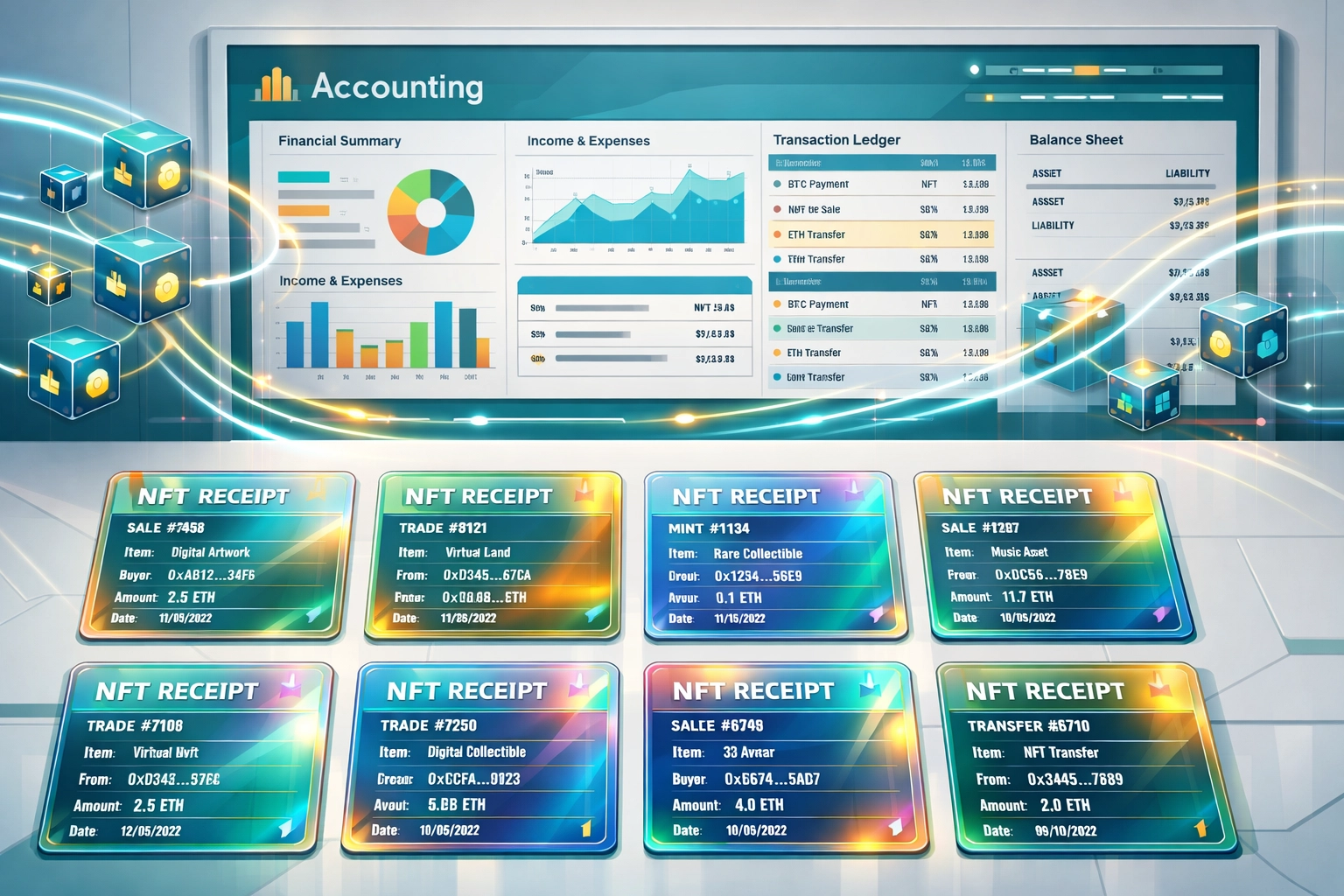
Every Larecoin transaction generates an NFT receipt. Immutable. Timestamped. Automatically logged.
Your accounting system connects directly to the blockchain. No manual reconciliation. No data discrepancies. No missing transactions.
Plus, LUSD (Larecoin's stablecoin version) eliminates volatility exposure completely. Every payment is denominated in stable value. No conversion headaches. No marking-to-market nightmares.
Just clean, automated bookkeeping.
Reason #4: International Payment Friction Still Exists
"Global" Processors That Aren't Actually Global
NOWPayments and CoinPayments promise borderless payments. But they still impose:
Currency conversion fees (0.5-1% additional)
Regional settlement delays
Country-specific compliance requirements
Limited support in emerging markets
Withdrawal restrictions by jurisdiction
Your "global" payment solution is still fractured by borders.
The Larecoin Fix: Truly Borderless Settlement
Blockchain doesn't recognize borders. Neither does Larecoin.
Same fee structure whether your customer is in Manhattan or Manila. Same settlement speed. Same custody model. Same transparent process.
No conversion fees between regions. No jurisdiction-based markup. No artificial delays.
This is the promise of cryptocurrency: actually delivered.
Reason #5: Settlement Delays Create Reconciliation Chaos
Batch Processing Is Legacy Infrastructure
Most crypto processors still use batch settlement cycles. They aggregate transactions, process in groups, then distribute to merchant accounts.
Why? It's cheaper for them.
But it creates:
Unpredictable settlement timing
Reconciliation mismatches between sales and settlements
Inventory management complications
Cash flow planning impossibility
Customer support confusion ("Where's my refund?")
You're running a modern business on outdated infrastructure.
The Larecoin Fix: Instant On-Chain Settlement
Every Larecoin transaction settles immediately on-chain. No batches. No queues. No waiting.
Customer pays → Smart contract executes → Funds arrive in your wallet.
Total time: seconds.
Your inventory systems stay synchronized. Your accounting stays accurate. Your cash flow stays predictable.
This is how payment processing should work.
The Compliance Advantage Nobody Expects
Here's where Larecoin separates from every other "decentralized" payment solution.
Rigorous US Regulatory Compliance
Larecoin maintains Money Services Business (MSB) registration and pursues state-level Money Transmitter Licenses (MTL) strategically across the United States.
Why does this matter?
Because crypto payment solutions operating in gray areas expose your business to regulatory risk. When (not if) enforcement actions hit the industry, compliant platforms survive. Non-compliant platforms get shut down.
Your payment processor going offline means:
Transaction history potentially inaccessible
Customer refund obligations you can't fulfill
Revenue recognition nightmares for auditors
Brand damage from association
Larecoin's compliance strategy isn't just about following rules. It's about building infrastructure that lasts.
The NFT Receipt Innovation
Standard crypto processors give you transaction IDs. Larecoin gives you programmable proof-of-payment.
Every transaction generates an NFT receipt with:
Complete payment metadata
Timestamp verification
Product/service details
Customer wallet linkage
Refund status tracking
These NFTs integrate directly with modern accounting platforms. They serve as legally recognized receipts in jurisdictions recognizing blockchain records. They enable automated customer loyalty programs.
And they cost nothing extra. They're built into the protocol.
The LUSD Stability Advantage
Volatility is crypto's biggest merchant adoption barrier. Larecoin solved it.
LUSD operates as Larecoin's stablecoin variant. Dollar-pegged. Instant settlement. Gas-only fees.
Accept payments in LUSD and eliminate:
Price fluctuation between sale and settlement
Accounting complexity from mark-to-market requirements
Mental burden of cryptocurrency exposure
Customer hesitation around volatile payment methods
You get crypto's benefits (low fees, instant settlement, global reach) without crypto's biggest drawback (volatility).
Stop Bleeding. Start Building.
Traditional crypto processors positioned themselves as disruptors. But they just replicated legacy payment infrastructure on blockchain rails.
They still take their cut. They still control your funds. They still create operational friction.
Larecoin represents actual disruption. Self-custody. Gas-only fees. Instant settlement. True decentralization.
The merchants switching to Larecoin aren't just saving money. They're reclaiming control over their payment infrastructure.
Your competitors are already making the switch. The question isn't whether self-custody payments become standard.
The question is whether you adopt early: or watch your margins bleed while you wait.
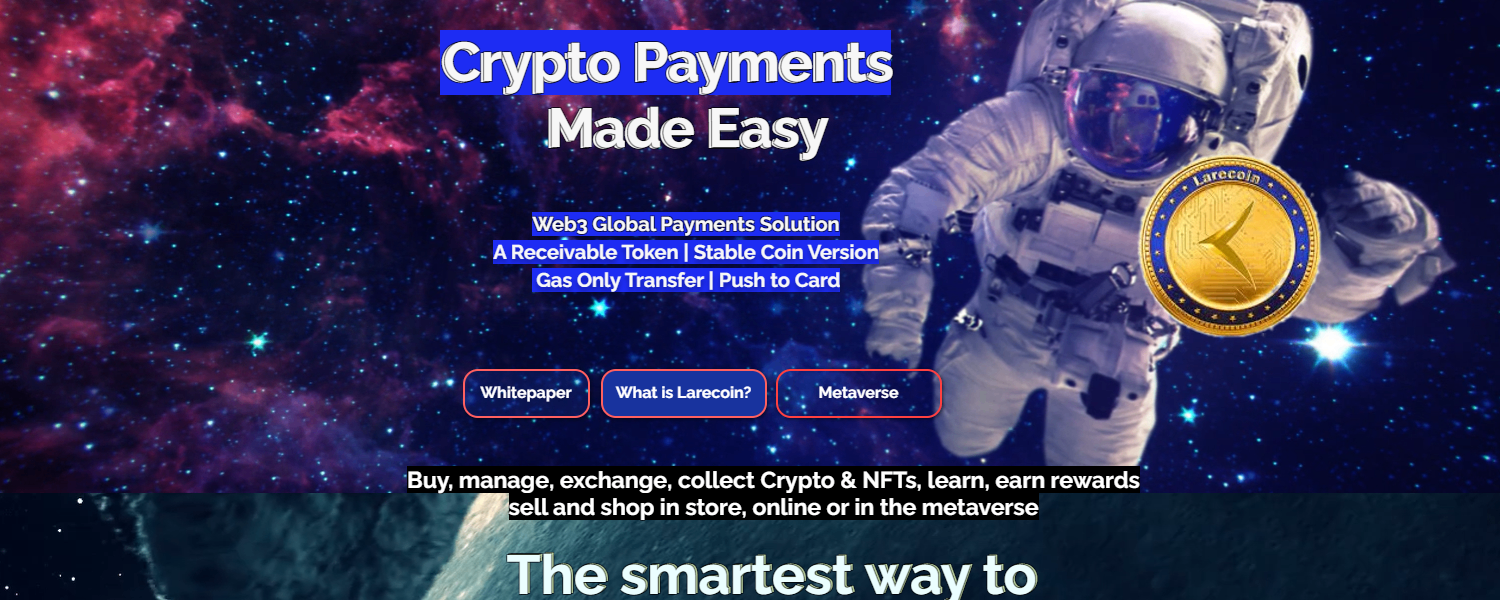
Ready to stop paying intermediaries? Check out the full Larecoin ecosystem and see what real Web3 payments look like.
The infrastructure is live. The compliance is handled. The savings are immediate.
Your move.
Comments