

.png)
5 Steps to Cut Interchange Fees by 50% with Self-Custody Crypto Payments (Easy Guide for Merchants)
- [[[Free!!]<<<<]] Watch: 스포르팅 - 토트넘 Live Stream 13 September 2022
- 6 hours ago
- 4 min read
![Writer: [[[Free!!]<<<<]] Watch: 스포르팅 - 토트넘 Live Stream 13 September 2022](https://lh3.googleusercontent.com/a/AItbvmktwQc0wCdd3ZEETSYItRQubwwBzOyjD_dcigRf=s96-c)
Interchange fees are killing your margins.
Every swipe. Every tap. Every transaction. Traditional payment processors take 2-4% on domestic transactions. Cross-border? That jumps to 4-6%.
For merchants processing $100,000 annually, that's $4,000-$6,000 vanishing into processing fees alone.
Here's the good news: Self-custody crypto payments can slash those fees by 50% or more. Some implementations hit 75% reductions.
This isn't theoretical. It's happening right now.
Let's break down exactly how to make this work for your business.
Why Self-Custody Changes Everything
Traditional payment processing involves multiple middlemen:
Card networks
Issuing banks
Acquiring banks
Payment processors
Correspondent banks (for international transactions)
Each layer skims fees. A $10,000 transfer through traditional rails costs approximately $330 in fees. Blockchain-based self-custody payments? About $66. That's an 80% reduction.
The difference? Direct peer-to-peer transactions. No intermediaries. No fee stacking.
Self-custody means you hold your keys. You control your funds. No third party can freeze, delay, or restrict your money.
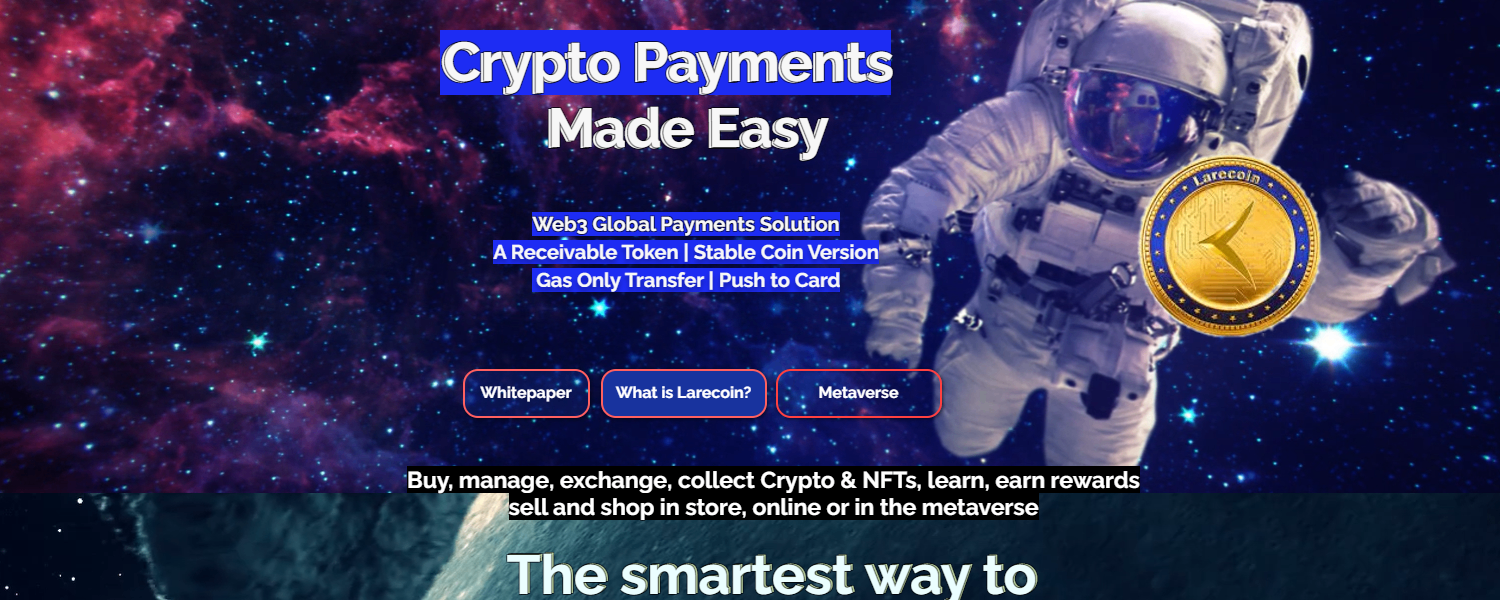
Step 1: Set Up Your Self-Custody Merchant Account
First things first. You need a Web3 payments platform that prioritizes merchant control.
What to look for:
Federal MSB (Money Services Business) registration
State-level MTL (Money Transmitter License) compliance across the U.S.
Self-custody architecture (not custodial solutions)
Gas-only transfer capabilities
Platforms like NOWPayments and CoinPayments offer crypto payment processing. But here's the catch, most operate on custodial models. They hold your funds. They control withdrawal timing. They set the rules.
Triple-A offers similar services but with limited stablecoin options and no NFT receipt functionality.
Larecoin takes a different approach. Full self-custody. You generate your wallet addresses. You hold your keys. Period.
Getting started:
Create your merchant account
Generate wallet addresses for your business
Complete compliance verification (faster than traditional merchant accounts)
Configure your settlement preferences
The entire process takes less than 24 hours. Compare that to 2-3 weeks for traditional merchant account approval.
Step 2: Configure Master/Sub-Wallets for Multi-Location Management
Running multiple locations? Departments? Revenue streams?
Master/sub-wallet architecture solves the organizational headache.
How it works:
One master wallet provides complete visibility and control
Sub-wallets operate independently for each location or department
Real-time reconciliation across all wallets
Granular permission settings for staff access

This structure mirrors traditional enterprise accounting, but with blockchain-level transparency. Every transaction is immutable. Every fund movement is traceable. Audit-ready from day one.
Pro tip: Set up separate sub-wallets for:
Individual store locations
E-commerce vs. in-store revenue
Different product categories
International vs. domestic sales
Reconciliation becomes automatic. No more manual cross-referencing between payment processors and accounting software.
Step 3: Integrate QR-Generated POS Systems
Forget expensive hardware terminals.
QR-generated POS (Point of Sale) systems transform any device into a crypto payment terminal. Smartphone. Tablet. Laptop. Even a printed QR code works.
The setup:
Generate unique QR codes for fixed pricing (retail)
Create dynamic QR codes for variable amounts (restaurants, services)
Display at checkout counter or integrate into e-commerce flow
Customer scans, confirms, done
Transaction confirmation happens in seconds. Not minutes. Not "pending" status for hours.
Cost comparison:
Solution | Hardware Cost | Monthly Fees | Per-Transaction |
Traditional POS | $300-$1,000 | $25-$100 | 2.5-3.5% |
Crypto POS (NOWPayments) | $0 | $0-$20 | 0.5-1% |
Crypto POS (CoinPayments) | $0 | $0 | 0.5% |
Crypto POS (Larecoin) | $0 | $0 | Gas-only |
Gas-only transfers mean you pay only the blockchain network fee. No percentage cuts. No platform fees eating into your margins.
For a merchant processing $18,000 annually, the difference between 3% traditional fees ($540) and gas-only crypto ($50-100 in network fees) is substantial.

Step 4: Enable NFT Receipts and LUSD Settlement
Two features that separate basic crypto payments from enterprise-grade solutions: NFT receipts and stablecoin settlement.
NFT Receipts
Every transaction generates an NFT receipt automatically. This isn't a gimmick.
Business benefits:
Immutable proof of transaction (legally defensible)
Automatic accounting records on-chain
Customer warranty/return verification
Loyalty program integration potential
Fraud dispute resolution
Traditional receipts can be altered, lost, or disputed. NFT receipts? Permanent. Tamper-proof. Timestamped on the blockchain.
LUSD Stablecoin Settlement
Volatility concerns? Valid.
LUSD eliminates price fluctuation risk. Transactions settle in a dollar-pegged stablecoin. You receive the exact dollar value quoted at checkout.
How LUSD outperforms:
Near-zero cross-border fees (vs. 6-6.5% traditional)
Settlement in minutes (vs. 3-5 business days)
Smart contract automation for compliance
Real-time currency conversion
For international merchants, LUSD settlement is transformative. A European customer pays. You receive USD-equivalent value. No correspondent banks. No forex delays. No hidden conversion fees.
Step 5: Optimize Gas-Only Transfers and Push-to-Card
Final step: Maximize your savings with gas-only transfers and instant fiat conversion.
Gas-Only Transfers
Traditional crypto payment processors charge percentage-based fees on top of network costs. Larecoin operates differently.
You pay only the blockchain gas fee. Nothing else.
For Solana-based transactions, gas fees typically run $0.00025 per transaction. Yes, fractions of a cent.

Push-to-Card Services
Need fiat liquidity fast?
Push-to-card converts crypto holdings to your bank card instantly. No 3-day waiting periods. No withdrawal limits throttling your cash flow.
Activation steps:
Link your business debit card
Set automatic conversion thresholds (optional)
Push funds on-demand when needed
This bridges the crypto-fiat gap seamlessly. Accept crypto. Convert when convenient. Maintain operational flexibility.
The Future: Metaverse Shopping and Social Commerce
Fee savings are immediate. But the real opportunity? What's coming next.
Larecoin's B2B2C metaverse opens entirely new revenue channels:
VR/AR shopping experiences
Social commerce integration
Virtual storefronts with zero physical overhead
Global customer reach without geographic limitations
Imagine your customers browsing products in virtual reality. Trying on clothes digitally. Walking through your store from anywhere in the world. Checking out with a single gesture.
This isn't science fiction. It's the roadmap.
Merchants adopting self-custody crypto payments today position themselves for metaverse commerce tomorrow.
Bottom Line: The Math Works
Let's run the numbers one more time.
Traditional processing ($100,000 annual volume):
Domestic fees (2.5%): $2,500
Cross-border fees (5%): Variable
Hardware costs: $500+
Monthly fees: $600+
Total: $3,600+ annually
Self-custody crypto payments ($100,000 annual volume):
Gas fees: ~$100
Hardware: $0
Monthly fees: $0
Total: ~$100 annually
That's 97% savings on payment processing.
Even conservative estimates hitting 50% reduction translate to thousands in recovered margin. Every year. Compounding.
Get Started Today
The setup takes hours, not weeks.
The savings start immediately.
The compliance is built-in (Federal MSB registration + state MTL coverage).
Ready to cut your interchange fees by 50% or more?
Visit Larecoin to set up your self-custody merchant account.
Your margins will thank you.
Comments