

.png)
5 Steps to Reduce Merchant Interchange Fees by 50% with Crypto Receivables (Easy Guide)
- [[[Free!!]<<<<]] Watch: 스포르팅 - 토트넘 Live Stream 13 September 2022
- 2 days ago
- 4 min read
![Writer: [[[Free!!]<<<<]] Watch: 스포르팅 - 토트넘 Live Stream 13 September 2022](https://lh3.googleusercontent.com/a/AItbvmktwQc0wCdd3ZEETSYItRQubwwBzOyjD_dcigRf=s96-c)
Interchange fees are killing your margins.
Every swipe. Every tap. Every online checkout. You're bleeding 2-4% to card networks and payment processors. Cross-border? That jumps to 4-6.5%.
Here's the reality: Traditional payment rails weren't built for merchants. They were built for banks.
Crypto receivables change everything.
With the right setup, you can slash those fees by 50% or more. We're talking sub-1% transaction costs. Full self-custody. No middlemen skimming your revenue.
This guide breaks down exactly how to do it. Five steps. No fluff.
Let's get into it.
Why Interchange Fees Are Draining Your Business
Before we dive into the fix, let's understand the problem.
The traditional payment stack:
Card network fees (Visa, Mastercard)
Issuing bank fees
Acquiring bank fees
Payment processor fees
Gateway fees
Each layer takes a cut. By the time a customer pays you $100, you're keeping $96-97 domestically. International sales? You might see $93-95.
Annual impact on a $500K business: ~$18,000 in fees Annual impact on a $5M business: ~$180,000 in fees
That's not a rounding error. That's your growth budget. Your hiring budget. Your profit margin.
Crypto receivables flip this model. Direct wallet-to-wallet transfers. Blockchain validation instead of banking intermediaries. Fees drop to fractions of a cent.
Ready to reclaim your revenue? Here's how.
Step 1: Set Up Your Self-Custody Merchant Account
First priority: Own your keys.
Self-custody means you control your funds. No frozen accounts. No arbitrary holds. No third-party permission required to access your own money.
What you need:
A Solana-compatible wallet (Phantom or Solflare work great)
Your seed phrase secured offline
A dedicated merchant wallet address
For multi-location businesses:
Set up a master wallet with sub-wallets for each location. This gives you:
Centralized visibility across all stores
Individual location tracking
Consolidated reporting
Granular access controls
Compare this to platforms like NOWPayments or CoinPayments. They hold your funds. They set withdrawal limits. They can freeze your account without warning.
With Larecoin's ecosystem, you're the bank. Your wallet. Your rules. Your money, accessible 24/7.
Pro tip: Create separate wallets for different revenue streams (online, in-store, international). Simplifies accounting massively.
Step 2: Integrate a Crypto Payment Checkout System
Your customers need multiple ways to pay crypto. Make it seamless.
Integration options:
Direct API Integration – Full customization for developers
E-commerce Plugins – WooCommerce, Shopify, Magento compatible
Point-of-Sale Solutions – Physical retail and service businesses
Payment Links – Invoice-style payments for B2B
Customer payment methods to support:
QR code scanning (mobile wallets)
Contactless NFC payments
Online checkout widgets
Direct wallet transfers
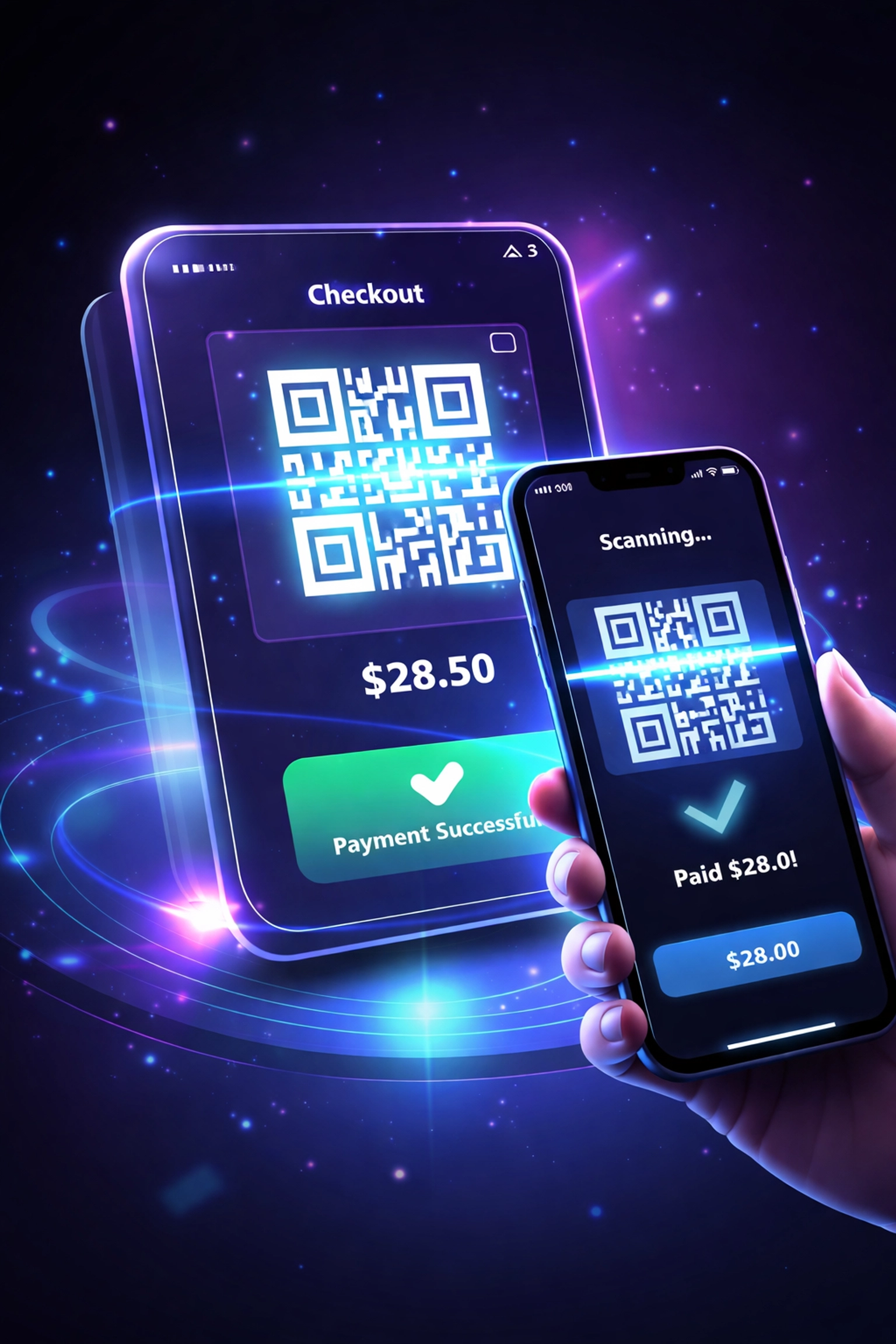
The checkout experience matters.
Clunky crypto payments kill conversions. Your system should be as smooth as Apple Pay. Customer scans. Confirms. Done.
Most competitors charge 0.5-1% per transaction for this functionality. CoinPayments sits around 0.5%. NOWPayments charges up to 1% depending on volume.
Larecoin? Gas-only transfers. We're talking fractions of a cent on Solana. That's not a typo.
Step 3: Choose Your Settlement Currency (LUSD Is Your Friend)
Volatility scares merchants away from crypto. Understandable.
You accept $500 in Bitcoin. Two hours later, it's worth $475. Not ideal for paying suppliers or rent.
Solution: Stablecoin settlement.
LUSD (Larecoin's stablecoin) gives you:
1:1 USD peg stability
Instant settlement
No volatility exposure
Sub-cent transaction costs
Why LUSD beats other stablecoins:
Feature | LUSD | USDT | USDC |
Decentralized | ✓ | ✗ | ✗ |
Self-custody native | ✓ | Partial | Partial |
Solana gas fees | Ultra-low | Higher | Higher |
Freeze risk | None | Yes | Yes |
USDT and USDC can freeze wallets. They've done it before. Centralized stablecoins carry counterparty risk.
LUSD keeps you in control. Always.
Settlement flexibility:
Accept payments in any crypto. Auto-convert to LUSD. Hold value without stress. Convert to fiat when you're ready.
Step 4: Enable NFT Receipt Generation
This is where Larecoin separates from every competitor.
Every transaction generates an NFT receipt.
Not a gimmick. A game-changer for your accounting.
What NFT receipts provide:
Immutable on-chain transaction records
Instant audit trails
Simplified tax preparation
Dispute resolution proof
Customer purchase verification
Traditional receipt problems:
Paper fades and gets lost
Digital receipts get deleted
Database records can be altered
Reconciliation takes hours
NFT receipt benefits:
Permanent blockchain storage
Tamper-proof records
One-click export for accountants
Real-time transaction verification
Come tax season, your CPA will thank you. During an audit? You've got bulletproof documentation.
NOWPayments doesn't offer this. CoinPayments doesn't offer this. This is Larecoin-exclusive functionality built for serious merchants.
Step 5: Set Up Push-to-Card Services (Optional but Powerful)
You've accepted crypto. You've settled in LUSD. Now you need fiat for traditional expenses.
Push-to-card solves the cash flow gap.
Convert crypto holdings to your debit card instantly. No 3-5 day ACH delays. No wire transfer fees. No bank business hours.
How it works:
Select amount to convert
Choose destination card
Confirm transaction
Funds arrive in minutes
Use cases:
Emergency supplier payments
Payroll funding
Rent and utilities
Unexpected expenses
The freedom factor:
Traditional crypto-to-fiat takes days. Your supplier needs payment tomorrow? Tough luck.
Push-to-card gives you on-demand liquidity. Business moves fast. Your money should too.
The Real Numbers: Your Savings Breakdown
Let's calculate actual impact.
Business Processing $500,000 Annually:
Cost Type | Traditional Fees | Larecoin Fees | Savings |
Domestic | $15,000 (3%) | $1,500 (0.3%) | $13,500 |
Cross-border | $25,000 (5%) | $2,500 (0.5%) | $22,500 |
Annual savings: $13,500 - $22,500 (depending on transaction mix)
Business Processing $5,000,000 Annually:
Cost Type | Traditional Fees | Larecoin Fees | Savings |
Domestic | $150,000 | $15,000 | $135,000 |
Cross-border | $250,000 | $25,000 | $225,000 |
Annual savings: $135,000 - $225,000
That's not theoretical. That's real money back in your business.

Why Merchants Are Switching to Larecoin
The competitive landscape:
NOWPayments: Charges 0.5-1% fees. Custodial model. No NFT receipts.
CoinPayments: 0.5% base fee. Limited self-custody options. Basic reporting.
Larecoin: Gas-only transfers. Full self-custody. NFT receipts. Master/sub-wallet architecture.
The Larecoin difference:
✓ True merchant independence ✓ Sub-cent transaction costs ✓ Immutable receipt generation ✓ LUSD stability without centralization risk ✓ Push-to-card liquidity ✓ Multi-location wallet management
You're not just saving money. You're building a payment infrastructure you actually own.
Get Started Today
Five steps. That's all it takes.
Set up self-custody – Your keys, your crypto
Integrate checkout – Meet customers where they pay
Choose LUSD – Stability without sacrifice
Enable NFT receipts – Accounting on autopilot
Add push-to-card – Instant fiat when needed

Interchange fees have stolen from merchants for decades. Card networks built the system. Banks benefit from it. You pay for it.
Crypto receivables hand you the exit.
Ready to cut your payment processing costs in half?
Explore the Larecoin ecosystem and start accepting crypto payments that actually work for your business.
Your margins will thank you.
Comments