

.png)
7 Mistakes Small Businesses Make with Crypto POS Systems (and How Self-Custody Fixes Them)
- [[[Free!!]<<<<]] Watch: 스포르팅 - 토트넘 Live Stream 13 September 2022
- 2 hours ago
- 5 min read
![Writer: [[[Free!!]<<<<]] Watch: 스포르팅 - 토트넘 Live Stream 13 September 2022](https://lh3.googleusercontent.com/a/AItbvmktwQc0wCdd3ZEETSYItRQubwwBzOyjD_dcigRf=s96-c)
Small businesses dive into crypto payments expecting freedom.
Instead? They get another middleman.
NOWPayments. CoinPayments. Same old custody games dressed in blockchain clothing.
Here are the seven biggest mistakes merchants make: and how true self-custody fixes every single one.
Mistake #1: Bleeding Money on Processing Fees
The Problem:
NOWPayments charges 0.5% per transaction. CoinPayments? Same deal.
Sounds small until you do the math.
Process $2 million annually? You just handed over $10,000 to a middleman. For what? Moving bits from one address to another.
Traditional crypto processors stack fees like card networks. Processing fees. Withdrawal fees. Currency conversion fees. Some even charge monthly platform fees on top.
The Self-Custody Fix:
Direct blockchain transactions eliminate processor fees entirely.
Gas fees? Sure. But those go to network validators: not corporate middlemen. On efficient chains, gas costs pennies per transaction.

A self-custody POS system lets customers pay directly to your wallet. No intermediary. No percentage cut. Just peer-to-peer transactions exactly as crypto was designed.
The difference? Thousands of dollars annually back in your pocket instead of theirs.
Mistake #2: Giving Up Self-Custody
The Problem:
CoinPayments holds your funds. NOWPayments holds your funds.
They promise "instant conversion" and "easy payouts": but those funds aren't yours until they decide to release them.
Payout delays. Account freezes. Custody risk. The very problems crypto was supposed to solve.
Centralized processors create settlement delays of 24-48 hours. Some longer. During that window, they control your money. If their system goes down, if they flag your account, if they decide your business is "high risk": you wait.
The Self-Custody Fix:
True self-custody means immediate settlement to your wallet.
Customer pays. Transaction confirms. Funds arrive in your wallet instantly. No middleman custody. No payout delays. No permission required.
Your keys. Your crypto. Your business.
Larecoin's approach prioritizes direct wallet-to-wallet transactions. Merchants receive payments immediately with full control. No waiting for processor approval to access your own money.
Mistake #3: Accepting Only Centralized Stablecoins
The Problem:
Most crypto processors limit stablecoin payments to USDT and USDC.
Both centralized. Both controlled by single companies. Both capable of freezing your funds or blacklisting your address without notice.
Circle (USDC) and Tether (USDT) comply with government requests. Account freezes happen. Address blacklists exist. Merchants discovered this the hard way during political protests and controversial industries.
This isn't theoretical. In 2022 alone, Circle froze over $100 million in USDC addresses at government request.
The Self-Custody Fix:
Decentralized stablecoins provide genuinely permissionless alternatives.

LUSD (Liquidity USD) operates without centralized control. No company can freeze it. No authority can blacklist addresses. Pure on-chain collateralization with transparent reserve backing.
Larecoin supports LUSD alongside traditional stablecoins. Merchants choose their preferred assets: not what processors allow. Customers pay with truly censorship-resistant currency.
True financial sovereignty requires decentralized infrastructure at every layer.
Mistake #4: Making Setup a Technical Nightmare
The Problem:
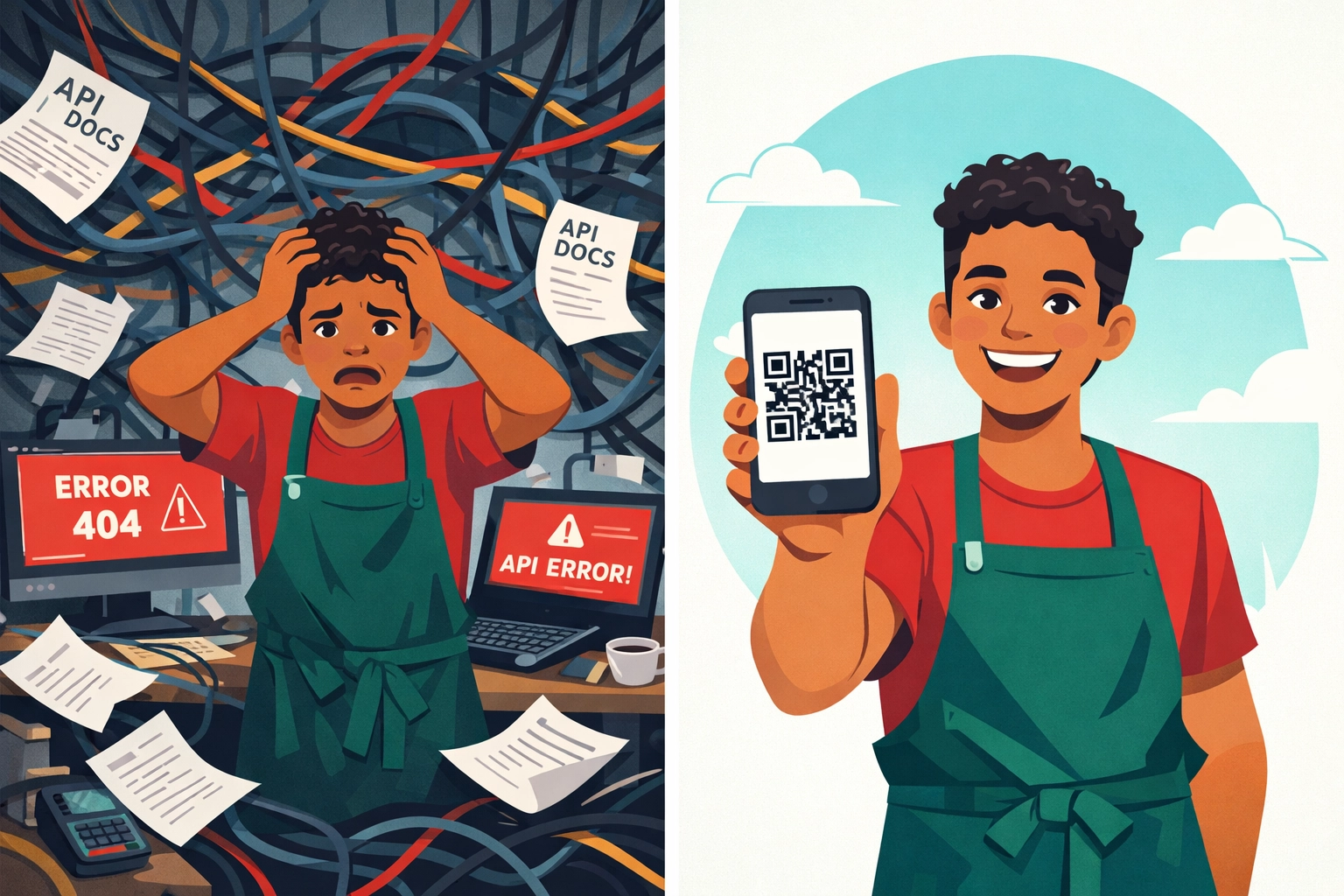
Traditional crypto processors demand API integrations. Developer resources. Technical expertise most small businesses don't have.
NOWPayments requires API keys, webhook configurations, and server-side implementations. CoinPayments expects merchants to handle payment button generation, IPN callbacks, and security protocols.
For a coffee shop owner or boutique retailer? This is insurmountable.
The result: businesses abandon crypto payments entirely or pay developers thousands to implement basic functionality.
The Self-Custody Fix:
No-code setup eliminates technical barriers.
Modern self-custody systems use QR codes and simple wallet connections. Merchants scan. Customers pay. Done.
Zero API integration. Zero developer resources. Zero technical knowledge required.
Self-custody doesn't mean complexity. It means simplicity without surrendering control. A properly designed system makes blockchain payments as easy as cash: but with digital efficiency.
Mistake #5: Limiting Which Tokens Customers Can Use
The Problem:
Processors restrict supported cryptocurrencies to maximize their operational efficiency.
NOWPayments supports selective tokens. CoinPayments offers broader support but charges premium fees for less common assets.
Research shows 85-90% of crypto payments concentrate on Bitcoin, Ethereum, and major stablecoins. But that remaining 10-15%? Real customers with real money.
A customer wanting to pay with SOL or AVAX finds merchants unable to accept it: not because the blockchain can't handle it, but because the processor won't support it.
Lost sales. Lost customers. Lost opportunity.
The Self-Custody Fix:
Multi-chain self-custody systems accept customer-preferred assets.
Your business. Your choice of supported tokens. Customer holds MATIC? Accept it. Someone wants to pay in SOL? No problem.

Larecoin's multi-chain infrastructure handles payments across networks. Merchants decide supported cryptocurrencies based on customer demand: not processor limitations.
More accepted tokens equals more potential customers. Simple math.
Mistake #6: Failing to Think Through Refunds Early
The Problem:
Crypto transactions cannot be reversed. Prices fluctuate. Refund policies become complicated fast.
Without clear internal rules established upfront, refund-related support tickets take 2-3 times longer than card transaction refunds.
Customer paid 0.05 ETH when ETH was $2,000. Now it's $2,500. Do you refund the original dollar amount or the original crypto amount? Who absorbs price movement losses?
Most processors offer zero guidance. Merchants figure it out through expensive trial and error.
The Self-Custody Fix:
Self-custody forces clear policy establishment upfront.
Because you control the wallet, you control refund execution. This requirement creates better business practices.
Set transparent policies before accepting first payment. Dollar-amount refunds? Crypto-amount refunds? Timeframe limitations? Document everything.
Larecoin merchants establish refund policies in merchant portals. Customers see terms before paying. Disputes decrease. Support tickets drop.
Clear policies protect both merchant and customer. Self-custody makes this mandatory: which turns out to be an advantage.
Mistake #7: Surrendering Control to Another Middleman
The Problem:
Centralized crypto processors replicate traditional payment structures exactly.
They set fees unilaterally. They determine supported cryptocurrencies. They freeze accounts at their discretion. They change terms without consent.
You escaped Visa and Mastercard only to rebuild the same system with crypto paint.
NOWPayments can suspend your account. CoinPayments can change their fee structure. Both can decide your business violates their terms: and you have zero recourse.
This isn't decentralization. It's centralization with extra steps.
The Self-Custody Fix:
True self-custody returns complete merchant autonomy.
You control fees (gas only). You control supported assets. You control business operations. No account to freeze. No terms to violate. No permission needed.
Decentralized infrastructure means exactly that. Larecoin's model empowers merchants with actual independence: not permission-based access disguised as freedom.
Your business runs on protocols, not platforms. Code you can verify. Rules that don't change arbitrarily. Freedom that's real.
The Security Checkpoint: Don't Skip This
Beyond these seven mistakes lies one more critical consideration: operational security.
Crypto eliminates chargebacks but introduces different risks. More than 20% of crypto-related losses come from internal process breakdowns: not external attacks.
Misplaced credentials. Shared wallet access. Human error. Lost seed phrases.
Self-custody means self-responsibility. Implement proper key management. Use hardware wallets for significant holdings. Document processes. Train staff properly.
The good news? These security practices are straightforward. The bad news? They're absolutely mandatory.
Take Back Control
Every mistake listed here stems from the same root problem: surrendering control to centralized intermediaries.
Self-custody fixes them all by eliminating the middleman entirely.
Lower fees. Immediate settlement. Decentralized stablecoins. Simple setup. Token flexibility. Clear policies. Complete autonomy.
That's not marketing speak. That's how blockchain was designed to work.
NOWPayments and CoinPayments serve a purpose for businesses needing hand-holding. But small businesses serious about crypto's potential need something better.
Direct payments. NFT receipts. LUSD support. Multi-chain flexibility. Merchant freedom.
Real decentralization starts when you stop asking permission to accept money.
Ready to stop paying middlemen and start keeping your profits? Self-custody isn't the future of crypto payments.
It's the present( for merchants brave enough to claim it.)
Comments