

.png)
7 Mistakes You're Making with Crypto Payment Processing (and How Self-Custody Fixes Them)
- [[[Free!!]<<<<]] Watch: 스포르팅 - 토트넘 Live Stream 13 September 2022
- Jan 23
- 4 min read
![Writer: [[[Free!!]<<<<]] Watch: 스포르팅 - 토트넘 Live Stream 13 September 2022](https://lh3.googleusercontent.com/a/AItbvmktwQc0wCdd3ZEETSYItRQubwwBzOyjD_dcigRf=s96-c)
Crypto payments should be simple. Yet most merchants are bleeding money, losing transactions, and trusting third parties with their funds.
Sound familiar?
The truth is brutal. Platforms like NOWPayments, CoinPayments, and Triple-A have normalized custodial models that create unnecessary risk. You hand over your keys. You pay stacked fees. You wait for approvals.
That's not Web3. That's Web2 with extra steps.
Self-custody changes everything. Here are the seven mistakes killing your crypto payment game: and how to fix them today.
Mistake #1: Letting Someone Else Hold Your Keys
This is the big one.
Custodial payment processors control your funds. They hold the private keys. If they get hacked, freeze your account, or go bankrupt: your money vanishes.
Remember the old saying? Not your keys, not your crypto.
The Self-Custody Fix:
With Larecoin, merchants maintain full control of their wallets. Master/sub-wallet architecture means you can manage multiple locations, departments, or revenue streams: all while keeping custody 100% in your hands.
No middlemen. No permission needed to access YOUR money.
Mistake #2: Paying Stacked Fees That Eat Your Margins
Here's what most processors don't advertise:
Exchange fees
Network fees
Processing fees
Withdrawal fees
Conversion fees
It adds up fast. Some merchants report losing 3-5% per transaction when all fees stack. That's worse than traditional credit card interchange.
The Self-Custody Fix:
Larecoin's gas-only transfer model eliminates processing middlemen. You pay network gas. That's it.
The result? Fee savings exceeding 50% compared to traditional interchange rates. For high-volume merchants, that's thousands: sometimes millions: back in your pocket annually.
LUSD, Larecoin's native stablecoin, keeps things simple. No conversion volatility. No surprise exchange rate markups. Predictable, transparent costs.
Mistake #3: No Proof of Purchase Beyond a Hash
Blockchain transactions are immutable. Great.
But a transaction hash tells you nothing about what was purchased, when it was delivered, or what terms applied. Disputes become nightmares. Audits become archaeological digs.
The Self-Custody Fix:
NFT receipts.
Larecoin issues every transaction as a verifiable NFT receipt: complete with purchase details, timestamps, and merchant metadata. It lives on-chain forever. Customers have proof. Merchants have records. Auditors have clarity.

This isn't a gimmick. It's the future of commercial documentation. Imagine instant proof-of-purchase for warranties, returns, expense reporting, and tax compliance. All tokenized. All automatic.
Mistake #4: Using the Wrong Network and Losing Funds
The research is clear: sending crypto via incorrect networks causes permanent loss.
Send ETH to a Solana address? Gone.
Send USDT on the wrong chain? Unrecoverable.
This happens more than you think: especially with multi-chain processors that don't provide adequate safeguards.
The Self-Custody Fix:
Larecoin's ecosystem operates natively across Solana and Binance Smart Chain with built-in network detection. The merchant portal flags mismatched networks before transactions confirm.

Smart routing means customers can pay in their preferred token while merchants receive LUSD. Swap and bridge functionality handles the complexity invisibly. No wrong-network disasters.
Mistake #5: Slow Processing That Kills Conversions
Some processors batch withdrawals once daily. Others require 3-5 business days for settlement.
In crypto, that's ancient.
Price volatility during delays can wipe out margins. Customers abandon carts when confirmations take too long. The whole point of blockchain is speed: and legacy processors are bottlenecking it.
The Self-Custody Fix:
Self-custody means instant settlement. The moment a transaction confirms on-chain, the funds are in YOUR wallet. Not pending. Not processing. Yours.
Larecoin's crypto POS system generates QR codes for instant mobile payments. Tap. Scan. Done. Confirmation in seconds, not days.
For brick-and-mortar? QR-generated POS terminals require zero specialized hardware. Any tablet or phone becomes a payment terminal.
Mistake #6: Zero Compliance Coverage
Here's the uncomfortable reality: most crypto payment processors operate in regulatory gray zones.
When authorities come knocking: and they will: merchants using non-compliant processors face liability. Frozen accounts. Fines. Reputational damage.
The Self-Custody Fix:
Larecoin maintains Federal MSB (Money Services Business) registration and state-level MTL (Money Transmitter License) coverage across the U.S.
MTL compliance isn't optional for serious merchants. It's the difference between operating legitimately and waiting for a cease-and-desist.
This matters especially for enterprise clients managing significant volume. Compliance infrastructure protects everyone in the transaction chain.
Mistake #7: Ignoring Where Commerce Is Heading
Static payment pages. Basic checkout widgets. Email receipts.
That's 2020 technology.
The future is immersive. Social. Spatial.
Merchants stuck on legacy processors will miss the metaverse shopping revolution entirely.
The Self-Custody Fix:
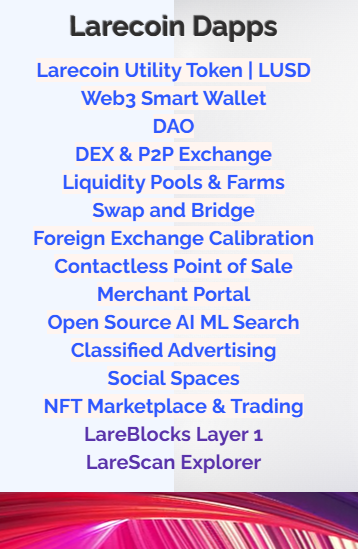
Larecoin's B2B2C metaverse enables social shopping experiences in VR/AR environments. Imagine customers browsing virtual storefronts, trying products in augmented reality, and completing purchases with a gesture: all settled instantly via self-custodied crypto.
This isn't theoretical. The infrastructure exists today. Early-adopter merchants are already building presence in Larecoin's social spaces.
The metaverse shopping opportunity is measured in trillions. The merchants who win will be those accepting payments natively in these environments: not retrofitting legacy systems after the fact.
The Competitive Landscape: Why Alternatives Fall Short
Let's be direct about the competition.
NOWPayments: Custodial model. Limited compliance infrastructure. No NFT receipt functionality. No metaverse integration.
CoinPayments: Multi-chain support but custodial. Fee stacking issues. Dated interface. No stablecoin ecosystem.
Triple-A: Enterprise focus but still custodial. Geographic limitations. No on-chain receipt tokenization.
None of these platforms offer true self-custody with the compliance, tooling, and future-readiness that serious merchants require.
Larecoin does.
What Self-Custody Actually Delivers
Let's summarize the transformation:
Problem | Legacy Processors | Larecoin Self-Custody |
Key Control | They hold keys | You hold keys |
Fees | 3-5% stacked | Gas-only transfers |
Receipts | Basic hash | NFT receipts |
Network Risk | User error = loss | Smart routing protection |
Settlement | Days | Instant |
Compliance | Gray zone | Federal MSB + MTL |
Future Commerce | Static | Metaverse-ready |
Ready to Fix These Mistakes?
The crypto payment landscape is maturing fast. Merchants clinging to custodial processors will find themselves outcompeted, over-charged, and under-protected.
Self-custody isn't just a philosophical preference. It's a strategic advantage.
Larecoin delivers the infrastructure: LUSD stablecoin stability, NFT receipt documentation, master/sub-wallet management, QR-generated crypto POS, and full MTL compliance coverage.
Plus the vision: metaverse shopping, social commerce, VR/AR integration.
Stop making these seven mistakes. Take control of your crypto payments.
Explore Larecoin and see what self-custody can do for your business.
Comments