

.png)
7 Mistakes You're Making with Crypto Payment Processors (and How NFT Receipts Fix Them)
![Writer: [[[Free!!]<<<<]] Watch: 스포르팅 - 토트넘 Live Stream 13 September 2022](https://lh3.googleusercontent.com/a/AItbvmktwQc0wCdd3ZEETSYItRQubwwBzOyjD_dcigRf=s96-c)
Most merchants think they're winning by accepting crypto payments.
They're not.
Traditional crypto payment processors like NOWPayments and CoinPayments are quietly draining profits through hidden fees, custodial control, and zero accounting transparency. Meanwhile, your competitors are switching to NFT receipt systems that cut costs to gas-only.
Let's break down the seven biggest mistakes: and how blockchain-native receipts fix every single one.
Mistake #1: Paying 0.5% to 1% Per Transaction (When You Could Pay Gas Only)
The Problem
NOWPayments charges 0.5% minimum per transaction. CoinPayments takes 0.5% on most payments. Add withdrawal fees, monthly subscriptions, and conversion charges.
Do the math on $100,000 monthly volume. That's $500 to $1,000 gone every month.
The NFT Receipt Solution
Larecoin's NFT receipts eliminate processing fees entirely. You pay blockchain gas fees only: typically $0.20 to $2.00 per transaction depending on network conditions.
Every NFT receipt is a permanent, immutable record stored on-chain. No middleman. No percentage cut. Just gas.
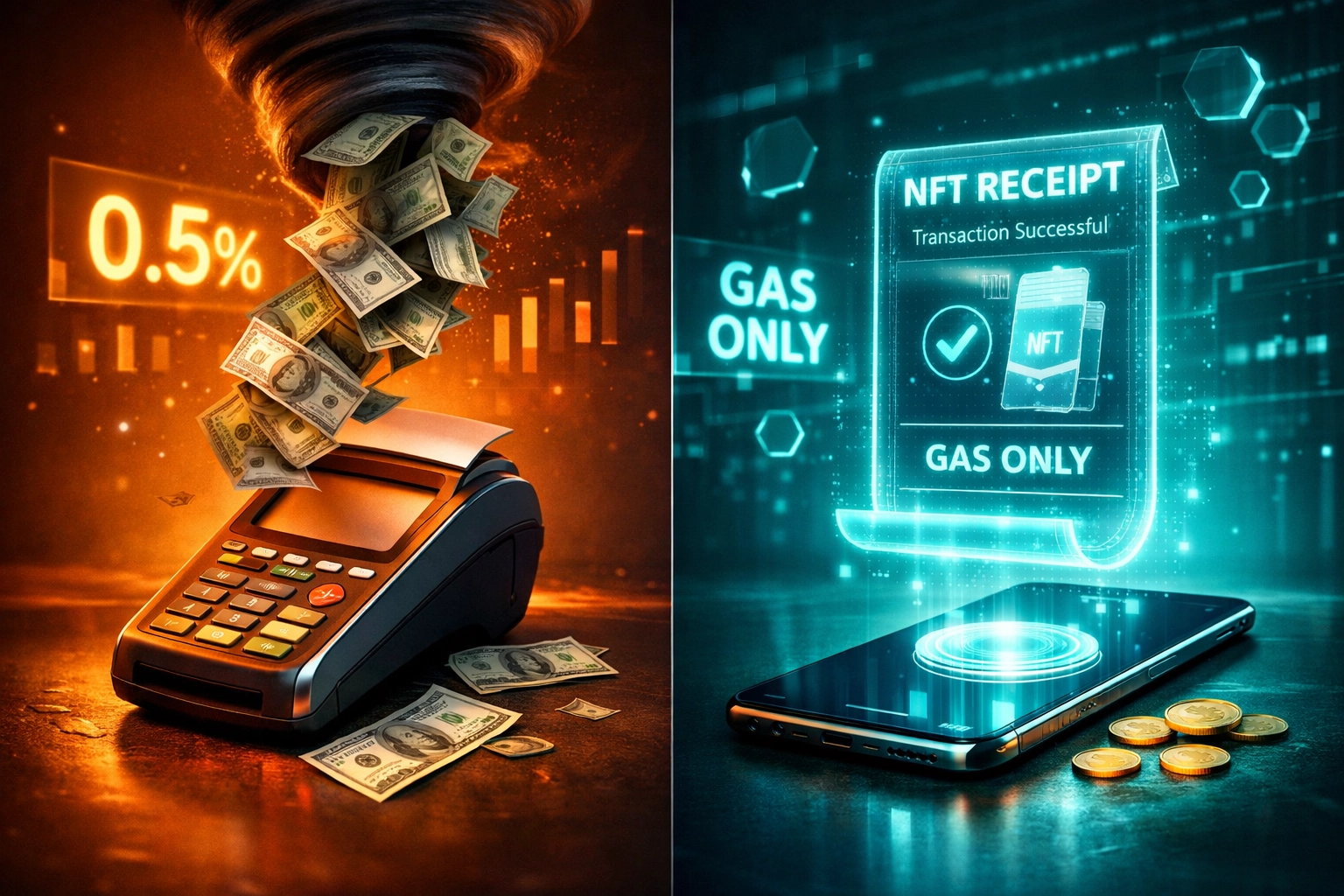
LUSD stablecoin transactions make this even cheaper. Since LUSD operates on efficient Layer 2 solutions, gas costs drop to pennies. Your $100,000 monthly volume? You're looking at $50 to $100 in total fees max.
That's a 90% cost reduction compared to NOWPayments or CoinPayments.
Mistake #2: Handing Over Custody of Your Funds
The Problem
CoinPayments holds your crypto in custodial wallets. NOWPayments controls the private keys. You're trusting a third party with your money.
Not your keys, not your crypto.
If the processor freezes your account, experiences downtime, or faces regulatory pressure: your funds are stuck. You're at their mercy.
The NFT Receipt Solution
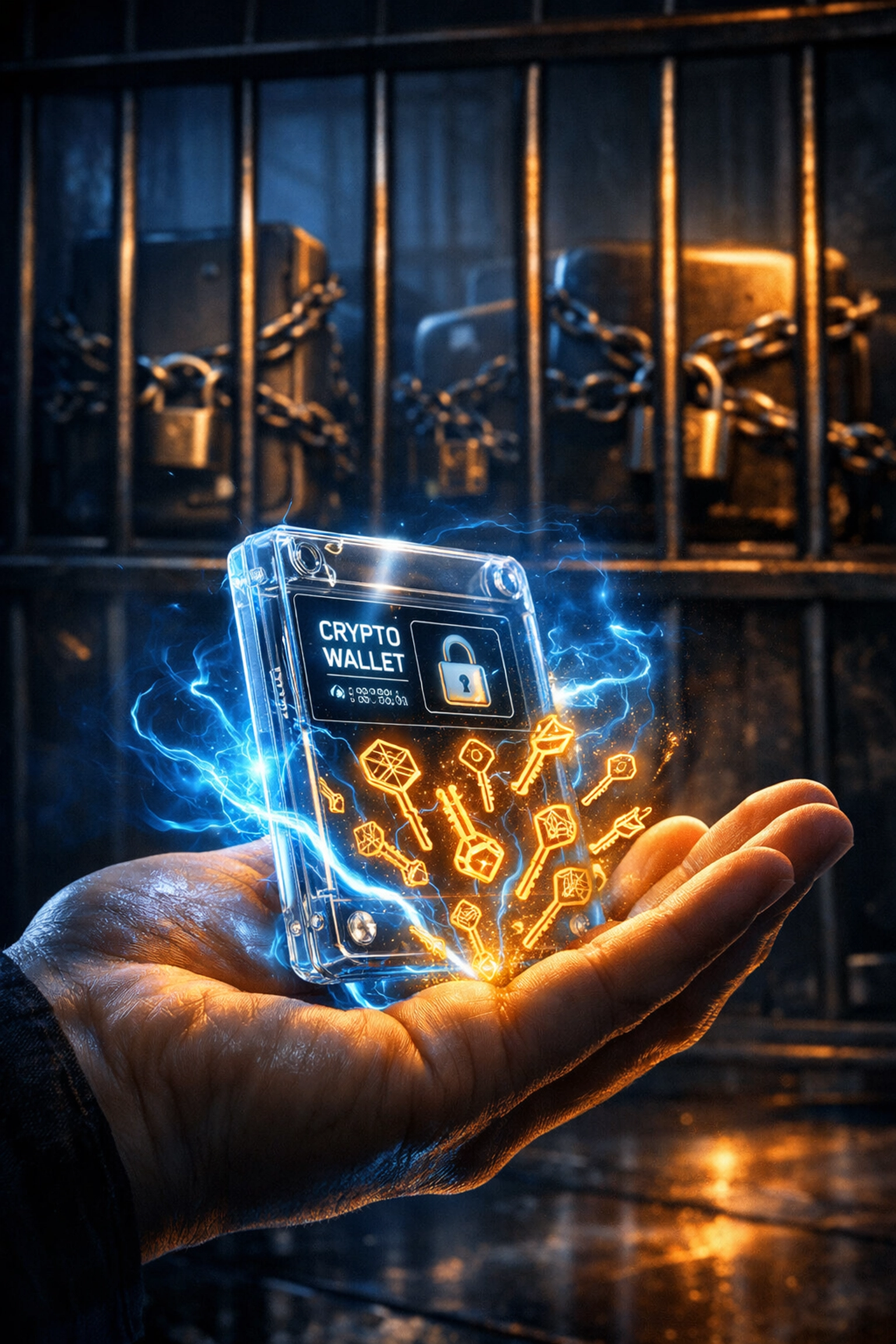
Self-custody is non-negotiable with Larecoin's system.
Every transaction settles directly to your wallet. You control the private keys. The NFT receipt confirms the payment instantly, but the funds? They're yours from second one.
No waiting periods. No withdrawal limits. No permission needed to access your own money.
This is true merchant freedom. You operate independently of any centralized processor.
Mistake #3: Zero Accounting Transparency (Good Luck During Tax Season)
The Problem
Traditional processors give you a basic transaction log. Maybe a CSV export if you're lucky.
Tax season arrives. Your accountant needs detailed records. Transaction amounts, timestamps, customer identifiers, product SKUs, refund status.
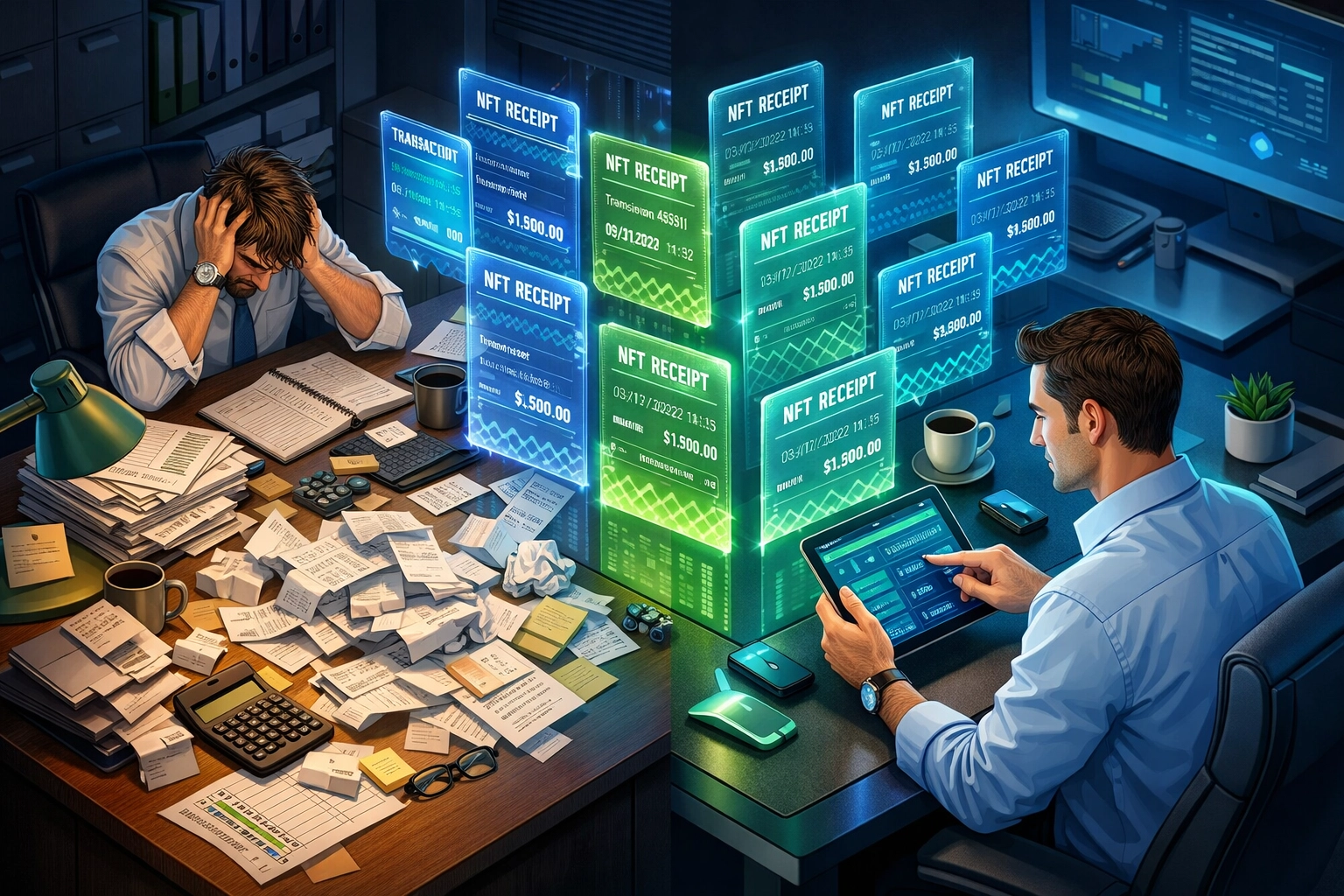
You're manually reconciling thousands of transactions across multiple spreadsheets. Hours wasted. Errors guaranteed.
The NFT Receipt Solution
Every NFT receipt contains immutable, timestamped transaction data stored permanently on-chain.
Customer wallet address. Exact amount paid. Product purchased. Date and time down to the second. Refund status. Everything your accountant needs.
Pull your entire transaction history from the blockchain anytime. Filter by date range, product category, or customer. Export to accounting software in minutes.
Zero reconciliation headaches. Perfect audit trails. Tax compliance becomes automatic.
Mistake #4: Complex Setup Requirements That Delay Your Launch
The Problem
CoinPayments requires extensive KYC documentation. Business licenses. Bank statements. Proof of address. Wait times of days or weeks.
NOWPayments demands API integrations and technical configuration. You need a developer just to get started.
Both platforms have multi-step verification processes that delay your first crypto payment by weeks.
The NFT Receipt Solution
Larecoin's merchant setup takes under 10 minutes.
Connect your self-custody wallet. Generate your merchant NFT receipt contract. Start accepting payments immediately.
No KYC documentation. No API complexity. No approval waiting period.
You're live and accepting LUSD stablecoin or LARE tokens before your competitors finish their CoinPayments application.
Speed matters. Every day of delay is lost revenue.
Mistake #5: Slow Confirmations and Unpredictable Gas Fees
The Problem
Bitcoin payments through NOWPayments take 10+ minutes for confirmation. Customers standing at checkout, waiting.
Ethereum transactions during network congestion? Gas fees spike to $20, $50, even $100. Your $15 sale becomes unprofitable instantly.
Different cryptocurrencies have wildly different confirmation speeds. You're juggling multiple chains with inconsistent performance.
The NFT Receipt Solution
LUSD stablecoin transactions on Layer 2 networks confirm in seconds.
Gas fees stay predictable: pennies per transaction regardless of network congestion. Your customers get instant payment confirmation. Your NFT receipt mints immediately.
The blockchain records the transaction permanently. But the customer experience feels instant.
No more awkward waiting at checkout. No more gas fee surprises eating your margins.
Mistake #6: Missing Business Intelligence Features
The Problem
NOWPayments and CoinPayments handle transactions. That's it.
No customer analytics. No purchase behavior insights. No loyalty program integration. No sales forecasting tools.
You're accepting payments but learning nothing about your customers or sales patterns.
The NFT Receipt Solution
Every NFT receipt is queryable blockchain data.
Track repeat customers by wallet address. Identify your highest-value clients. See purchase frequency patterns. Analyze product popularity over time.
Build loyalty programs directly into your NFT receipts. Reward customers with collectible receipt NFTs that unlock discounts. Create tiered rewards based on purchase history: all verified on-chain.
Your payment infrastructure becomes your CRM, loyalty platform, and business intelligence tool simultaneously.
Traditional processors charge extra for these features. With NFT receipts, they're built into the system.
Mistake #7: Irreversible Payment Errors (Wrong Address, Wrong Chain)
The Problem
Customer sends payment to wrong wallet address. Funds lost forever.
Someone uses ERC-20 instead of BEP-20. Transaction fails. Money vanished.
Wrong network selected. Payment disappears into the blockchain void.
CoinPayments and NOWPayments offer zero protection against these errors. Customer loses money. You lose a customer. Everyone loses trust.
The NFT Receipt Solution
Smart contract validation prevents wrong-chain transactions before they execute.
Larecoin's merchant contracts verify the correct network and token standard automatically. Wrong chain? Transaction rejected before funds leave the customer's wallet.
The NFT receipt system also enables refund functionality. Unlike traditional crypto transactions, smart contracts can facilitate returns when issues occur.
Customer sent payment twice by accident? Refund is possible. Wrong product purchased? Issue a return directly through the blockchain.
This protection builds customer confidence. They know their funds are safe. You know your reputation stays intact.
Why Merchants Are Making the Switch
Traditional processors made sense five years ago. The technology wasn't mature. Self-custody seemed risky. Blockchain receipts didn't exist.
Everything changed.
NOWPayments and CoinPayments still operate on 2019 technology. They're custodial, expensive, and limited.
Larecoin's NFT receipt system represents 2026 innovation. Self-custody. Gas-only fees. Blockchain-native accounting. Instant settlements.
The merchants winning right now aren't using traditional processors. They're embracing decentralized payment infrastructure that gives them control, transparency, and massive cost savings.
Your Next Move
Stop paying percentage fees to middlemen.
Stop trusting third parties with your funds.
Stop settling for basic transaction logs when you could have immutable blockchain receipts.
The switch to NFT receipts takes minutes. The savings start immediately. The competitive advantage lasts forever.
Explore what Larecoin's ecosystem offers at larecoin.com.
LUSD stablecoin payments. Self-custody wallets. NFT receipt infrastructure. Zero processing fees beyond gas.
This is merchant independence. This is decentralized commerce.
Your competitors are already making the move. The question isn't whether to switch: it's how fast you can implement before you fall behind.
Comments