

.png)
7 Mistakes You're Making with Merchant Interchange Fees (And How Web3 Fixes Them)
- [[[Free!!]<<<<]] Watch: 스포르팅 - 토트넘 Live Stream 13 September 2022
- Jan 18
- 4 min read
![Writer: [[[Free!!]<<<<]] Watch: 스포르팅 - 토트넘 Live Stream 13 September 2022](https://lh3.googleusercontent.com/a/AItbvmktwQc0wCdd3ZEETSYItRQubwwBzOyjD_dcigRf=s96-c)
Let's talk about the elephant in every merchant's room.
Interchange fees.
They're eating your margins. Quietly. Consistently. And most businesses don't even realize how much they're losing.
The traditional payment system has around 300 different fee components. That's not a typo. Three hundred. Most of them bundled together in confusing statements you barely have time to read.
Here's the thing: Web3 payments are rewriting the rules. And if you're still playing the old game, you're leaving serious money on the table.
Let's break down the seven biggest mistakes merchants make with interchange fees: and exactly how blockchain-based solutions like Larecoin are fixing them.
Mistake #1: Accepting "Industry Standard" as Inevitable
The average U.S. credit card interchange fee hovers around 2%. Some premium cards push 3% or higher.
Most merchants shrug. "Cost of doing business," they say.
Wrong mindset.
Web3 payment solutions don't play by these rules. There's no Visa. No Mastercard. No middlemen taking a cut of every single transaction.
Crypto POS systems for small business can slash processing fees by 50% or more. That's not marketing fluff: that's math.
The Fix: Stop treating 2-3% fees as normal. They're not. They're a relic of a banking system that's been charging rent for decades.

Mistake #2: Not Understanding Your Pricing Model
Blended pricing. Interchange-plus. Tiered pricing. Flat rate.
Sound confusing? That's by design.
Payment processors love complexity. It keeps merchants from shopping around. From asking questions. From demanding better.
Most small business owners have no idea what they're actually paying per transaction. The true cost is buried in statements filled with jargon.
The Fix: Web3 payments bring radical transparency. With self-custody merchant accounts, you see exactly what comes in and what goes out. No hidden markups. No mysterious "assessment fees."
Larecoin's merchant portal gives you complete visibility. Real-time. On-chain. Verifiable.
Mistake #3: Ignoring International Payment Complexity
Selling globally? Brace yourself.
Cross-border interchange fees are brutal. Currency conversion fees stack on top. International card network fees pile higher.
A $100 sale to a customer in Germany might net you $93. Maybe less.
And let's not forget the settlement delays. Your money sitting in limbo for 3-7 business days while banks "process" transactions.
The Fix: Web3 global payments don't care about borders. Crypto doesn't need conversion through three different banking systems. LUSD stablecoin benefits include instant settlement, price stability, and fees that don't change based on geography.
Your customer in Tokyo pays. You receive funds. Done.
Mistake #4: Relying on Third-Party Custody
Here's an uncomfortable truth:
When you use traditional payment processors, you don't control your money. They do. Until they decide to release it.
Chargebacks? They dip into your account first, ask questions later. Account freezes? Happen more than you'd think. Reserve requirements? That's your cash sitting in someone else's pocket.
This isn't financial sovereignty. It's financial dependency.
The Fix: Self-custody merchant accounts change everything. Your keys. Your funds. Your control.
With Larecoin, payments settle directly to wallets you own. No intermediary holding your revenue hostage. No 30-day rolling reserves. No surprise freezes because an algorithm flagged something.

Mistake #5: Treating Receipts as Throwaway Documents
Traditional receipts are administrative nightmares.
Paper fades. Email receipts get lost in spam folders. Digital records from different processors don't talk to each other. Come tax season, it's a scramble.
Auditors love this. Accountants hate it. You pay the price.
The Fix: NFT receipts for accounting aren't a gimmick: they're a game-changer.
Every transaction minted as an immutable, on-chain record. Timestamped. Verified. Permanent. Your accountant can trace every sale back to its source. Your auditor can verify without wading through boxes of paper.
It's bookkeeping that actually works in the 21st century.
Mistake #6: Missing the Receivables Revolution
Traditional payment processing treats each transaction as isolated. Money in. Fees out. End of story.
But what about cash flow management? What about using your expected revenue as collateral? What about liquidity before settlement?
The old system doesn't care about your working capital needs.
The Fix: Receivables tokens unlock liquidity you didn't know you had.
Your pending settlements become tradeable, verifiable assets. Need funds before your weekly settlement hits? Receivables tokens can help bridge that gap without predatory merchant cash advances.
This is DeFi meeting real-world commerce. And it's happening now.
Mistake #7: Sticking with Legacy Processors Out of Habit
"We've always used [insert processor here]."
Famous last words for businesses watching margins shrink.
Legacy payment companies aren't evolving fast enough. They're patching old systems instead of building new ones. Adding crypto as an afterthought instead of architecting around it.
Platforms like NOWPayments and CoinPayments moved the needle. They proved crypto payments could work for merchants. But they're still operating within limitations.
The Fix: If you're searching for a NOWPayments alternative or CoinPayments alternative, look at what's actually possible now.
Larecoin was built from scratch for Web3 commerce. Not retrofitted. Not bolted on.
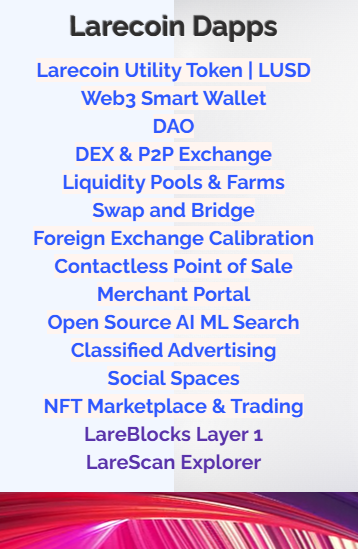
Contactless crypto POS systems
LUSD stablecoin for price-stable transactions
Gas-only transfers that minimize costs
Push-to-card for instant fiat off-ramps
Complete merchant portal with real-time analytics
This isn't an incremental improvement. It's a paradigm shift.
The Real Cost of Doing Nothing
Let's do quick math.
A business processing $500,000 annually at 2.5% interchange pays $12,500 in fees.
Cut that by 50% with Web3 payments? That's $6,250 back in your pocket. Every year.
Scale that to $1 million in processing. $2 million. The numbers get serious fast.
And we haven't even counted:
Faster settlements improving cash flow
Eliminated chargeback fraud
Reduced accounting overhead with NFT receipts
Global market access without currency penalties
The merchants who move first capture the advantage.

Ready to Reduce Merchant Interchange Fees?
The payment landscape is splitting.
One path: Keep paying 2-3% on every transaction. Keep waiting for settlements. Keep hoping your processor doesn't freeze your account at the worst possible moment.
Other path: Bank-free business operations. Self-custody. Transparent fees. Instant global payments.
Larecoin is building that second path.
The merchants who figure this out first? They're not just saving money. They're building competitive moats their competitors can't cross.
Seven mistakes. Seven fixes.
The question isn't whether Web3 payments will dominate merchant processing.
The question is whether you'll be ahead of that curve: or scrambling to catch up.
Check out our latest updates or explore how Larecoin's ecosystem can transform your payment infrastructure.
Comments