

.png)
7 Mistakes You're Making with NFT Receipts for Accounting (And How Larecoin Fixes Them)
![Writer: [[[Free!!]<<<<]] Watch: 스포르팅 - 토트넘 Live Stream 13 September 2022](https://lh3.googleusercontent.com/a/AItbvmktwQc0wCdd3ZEETSYItRQubwwBzOyjD_dcigRf=s96-c)
Tax season hits different when you're running crypto payments.
Your accountant charges $150/hour to reconcile messy transaction records. The IRS automated matching system catches every discrepancy between your filings and exchange reports. And traditional processors like NOWPayments and CoinPayments? They confirm payment but leave you drowning in spreadsheets.
NFT receipts change everything.
Here are the seven accounting disasters merchants face: and how Larecoin's blockchain-based receipt system eliminates them completely.
Mistake #1: Not Tracking Every Single Transaction
The Problem: Every crypto transaction is taxable. No exceptions.
Merchants skip reporting small trades, cross-wallet transfers, or gas fee payments. The IRS doesn't care about transaction size. Their automated systems flag inconsistencies between what you report and what exchanges submit on Form 1099-DA.
Missing a $50 LUSD payment? Audit risk.

How Larecoin Fixes It: Every transaction generates an immutable NFT receipt on Solana.
The blockchain captures it automatically. No manual entry. No forgotten transfers. Your complete payment history lives permanently on-chain with exact timestamps, amounts, and wallet addresses.
Zero gaps. Zero guesswork. Zero audit flags.
Mistake #2: Losing Cost Basis Documentation
The Problem: Cost basis tracking destroys merchant accounting.
You bought crypto at $40k Bitcoin. Sold services at $65k Bitcoin. What's your taxable gain? Traditional payment processors don't track this. NOWPayments processes the payment but doesn't capture purchase price, holding period, or applicable tax rate.
Result? Accountants spend hours reconstructing historical data you should've captured automatically.
How Larecoin Fixes It: NFT receipts lock in cost basis at transaction moment.
Each receipt records:
Purchase price in USD
Crypto amount received
Fair market value timestamp
Holding period start date
Applicable tax treatment
Your accountant imports this data directly into tax software. No reconstruction. No estimates. No $150/hour reconciliation fees.
Mistake #3: Manual Reconciliation Errors
The Problem: CoinPayments and NOWPayments force manual reconciliation between gross and net income.
They charge 0.5-1% per transaction. You receive payment minus fees. Your accounting software sees gross revenue. The mismatch creates reconciliation nightmares every quarter.
Merchants waste 6-8 hours monthly reconciling payment processor fees with actual deposits.
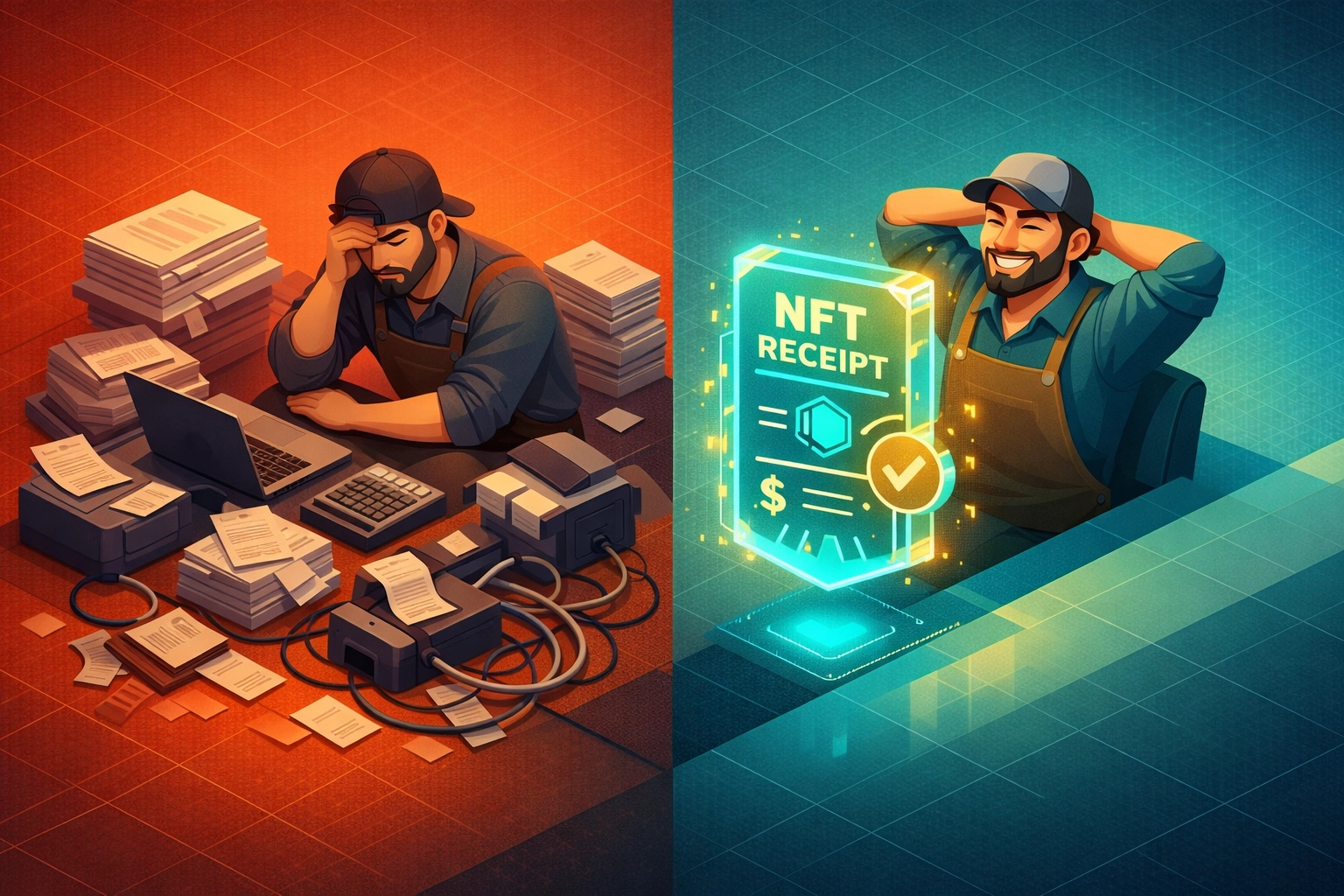
How Larecoin Fixes It: Gas-only LUSD transfers eliminate platform fees entirely.
You pay Solana network gas (typically $0.00025). No percentage cuts. No hidden charges. No fee reconciliation required.
Your NFT receipt shows exact amount sent equals exact amount received. One number. Perfect reconciliation. Every time.
Mistake #4: Missing Fair Market Value Timestamps
The Problem: The IRS requires contemporaneous fair market value documentation.
You can't estimate. You can't remember. You need proof of what your crypto was worth at the exact transaction second.
Traditional receipts don't capture this. Email confirmations show payment received but not USD equivalent at transaction time. When crypto swings 5% daily, this creates massive tax compliance gaps.
How Larecoin Fixes It: NFT receipts embed price oracle data at transaction moment.
Each receipt includes:
Exact timestamp (down to the second)
LUSD/USD exchange rate
Crypto market price at execution
Blockchain-verified pricing source
Your documentation proves fair market value without third-party valuation services or expensive forensic accounting.
Mistake #5: Inadequate Audit Trail Documentation
The Problem: Payment gateways confirm payment. They don't create audit trails.
The IRS wants to see:
What service you provided
When payment cleared
What income category applies
Supporting documentation linking payment to invoice
NOWPayments gives you a transaction ID. That's it.
When auditors request proof of income source three years later, you're scrambling through email archives matching payments to invoices manually.

How Larecoin Fixes It: NFT receipts combine payment, invoice, and service description in one immutable record.
Each receipt stores:
Item/service description
Invoice number
Payment terms
Customer wallet identifier
Complete transaction metadata
Everything an auditor needs lives permanently on-chain. Retrieve it instantly. Forever.
Mistake #6: Misclassifying NFT Assets
The Problem: NFTs have zero specific guidance under U.S. GAAP.
Are your NFT receipts inventory? Intangible assets? Collectibles subject to 28% capital gains rates?
Merchants misclassify constantly. The difference between ordinary income and capital gains treatment changes your tax liability by 15-20%.
Traditional processors don't classify transactions. You're guessing. Your accountant bills you to fix it.
How Larecoin Fixes It: NFT receipts carry embedded classification metadata.
The system tags each receipt by transaction type:
Business income (ordinary rates)
Payment receipt (non-taxable event)
Service exchange (barter treatment)
Asset transfer (capital treatment)
Your accounting software imports these classifications automatically. No manual categorization. No expensive CPA consultations every tax season.
Mistake #7: Paying for Expensive Accounting Software Integration
The Problem: Traditional crypto payment processors require middleware to integrate with QuickBooks, Xero, or FreshBooks.
NOWPayments offers API access. You hire developers to build custom integrations. CoinPayments charges extra for accounting software plugins. The whole process costs $2,000-5,000 upfront plus ongoing maintenance.
Small merchants eat these costs or reconcile manually forever.
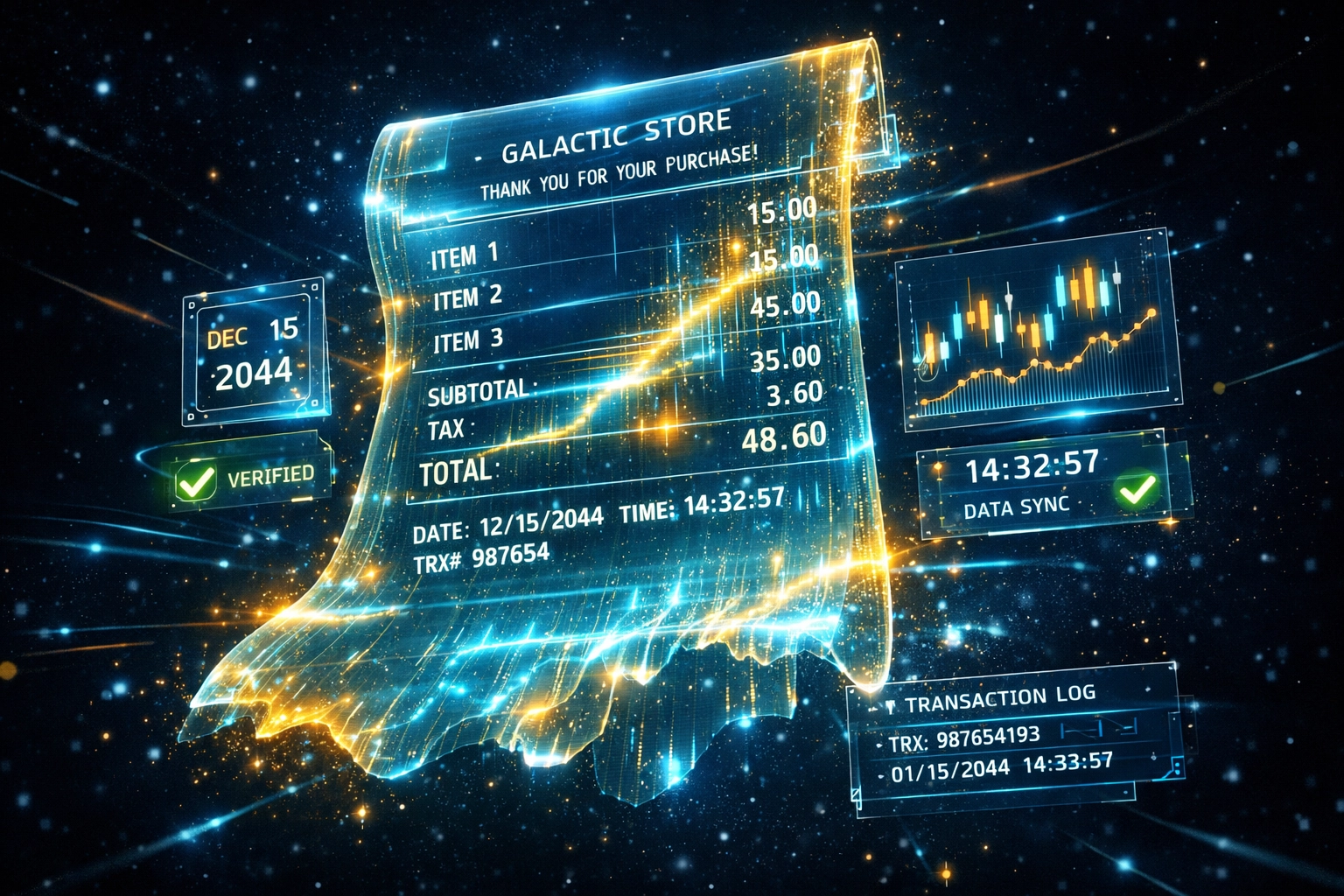
How Larecoin Fixes It: NFT receipts are self-documenting data structures accounting software reads natively.
Export your transaction history as CSV, JSON, or direct blockchain query. Import into any modern accounting platform without middleware, plugins, or custom development.
The blockchain IS your accounting database. Your software just reads it.
Total integration cost? Zero dollars.
The Self-Custody Advantage
Traditional payment processors control your transaction data.
NOWPayments stores it on their servers. CoinPayments owns your payment history. If they shut down, get hacked, or change terms: your accounting records vanish.
Larecoin NFT receipts live on Solana permanently.
No company controls them. No platform can delete them. Your financial records exist independently of any payment processor's business model or survival.
True merchant independence. True data ownership.

Real Numbers: Fee Comparison
CoinPayments:
0.5% transaction fee
$10,000 monthly volume = $50 in fees
Annual cost: $600
NOWPayments:
0.5-1% transaction fee
$10,000 monthly volume = $50-100 in fees
Annual cost: $600-1,200
Larecoin:
Gas-only transfers (typically $0.00025 per transaction)
$10,000 monthly volume = ~$0.30 in fees
Annual cost: ~$3.60
Plus you get permanent NFT receipt documentation automatically. No extra charge. No accounting software fees. No reconciliation costs.
The savings compound monthly.
Making the Switch
Merchants switching to Larecoin report 4-6 hours saved monthly on accounting reconciliation.
That's $600-900 in recovered time at typical bookkeeper rates. The NFT receipt system eliminates most common audit triggers automatically. And your accountant stops charging emergency rates every tax deadline.
The math is simple.
Traditional processors charge percentage fees and leave you with accounting headaches. Larecoin charges gas-only and hands you audit-ready documentation automatically.
Your business. Your records. Your control.
Visit larecoin.com to see how NFT receipts transform merchant accounting from expensive chaos into automated compliance.
The future of crypto payments isn't just lower fees.
It's eliminating accounting problems before they start.
Comments