

.png)
AI-Powered Shopping Meets Community Hubs: 7 Ways Larecoin's B2B2C Metaverse Beats Legacy E-Commerce
- [[[Free!!]<<<<]] Watch: 스포르팅 - 토트넘 Live Stream 13 September 2022
- 2 hours ago
- 5 min read
![Writer: [[[Free!!]<<<<]] Watch: 스포르팅 - 토트넘 Live Stream 13 September 2022](https://lh3.googleusercontent.com/a/AItbvmktwQc0wCdd3ZEETSYItRQubwwBzOyjD_dcigRf=s96-c)
Legacy e-commerce is dead.
Not dying. Dead.
You know the drill: static product pages. Solitary browsing. Clicking through endless menus. Zero community. Zero excitement.
Larecoin's B2B2C metaverse flips that script entirely. We're talking AI-powered shopping experiences where customers browse together, merchants eliminate hardware costs, and every transaction becomes a digital asset.
Here's exactly how the future of commerce destroys the old model.
1. Social Shopping Replaces Solo Scrolling
Traditional e-commerce? You're alone. Clicking buttons. Reading reviews from strangers. Guessing if that jacket actually looks good.
Larecoin's metaverse changes everything.
Group shopping experiences in virtual spaces. Your friends join your session. You see what they're browsing. They see your reactions. Real-time collaboration on purchase decisions.
Merchants report 3x higher engagement rates compared to standard online stores.
Why? Because shopping was always meant to be social.
Think about it: physical retail worked because you brought friends. You tried things on together. You got immediate feedback.
Legacy e-commerce killed that experience. Metaverse commerce brings it back.
Plus AI-powered recommendations based on group preferences. The system learns what your shopping crew likes. Suggests complementary items. Creates curated experiences nobody could build manually.

2. One Dashboard Rules Them All
Running multiple storefronts used to mean juggling multiple platforms.
Physical POS system. Online store platform. Third-party payment processor. Inventory management software. Accounting tools.
Each one with its own login. Its own fees. Its own reconciliation nightmare.
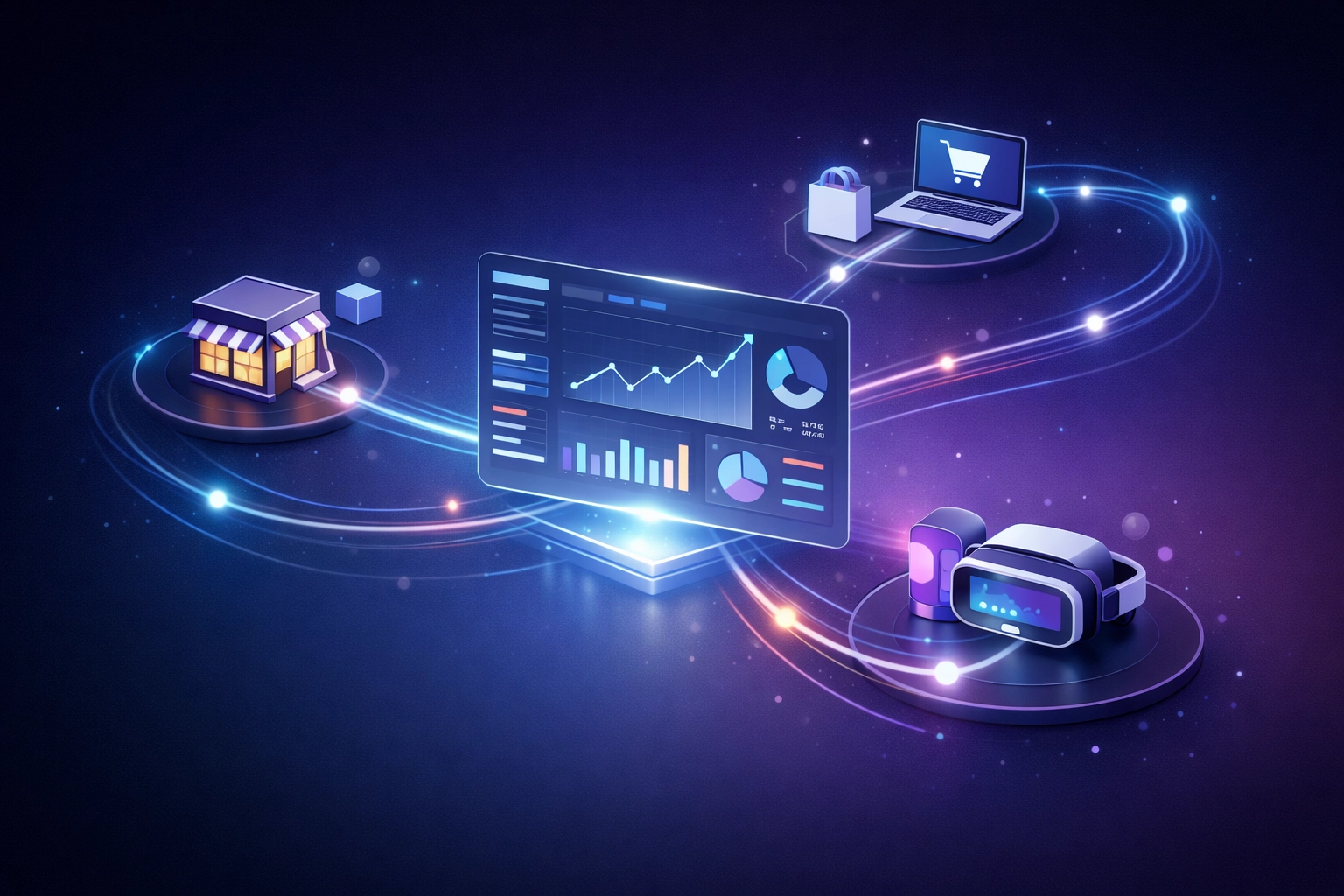
Larecoin's master/sub-wallet system consolidates everything.
Physical retail locations. Online storefronts. Metaverse shops. All managed from one dashboard.
Unlimited locations. Single interface.
Update inventory once: it syncs everywhere. Run promotions across all channels simultaneously. View consolidated analytics without export/import gymnastics.
No more platform-hopping. No more data silos.
And here's the kicker: add new locations or virtual storefronts in minutes. Not weeks. Not after vendor negotiations.
Minutes.
3. Hardware-Free Point of Sale
Traditional POS terminals cost thousands upfront. Plus monthly fees. Plus processing percentages. Plus "maintenance."
Larecoin eliminates all of it.
QR-generated POS systems replace expensive hardware. Customers scan codes with their crypto wallets. Payments clear instantly.
Works everywhere:
Physical counters
Pop-up shops
Events and festivals
VR checkout stations
Mobile vendors
Zero terminals. Zero contracts. Zero monthly fees.
Just generate a QR code. Customer scans. Transaction completes.
The system works identically whether you're at a brick-and-mortar store, a music festival booth, or a virtual metaverse storefront.
Same checkout flow. Same instant settlement. Dramatically different cost structure.
4. Fees Drop Over 50%
Let's talk numbers.
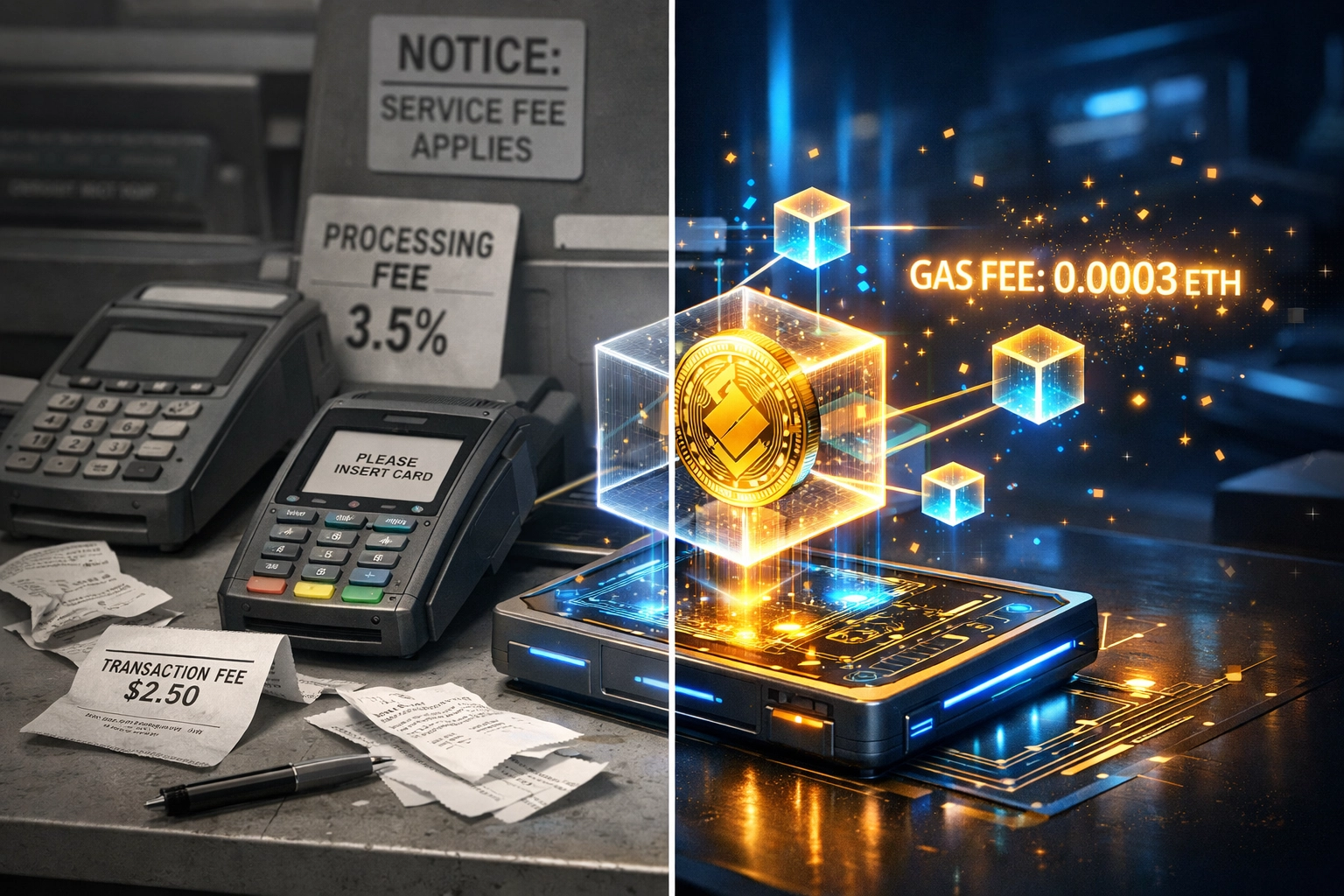
Legacy payment processors charge 2.9% + $0.30 per transaction. Sometimes more for international cards. Sometimes currency conversion fees on top.
Then settlement takes 2-3 days. Sometimes longer.
Larecoin uses gas-only transfers. Processing fees drop over 50% compared to traditional processors.
No percentage cuts. No hidden fees. No "international transaction" surcharges.
Just minimal gas fees to process on LareBlocks Layer 1.
Settlement? Instant. Not instant as in "same day." Instant as in seconds.
The merchant portal shows cleared funds immediately. Push-to-card features enable instant liquidity to traditional bank accounts if needed.
For high-volume merchants, the savings are massive. For small businesses, it's the difference between profitability and struggle.
5. Immersive Virtual Storefronts Replace Flat Websites
Product photos on white backgrounds? Done.
"Add to cart" buttons? Obsolete.
VR and AR shopping environments create actual experiences.
Customers use avatars to browse virtual aisles. Try on apparel digitally using their actual measurements. Preview furniture in their real living room via AR.
The platform supports:
Meta Quest headsets
Apple Vision Pro
Mobile AR on phones
Desktop browsers
Same consistent checkout across all devices.
Physical stores have atmosphere. Lighting. Layout. Merchandising that guides behavior.
Legacy e-commerce websites have... buttons.
Larecoin's metaverse storefronts restore that environmental design. Merchants create spaces that reflect brand identity. Customers explore rather than scroll.
Plus AI-powered virtual shopping assistants. They learn customer preferences. Answer questions conversationally. Suggest products based on browsing behavior across the entire ecosystem.

6. NFT Receipts as Functional Digital Assets
Most receipts end up crumpled in wallets. Or deleted from inboxes.
Larecoin turns every transaction into an NFT receipt.
These aren't collectibles. They're functional digital assets.
Verify product authenticity instantly. Prove ownership for warranties. Access exclusive drops for repeat customers. Unlock loyalty benefits automatically.
For customers: proof of purchase that can't be lost or forged.
For merchants: built-in authenticity verification. Automated loyalty programs. Future marketing opportunities to proven buyers.
Plus blockchain transparency for tax purposes. Every transaction verifiable. Every receipt immutable.
Accountants love it. Auditors love it. The IRS can't argue with blockchain records.
And customers who actually care about authenticity: sneakerheads, luxury goods buyers, electronics enthusiasts: get verifiable proof their product is legitimate.
7. Self-Custody Means Actual Control
Traditional e-commerce platforms hold your money. Payment processors hold your money. Banks hold your money.
Everyone holds your money except you.
Larecoin merchants maintain direct control through self-custody wallets.
Your funds. Your keys. Your control.
No custodial risk. No frozen accounts. No "we're investigating unusual activity" lockouts during your biggest sales period.
Instant liquidity through push-to-card features. Move funds to traditional bank accounts on your schedule. Not when a processor decides to release your money.
No hidden fees. No sudden policy changes. No Terms of Service updates that add new restrictions.
Plus the master/sub-wallet architecture means enterprise-level security with individual accountability. Assign specific wallet permissions to specific employees. Track exactly who processed what.
The Legacy E-Commerce Problem
Here's what traditional platforms can't fix:
Isolation. Every customer browses alone.
Complexity. Multiple platforms for multiple channels.
Hardware costs. Terminals, registers, card readers.
Processing fees. Death by a thousand percentage cuts.
Static experiences. Product photos haven't evolved in 20 years.
Temporary receipts. Paper trash or forgotten emails.
Custodial control. Your money, their vault.
Incremental improvements won't solve structural problems.
Why Metaverse Commerce Wins
Larecoin's B2B2C platform isn't e-commerce 2.0.
It's a completely different category.
Social by default. Unified by design. Hardware-free by architecture. Cost-efficient through blockchain. Immersive through VR/AR. Asset-generating via NFTs. Self-custodial for merchant control.
Every piece reinforces the others.
The merchant portal managing multi-channel operations connects directly to the same system powering metaverse storefronts. The QR-generated POS uses the same infrastructure as virtual checkout. The NFT receipts work identically whether you bought in-person, online, or in VR.
This is how commerce actually works when you build it on Web3 infrastructure from day one.
Not bolting crypto payments onto legacy platforms. Not adding a "metaverse option" to standard e-commerce.
Building the entire stack around decentralized architecture, community experiences, and merchant empowerment.
What This Means for Merchants
Lower costs. Higher engagement. Complete control.
That's not marketing speak. Those are the actual operational benefits.
You reduce processing fees by over 50%. You triple engagement rates through social shopping. You eliminate hardware costs entirely. You consolidate platform management. You maintain custody of your funds.
Plus you're building on infrastructure designed for the next decade. Not retrofitting 1990s e-commerce models with crypto stickers.
Want to see it in action? The Larecoin merchant portal is live. The metaverse storefronts are operational. The QR POS system is processing transactions right now.
Check out the ecosystem and see how merchants are already operating in the future.
Legacy e-commerce had its run.
Time to upgrade.
Comments