

.png)
Are Traditional Payment Networks Dead? Why Web3 Global Payments and Receivables Tokens Are the Future in 2026
- [[[Free!!]<<<<]] Watch: 스포르팅 - 토트넘 Live Stream 13 September 2022
- 2 hours ago
- 5 min read
![Writer: [[[Free!!]<<<<]] Watch: 스포르팅 - 토트넘 Live Stream 13 September 2022](https://lh3.googleusercontent.com/a/AItbvmktwQc0wCdd3ZEETSYItRQubwwBzOyjD_dcigRf=s96-c)
The Payment Network Reality Check
Traditional payment networks aren't dead.
But they're bleeding merchants dry.
Half the world's consumer payments still run through card networks in 2026. That's a milestone. But it's also a problem.
Those networks charge 2-3% per transaction. Sometimes more. Every single time.
For a business doing $500K annually? That's $15,000 vanishing into interchange fees. Gone.
The Multi-Rail Mess Nobody Talks About
Banks are building "multi-rail architectures." Fancy term for routing payments through different systems.
FedNow. SWIFT. Card networks. Real-time payment systems.
Each rail has rules. Fees. Settlement times. Regulatory constraints.
The result? Fragmentation.
Businesses need multiple payment processors. Multiple accounts. Multiple reconciliation headaches.
Mastercard launches commercial products. SWIFT pilots tokenized transfers. Visa supports 130+ stablecoin programs.
It's evolution. Not innovation.
Why Web3 Payments Are Different (Not Just Hype)
Web3 global payments solve the core problem traditional networks can't touch.
Ownership.
When you accept a Visa payment, you don't own the infrastructure. You rent access. You follow their rules. Pay their fees.
With Larecoin and Web3 payments, merchants control the rails.
Self-custody merchant accounts mean your funds sit in wallets you control. No intermediary freeze risk. No surprise account holds.
Real-time settlement. Not 2-3 business days. Seconds.
Global by default. No cross-border fee markups. No currency conversion gouging.
This isn't about replacing traditional networks. It's about giving merchants a choice they never had before.
Receivables Tokens: Your Money, Your Asset
Here's where it gets revolutionary.
Receivables tokens transform outstanding invoices into tradable digital assets.
Think about it. A business has $50K in receivables coming in 30-60 days. That's dead capital. Can't spend it. Can't invest it.
Traditional factoring? You sell those invoices at 3-5% discount. Minimum.
With receivables tokens on Web3 infrastructure, you tokenize those invoices. Trade them. Use them as collateral. Access liquidity instantly.
Larecoin's receivables token system lets merchants convert future payments into present capital without predatory discounts.
You maintain custody. You set terms. You capture value.
The Technical Edge: NFT Receipts and LUSD
Let's talk specifics.
NFT Receipts for Accounting
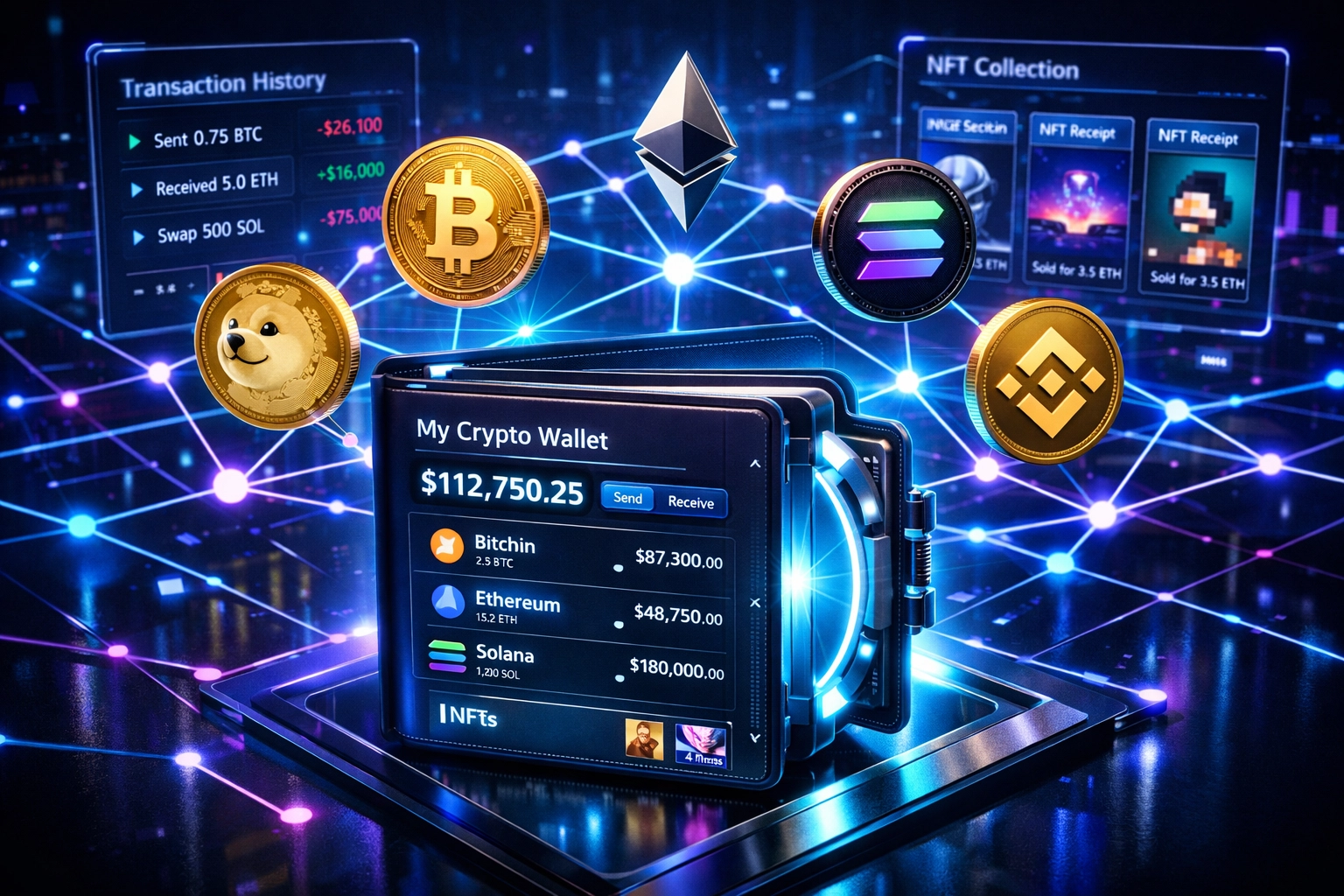
Every transaction generates an NFT receipt. Immutable. Timestamped. Verifiable.
Tax season? Export your NFT receipt history. Done.
Audit? Provide cryptographic proof of every transaction. Unforgeable.
Traditional receipt systems rely on databases. Databases get hacked. Altered. Lost.
NFT receipts live on-chain forever. Accountants love this. So does the IRS.
LUSD Stablecoin Benefits
Price volatility kills crypto adoption for merchants. Nobody wants Bitcoin payment worth $100 today and $85 tomorrow.
LUSD solves this. Decentralized stablecoin. Overcollateralized. No central issuer risk.
Unlike USDC (Circle controls it) or USDT (opaque reserves), LUSD maintains stability through collateralized debt positions.
For merchants, this means stable value. No surprise devaluations. No frozen funds from centralized issuers.
Accept LUSD. Know exactly what you're getting.
Self-Custody Merchant Accounts
Most crypto payment processors hold your funds. You're trusting their security. Their compliance. Their business continuity.
Larecoin's self-custody model means your wallet, your keys, your crypto.
Integration takes minutes. Smart contracts handle conversion. Funds hit your wallet directly.
Zero counterparty risk. Zero trust assumptions beyond the blockchain itself.
Competitor Reality Check: NOWPayments vs CoinPayments vs Triple-A
Let's compare real alternatives.
NOWPayments
Supports 200+ cryptocurrencies. Seems great.
But custody model? They hold funds temporarily. Settlement delays exist. Fees hit 0.5% plus network costs.
No receivables tokenization. No NFT receipts. No LUSD integration.
It's crypto acceptance. Not Web3 infrastructure.
CoinPayments
Established player. 2 million+ merchants claimed.
Problems? Custodial wallet system. KYC requirements that mirror traditional banking. Withdrawal limits.
Fees range 0.5-1%. Better than cards. Still extractive.
Zero innovation in merchant cash flow management. Accept crypto, convert to fiat. That's it.
Triple-A
B2B focus. Enterprise clients.
Strengths: Regulatory compliance. Fiat settlement options.
Weaknesses: Centralized architecture. No self-custody. Traditional payment mindset with crypto bolted on.
Merchants remain renters, not owners.
Larecoin's Difference
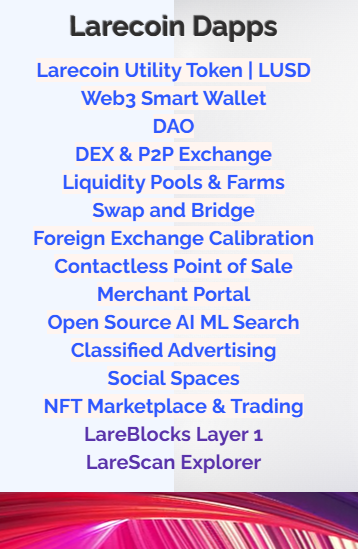
Web3-native from ground up. Self-custody default. Receivables tokenization built-in. NFT receipts standard.
LUSD integration for stability without centralization risk.
Gas-only transfer fees. No percentage cuts. No hidden charges.
True financial sovereignty, not just crypto acceptance.
Slashing Merchant Fees: The 50%+ Reality
Do the math.
Traditional payment processing: 2-3% per transaction.
Larecoin's Web3 global payments: Gas fees only. Typically $0.50-$2.00 per transaction regardless of size.
For a $1,000 sale:
Traditional: $20-$30 in fees
Larecoin: ~$1 in gas
That's 95%+ reduction.
Even for small transactions, the savings compound fast.
$50 sale on traditional networks: $1-$1.50 in fees. Still 2-3%.
$50 sale on Larecoin: Same ~$1 gas fee. 2% instead of 3%.
For high-volume merchants, this difference is existential. Not incremental.
A restaurant doing 500 transactions daily saves $10K+ monthly switching to Web3 payments.
That's hiring another employee. Or actually keeping profits.
Global Reach Without Permission
Traditional international payments hit walls.
Currency controls. Banking relationships. Compliance headaches. 3-7% cross-border fees.
Web3 payments ignore borders. Peer-to-peer by design.
A merchant in Brazil accepts payment from customer in Japan. Same experience as local transaction. Same fees. Same settlement speed.
No intermediary banks extracting rent. No SWIFT delays. No surprise holds for "suspicious" international activity.
For e-commerce businesses, this unlocks markets previously too expensive to serve.
Bank-Free Business Operations
The boldest shift: You don't need a bank account to accept payments.
Traditional business advice: Open business checking. Get merchant account. Pay monthly fees. Maintain minimums.
Web3 reality: Create wallet. Share address. Accept payments. Control funds.
Zero monthly fees. No minimum balances. No account approval process.
For unbanked entrepreneurs globally, this isn't convenience. It's access.
For established businesses, it's redundancy. Bank issues? You still operate. Payment rails diversified.

The Composable Future
Traditional networks will survive. They'll evolve. Add blockchain integrations. Support stablecoins.
But they'll remain extractive. Centralized. Permission-based.
Web3 global payments offer different model. Complementary, not competitive.
Smart merchants use both. Traditional rails for customers who demand it. Web3 infrastructure for everyone else.
The crypto POS system for small business isn't coming. It's here. Larecoin's contactless POS integrates Web3 payments into physical retail seamlessly.
QR codes. NFC. Traditional checkout flow. Web3 backend.
What Happens Next
2026 is inflection point.
Regulatory clarity arrived. The U.S. GENIUS Act enables innovation. Other jurisdictions following.
Stablecoin adoption accelerating. Not replacing dollars. Digitizing them.
Tokenization moving from buzzword to infrastructure layer.
Merchants who adapt now capture first-mover advantage. Lower fees. Better cash flow. Financial sovereignty.
Those waiting for traditional networks to fix themselves? Still bleeding fees. Still renting infrastructure.
Still powerless.
Take Action
Explore Larecoin's Web3 global payment solution at larecoin.com.
Set up self-custody merchant account in minutes. Start accepting LUSD. Generate NFT receipts automatically.
Join merchants already saving 50%+ on payment processing.
Or keep paying interchange fees to networks that never prioritized your success.
Your business. Your choice. Your infrastructure.
The future isn't replacing traditional payments. It's owning your payment rails.
That future is now.
Comments