

.png)
Are Traditional Payment Processors Dead? How Receivables Tokens Unlock Real Merchant Independence (And Why NOWPayments Can't Compete)
- [[[Free!!]<<<<]] Watch: 스포르팅 - 토트넘 Live Stream 13 September 2022
- 2 hours ago
- 5 min read
![Writer: [[[Free!!]<<<<]] Watch: 스포르팅 - 토트넘 Live Stream 13 September 2022](https://lh3.googleusercontent.com/a/AItbvmktwQc0wCdd3ZEETSYItRQubwwBzOyjD_dcigRf=s96-c)
Traditional payment processors are bleeding merchants dry.
Every swipe. Every transaction. 2.9% + $0.30 gone.
It's 2026. The old guard is crumbling. And a new paradigm is rising.
The Death Spiral of Traditional Payment Processing
Legacy processors had their moment.
Visa. Mastercard. The entire card network infrastructure.
But here's what they won't tell you: merchants are subsidizing a bloated, outdated system that extracts value instead of creating it.
Interchange fees average 2-3% per transaction. For high-risk merchants? Try 4-6%.
Those margins add up fast:
$100,000 in monthly revenue = $2,900 in fees
$1,000,000 annually = $29,000 gone
Scale that across years? Hundreds of thousands lost to middlemen
And for what? Processing speed that Web3 already matches. Security that blockchain does better. Convenience that crypto wallets now provide seamlessly.
Traditional processors offer nothing innovative. Just the same extractive model wrapped in slightly better UX.
The dominance is over.

Enter Receivables Tokens: The Merchant Liberation Model
Receivables tokens represent a fundamental shift.
Not just another payment method. A completely new ownership structure.
Here's how they work:
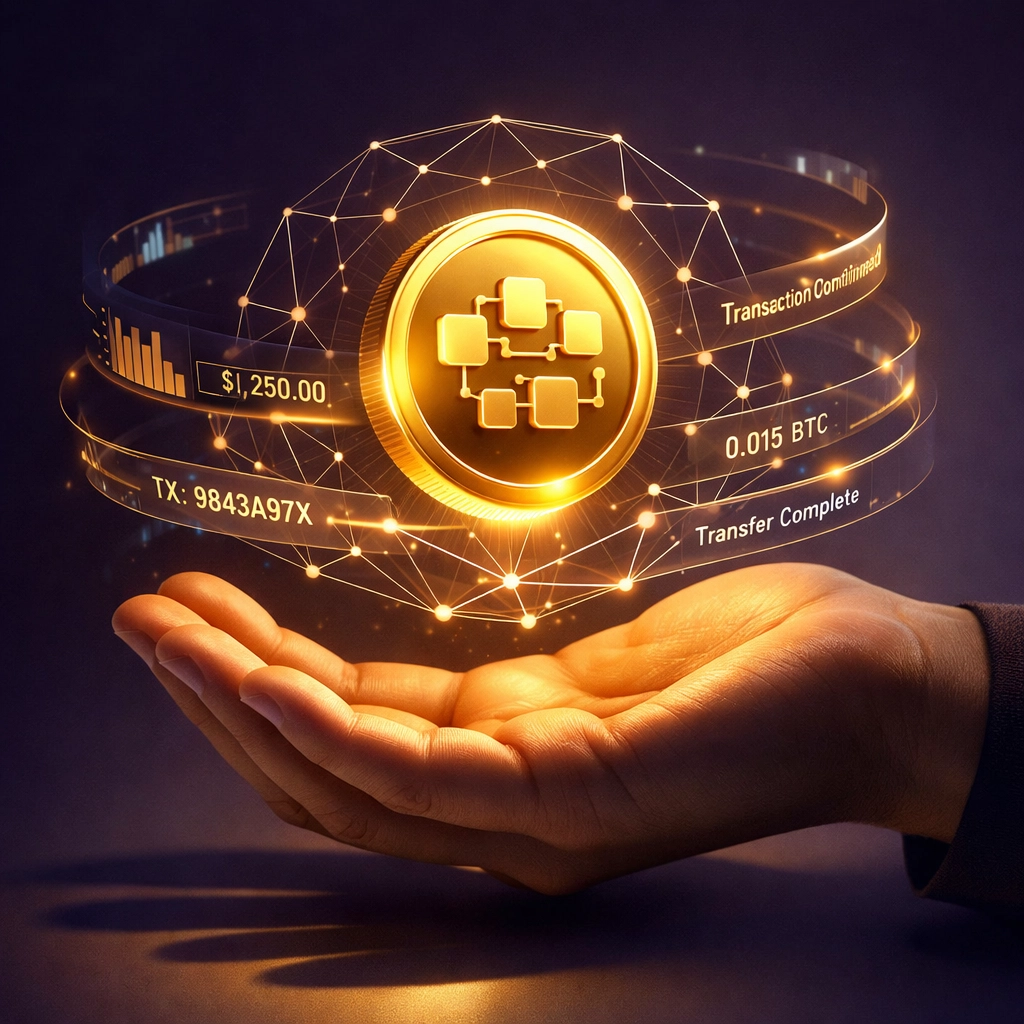
Instead of payments flowing through custodial processors, merchants tokenize their receivables on-chain. Each transaction becomes a digital asset: traceable, tradeable, and entirely controlled by the merchant.
Think of it as turning your payment infrastructure into liquid capital.
Benefits stack fast:
Real ownership - Your receivables. Your keys. Your control.
Instant liquidity - Tokenize today's sales. Access capital tomorrow.
Programmable money - Smart contracts automate reconciliation, refunds, and accounting.
Transparent fees - No hidden costs. Just gas fees and what you see on-chain.
Larecoin built this model from the ground up.
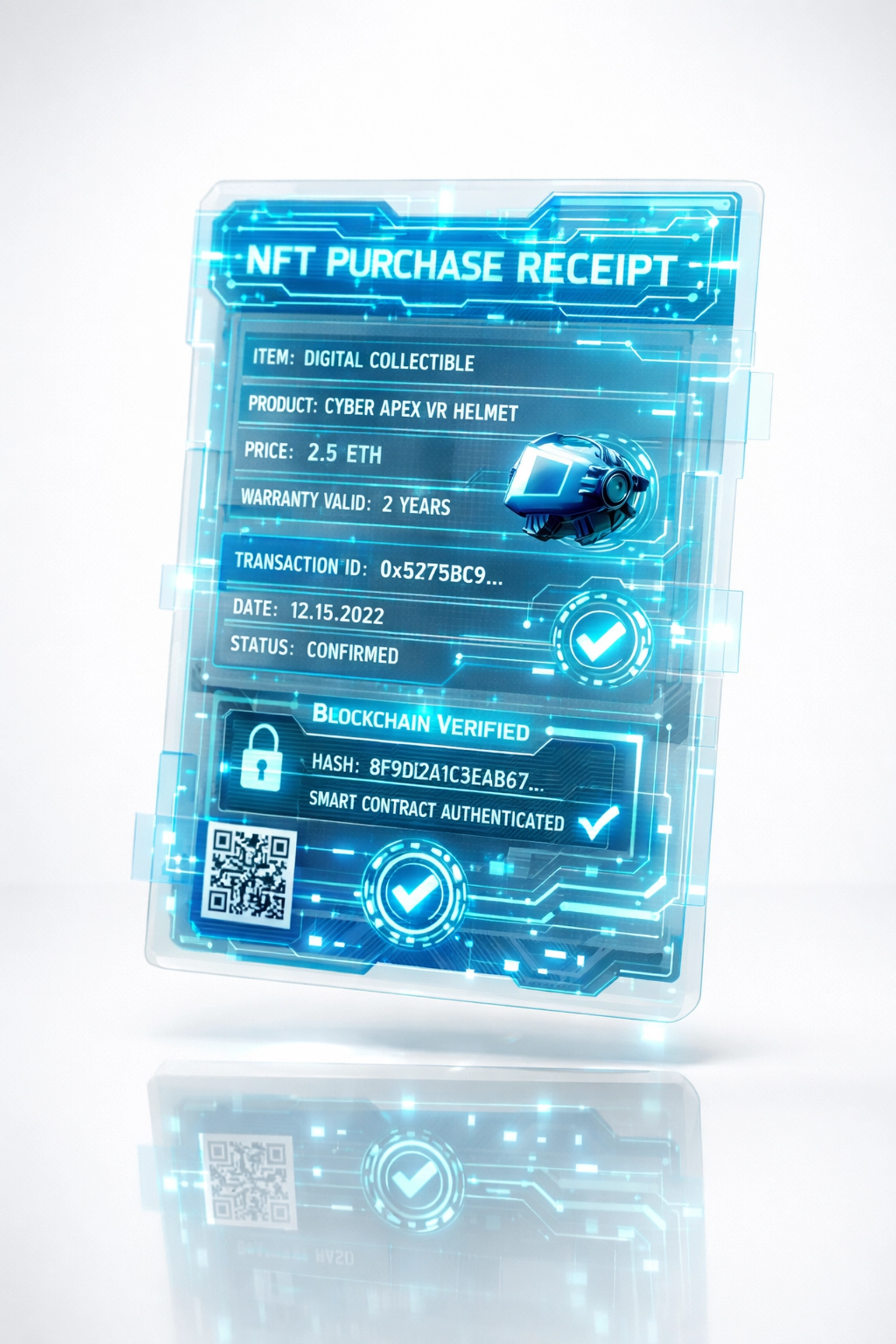
Every payment generates a receivables token. Every token is an NFT receipt with embedded transaction data. Every merchant owns their entire payment history: forever.
Compare that to traditional processors who own your data, control your funds, and can freeze your account on a whim.
There's no comparison.
How Larecoin Slashes Fees 50%+ (While Traditional Processors Can't)
Let's talk numbers.
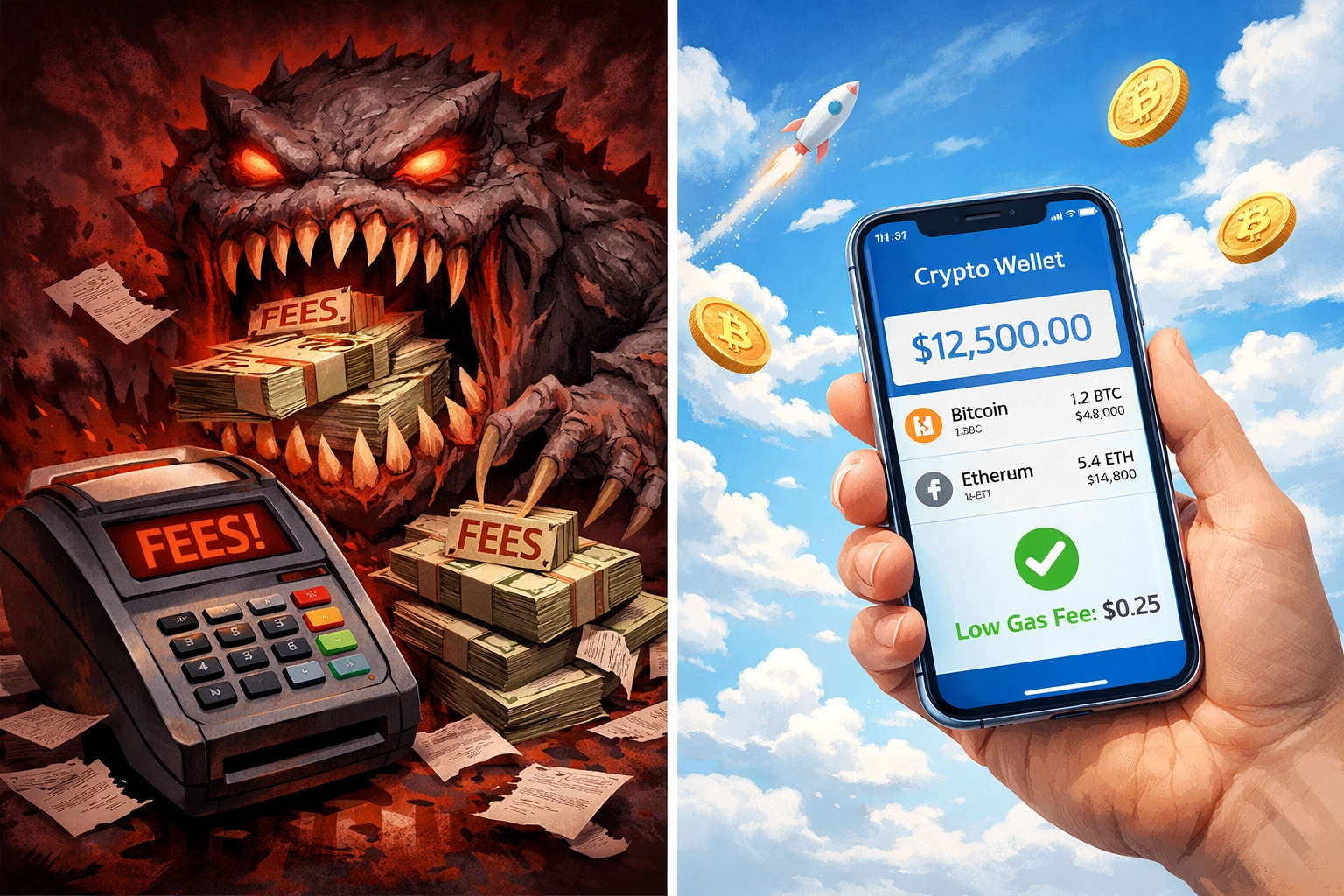
Traditional processor: 2.9% + $0.30 per transaction.
Larecoin: Gas fees only. Typically $0.01-0.05 per transaction on Solana.
For a $100 transaction:
Traditional processor: $3.20 in fees
Larecoin: $0.03 in gas
That's a 98% reduction.
Even accounting for stablecoin conversion and bridging costs, merchants save 50-70% compared to legacy rails.
Why the massive difference?
No middlemen. No card networks. No banks taking their cut.
Just peer-to-peer, blockchain-verified transactions with cryptographic security baked in.
Merchants keep what they earn. Novel concept, right?
The LUSD Advantage: Stability Without Centralized Control
Volatility kills merchant adoption.
You can't run a business on assets that swing 10% daily.
That's why Larecoin integrated LUSD: a truly decentralized, over-collateralized stablecoin.
Why LUSD beats USDC and USDT:
Decentralization LUSD is algorithmic. No company controls it. No bank accounts to freeze. No regulatory blacklist risk.
Over-Collateralization Every LUSD is backed by 110%+ collateral in ETH. If the peg breaks, the protocol automatically liquidates positions to restore it.
Censorship Resistance USDC froze $75,000 in addresses in 2023. USDT has blocked over 500 addresses. LUSD? Can't be frozen. Ever.
For merchants, this means:
Price stability of a stablecoin
Security of true decentralization
Zero counterparty risk
Accept crypto payments in LARE. Convert to LUSD instantly. Hold value without trusting Tether or Circle.
That's merchant independence.
NFT Receipts: Utility Beyond Marketing Gimmicks
Everyone's doing NFTs wrong.
Collectibles. Art. Profile pictures.
Larecoin uses NFTs for actual utility: immutable transaction records.
Every payment generates an NFT receipt containing:
Transaction amount and timestamp
Merchant and customer wallet addresses
Product/service metadata
Warranty information
Return/refund status
Benefits for merchants:
Audit-ready accounting - Every sale permanently recorded on-chain
Automated warranty tracking - NFT proves purchase date and terms
Fraud prevention - Cannot fake or duplicate blockchain-verified receipts
Customer loyalty programs - Reward wallets with provable purchase history
Benefits for customers:
Proof of purchase - Lost email? No problem. Your wallet holds the receipt NFT.
Resale authenticity - Selling something secondhand? Transfer the NFT to prove it's legit.
Digital ownership - Actually own your purchase history instead of trusting merchant databases
Traditional processors offer… a PDF receipt in your email.
Larecoin offers permanent, portable, programmable proof of every transaction.
One creates value. One extracts it.
Why NOWPayments Can't Compete (And Doesn't Even Come Close)
NOWPayments markets itself as a crypto payment gateway.
They're not.
They're a custodial middleman wearing crypto clothing.
Here's what they won't tell you:
1. They Control Your Funds Every payment flows through NOWPayments' wallets first. You don't get paid directly. You get paid when they decide to process the payout.
Larecoin? Direct peer-to-peer. Your wallet receives funds instantly.
2. Hidden Fees Everywhere "0.5% transaction fee" sounds great. Until you realize:
Exchange rate markups (1-3%)
Withdrawal fees
Conversion fees
Network fees they pass to you
Effective cost? Often 2%+.
Larecoin? Gas only. No hidden markups. What you see is what you pay.
3. No Real Innovation NOWPayments is just an API between merchants and existing blockchain networks. They add a centralized layer on top of decentralized tech.
That's not Web3. That's Web2 with crypto bolted on.
Larecoin? Native blockchain infrastructure. Receivables tokens. NFT receipts. LUSD integration. Self-custody by design.
4. You Don't Own Anything Close your NOWPayments account? Your transaction history disappears. Your customer data? Controlled by them. Your payment infrastructure? Rented, not owned.
Larecoin? Every transaction lives on-chain forever. You own your receivables tokens. You control your payment history. You hold your customer relationships.
Self-Custody: The Non-Negotiable Foundation of Real Independence
Not your keys, not your crypto.
Not your wallet, not your payments.
Traditional processors hold merchant funds in pooled accounts. One regulatory change, one bank closure, one executive decision: and your business is frozen.
Crypto processors like NOWPayments do the same thing. Just with crypto instead of fiat.
Larecoin refuses to touch your funds.
Every merchant operates their own wallet. Every payment hits that wallet directly. Every receivables token sits in custody of the merchant who earned it.
Self-custody means:
No one can freeze your account
No one can seize your funds
No one can censor your transactions
No one can dictate your business model
This isn't philosophical. It's practical.
Merchants using PayPal or Stripe have lost access to six-figure balances overnight for vague "terms of service" violations.
Merchants using custodial crypto gateways face the same risk.
Merchants using Larecoin? Immune to that entire attack vector.
The 2026 Reality: Adapt or Die
Payment orchestration is table stakes now.
Merchants route transactions across multiple processors to optimize approval rates and minimize fees.
But orchestration is just optimization of a broken system.
Why optimize a 3% fee when you can eliminate it entirely?
The smartest merchants are moving to blockchain rails:
Real-time settlement (not 2-3 business days)
Global reach (no cross-border fees)
Programmable infrastructure (automate everything)
True ownership (your business, your rules)
Traditional processors see the writing on the wall. They're launching "crypto products" and "blockchain initiatives."
Too little. Too late. Too extractive.
Larecoin was built for this moment.
Not as a legacy processor trying to adapt. As a Web3-native solution designed from first principles.
Your Move: Receivables Tokens or Rent-Seeking Middlemen
The choice is binary.
Keep paying 3% to processors who add no value.
Or slash fees to near-zero while gaining actual ownership of your payment infrastructure.
Traditional processors are dying. Not overnight. But slowly, inevitably, as merchants realize they don't need intermediaries anymore.
Receivables tokens unlock what processors promise but never deliver: real merchant independence.
NOWPayments and competitors can't offer this. They're trapped in the same custodial, extractive model: just with crypto aesthetics.
Larecoin offers actual liberation.
Your receivables. Your tokens. Your sovereignty.
Ready to stop renting your payment infrastructure and start owning it?
Visit Larecoin and see what merchant independence actually looks like.
The revolution won't wait.
Comments