

.png)
Are Traditional Payment Processors Dead? Why Smart Merchants Are Switching to Crypto POS Systems
- [[[Free!!]<<<<]] Watch: 스포르팅 - 토트넘 Live Stream 13 September 2022
- Feb 11
- 4 min read
![Writer: [[[Free!!]<<<<]] Watch: 스포르팅 - 토트넘 Live Stream 13 September 2022](https://lh3.googleusercontent.com/a/AItbvmktwQc0wCdd3ZEETSYItRQubwwBzOyjD_dcigRf=s96-c)
Traditional payment processors aren't dead yet. But they're bleeding market share fast.
Merchants are waking up to a simple truth: You don't need to pay 3% per transaction when crypto POS systems charge 0.5%.
The migration is real. The savings are massive. And the tech has finally caught up to make switching painless.
The $1,900 Monthly Problem
Let's talk numbers.
Your traditional processor charges 2.9% plus $0.30 per transaction. Industry standard. Everyone accepts it.
Process $100,000 monthly? You're paying roughly $3,200 in fees.
Switch to a crypto POS system? That same volume costs $1,300.
You just saved $1,900. Every single month.
That's $22,800 annually. Enough to hire another employee. Upgrade your inventory system. Actually grow your business.
And international payments? Traditional processors massacre you with 4-7% fees. Crypto POS systems charge the same 0.5-2% whether your customer is in Tokyo or Toronto.
90% cost reduction on international transactions.

Why Traditional Processors Cost So Much
The fee structure is the problem.
Traditional payment processors run through multiple intermediaries:
Issuing bank (takes a cut)
Card network (takes a cut)
Acquiring bank (takes a cut)
Payment processor (takes a cut)
Each layer adds cost. Each middleman wants their share.
This is called interchange fees. And you can't negotiate them away because you don't control the infrastructure.
Crypto POS systems eliminate this entirely.
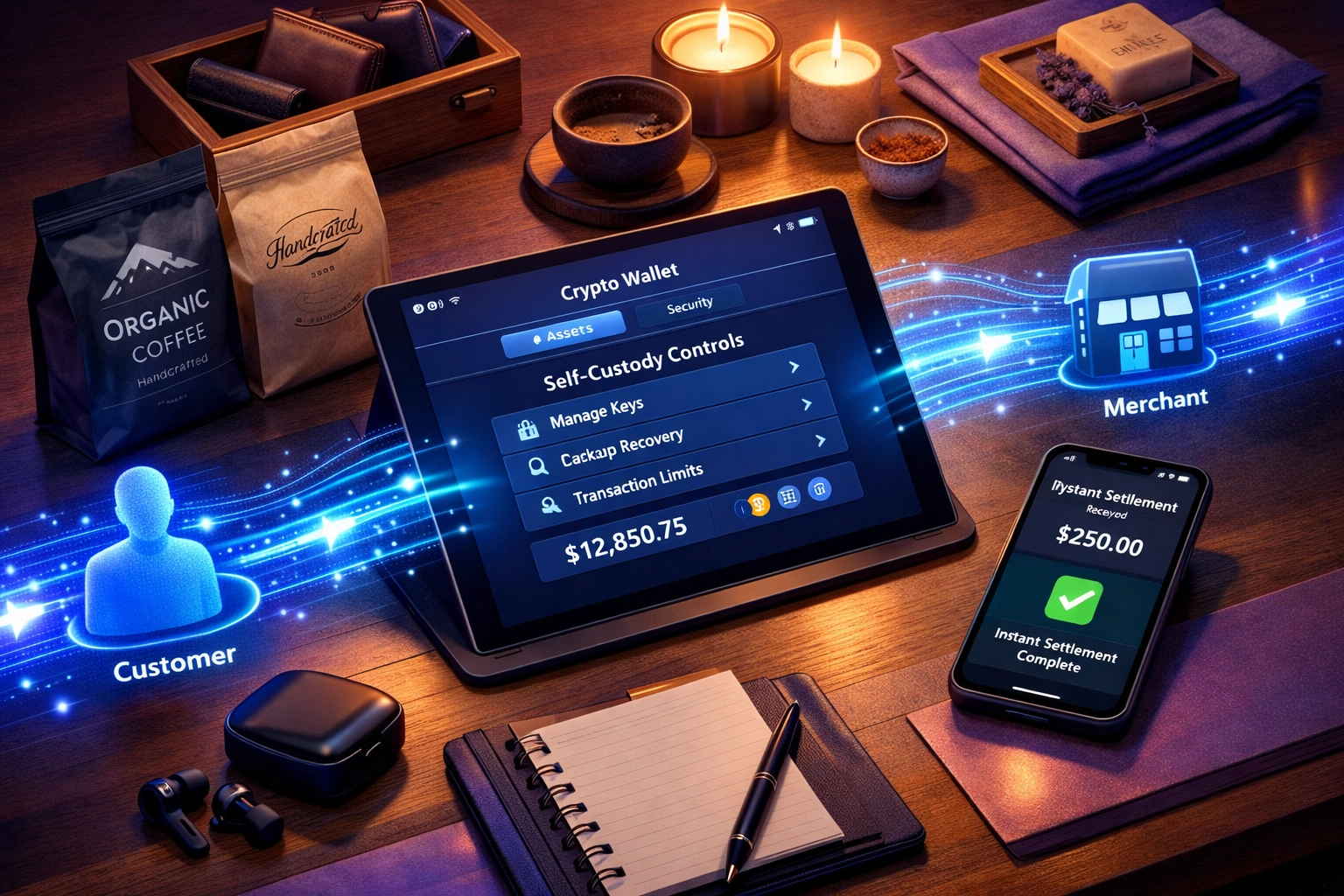
Blockchain payments move directly from customer wallet to your self-custody merchant account. No intermediaries. No interchange fees. Just peer-to-peer transfer.
The savings aren't magic. They're structural.
Self-Custody Changes Everything
Here's what traditional processors don't tell you: They control your money.
They hold your funds. They apply arbitrary rules. They can freeze accounts. They delay settlements for days.
You're running your business on someone else's terms.
Self-custody merchant accounts flip this completely.
Your crypto. Your keys. Your control.
Settlements happen in minutes, not days. No chargebacks draining your account 90 days later. No surprise holds because their algorithm flagged your account.
Financial sovereignty for merchants.
Solutions like Larecoin's receivables token take this further. Convert customer payments into tokenized receivables. Use them as collateral. Trade them. Move them across chains.
Traditional processors can't touch this functionality. They're stuck in 1990s infrastructure.
NFT Receipts for Accounting
Smart merchants need smart accounting.
NFT receipts solve reconciliation nightmares automatically.
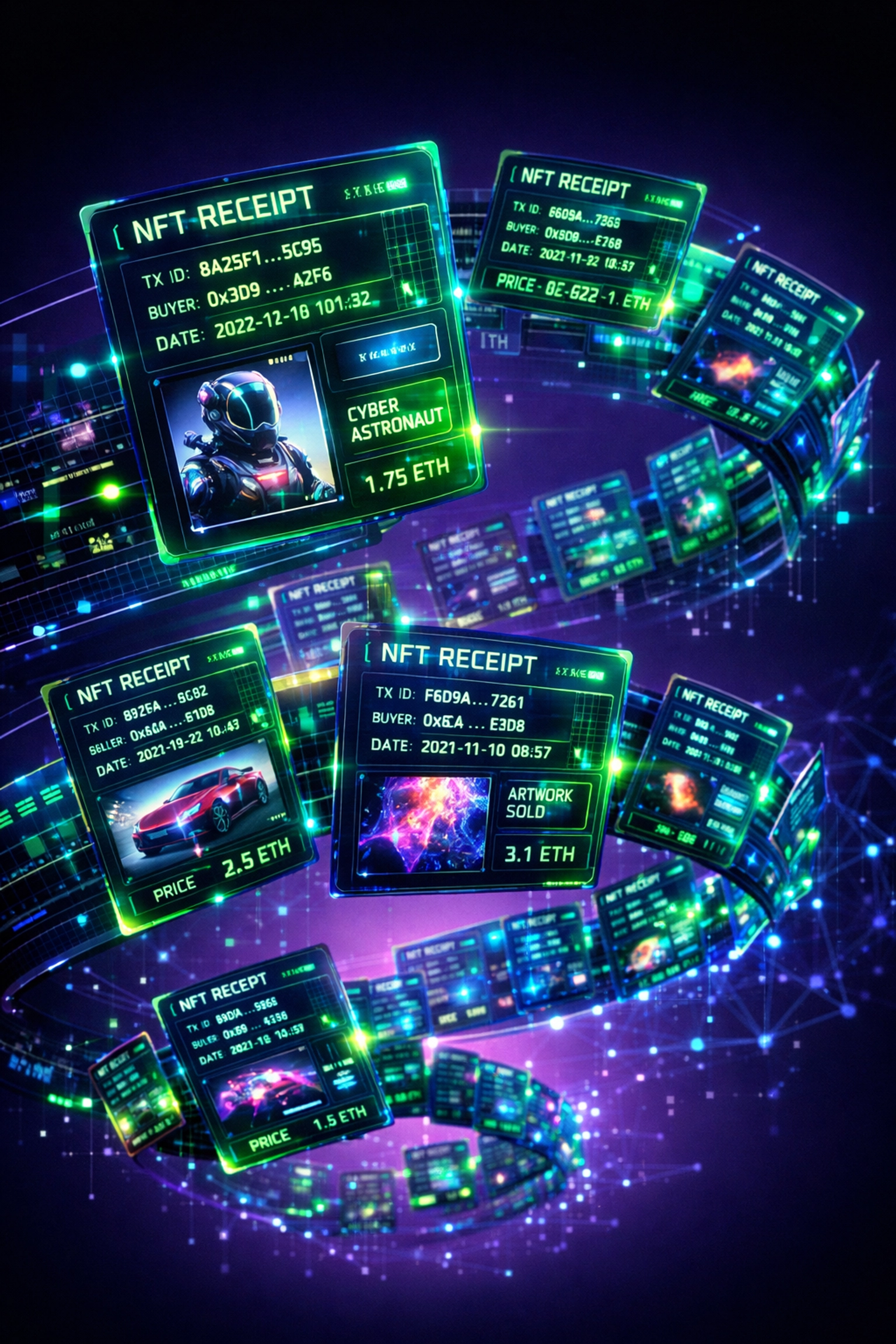
Every transaction mints an NFT receipt with embedded metadata:
Transaction amount
Timestamp
Customer wallet
Product details
Tax information
Your accounting software reads these NFT receipts directly. Zero manual entry. Zero reconciliation errors.
Compare this to traditional processors: Download CSV files. Import to accounting software. Fix formatting errors. Match transactions manually.
NFT receipts integrate with smart contracts. Automatic inventory updates. Automatic revenue recognition. Automatic tax calculations.
This is accounting infrastructure for 2026, not 1996.
LUSD Stablecoin Benefits
Volatility killed early crypto payments. Nobody wants to accept Bitcoin today and lose 15% value tomorrow.
Stablecoins fixed this. Specifically LUSD.
LUSD maintains 1:1 USD peg without centralized control. No bank backing. No corporate treasury. Pure algorithmic stability backed by crypto collateral.
Why this matters for merchants:
Accept payments in LUSD
Value stays stable
Convert to fiat when you want
Or hold in crypto
Your choice. Your timeline.
Traditional processors force immediate conversion. You get dollars whether you want them or not.
LUSD gives you optionality. Keep payments in crypto during bull markets. Convert during bear markets. Optimize your treasury management.
Solutions like NOWPayments and CoinPayments offer stablecoins, but they're custodial. They hold your funds. Larecoin offers LUSD with full self-custody.
Stability without surrendering control.
Comparing the Alternatives
Not all crypto POS systems are equal. Let's break down the options.
NOWPayments:
0.5% fee (good)
Custodial wallets (bad)
They control your funds
Limited stablecoin options
CoinPayments:
0.5% fee (good)
Custodial model (bad)
Wallet limitations
No receivables tokenization
Triple-A:
1% fee (decent)
Better compliance
Still custodial
Traditional banking dependencies
Larecoin:
Sub-0.1% fees for Web3 global payments
Full self-custody
LUSD stablecoin integration
NFT receipt automation
Receivables token functionality
No banking dependencies
The difference is infrastructure philosophy. Competitors added crypto to traditional systems. Larecoin built Web3-native from inception.
You either build on blockchain rails or retrofit crypto onto legacy systems.
The cost structure proves which approach works.
The Real Savings Breakdown
Let's compare apples to apples.
Scenario: $50,000 monthly revenue
Traditional processor (2.9% + $0.30):
Transaction fees: $1,600
Monthly statement fee: $25
PCI compliance: $50
Chargeback fees: $100 (average)
Total: $1,775/month
Crypto POS via NOWPayments alternative (0.5%):
Transaction fees: $250
No statement fees
No compliance fees
Minimal chargebacks
Total: $250/month
Savings: $1,525/month = $18,300/year
Now add international sales. Traditional processors charge 4-7% for cross-border. Crypto stays at 0.5%.
$10,000 international sales:
Traditional: $600 in fees
Crypto: $50 in fees
Additional savings: $550/month
Total annual impact: $24,900 saved.
That's real money. Business-changing money.
Bank-Free Business Operations
The ultimate advantage isn't just fees. It's independence.
Crypto POS systems enable completely bank-free operations:
Accept payments globally
No merchant account needed
No banking relationship required
No geographic restrictions
Traditional processors require:
Business bank account
Merchant account approval
Geographic restrictions
Banking relationship maintenance
Crypto removes these dependencies entirely.
You can operate in countries where traditional processors won't serve you. Accept payments from customers in sanctioned regions. Build truly global businesses without permission.
Financial sovereignty at the business level.

Integration Reality Check
Early crypto payments required developer expertise. 2026 is different.
Modern crypto POS systems offer:
One-click e-commerce integrations
Mobile POS apps
QR code payments
No hardware changes needed
Your staff doesn't need crypto training. Customer experience mirrors traditional payments exactly. QR code scan, payment confirmation, done.
The technical barriers disappeared. What remains is the decision to reduce merchant interchange fees or keep paying legacy rates.
The Smart Merchant Decision
Traditional payment processors aren't dead. They're just expensive.
Unnecessarily expensive.
The choice is simple:
Pay 3% forever
Or switch to 0.5% now
The merchants making the switch aren't crypto enthusiasts. They're pragmatists who did the math.
$1,900 monthly savings adds up. Over 5 years, that's $114,000. Over 10 years, $228,000.
You're either capturing that value or donating it to payment processors.
Smart merchants are switching because the numbers don't lie. Lower fees. Faster settlements. Better control. Superior infrastructure.
The question isn't whether crypto POS systems will replace traditional processors. The question is whether you'll switch before your competitors do.
Check out Larecoin's Web3 payment infrastructure and calculate your own savings. The math might surprise you.
Traditional processors aren't dead. But they're definitely on life support.
Comments