

.png)
Are You Making These Common Crypto Payment Mistakes? The Merchant Freedom Checklist
![Writer: [[[Free!!]<<<<]] Watch: 스포르팅 - 토트넘 Live Stream 13 September 2022](https://lh3.googleusercontent.com/a/AItbvmktwQc0wCdd3ZEETSYItRQubwwBzOyjD_dcigRf=s96-c)
Most merchants lose money before their first crypto payment even clears.
Not because crypto is complicated. Because traditional payment processors want it that way.
You're paying 3-5% fees. Waiting days for settlements. Surrendering custody of your funds. And hoping nothing breaks.
That's not merchant freedom. That's just swapping one middleman for another.
Here's your checklist to fix it.
Mistake #1: Handing Over Custody to Payment Processors
NOWPayments and CoinPayments hold your crypto. They control your funds until they decide to release them.
Sound familiar? It's the same model banks use.
The Problem:
Your funds sit in their wallets
You wait for batch payouts
They control withdrawal timing
Counter-party risk on every transaction
The Larecoin Difference: Self-custody isn't a feature. It's the foundation.
Payments hit your wallet directly. No intermediary custody period. No wondering when you'll see your funds. Gas-only transfers mean you control settlement timing from transaction one.

Traditional processors act as crypto banks. Larecoin returns ownership to merchants.
Mistake #2: Paying Ridiculous Processing Fees
Check your statements. 3% here. 4% there. "Network fees" on top.
Those fees compound fast.
Real Numbers:
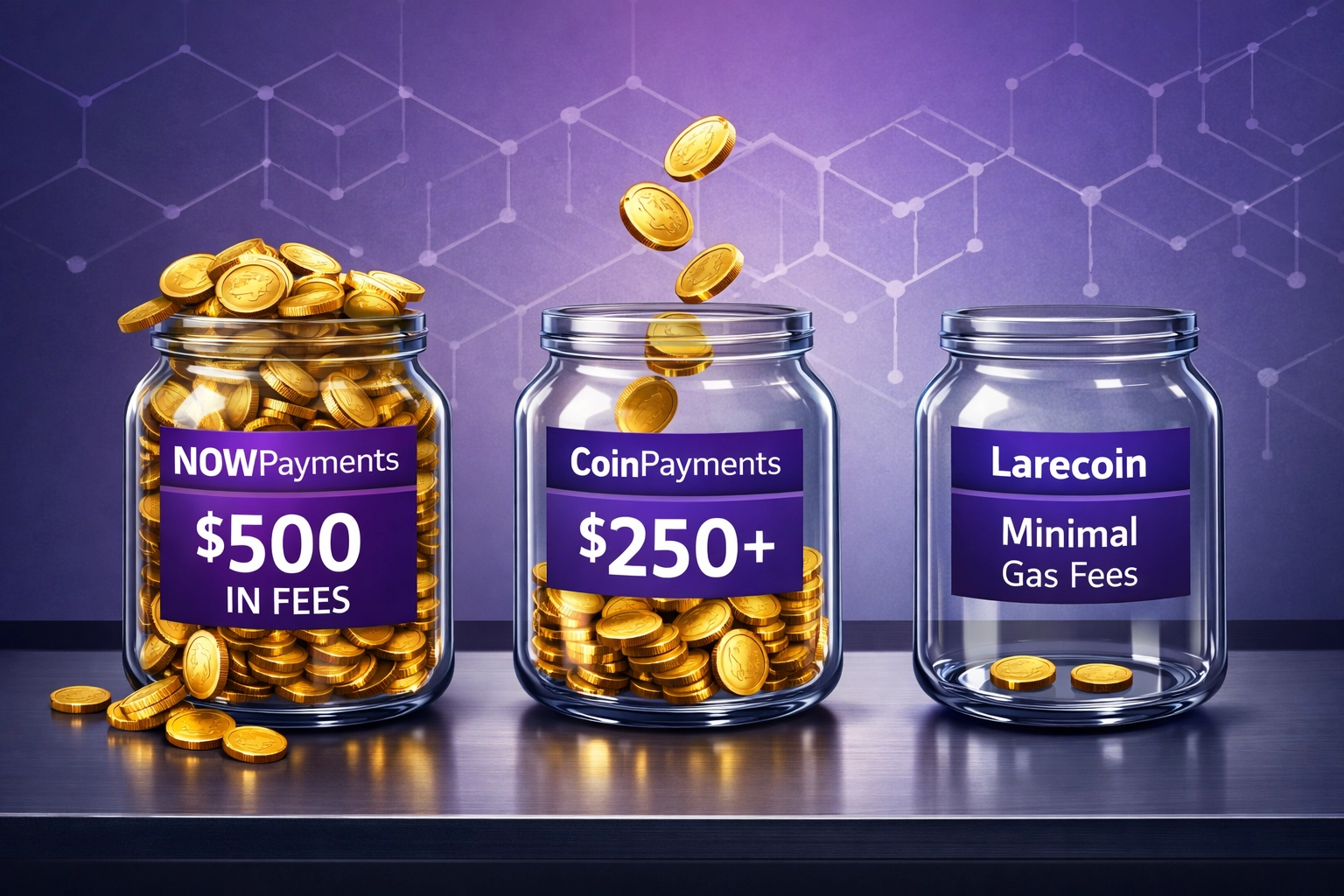
NOWPayments: 0.5-1% + blockchain fees
CoinPayments: 0.5% base + withdrawal fees + conversion fees
Larecoin: Gas fees only
On $50,000 monthly volume:
NOWPayments cost: $250-$500+ monthly
CoinPayments cost: $250+ monthly plus withdrawal penalties
Larecoin cost: Blockchain gas fees (typically $2-$15 per transaction)
The math isn't close.
Mistake #3: Ignoring NFT Receipt Innovation
You're accepting payments in 2026 without NFT receipts?
That's leaving money, and customer loyalty, on the table.
What Traditional Processors Miss:
No permanent transaction records
No customer engagement layer
No loyalty integration
No collectible incentive
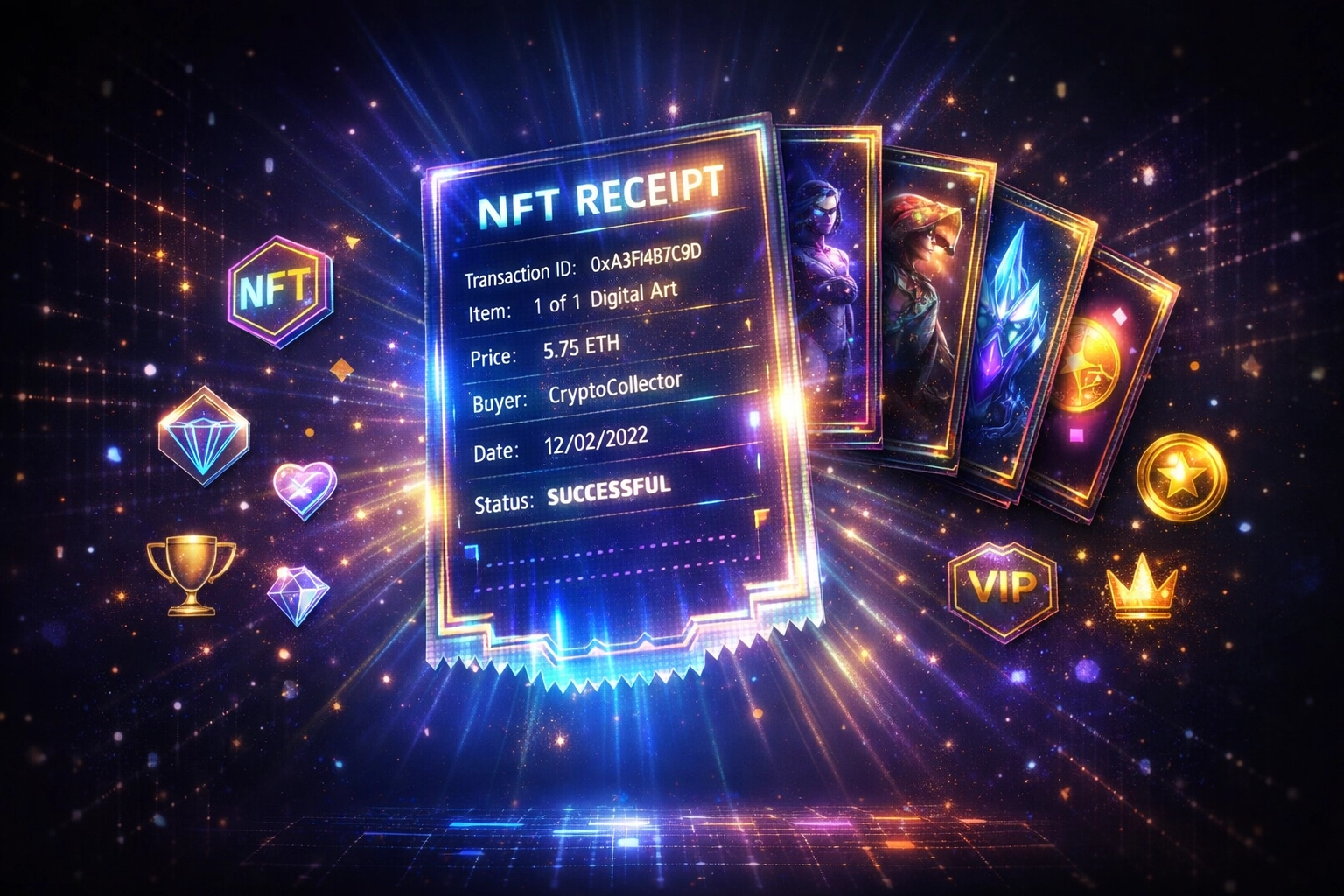
The Larecoin Approach: Every payment generates an NFT receipt. Permanent. Verifiable. Collectible.
Customers keep proof of purchase forever. You build engagement through blockchain-native loyalty. They're not just buying, they're collecting your brand.
NFT receipts transform transactions into relationships.
Mistake #4: Accepting Volatile Assets Without Stablecoin Options
Bitcoin swings 5% while your customer checks out. That's your margin, gone.
The Volatility Trap: Most processors push Bitcoin and Ethereum. High volatility. Merchant risk.
Some offer instant conversion to fiat. But that's just rebuilding the traditional banking system with extra steps.
The LUSD Solution: Larecoin integrates LUSD, a decentralized stablecoin with zero middleman markup.
No conversion fees. No currency risk. No waiting for settlement. Just stable value hitting your wallet immediately.
Accept volatile crypto if you want exposure. Accept LUSD when you want certainty. You choose, not your processor.
Mistake #5: Sacrificing Speed for "Security"
Payment processors sell "security" while making you wait 24-72 hours for settlements.
That's not security. That's control.
The Settlement Scam:
NOWPayments: Minimum thresholds before payout
CoinPayments: Scheduled batch settlements
Both: Your money locked in their system
The Larecoin Reality: Transactions settle on-chain immediately. Self-custody means instant access. No batching. No thresholds. No artificial delays.
Security doesn't require permission. It requires proper architecture.
Mistake #6: Choosing Processors That Compete With Your Business Model
Here's what nobody tells you: centralized payment processors become competitors the moment they scale.
They're building merchant relationships on your transactions. They're collecting data on your customers. They're positioning to replace you.
The Centralization Problem:
They aggregate merchant demand
They leverage network effects
They become the brand customers recognize
You become replaceable
The Decentralized Alternative: Larecoin doesn't want to be your brand. It wants to empower it.
Open protocol. No data harvesting. No competitive positioning. Just infrastructure that lets you own customer relationships completely.
Mistake #7: Overlooking Multi-Chain Flexibility
You're locking yourself into one blockchain while your customers hold assets across ten.
The Single-Chain Trap: Most processors optimize for Bitcoin or Ethereum. If customers hold assets elsewhere, they're stuck converting before payment, adding friction and fees.
The Larecoin Ecosystem: Built on Solana for speed. Compatible with cross-chain swaps. Designed for the multi-chain future merchants actually operate in.
Accept payments where your customers already are. Not where your processor decided to build.
Mistake #8: Trusting Black Box Fee Structures
Read the fine print on NOWPayments and CoinPayments. Notice how fees multiply?
Base processing fee
Network fee passthrough
Withdrawal fees
Conversion fees
Minimum transaction fees
Five fee categories. None clearly disclosed upfront.
The Larecoin Standard: Gas fees. That's it.
Transparent. Predictable. No hidden markups. No surprise charges when you withdraw. No penalty for success.
Mistake #9: Ignoring Direct Wallet Integration
Why bounce payments through a processor when customers can pay your wallet directly?
The Unnecessary Middleman: Traditional processors insert themselves between customer wallets and merchant wallets. They add latency. They add fees. They add risk.
All to provide "services" blockchain already delivers natively.
The Direct Model: Larecoin facilitates direct wallet-to-wallet payments. Customer sends. You receive. Blockchain validates. Done.
No intermediary database. No reconciliation delays. No wondering if the processor recorded your transaction correctly.
Mistake #10: Forgetting Merchant Independence Is the Goal
You switched to crypto to escape payment processor control.
Then you hired a crypto payment processor that recreates the exact same dynamic.
The Real Question: Who controls your business?
If your processor can freeze accounts, delay settlements, or change fee structures unilaterally, you haven't escaped anything.
The Freedom Framework: Larecoin doesn't control merchants. It enables them.
Self-custody: You control funds
Transparent fees: You predict costs
Open protocol: You own relationships
Decentralized infrastructure: You avoid single points of failure
That's not just different. That's the entire point of crypto payments.
The Merchant Freedom Checklist
Before your next crypto transaction, ask:
✓ Do I control custody of received funds? ✓ Are fees transparent and minimal? ✓ Am I leveraging NFT receipt innovation? ✓ Can I accept stablecoins without conversion penalties? ✓ Do settlements happen instantly? ✓ Does my processor compete with my business? ✓ Am I limited to single-chain payments? ✓ Are fee structures clear or hidden? ✓ Do customers pay my wallet directly? ✓ Do I maintain merchant independence?
If you answered "no" to any question, you're leaving money and freedom on the table.
Stop Making Excuses. Start Taking Control.
Merchant freedom isn't a marketing pitch. It's an operational reality when you choose the right infrastructure.
NOWPayments and CoinPayments rebuilt banking in crypto. Larecoin rebuilt commerce on blockchain principles.
There's a difference.
One requires trust in intermediaries. The other requires trust in code.
One extracts fees at every step. The other charges gas fees only.
One holds your funds. The other sends them directly to you.
Choose accordingly.
Ready to fix these mistakes? Explore the Larecoin ecosystem and discover what merchant freedom actually looks like in 2026.
Comments