

.png)
CoinPayments Vs Larecoin: Which Crypto POS System Actually Gives You Full Custody?
- [[[Free!!]<<<<]] Watch: 스포르팅 - 토트넘 Live Stream 13 September 2022
- 3 days ago
- 4 min read
![Writer: [[[Free!!]<<<<]] Watch: 스포르팅 - 토트넘 Live Stream 13 September 2022](https://lh3.googleusercontent.com/a/AItbvmktwQc0wCdd3ZEETSYItRQubwwBzOyjD_dcigRf=s96-c)
The Custody Question Every Merchant Should Ask
Here's the deal.
You're accepting crypto payments. Feels like you've escaped the traditional banking system. No more 3% interchange fees. No chargebacks. Financial freedom.
But wait.
Who actually holds your money?
If you're using most crypto payment processors, including CoinPayments, your funds sit in their wallet. Not yours. They decide when you get access.
Sound familiar? That's exactly how traditional payment processors work.
Let's break down what "full custody" actually means. And why Larecoin's approach changes everything for merchants who want real financial sovereignty.
What Is Self-Custody? (And Why Should You Care?)
Self-custody means one thing: Your keys. Your crypto.
When a customer pays you, the funds land directly in YOUR wallet. Immediately. No middleman holding your revenue hostage.
Here's why this matters:
No counterparty risk , If the payment processor gets hacked or goes bankrupt, your funds are safe
Instant access , Use your money whenever you want
True ownership , You control the private keys
Financial sovereignty , No third party can freeze or seize your assets
This is the entire point of crypto. Decentralization. Permissionless transactions. Direct peer-to-peer commerce.
Yet most crypto POS systems operate just like Visa and Mastercard. They sit between you and your money.
CoinPayments: The Custodial Model Explained
CoinPayments has been around since 2013. They support 2,000+ coins. Decent interface. Solid reputation.
But here's what most merchants don't realize:
CoinPayments operates as a custodian.
When a customer pays you through CoinPayments:
The crypto goes to CoinPayments' wallet first
They process the transaction
They hold your funds
They release it to you on their schedule
Processing times? Variable. Minutes to hours depending on the coin, network congestion, and their internal systems.
Fees? Typically 0.5% to 1% per transaction. Plus potential withdrawal fees.
This isn't self-custody. It's traditional payment processing with a crypto wrapper.
You've traded one intermediary for another.

Larecoin: How True Self-Custody Works
Larecoin was built differently. From the ground up.
No custodial model. No intermediary. No third party touching your revenue.
Here's the flow:
Customer pays → Funds go directly to YOUR wallet → Done.
That's it. Sub-second settlement on Solana. Your money arrives before your customer walks out the door.
The architectural difference is fundamental:
Larecoin enables direct merchant-to-customer transactions
Your wallet, your keys, your control
Zero custodial risk
Immediate access to 100% of your funds
This is what a crypto POS system for small business should look like. Bank-free. Intermediary-free. Truly decentralized commerce.
Head-to-Head: CoinPayments vs Larecoin
Let's compare what actually matters:
Settlement Speed
CoinPayments: Minutes to hours. Their system has to process, verify, and release.
Larecoin: Sub-second. Built on Solana. Funds arrive instantly.
Winner: Larecoin. Not close.
Fee Structure
CoinPayments: 0.5-1% per transaction plus potential withdrawal fees.
Larecoin: Gas-only fees. That's it. 50%+ savings compared to legacy processors.
Winner: Larecoin. Your margins will thank you.
Custody Model
CoinPayments: They hold your funds. They control access.
Larecoin: Full self-custody. Your wallet. Your keys. Your money.
Winner: Larecoin. This is the whole point.
Counterparty Risk
CoinPayments: If they get hacked, face regulatory issues, or shut down, your funds are at risk.
Larecoin: Zero counterparty risk. Nothing to hack on their end because they never hold your money.
Winner: Larecoin. Sleep better at night.
Beyond Self-Custody: What Else Does Larecoin Offer?
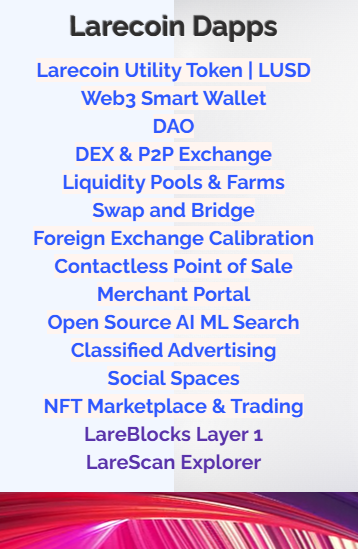
Self-custody is the foundation. But Larecoin's Web3 payment ecosystem goes further.
NFT Receipts for Accounting
Every transaction generates an NFT receipt. Immutable. On-chain. Permanent.
Why this matters:
Automated accounting trail
Easy tax compliance
Fraud-proof record keeping
No lost or disputed receipts
Traditional POS systems give you paper or a PDF. Larecoin gives you blockchain-verified proof of every transaction.
LUSD Stablecoin
Volatility concerns? Larecoin's ecosystem includes LUSD, a stablecoin pegged to USD.
Accept crypto. Settle in stable value. Best of both worlds.
Receivables Token
Turn your future receivables into liquid assets. This is DeFi meets merchant services.
Cash flow problems? The receivables token system opens new financial possibilities traditional processors can't touch.
Global Reach Without Banks
No banking relationship required. Accept payments from anywhere in the world. Settle in seconds.
This is how you build a truly global business without the traditional financial infrastructure holding you back.
Who Should Switch to Larecoin?
E-commerce merchants tired of 3%+ payment processing fees eating into margins.
Physical retail stores wanting a true crypto POS system for small business operations.
International sellers who need to accept payments globally without complex banking arrangements.
Privacy-conscious merchants who believe their revenue shouldn't flow through third-party hands.
DeFi natives who understand self-custody isn't optional, it's essential.
Anyone who's looked at their CoinPayments dashboard and wondered why a "crypto" solution feels exactly like traditional payment processing.
The Real CoinPayments Alternative
Let's be direct.
CoinPayments is a decent legacy solution. It served its purpose when the crypto payment space was young.
But the technology has evolved. Web3 has matured. Self-custody is no longer a nice-to-have.
Merchants looking for a true CoinPayments alternative need to ask:
Do I want an intermediary holding my funds?
Am I okay with delayed settlement?
Do percentage-based fees make sense when gas-only options exist?
Is counterparty risk acceptable for my business?
If you answered "no" to any of these: you already know where this is going.
Financial Sovereignty for Merchants
The phrase gets thrown around a lot. But what does "financial sovereignty" actually mean for a business owner?
It means:
Your revenue stream isn't dependent on a third party
No one can freeze your merchant account
Settlement happens on YOUR terms
Fees are minimal and predictable
Your business operates outside traditional banking constraints
This is what crypto promised from the beginning. Permissionless commerce. True ownership. Direct value transfer.
Larecoin delivers on that promise. Most other crypto payment processors: including CoinPayments: don't.
Making the Switch
Ready to experience real self-custody?
Here's what to do:
Visit https://larecoin.com
Set up your self-custody merchant account
Connect your existing wallet
Start accepting payments directly
No complicated onboarding. No waiting for approval from a legacy system.
Your funds. Your wallet. Your control.
That's how crypto payments should work.
The custody question isn't just technical. It's philosophical.
Either you control your money, or someone else does.
CoinPayments chose the intermediary model. Larecoin chose self-custody.
Which one aligns with why you got into crypto in the first place?
Comments