

.png)
Do You Really Need a Bank to Accept Crypto Payments? Here's the Truth About Web3 Global Payments
- [[[Free!!]<<<<]] Watch: 스포르팅 - 토트넘 Live Stream 13 September 2022
- 2 hours ago
- 4 min read
![Writer: [[[Free!!]<<<<]] Watch: 스포르팅 - 토트넘 Live Stream 13 September 2022](https://lh3.googleusercontent.com/a/AItbvmktwQc0wCdd3ZEETSYItRQubwwBzOyjD_dcigRf=s96-c)
Short answer: No.
Long answer: Absolutely not, and here's why that matters for your business.
The traditional banking system has conditioned merchants to believe they need a bank account, a payment processor, and a mountain of paperwork to accept payments. That's the old playbook. Web3 global payments are rewriting the rules entirely.
Let's break down what's really happening in the world of bank-free commerce.
The Banking Dependency Myth
Traditional payment infrastructure was built on a simple premise: banks are the gatekeepers. Want to accept credit cards? Need a merchant account. Want to receive international payments? Better have a correspondent banking relationship.
This creates problems:
3-5% interchange fees on cross-border transactions
1-3 day settlement times (sometimes longer)
Geographic restrictions blocking entire markets
Chargeback vulnerabilities eating into your margins
Complex compliance requirements just to get started
For small businesses and global merchants, these aren't minor inconveniences. They're structural barriers to growth.
How Crypto Payments Actually Work (Without Banks)
Crypto payment gateways connect directly to blockchain networks. No bank relationships required. No local payment processor infrastructure needed.
Here's the flow:
Customer initiates payment from their wallet
Transaction broadcasts to the blockchain
Network validates and settles the payment
Funds arrive in your self-custody merchant account
Optional: Convert to fiat currency instantly
That's it. No intermediaries skimming percentages. No waiting days for settlement. No permission needed from legacy financial institutions.
This opens markets previously impossible to reach. Customers in emerging economies with internet access and crypto holdings can now transact with you, even without traditional bank accounts.
The Real Cost of Traditional Payment Processing
Let's talk numbers.
A typical international card transaction costs merchants:
Interchange fee: 1.5-3%
Processor markup: 0.3-0.5%
Cross-border fee: 1-2%
Currency conversion: 1-3%
Total: Up to 8.5% on a single transaction.
Now multiply that across thousands of global customers. The math gets painful fast.
Web3 payment solutions flip this model. Blockchain transaction fees are typically under $1, regardless of transaction size. A $10,000 payment costs the same as a $10 payment.
For merchants looking to reduce merchant interchange fees, this isn't incremental improvement. It's a fundamentally different cost structure.

Why Self-Custody Matters for Merchants
When you accept payments through traditional processors, your funds sit in someone else's account. You're trusting intermediaries with your revenue.
Self-custody merchant accounts change this dynamic completely.
Your funds. Your keys. Your control.
No frozen accounts because of "suspicious activity." No arbitrary holds during "review periods." No asking permission to access your own money.
This is financial sovereignty for merchants. And it's becoming non-negotiable for businesses that value operational independence.
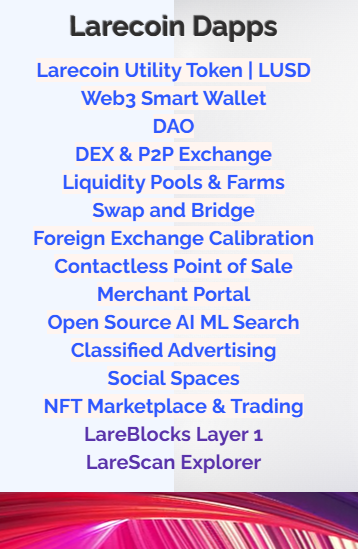
Platforms like Larecoin are building infrastructure specifically for this use case, letting merchants maintain custody while still accessing professional-grade payment tools.
Beyond Payments: NFT Receipts and Accounting Innovation
Here's where things get interesting.
Traditional receipts are PDFs. Maybe emails. They get lost, duplicated, or manipulated. Reconciling them at tax time? A nightmare.
NFT receipts for accounting solve this elegantly.
Each transaction generates a unique, immutable receipt on-chain. It can't be forged. Can't be altered. Can't disappear. Your accountant will love you.
These receipts contain:
Transaction timestamp
Exact payment amount
Wallet addresses (buyer/seller)
Product/service details
Cryptographic proof of authenticity
Audit trails become automatic. Compliance becomes simpler. Disputes become easier to resolve.
This isn't theoretical. Larecoin's ecosystem includes NFT-based receivables tokens that transform how businesses track and verify payments.
LUSD: Stablecoin Benefits for Real Business Operations
Volatility concerns? Valid. Solutions exist.
LUSD stablecoin benefits include:
Price stability pegged to USD value
Instant settlement without waiting for bank transfers
Global accessibility across 180+ countries
Lower transaction costs versus traditional stablecoins
No bank dependency for issuance or redemption
For merchants nervous about crypto price swings, stablecoin payments offer the best of both worlds. You get blockchain efficiency without Bitcoin's volatility.
Accept payment in any crypto. Auto-convert to LUSD. Maintain stable value until you're ready to cash out, or keep operating entirely in Web3.
Competitor Comparison: What's Actually Available
The market has options. Not all are equal.
NOWPayments: Popular NOWPayments alternative seekers often cite limited fiat off-ramp options and basic feature sets. Works for simple use cases.
CoinPayments: A veteran in the space. Those looking for a CoinPayments alternative typically want better self-custody options and more advanced merchant tools.
Triple-A: Enterprise-focused. Higher minimums. Complex onboarding.
Larecoin: Purpose-built for financial sovereignty. NFT receipts. LUSD integration. Self-custody by default. Contactless crypto POS system for small business deployments. Full merchant portal with real-time analytics.
The differentiator? Larecoin treats self-custody and merchant independence as core features, not afterthoughts.

Implementation: Easier Than You Think
Worried about technical complexity? Don't be.
Modern Web3 payment solutions offer multiple integration paths:
Direct wallet integration: Accept payments to your own address. Maximum simplicity.
Payment gateway API: Embed checkout flows into your existing site. Handle conversions automatically.
POS hardware: Physical terminals for brick-and-mortar locations. Tap-to-pay crypto acceptance.
Hosted checkout pages: No coding required. Share a link. Get paid.
Most merchants are operational within hours, not weeks. No bank approval timelines. No underwriting delays.
The Global Reach Advantage
Traditional banking infrastructure doesn't exist everywhere. But internet access does.
Web3 global payments unlock:
Customers in unbanked regions
Remittance corridors without correspondent banking fees
B2B transactions across borders without SWIFT delays
Freelancer payments without PayPal restrictions
Your customer base isn't limited by banking relationships anymore. If they have a wallet and internet access, they can pay you.
This is particularly powerful for digital services, SaaS businesses, and global e-commerce operations.
What About Fiat Conversion?
Yes, you can still get dollars (or euros, or pounds).
Modern crypto payment gateways handle conversion automatically. Receive crypto. Settle in fiat. Deposit to your bank account: or skip the bank entirely and push to card.
You maintain flexibility without sacrificing accessibility.
The key difference: conversion is optional, not mandatory. Keep funds in crypto. Use stablecoins. Convert partially. The choice is yours.
The Bottom Line
Banks aren't gatekeepers anymore. At least, they don't have to be.
Web3 payment infrastructure gives merchants:
50%+ reduction in payment processing costs
Instant settlement versus multi-day delays
Global reach without complex banking relationships
Self-custody and financial sovereignty
NFT receipts for bulletproof accounting
Zero chargebacks on crypto transactions
The question isn't whether you can accept crypto without a bank. It's whether you can afford not to.
Ready to explore bank-free payment acceptance? Check out Larecoin's merchant solutions and see what financial sovereignty looks like in practice.
Building the future of commerce, one transaction at a time.
Comments