

.png)
Do You Really Need a Third-Party Payment Processor? Here's the Truth About Self-Custody Merchant Accounts
- [[[Free!!]<<<<]] Watch: 스포르팅 - 토트넘 Live Stream 13 September 2022
- 2 days ago
- 5 min read
![Writer: [[[Free!!]<<<<]] Watch: 스포르팅 - 토트넘 Live Stream 13 September 2022](https://lh3.googleusercontent.com/a/AItbvmktwQc0wCdd3ZEETSYItRQubwwBzOyjD_dcigRf=s96-c)
Here's the deal.
Most merchants assume they need a third-party payment processor to accept crypto. It's the default. The "easy" path. But easy comes with a price tag, and we're not just talking about fees.
We're talking about control. Freedom. Independence.
The question isn't whether you can use a third-party processor. The question is whether you should.
Let's break it down.
The Hidden Cost of Third-Party Payment Processors
Third-party payment processors like NOWPayments and CoinPayments have dominated the crypto payment space for years. They promise quick setup. Simple integration. No technical headaches.
Sounds great, right?
Here's what they don't advertise:
Higher per-transaction fees that eat into your margins
Account freezes triggered by automated fraud detection
Custody of your funds sitting in someone else's wallet
Limited control over your payment flow
Forced conversions that don't match your business needs
When you use a pooled merchant account, your transactions get lumped together with thousands of other businesses. One suspicious transaction from a completely unrelated merchant? Your funds could get locked.
That's the reality of third-party dependency.
What Self-Custody Actually Means for Merchants
Self-custody is exactly what it sounds like.
You hold the keys. You control the wallet. Your crypto goes directly to you, not through an intermediary that can freeze, delay, or restrict access.
With a self-custody merchant account:
Payments hit your wallet instantly
No third party ever touches your funds
Zero risk of arbitrary account suspension
Complete transparency on every transaction
Full autonomy over your business finances
This isn't theoretical. This is how decentralized payments were always meant to work.
The blockchain doesn't need a middleman. Neither do you.
NOWPayments vs CoinPayments: The Custodial Problem
Let's get specific.
NOWPayments offers over 150 cryptocurrencies with a straightforward API. Sounds impressive. But they're holding your funds until you withdraw. That's custodial. That's risk.
CoinPayments has been around since 2013. They support 2,000+ coins. But again, custodial wallets. Withdrawal fees. Processing delays. And if their platform goes down? So does your access.
Both platforms charge somewhere between 0.5% and 1% per transaction. Doesn't sound like much until you're processing $50,000 a month. That's $250-$500 gone. Every month. Just for the privilege of using their infrastructure.
And here's the kicker: you still don't own your funds until you manually withdraw them.
That's not merchant freedom. That's permission-based commerce.
Enter Larecoin: Self-Custody Crypto Payments Built for Independence
Larecoin flips the script entirely.
No custodial wallets. No pooled accounts. No middlemen holding your money hostage.
When a customer pays through Larecoin's merchant solution, the crypto goes directly to your wallet. Instantly. No waiting. No approval process. No third-party intervention.
Here's what that means for your business:
Immediate access to every payment
Zero custody risk, if Larecoin's servers went offline tomorrow, your funds are still yours
Lower fees because you're not paying for someone else's infrastructure overhead
Complete financial sovereignty over your crypto assets
This is what decentralized commerce looks like.

The Fee Advantage: Why Self-Custody Saves Real Money
Let's talk numbers.
Traditional third-party processors charge:
Processor | Transaction Fee | Withdrawal Fee | Hidden Costs |
NOWPayments | 0.5% - 1% | Varies by coin | Network fees, conversion spreads |
CoinPayments | 0.5% | 0.5% on some coins | Conversion fees, minimum thresholds |
Now compare that to self-custody through Larecoin:
No intermediary fees on transactions
Gas-only transfers using the network's native costs
No withdrawal fees because there's nothing to withdraw, it's already in your wallet
Over a year, merchants processing $100,000 in crypto payments could save anywhere from $1,000 to $2,000+ by eliminating third-party processor fees.
That's money back in your pocket. Not theirs.
LUSD: Stability Meets Self-Custody
Volatility scares merchants. We get it.
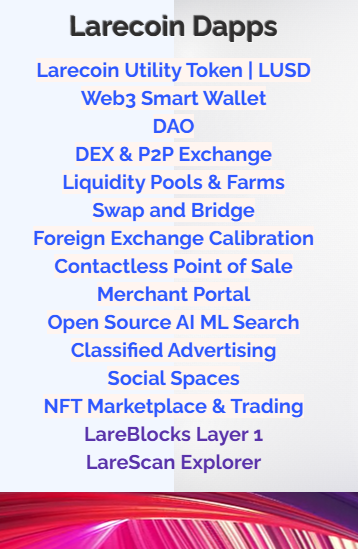
That's why Larecoin's ecosystem includes LUSD, a stablecoin designed for seamless commerce.
Accept payments in any supported crypto. Automatically receive LUSD if you want price stability. All while maintaining complete self-custody.
No forced conversions through a third party. No waiting for settlement. No wondering if your $500 payment will be worth $480 by the time you can access it.
LUSD gives you the stability of fiat with the freedom of crypto.
And it stays in your wallet. Where it belongs.
NFT Receipts: Proof of Payment on the Blockchain
Here's something NOWPayments and CoinPayments can't offer.
NFT receipts.
Every transaction through Larecoin can generate a unique, immutable NFT that serves as verifiable proof of payment. Stored on-chain. Permanent. Tamper-proof.
Why does this matter?
Accounting simplicity, every receipt is timestamped and traceable
Dispute resolution, undeniable proof of payment exists on the blockchain
Customer engagement, NFT receipts can double as loyalty tokens or collectibles
Brand differentiation, you're not just accepting crypto, you're delivering a Web3 experience
This isn't a gimmick. It's the future of transactional records.
The Freedom Factor: Why Independence Matters
Let's zoom out for a second.
When you rely on a third-party processor, you're trusting them with your livelihood. Their terms of service. Their fraud algorithms. Their decisions about what's acceptable.
Merchants get shut down every day for reasons they never see coming. Chargebacks from unrelated accounts. Suspicious activity flags from normal business patterns. Policy changes that happen overnight.
Self-custody eliminates that dependency entirely.
You're not asking permission to access your own money. You're not waiting for approval. You're not hoping their support team gets back to you before rent is due.
You're running your business on your terms.
That's merchant independence. That's what Larecoin enables.
Who Should Consider Self-Custody Merchant Accounts?
Self-custody isn't for everyone. But it's perfect for:
E-commerce stores tired of processor fees eating margins
Subscription services wanting predictable, direct payment flows
International merchants avoiding cross-border payment friction
Privacy-conscious businesses that don't want third parties tracking transactions
Crypto-native brands building for Web3 audiences
High-volume merchants where fee savings compound significantly
If you're processing more than $5,000/month in crypto, the math starts making serious sense.
If you value control over convenience, self-custody is the move.
Getting Started with Larecoin
Setting up a self-custody merchant account with Larecoin takes minutes.
Connect your existing crypto wallet
Configure your payment preferences
Integrate with your store or checkout flow
Start accepting payments, directly to your wallet
No lengthy verification processes. No waiting weeks for approval. No custodial agreements to sign.
Just plug in and go.
Ready to ditch the middlemen? Explore the Larecoin ecosystem and see what true payment freedom looks like.

The Bottom Line
Do you need a third-party payment processor?
Technically, no.
The blockchain was designed for peer-to-peer transactions. Direct. Trustless. Permissionless.
Third-party processors added a layer of convenience; but also a layer of cost, control, and custody risk.
Self-custody merchant accounts through Larecoin strip away that unnecessary layer. You get the benefits of crypto payments without sacrificing ownership of your funds.
Lower fees. Instant access. Complete control. NFT receipts. LUSD stability.
That's not just an alternative to NOWPayments or CoinPayments.
That's the future of merchant payments.
And it's live right now at Larecoin.com.
Comments