

.png)
How 1.5% of Every Transaction Fights Global Hunger: The Social Impact Behind Web3 Payments
- [[[Free!!]<<<<]] Watch: 스포르팅 - 토트넘 Live Stream 13 September 2022
- 2 hours ago
- 4 min read
![Writer: [[[Free!!]<<<<]] Watch: 스포르팅 - 토트넘 Live Stream 13 September 2022](https://lh3.googleusercontent.com/a/AItbvmktwQc0wCdd3ZEETSYItRQubwwBzOyjD_dcigRf=s96-c)
The Payment Industry Has a Dirty Secret
Traditional payment processors take 2-3% of every transaction. Where does that money go? Straight to shareholders and executives.
Visa processed $14.6 trillion in 2025. Mastercard handled another $8 trillion. The fees? Pure profit.
Zero dollars to social good. Zero transparency. Zero accountability.
Web3 payments are changing that equation.
Automatic Charity at the Protocol Level
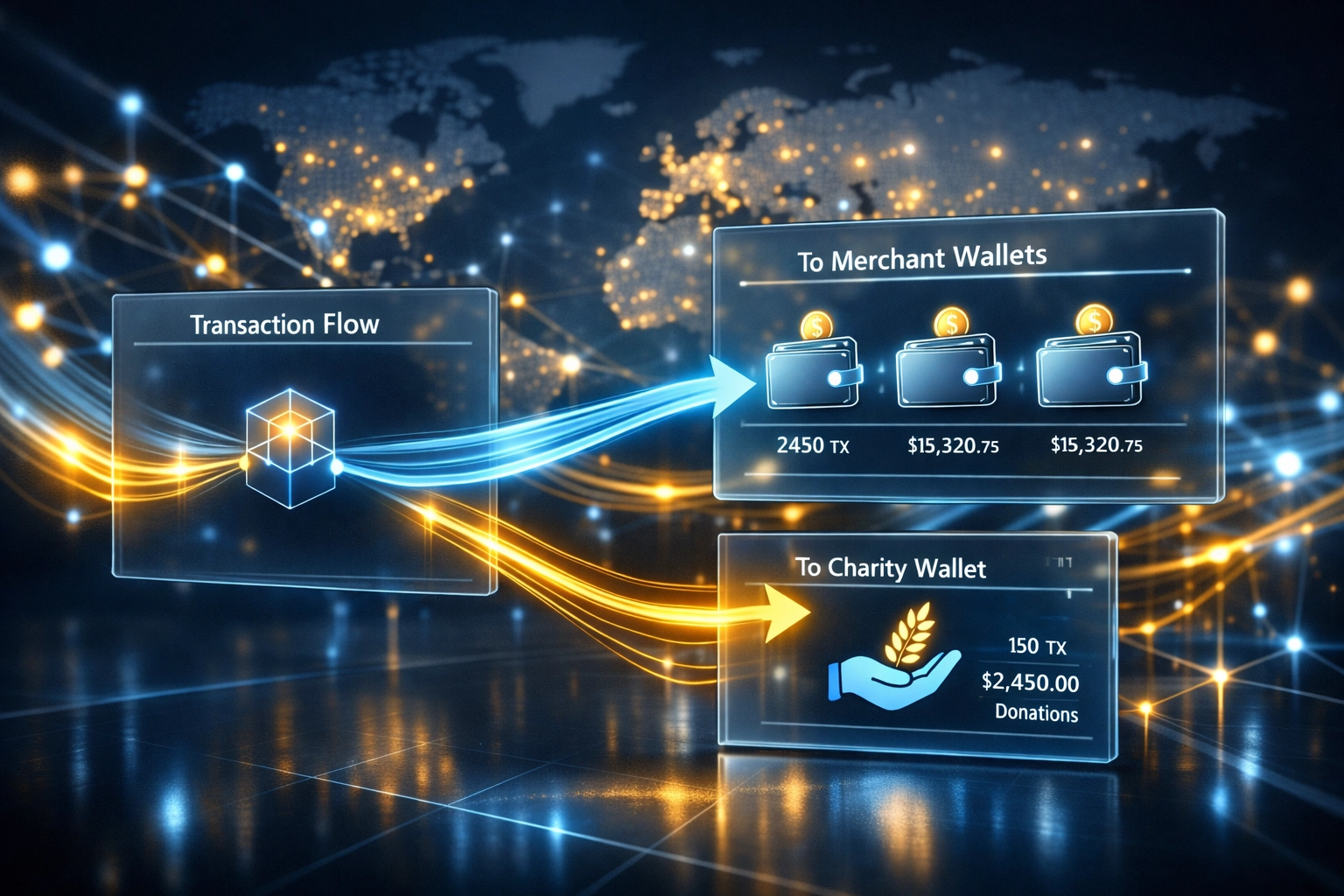
Larecoin embeds a 1.5% transaction tax directly into the blockchain infrastructure. Not an opt-in. Not a separate donation flow. Not something merchants need to configure.
Every single transaction automatically routes funds to verified hunger relief wallets.
Here's the breakdown:
Customer checks out normally
Merchant processes payment as usual
1.5% splits to charitable wallets at protocol level
No extra steps required from anyone
The mechanism is invisible to end users but permanently recorded on the blockchain. Every allocation. Every wallet. Every meal funded.
Check LareScan and you'll see the exact flow of funds in real-time.
Why Hunger Relief?
821 million people face chronic hunger worldwide. That's one in nine humans.
The problem isn't food scarcity. It's distribution and funding. Traditional aid models rely on sporadic donations that spike during crises and disappear when media attention fades.
Web3 payments create consistent, predictable funding streams.
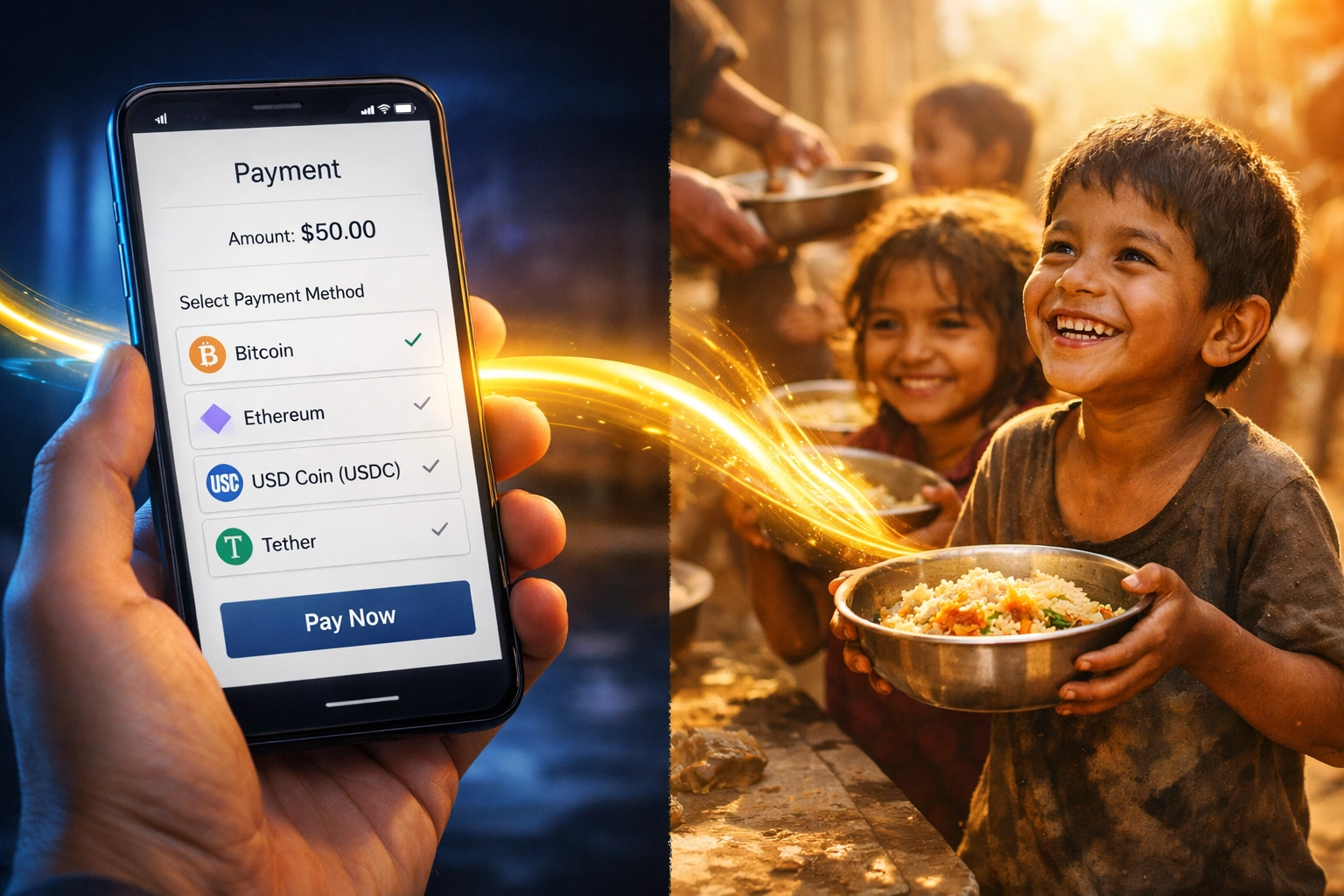
When commerce flows through blockchain infrastructure with embedded social impact, charity becomes automatic. A coffee purchase in New York funds rice distribution in Bangladesh. A metaverse NFT transaction sponsors school meals in Kenya.
No fundraising campaigns. No donation fatigue. Just built-in value redistribution.
Community Governance Replaces Corporate Control
Traditional charities have overhead problems. Administrative costs eat 20-30% of donations. Board members make allocation decisions behind closed doors.
Larecoin operates differently.
Monthly voting cycles determine fund distribution through decentralized governance.
Token holders vote on:
Which organizations receive allocations
Emergency crisis response priorities
Geographic distribution strategies
Verification requirements for recipient wallets
September 2025: Community voted to redirect 40% of funds to East African famine relief.
January 2026: Emergency allocation approved for flood victims in South Asia within 48 hours of crisis.
No waiting for board meetings. No bureaucratic delays. Just transparent, community-driven impact.

The Transparency Advantage
Blockchain changes everything about charitable accountability.
Every transaction creates an immutable record. Every allocation is traceable. Every wallet address is verifiable.
LareScan provides complete visibility:
Real-time transaction monitoring
Verified charity wallet addresses
Donation amounts in USD equivalent
Geographic distribution heatmaps
Impact metrics updated live
Compare that to traditional payment processors. Zero visibility into fee allocation. Zero transparency about fund usage. Zero proof of impact.
Donors can track exactly where their contribution went and verify it reached intended recipients. That level of accountability doesn't exist in Web2 finance.
Real Numbers, Real Impact
Larecoin has funded 2.3 million meals through the 1.5% transaction tax mechanism.
Breaking down the math:
Average transaction value: $47
1.5% allocation: $0.70
Cost per meal in developing regions: $0.35
Meals per transaction: 2
Scale that across thousands of daily transactions and the impact compounds quickly.
But the model extends beyond just Larecoin. The World Food Programme operates blockchain initiatives targeting $1 billion in hunger relief funding. HesabPay on Algorand has supported 14,000+ families in Afghanistan.
Web3 payments are becoming humanitarian infrastructure.
How Traditional Processors Waste Social Impact Potential
Let's run a comparison.
NOWPayments charges 0.5% transaction fees. All profit. Zero social allocation.
CoinPayments takes 0.5% plus network fees. All profit. Zero transparency.
Both are excellent technical solutions for crypto payments. But they miss the opportunity to embed social good into payment infrastructure itself.
Imagine if NOWPayments allocated just 0.5% of their fees to charity. With their transaction volume, they'd fund millions of meals annually. Instead? Shareholder dividends.
The Web3 model flips that equation. Payment infrastructure becomes humanitarian infrastructure.
Master Wallet Architecture for Enterprise Impact
Large enterprises using Larecoin can amplify social impact through master and sub-wallet management.
Here's how it works:
Master wallet controls multiple sub-wallets for different:
Geographic regions
Product lines
Business units
Seasonal campaigns
Each sub-wallet processes transactions independently but rolls up to master wallet reporting. The 1.5% allocation happens at the sub-wallet level, creating granular impact tracking.
A global retailer with 50 sub-wallets across 30 countries can track exactly which regions generate the most social impact. Marketing teams can highlight specific charitable contributions by product category.
Transparency becomes a competitive advantage.
Onboarding Without Friction
The biggest barrier to Web3 adoption? Complexity.
Larecoin solves this with multiple onboarding methods:
Gift cards for non-crypto users
ACH transfers from traditional bank accounts
Push-to-card services for instant fiat conversion
Someone can buy a Larecoin gift card at a retail location, load it to their wallet, make a purchase, and contribute to hunger relief: all without understanding blockchain technology.
The social impact happens automatically regardless of user technical knowledge.
The Future of Payments is Humanitarian
We're witnessing the early stages of a fundamental shift.
Payment infrastructure no longer needs to extract value purely for corporate profit. Blockchain technology enables embedded social good at the protocol level.
The 1.5% transaction tax model proves it's possible. Community governance proves it's sustainable. LareScan transparency proves it's accountable.
Every transaction can fight global hunger. Every merchant can be a humanitarian. Every customer can make a difference.
Traditional payment processors had decades to build social responsibility into their business models. They chose shareholder value instead.
Web3 payments choose differently.
The infrastructure exists. The technology works. The impact is measurable.
Now it's about scaling adoption and proving the model across industries. From e-commerce to metaverse transactions. From micropayments to enterprise procurement.
Join the movement. Process payments that matter.
Explore the full Larecoin ecosystem at larecoin.com and see how Web3 global payments are solving real-world problems one transaction at a time.
Comments