

.png)
How to Reduce Merchant Interchange Fees by 50% and Keep Full Custody (Easy Guide for Merchants)
- [[[Free!!]<<<<]] Watch: 스포르팅 - 토트넘 Live Stream 13 September 2022
- Jan 24
- 4 min read
![Writer: [[[Free!!]<<<<]] Watch: 스포르팅 - 토트넘 Live Stream 13 September 2022](https://lh3.googleusercontent.com/a/AItbvmktwQc0wCdd3ZEETSYItRQubwwBzOyjD_dcigRf=s96-c)
Interchange fees. The silent profit killer.
Every swipe. Every tap. Every transaction. You're bleeding 2-4% to card networks, banks, and payment processors.
That's thousands, sometimes hundreds of thousands, gone every year. Money that should be building your business.
Here's the thing: you don't have to accept this anymore.
Web3 payments are flipping the script. And with the right approach, you can slash those interchange fees by 50% or more, while keeping full custody of your funds.
No banks holding your money hostage. No waiting days for settlement. No hidden fees eating into your margins.
Let's break it down.
The Real Cost of Interchange Fees
Most merchants don't realize how much they're actually losing.
Traditional credit card processing hits you with:
Interchange fees: 1.5% - 3.5% per transaction
Assessment fees: 0.13% - 0.15%
Processor markups: 0.2% - 0.5%
Monthly fees, PCI compliance fees, chargeback fees
Add it up. A business processing $500K annually? Easily losing $15,000 - $20,000 in fees.
That's not overhead. That's theft by a thousand cuts.
Traditional optimization tactics, Level II/III data capture, PIN debit routing, daily settlement, might save you 10-30%. Maybe 40% if you're lucky.
But you're still playing their game. Still dependent on legacy rails. Still handing over custody of your revenue.
Why Traditional Crypto Payment Processors Don't Cut It
"Just accept crypto," they say.
Sounds simple. It's not.
Most crypto payment processors like NOWPayments, CoinPayments, or Triple-A still operate on custodial models. They hold your funds. They control the keys. They charge conversion fees.
Here's what typical crypto processors do:
Hold your funds until you request withdrawal
Convert automatically to fiat (with fees)
Charge 0.5% - 1% processing fees
Add exchange rate spreads on conversions
Require KYC/AML that slows everything down
Better than Visa? Sure. True financial sovereignty? Not even close.
You're just trading one middleman for another.
The Self-Custody Merchant Revolution
Self-custody changes everything.
When you control your own wallet, you:
Receive payments instantly to your address
Hold funds in your preferred currency
Avoid custodial risks (no platform can freeze your money)
Eliminate withdrawal delays
Maintain complete financial privacy
This is what a self-custody merchant account actually looks like.
No intermediary holding your revenue. No permission needed to access your own money.

How Larecoin Slashes Fees by 50%+ (Step-by-Step)
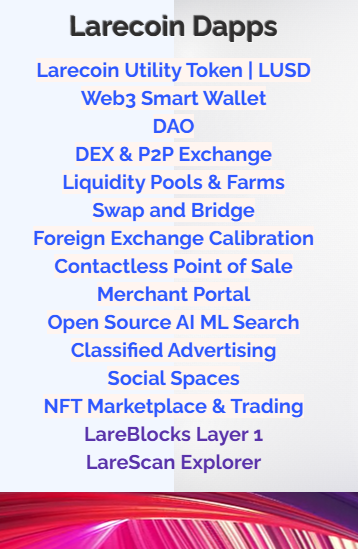
Larecoin isn't just another payment processor. It's a complete Web3 global payments ecosystem built for merchants who want control.
Here's the playbook:
Step 1: Set Up Your Self-Custody Wallet
Create a wallet you control. Private keys = your keys. Your funds = your funds.
Larecoin's smart wallet integrates directly with your existing systems. No complicated setup. No technical expertise required.
Step 2: Accept Payments in LUSD
LUSD stablecoin benefits are massive:
Pegged 1:1 to USD , no volatility stress
Gas-only transfers , minimal transaction costs
Instant settlement , funds available immediately
No conversion fees , keep the full payment amount
Compare that to a 3% interchange hit on every credit card transaction. The math isn't complicated.
Step 3: Deploy the Crypto POS System
Larecoin's crypto POS system for small business works in-store, online, and even in the metaverse.
Features include:
Contactless payments
QR code scanning
Multi-currency support
Real-time conversion rates
NFT receipts for accounting
Yes, NFT receipts. Immutable, verifiable proof of every transaction: permanently on-chain. Your accountant will thank you.
Step 4: Leverage the Receivables Token
The receivables token model transforms how you manage cash flow.
Outstanding invoices become tradeable assets. Need liquidity before a customer pays? Tokenize the receivable. Access funds immediately.
This isn't theoretical. It's operational.
Larecoin vs. The Competition
Let's get specific.
Feature | NOWPayments | CoinPayments | Triple-A | Larecoin |
Self-Custody | ❌ | ❌ | ❌ | ✅ |
NFT Receipts | ❌ | ❌ | ❌ | ✅ |
Native Stablecoin | ❌ | ❌ | ❌ | ✅ (LUSD) |
Receivables Token | ❌ | ❌ | ❌ | ✅ |
Gas-Only Transfers | ❌ | ❌ | ❌ | ✅ |
Push to Card | ❌ | ❌ | Limited | ✅ |
Looking for a NOWPayments alternative or CoinPayments alternative? This is it.
Those platforms were built for a different era. Larecoin was built for merchants who refuse to sacrifice custody for convenience.
The Full Custody Advantage
Let's talk about what "full custody" actually means for your business.
Bank-free operations. No account freezes. No payment processor disputes. No unexplained holds on your revenue.
Traditional payment processors can: and do: freeze merchant accounts. Sometimes for weeks. Sometimes permanently. Often without explanation.
With self-custody:
You control withdrawal timing
You choose which currencies to hold
You decide when and how to convert
No third party can touch your funds
This is financial sovereignty for merchants.

Real Numbers: What 50% Savings Looks Like
Let's run the math on a business processing $100,000 monthly.
Traditional Credit Card Processing:
Average interchange: 2.5%
Monthly fees: $2,500
Annual fees: $30,000
Larecoin Web3 Payments:
Gas fees: ~0.5% (variable, often lower)
No interchange
No processor markup
Monthly cost: ~$500
Annual cost: ~$6,000
Annual savings: $24,000
That's an 80% reduction. Not 50%. Eighty percent.
And you keep full custody the entire time.
Getting Started: Your Action Plan
Ready to stop bleeding interchange fees?
Step 1: Visit Larecoin.com and explore the merchant solutions.
Step 2: Set up your self-custody smart wallet.
Step 3: Integrate the crypto POS system with your existing checkout.
Step 4: Start accepting LUSD and other supported currencies.
Step 5: Watch your payment processing costs drop: while your control increases.

The Bottom Line
Interchange fees aren't inevitable. They're a choice.
A choice to use legacy payment rails designed to extract maximum value from merchants.
Web3 payments: specifically, self-custody solutions like Larecoin: offer an exit ramp.
Lower fees. Full custody. Global reach. NFT receipts for bulletproof accounting. Stablecoin stability without volatility risk.
This isn't the future of payments. It's available right now.
The only question: How much longer will you keep paying 3% on every transaction when the alternative is sitting right in front of you?
Your money. Your custody. Your rules.
Comments