

.png)
How to Reduce Merchant Interchange Fees by 50% (The Proven Larecoin Framework)
- [[[Free!!]<<<<]] Watch: 스포르팅 - 토트넘 Live Stream 13 September 2022
- 2 hours ago
- 5 min read
![Writer: [[[Free!!]<<<<]] Watch: 스포르팅 - 토트넘 Live Stream 13 September 2022](https://lh3.googleusercontent.com/a/AItbvmktwQc0wCdd3ZEETSYItRQubwwBzOyjD_dcigRf=s96-c)
![[HERO] How to Reduce Merchant Interchange Fees by 50% (The Proven Larecoin Framework)](https://cdn.mar2blism.com/5YFOMmAslgI.webp)
Every time a customer taps a credit card at your register or clicks "Buy Now" on your site, you lose. You lose 2.5%. You lose 3%. Sometimes, you lose 4% or more.
Traditional payment processing is a legacy tax on innovation. It’s a multi-layered cake of fees: interchange fees, assessment fees, processor markups, and gateway monthly costs. For a business doing $100,000 a month in volume, that’s $5,000 straight into the pockets of banks and middlemen. That’s $60,000 a year: enough to hire a new employee or double your marketing budget.
It’s time to stop the bleed.
At Larecoin, we’ve developed a framework that doesn’t just "tweak" these costs. It nukes them. By moving off legacy rails and onto Web3 infrastructure, you can reduce merchant interchange fees by 50% to 90%.
Here is the proven Larecoin Framework for financial sovereignty.
The Problem: The 3% Black Hole
Traditional processors like Visa and Mastercard operate on 1970s technology wrapped in modern marketing. To move money from Point A to Point B, they require a dozen intermediaries. Each one takes a "small" cut.
Interchange Fee: 1.5% – 2.5%
Assessment Fee: 0.13%
Processor Markup: 0.20% – 0.50%
Flat Per-Transaction Fee: $0.10 – $0.30
If you sell a high-ticket item for $1,000, you pay roughly $30 in fees. If you process $1 million a year, you’re handing over $30,000 for the "privilege" of getting paid.
The Larecoin Solution: Fixed Costs, Not Percentages
The core of the Larecoin Framework is simple: Replace percentage-based fees with fixed network costs.
When you use the Larecoin ecosystem, you aren't paying a middleman to "authorize" a transaction. You are using the blockchain to verify it. On networks like Solana, the cost to move $100 or $100,000 is essentially the same: a fraction of a cent in gas fees.
The Math of Web3 Global Payments
Let’s look at the numbers. In a traditional setup, your fees scale linearly with your success. The more you sell, the more the bank takes.
With Larecoin:
Traditional Fee on $1,000: ~$30.00
Larecoin Gas Fee on $1,000: ~$0.02 - $0.15
By switching to a crypto POS system for small business, you effectively decouple your growth from your overhead. Our framework focuses on LUSD, our stablecoin version, ensuring you get the speed of crypto without the headache of Bitcoin's price swings.
Why Legacy "Crypto Processors" Fail
You might have looked at a NOWPayments alternative or a CoinPayments alternative before. Many of these platforms are better than banks, but they still act as "custodial" intermediaries. They take your crypto, hold it, and then charge you a 0.5% to 1% fee to withdraw it to your own wallet.
Larecoin is different. We believe in self-custody merchant accounts.
When a customer pays you via Larecoin, the funds go directly to a wallet you control. No middleman holding your funds. No "payout" delays. No 1% withdrawal fee. You keep the 1% that Triple-A or CoinPayments would have taken. That is true financial sovereignty.
Pillar 1: NFT Receipts for Accounting
One of the biggest hurdles for merchants moving to Web3 is bookkeeping. "How do I prove this transaction happened for my CPA?"
The Larecoin Framework utilizes NFT receipts for accounting. Every transaction generates a unique, immutable NFT that serves as a digital "Receivables Token."
These aren't just pictures of monkeys. They are cryptographic proof of sale. They contain the metadata of the transaction: date, amount, SKU, and timestamp. Because they live on-chain, they are unalterable. You can export these directly to your accounting software, making tax season a breeze instead of a nightmare.

Suggested Image: A clean, modern infographic comparing a messy paper receipt pile to a streamlined digital NFT receipt dashboard.
Pillar 2: LUSD Stablecoin Benefits
Volatility is the enemy of the merchant. You can’t pay rent in a currency that drops 10% between lunch and dinner.
The Larecoin framework utilizes LUSD stablecoin benefits to provide a rock-solid unit of account.
1:1 Peg: LUSD is designed for stability.
Instant Settlement: No waiting 3 business days for "clearing."
Global Reach: Accept payments from a customer in Tokyo as easily as a customer in New York, with zero FX conversion fees.
This is the "Web3 global payments" promise fulfilled. You get the efficiency of the blockchain with the stability of the dollar.
Pillar 3: Self-Custody and Bank-Free Operations
The biggest risk to any business in 2026 isn't just fees: it's "de-platforming." We’ve seen traditional processors freeze merchant accounts for "high-risk" activities (which often just means "growing too fast").
With self-custody merchant accounts, Larecoin removes the "off switch" that banks hold over your head. Your money is yours. You control the private keys.
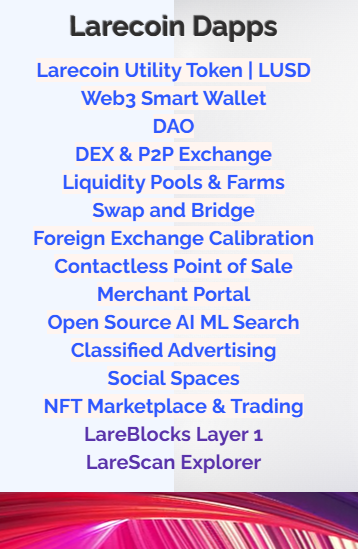
By using our decentralized applications, you can swap your LUSD for other assets or bridge them to different chains without ever asking a bank for permission.
How to Implement the Framework
Ready to stop overpaying? The transition to the Larecoin ecosystem is faster than you think.
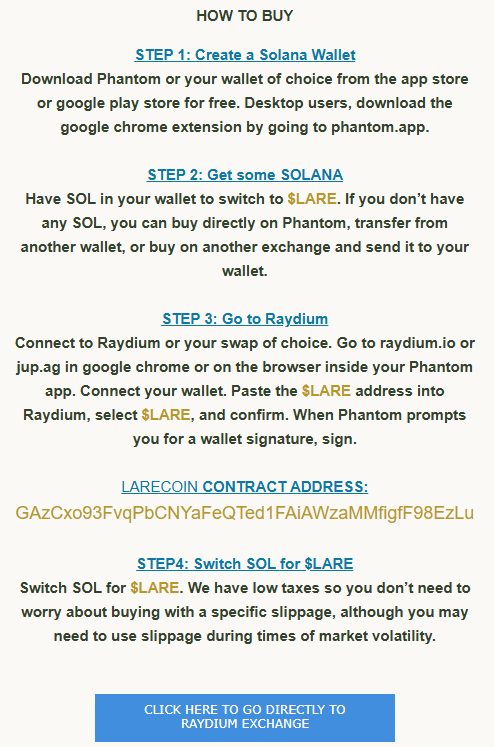
1. Set Up Your Solana Wallet
Since Larecoin is built for speed and low cost, we leverage the Solana network. You'll need a self-custody wallet like Phantom or Solflare.
2. Acquire $LARE
$LARE is the fuel for our ecosystem. You can acquire it via Raydium. This allows you to participate in the governance of the DAO and unlock advanced merchant features.
3. Integrate the Payment Widget
Our merchant portal allows you to generate a "Push-to-Card" or direct-to-wallet payment link. You can embed this on your Shopify store, WooCommerce site, or use it as a standalone crypto POS system for small business.
4. Switch to Gas-Only Transfers
Once your customers start paying in LUSD, you’ll notice the difference immediately. No more 3% deductions. Just the small, flat gas fee required by the network.
Comparing the Competition
Let’s be real. There are other players in the space. But look at the fee structures:
Feature | NOWPayments / CoinPayments | Larecoin Framework |
Transaction Fee | 0.5% - 1.0% | $0 (Gas Only) |
Custody | Custodial (They hold it) | Self-Custody (You hold it) |
Settlement | Manual / Delayed | Instant |
Accounting | CSV Exports | NFT Receipts |
Governance | None | DAO Community Driven |
The choice is clear. If you want to actually reduce merchant interchange fees, you have to move away from percentage-based models entirely.
The Future: AI and Metaverse Payments
We aren't just looking at the present. Larecoin is positioning itself for the next decade of commerce. Our roadmap includes AI-driven FX calibration and metaverse-integrated payment portals.
Imagine a world where your AI agent negotiates the best liquidity paths for your store’s receivables in real-time. That’s where we are headed. Check out our latest blog posts to see how we’re integrating machine learning into the Larecoin.ai ecosystem.
Financial Sovereignty is a Choice
High fees are not a "cost of doing business." They are a choice.
By sticking with legacy processors, you are choosing to fund a banking system that doesn't care about your margins. By switching to the Larecoin Framework, you are choosing to keep that 3% for yourself.
Join the movement. Start slashing your fees and take back control of your revenue.
Ready to get started?
Don't let the banks take another cent. Transition to Web3 payments today.
Comments