

.png)
How to Reduce Merchant Interchange Fees by 50%+ Using Web3 Global Payments (Easy Guide)
- [[[Free!!]<<<<]] Watch: 스포르팅 - 토트넘 Live Stream 13 September 2022
- 5 days ago
- 4 min read
![Writer: [[[Free!!]<<<<]] Watch: 스포르팅 - 토트넘 Live Stream 13 September 2022](https://lh3.googleusercontent.com/a/AItbvmktwQc0wCdd3ZEETSYItRQubwwBzOyjD_dcigRf=s96-c)
Interchange fees are eating your profits alive.
Every swipe. Every tap. Every online checkout. You're bleeding 2-4% to card networks, issuing banks, and payment processors.
For cross-border transactions? That jumps to 4-6%.
Here's the thing. You don't have to accept this anymore.
Web3 global payments are rewriting the rules. Merchants switching to stablecoin-based payment rails are slashing interchange fees by 50% or more. Some are eliminating them entirely.
This guide breaks down exactly how to do it. No fluff. No jargon. Just actionable steps to keep more of what you earn.
Why Traditional Interchange Fees Are Crushing Your Margins
Let's talk numbers.
The average merchant pays 1.5-3.5% per transaction to accept credit cards. That's the "cost of doing business," right?
Wrong.
Here's what that fee actually includes:
Interchange fee (paid to issuing bank): 1.5-2.5%
Assessment fee (paid to card network): 0.13-0.15%
Processor markup: 0.2-0.5%
Foreign exchange spread (international): 1-3%
Stack those up. A $100 international sale might net you $94. Maybe less.
For high-volume merchants, that's tens of thousands annually. Gone. Poof.
Monthly stablecoin payment volume grew from under $2 billion to over $6.3 billion in just two years. Merchants are waking up.
How Web3 Global Payments Eliminate Fee Layers
Traditional payments move through a maze of intermediaries.
Each one takes a cut.
Web3 payments? They compress that entire chain.
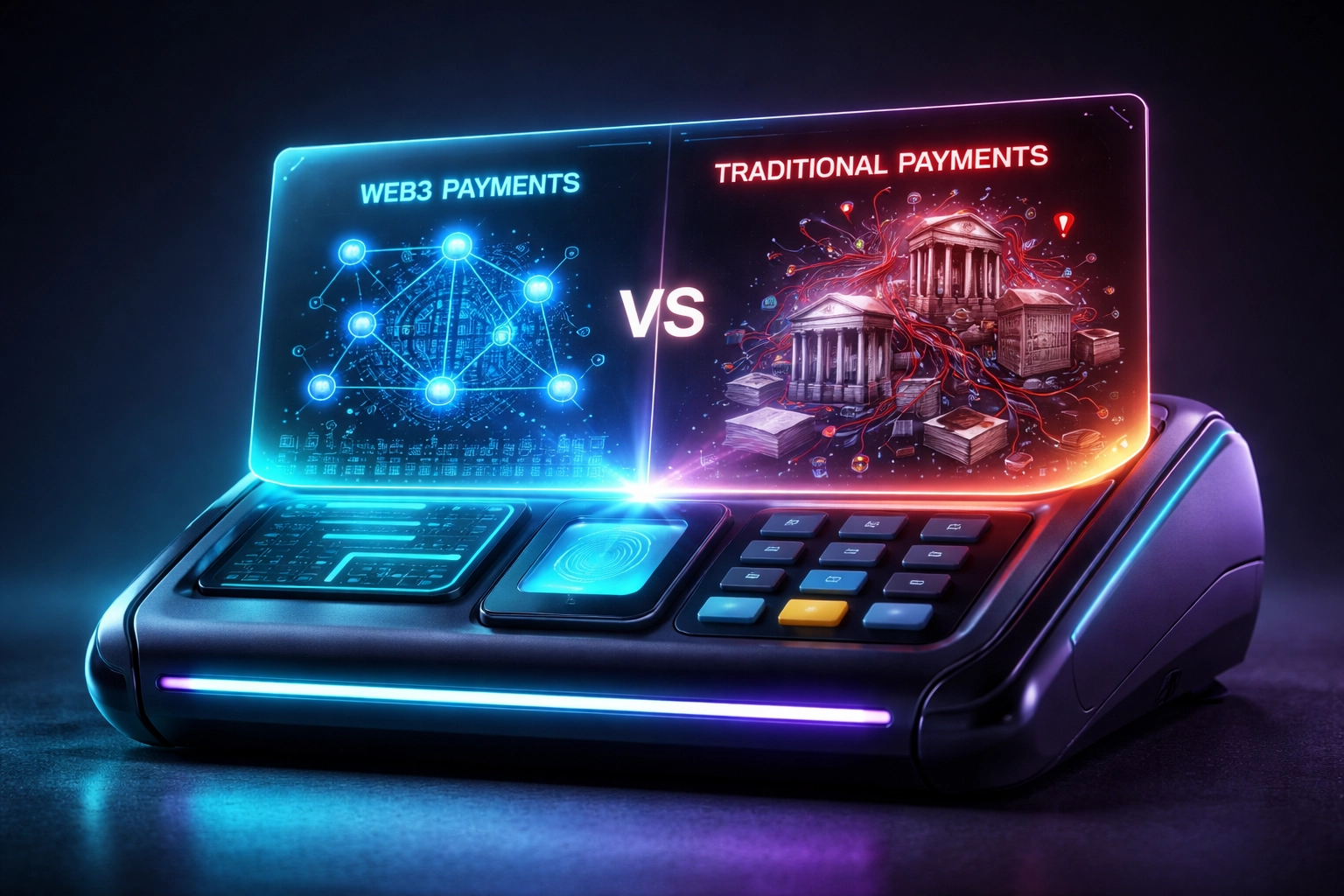
Here's the difference:
Traditional Payment Flow | Web3 Payment Flow |
Customer → Card Network → Issuing Bank → Acquiring Bank → Processor → Merchant | Customer → Blockchain → Merchant |
That's it. Two steps instead of six.
No correspondent banks. No assessment fees. No foreign exchange markups. No multi-day settlement windows locking up your capital.
Stablecoin-based clearing allows instant settlement. Money that used to take 2-5 days to hit your account? Now it's minutes.
The 5-Step Guide to Cutting Interchange Fees by 50%+
Ready to make the switch? Follow this roadmap.
Step 1: Choose a Web3 Payment Solution
Not all crypto payment processors are equal.
You need one that offers:
Self-custody merchant accounts (you control your funds)
Stablecoin support (LUSD, USDC, USDT)
Instant settlement (no waiting)
Fiat off-ramps (easy conversion to dollars)
Popular options include NOWPayments, CoinPayments, and Triple-A. But they each have limitations.
NOWPayments charges 0.5-1% per transaction. Good, but not great.
CoinPayments has been around since 2013. Solid reputation. But their interface feels dated and fees can climb with volume.
Triple-A focuses on enterprise. If you're a small business, you might feel overlooked.
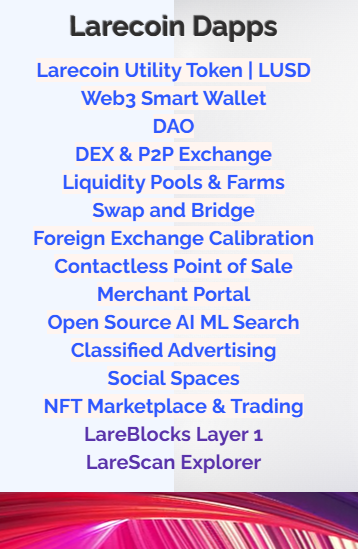
Larecoin offers a different approach. Full self-custody. LUSD stablecoin benefits. NFT receipts for accounting. And a crypto POS system designed specifically for small business operations.
Step 2: Set Up Your Self-Custody Merchant Account
This is crucial.
With traditional processors, they hold your money. They control when you get paid. They can freeze your account.
Self-custody flips that.
Your keys. Your crypto. Your rules.
A self-custody merchant account means:
Funds settle directly to your wallet
No third-party holding periods
No arbitrary account freezes
Complete financial sovereignty
Bank-free business operations aren't a dream anymore. They're happening right now.
Step 3: Integrate Stablecoin Payments
Volatility scares merchants away from crypto.
Stablecoins solve that.
LUSD stablecoin benefits include:
1:1 peg to USD
No price swings
Instant settlement
Minimal transaction fees
Global acceptance
Your customer pays in LUSD. You receive LUSD. The value stays constant.
No more watching Bitcoin drop 10% while you're waiting for settlement.
Step 4: Deploy a Crypto POS System
Online merchants have it easy. Add a payment widget. Done.
Brick-and-mortar? You need hardware.
A crypto POS system for small business should include:
QR code generation for wallet payments
NFC tap-to-pay compatibility
Real-time conversion display
Receipt generation (including NFT receipts)
Integration with existing inventory systems
Larecoin's contactless POS handles all of this. Set up takes minutes. Training takes even less.
Step 5: Leverage NFT Receipts for Accounting
Here's where it gets interesting.
Traditional receipts are paper. Or PDFs. Easy to lose. Hard to verify. A nightmare during audits.
NFT receipts for accounting change everything.
Every transaction generates an immutable, blockchain-verified receipt. Timestamped. Traceable. Permanent.
Benefits:
Audit-proof records : Can't be altered or forged
Automatic categorization : Smart contracts tag transaction types
Instant reconciliation : No more spreadsheet headaches
Tax compliance : Clear paper trail for regulators
Your accountant will thank you.
Real Cost Comparison: Traditional vs. Web3 Payments
Let's do the math on a $10,000 monthly transaction volume.
Traditional Credit Card Processing:
Fee Type | Rate | Monthly Cost |
Interchange | 2.0% | $200 |
Assessment | 0.14% | $14 |
Processor Markup | 0.3% | $30 |
Total | 2.44% | $244 |
Web3 Payment Processing (Larecoin):
Fee Type | Rate | Monthly Cost |
Network Gas | ~0.1% | $10 |
Conversion Fee | 0.5% | $50 |
Total | ~0.6% | $60 |
Annual Savings: $2,208
That's a 75% reduction in payment processing costs.
Scale that to $100,000 monthly volume? You're keeping an extra $22,080 per year.

Why Larecoin Beats NOWPayments and CoinPayments Alternatives
Searching for a NOWPayments alternative or CoinPayments alternative? Here's what sets Larecoin apart.
Full Self-Custody
NOWPayments and CoinPayments both hold funds before releasing them to you. That's custodial. That's risk.
Larecoin? Direct wallet settlement. Always.
Receivables Token Innovation
Larecoin's receivables token system lets you tokenize pending payments. Use them as collateral. Trade them. Unlock liquidity without waiting.
No other crypto payment processor offers this.
Gas-Only Transfers
Most platforms charge percentage-based fees. Larecoin charges only blockchain gas fees for transfers between wallets.
Sending $10,000? Same gas fee as sending $10.
Push-to-Card Integration
Need fiat fast? Push-to-card lets you convert stablecoins and send directly to your debit card. Instant liquidity.
Getting Started: Your Action Plan
Stop paying unnecessary interchange fees today.
Here's your roadmap:
Visit Larecoin.com : Explore the merchant portal
Set up your self-custody wallet : Takes 5 minutes
Integrate the payment widget : Works with Shopify, WooCommerce, custom builds
Deploy the crypto POS : For in-store transactions
Start accepting stablecoin payments : Watch your margins improve
Web3 global payments aren't the future. They're the present.
Every day you wait is money lost to interchange fees.
The Bottom Line
Traditional payment processors have had merchants trapped for decades.
High fees. Slow settlement. Zero transparency.
Web3 changes the equation.
50%+ fee reduction isn't a marketing promise. It's math. Fewer intermediaries equals lower costs.
Add in NFT receipts for bulletproof accounting. LUSD stablecoin benefits for zero volatility. Self-custody merchant accounts for true financial sovereignty.
This is how modern merchants operate.
This is how you keep more of what you earn.
Ready to slash your interchange fees? Start with Larecoin today.
Comments