

.png)
How to Reduce Merchant Interchange Fees by 50%+ with Web3 Global Payments
- [[[Free!!]<<<<]] Watch: 스포르팅 - 토트넘 Live Stream 13 September 2022
- 6 days ago
- 4 min read
![Writer: [[[Free!!]<<<<]] Watch: 스포르팅 - 토트넘 Live Stream 13 September 2022](https://lh3.googleusercontent.com/a/AItbvmktwQc0wCdd3ZEETSYItRQubwwBzOyjD_dcigRf=s96-c)
Traditional payment processors are eating your profits. Every swipe. Every tap. Every transaction.
Interchange fees averaging 2-3% domestically? That's just the beginning. Cross-border card payments? You're looking at 4-6% stripped from every sale.
Web3 global payments change everything. We're talking 50%+ reductions. Real savings. Real margins.
Here's exactly how it works.
The Interchange Fee Problem Nobody's Solving
Credit card networks have built an empire on merchant fees. Acquiring banks, issuing banks, payment processors: everyone takes a cut before you see a dime.
The math is brutal:
Domestic transactions: 1.5-3.5% per sale
International transactions: 4-6% per sale
Currency conversion markups: Additional 1-2%
Settlement delays: 2-5 business days of locked capital
Sell $100,000 monthly with 30% international customers? You're hemorrhaging $3,000-5,000 in fees alone. Every single month.
Traditional processors like CoinPayments and NOWPayments helped bridge crypto acceptance. But they still operate within legacy frameworks. Still charge percentage-based fees. Still rely on centralized custody.
The real revolution requires eliminating intermediaries entirely.
How Stablecoins Slash Interchange to Near Zero
Stablecoins bypass the entire traditional payment infrastructure. No interchange. No acquiring bank fees. No currency conversion markups.
Direct blockchain settlement means:
Transaction costs under $0.50: regardless of amount
Settlement in minutes: not days
No percentage-based fees: flat network costs only
Global reach: same fees whether customer is local or international
A $10,000 transaction on traditional rails? $300-600 in fees. Same transaction via stablecoin? Under $1.
That's not a marginal improvement. That's a paradigm shift.
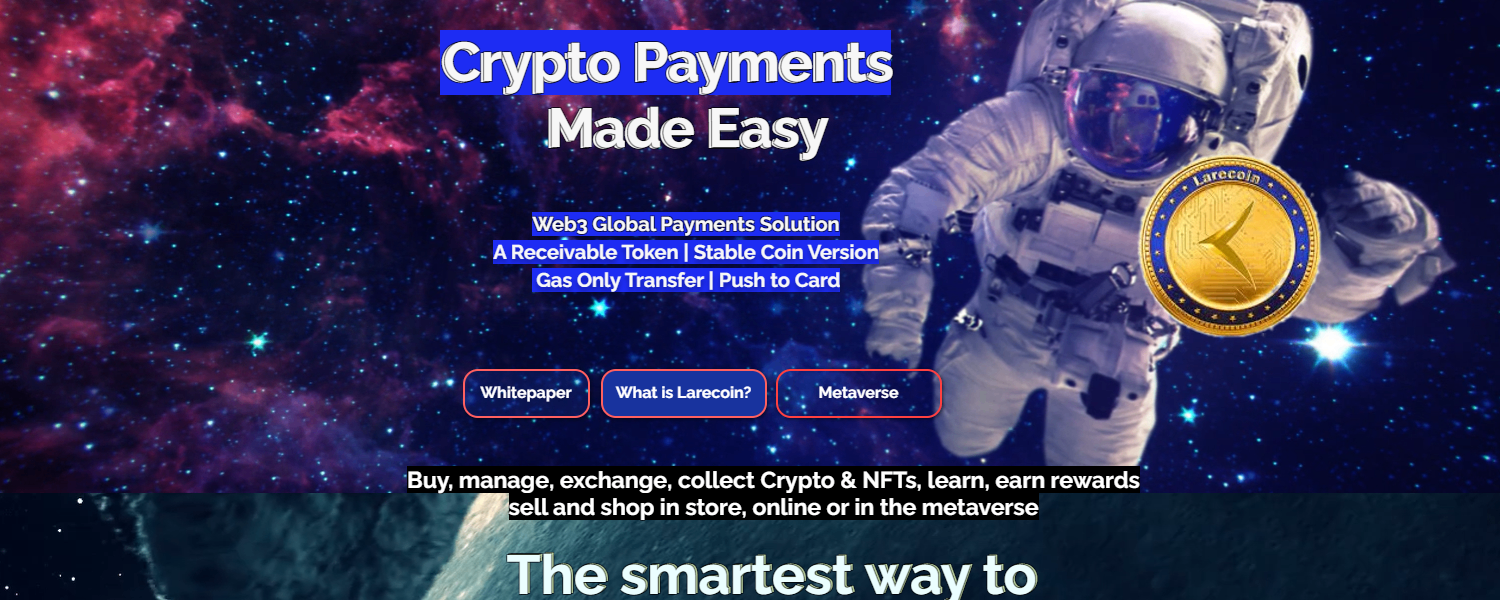
Enter Larecoin: Purpose-Built Web3 Global Payments
Larecoin isn't another crypto payment gateway bolted onto legacy systems. It's native Web3 infrastructure designed specifically for merchant fee reduction.
LUSD Stablecoin Benefits
The LUSD stablecoin maintains dollar parity while eliminating volatility concerns. Merchants receive predictable value. Customers spend familiar denominations.
Key advantages:
1:1 USD peg: no price fluctuation risk
Gas-only transfers: minimal transaction costs
Multi-chain support: optimal network selection
Instant finality: immediate settlement confirmation
Self-Custody Merchant Accounts
Traditional processors hold your funds. They control access. They dictate terms.
Larecoin's self-custody merchant accounts flip the script:
You control private keys
No account freezes
No withdrawal limits
No third-party access
Financial sovereignty isn't a buzzword here. It's architecture.
NFT Receipts for Accounting: The Hidden Advantage
Beyond fee reduction, Larecoin introduces NFT receipts for accounting: immutable, verifiable transaction records living permanently on-chain.
Every sale generates:
Timestamped proof of transaction
Automatic blockchain verification
Exportable accounting data
Audit-ready documentation
Traditional receipt systems fail. Paper gets lost. Digital records corrupt. Disputes drag on.
NFT receipts eliminate ambiguity. The blockchain doesn't lie. The blockchain doesn't forget.
For merchants handling high-volume transactions, this means streamlined reconciliation, reduced dispute costs, and bulletproof compliance documentation.
Receivables Token: Unlocking Working Capital
Here's where Larecoin truly separates from NOWPayments alternatives and CoinPayments competitors.
The receivables token transforms pending payments into liquid, tradeable assets. Invoiced a client? That receivable becomes tokenized collateral.
Implications:
Access capital before payment arrives
Trade receivables on secondary markets
Improve cash flow without factoring fees
Maintain balance sheet flexibility
Traditional invoice factoring charges 1-5% of invoice value. Receivables tokenization democratizes access while slashing costs.
Crypto POS System for Small Business
Enterprise solutions are great. But small businesses need accessible tools too.
Larecoin's crypto POS system for small business delivers:
Contactless payment acceptance
QR code generation
Multi-currency support
Real-time conversion options
Push-to-card functionality
No expensive hardware. No complex integration. Just download, configure, and accept Web3 payments within minutes.

Head-to-Head: Larecoin vs. Traditional Crypto Processors
How does Larecoin stack against established players?
vs. NOWPayments
NOWPayments offers solid crypto gateway functionality. Reasonable fees. Decent coin support.
But:
Still charges 0.5-1% per transaction
Centralized custody model
Limited stablecoin infrastructure
No receivables tokenization
Larecoin eliminates percentage fees, offers self-custody, and provides advanced DeFi features NOWPayments can't match.
vs. CoinPayments
CoinPayments pioneered multi-coin acceptance. Wide altcoin support remains impressive.
However:
0.5% standard fee structure
Custodial wallet model
Aging infrastructure
Minimal Web3 innovation
For merchants prioritizing fee reduction and financial sovereignty, CoinPayments feels increasingly legacy.
vs. Triple-A
Triple-A targets enterprise clients with compliance-focused solutions.
Trade-offs:
Higher fee structures for compliance overhead
Corporate-centric approach
Less flexibility for small businesses
Traditional custody arrangements
Larecoin serves both enterprise and SMB markets with unified, self-sovereign infrastructure.
Implementation: Your 50%+ Fee Reduction Roadmap
Ready to slash interchange fees? Here's your action plan:
Step 1: Set Up Your Larecoin Merchant Portal
Head to larecoin.com and access the merchant portal. Configure your self-custody wallet. Generate API keys for integration.
Step 2: Integrate LUSD Acceptance
Add LUSD as a checkout option. Most e-commerce platforms support simple plugin integration. Custom builds can leverage Larecoin's API documentation.
Step 3: Configure Multi-Chain Support
Select optimal blockchain networks based on your transaction patterns. High-frequency, low-value sales? Choose low-fee networks. Large B2B transactions? Prioritize security over speed.
Step 4: Enable NFT Receipt Generation
Activate automatic NFT receipt creation. Export settings to match your accounting software requirements.
Step 5: Train Your Team
Brief staff on handling crypto payments. Most POS interactions remain identical to card processing: just different backend settlement.

The Math: Real Savings Projections
Let's quantify impact for a typical merchant:
Scenario: $500,000 annual revenue, 25% international sales
Traditional Processing Costs:
Domestic: $375,000 × 2.5% = $9,375
International: $125,000 × 5% = $6,250
Total: $15,625 annually
Larecoin Processing Costs:
All transactions: ~$0.50 average network fee
Estimated 5,000 annual transactions × $0.50 = $2,500
Total: $2,500 annually
Annual Savings: $13,125 (84% reduction)
That's not theoretical. That's achievable starting today.
Bank-Free Business Operations: The Bigger Picture
Fee reduction is immediate. The larger opportunity? Complete financial sovereignty.
Web3 global payments enable:
24/7 settlement: no banking hours restrictions
Borderless commerce: same experience globally
Censorship resistance: no account deplatforming risk
Programmable money: automated payment logic
Traditional banking served its purpose. Web3 infrastructure serves tomorrow's merchants.
Start Cutting Fees Today
Interchange fees are a choice. A expensive choice most merchants make by default.
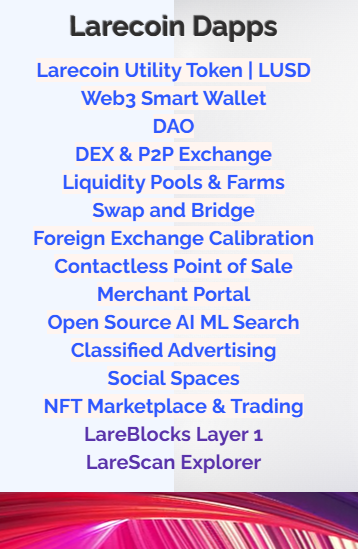
Larecoin offers the alternative. Self-custody. Stablecoin acceptance. NFT receipts. Receivables tokenization. Crypto POS systems.
All designed for one outcome: keeping more of what you earn.
Explore the full Larecoin ecosystem at larecoin.com. Set up your merchant account. Start accepting Web3 payments.
Your margins will thank you.
Comments