

.png)
How to Reduce Merchant Interchange Fees by 50%+ with Web3 Global Payments (5-Step Guide)
- [[[Free!!]<<<<]] Watch: 스포르팅 - 토트넘 Live Stream 13 September 2022
- 2 hours ago
- 5 min read
![Writer: [[[Free!!]<<<<]] Watch: 스포르팅 - 토트넘 Live Stream 13 September 2022](https://lh3.googleusercontent.com/a/AItbvmktwQc0wCdd3ZEETSYItRQubwwBzOyjD_dcigRf=s96-c)
Merchants are bleeding money. Every swipe. Every tap. Every transaction.
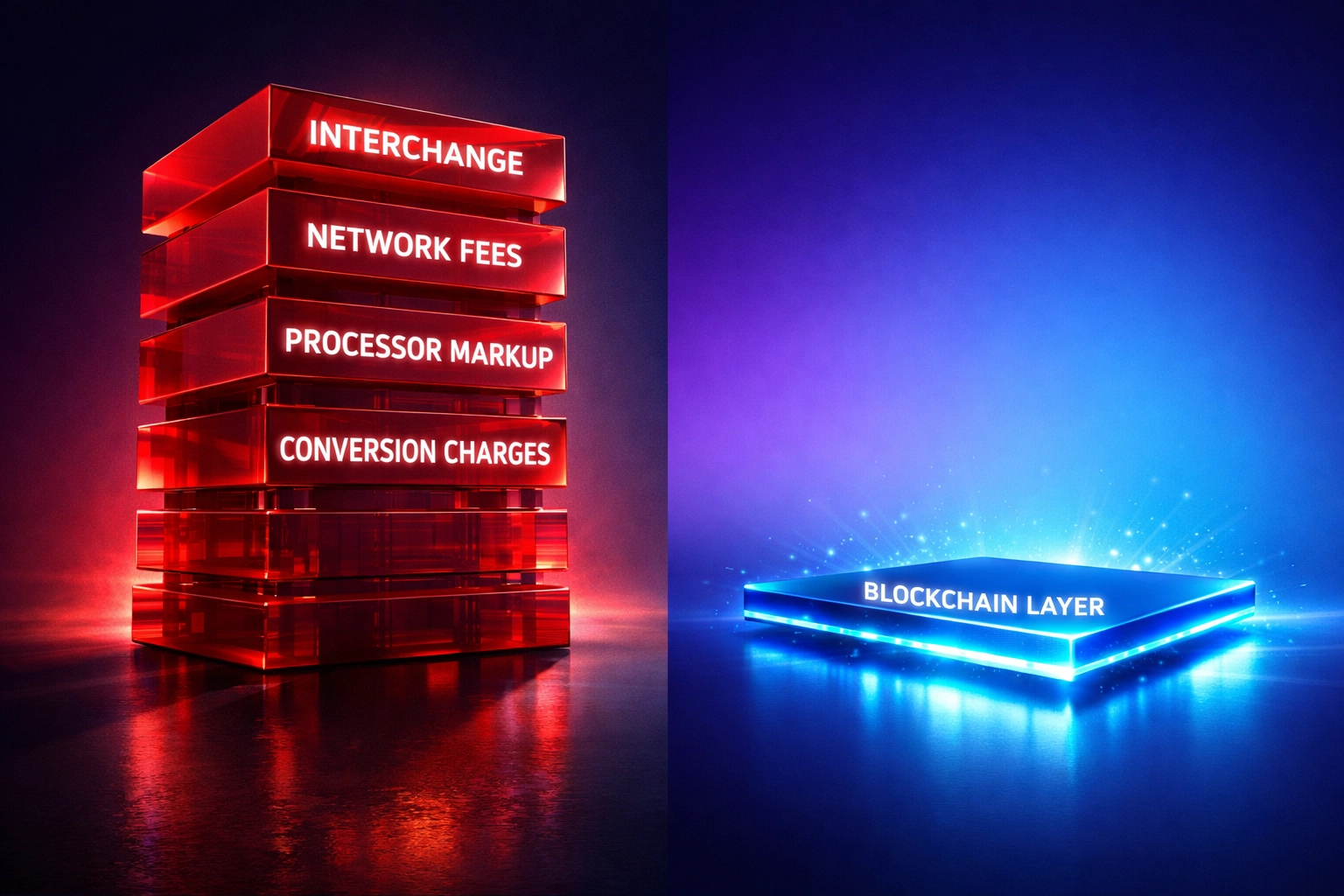
Traditional payment processors take 2-3.5% of your revenue. Card networks stack interchange fees. Banks add processing markups. Cross-border? Add another 1-3% for conversion.
A $500,000 annual business loses $15,000-$18,000 to fees alone.
Web3 global payments slash that number to under $5,000. That's a 70%+ reduction. Real savings. Instant settlement. Zero chargebacks.
Here's exactly how to implement it in five steps.
The Traditional Fee Stack Is Crushing Merchants
Let's break down where your money goes with conventional payment processing:
Interchange fees: 1.5-2.5% per transaction
Network fees: 0.1-0.3% (Visa/Mastercard cut)
Processor markup: 0.2-0.5% (Stripe, Square, PayPal)
Cross-border conversion: 1-3% additional
Chargeback fees: $15-$100 per dispute
Monthly gateway fees: $10-$50
Total effective rate? 3-3.5% for domestic, 4-6% for international.
Platforms like NOWPayments and CoinPayments offer crypto payment options, but many still charge 0.5-1% platform fees on top of blockchain costs. They're better than traditional rails, but they're intermediaries with their own fee structures.
Web3 payments eliminate the intermediaries entirely.
Step 1: Set Up Your Self-Custody Web3 Merchant Account
Traditional merchant accounts require bank approvals, credit checks, and multi-week onboarding.
Web3? 15 minutes. No gatekeepers.
Here's the setup:
Create a self-custody wallet specifically for merchant payments. This gives you complete control: no frozen accounts, no arbitrary holds, no third-party permission required.
Key features to enable:
Multi-signature security for team access
Hot wallet for daily operations, cold storage for reserves
Direct blockchain settlement (Solana, Ethereum, Polygon)
Native LUSD stablecoin integration
Larecoin's merchant infrastructure handles this natively. Full self-custody. Gas-only transfers. No platform fees skimmed off the top.
Unlike NOWPayments where funds flow through their custodial system first, you receive payments directly to your wallet. Instant access. Your keys, your crypto, your control.
Setup time: 15 minutes. Bank approval required: Zero.
Step 2: Enable LUSD Stablecoin Payments for Predictable Settlement
Cryptocurrency volatility scares merchants. Fair concern.
LUSD stablecoins solve this completely.
LUSD maintains 1:1 peg with the US dollar. Zero volatility. Predictable value. No conversion guesswork.
Benefits for merchants:
Instant settlement in stable dollar-equivalent value
No forex markups on international transactions
No conversion delays or settlement holds
Blockchain transparency for every payment
Accept LUSD alongside Bitcoin, Ethereum, and native Larecoin tokens. Customers pay in their preferred cryptocurrency. You receive stable value.
CoinPayments offers stablecoin options but forces conversion through their exchange at market rates with spreads. That's additional slippage eating your margins.
Direct LUSD settlement? You get exactly what the customer sends. No conversion spread. No exchange rate games.

Step 3: Integrate Payments Alongside Your Existing Systems
Web3 payments don't replace traditional processing: they complement it.
Run both simultaneously.
Integration options:
Point-of-sale terminals for in-person crypto payments
API integration for e-commerce platforms
Payment links for invoicing and recurring billing
QR codes for mobile wallet scanning
Embeddable widgets for website checkout
Your crypto-native customers pay with digital assets. Traditional customers use cards. You capture both markets while drastically reducing average processing costs.
Larecoin's API documentation provides plug-and-play integration for major e-commerce platforms. Shopify, WooCommerce, custom builds: straightforward implementation.
NOWPayments offers similar integrations but routes everything through centralized servers. More points of failure. More dependency on third-party uptime.
Decentralized settlement means your payment processing isn't dependent on any single company's infrastructure staying online.
Step 4: Leverage Blockchain Networks for Ultra-Low-Fee Settlement
Here's where the magic happens. Real fee reduction.
Blockchain transaction costs:
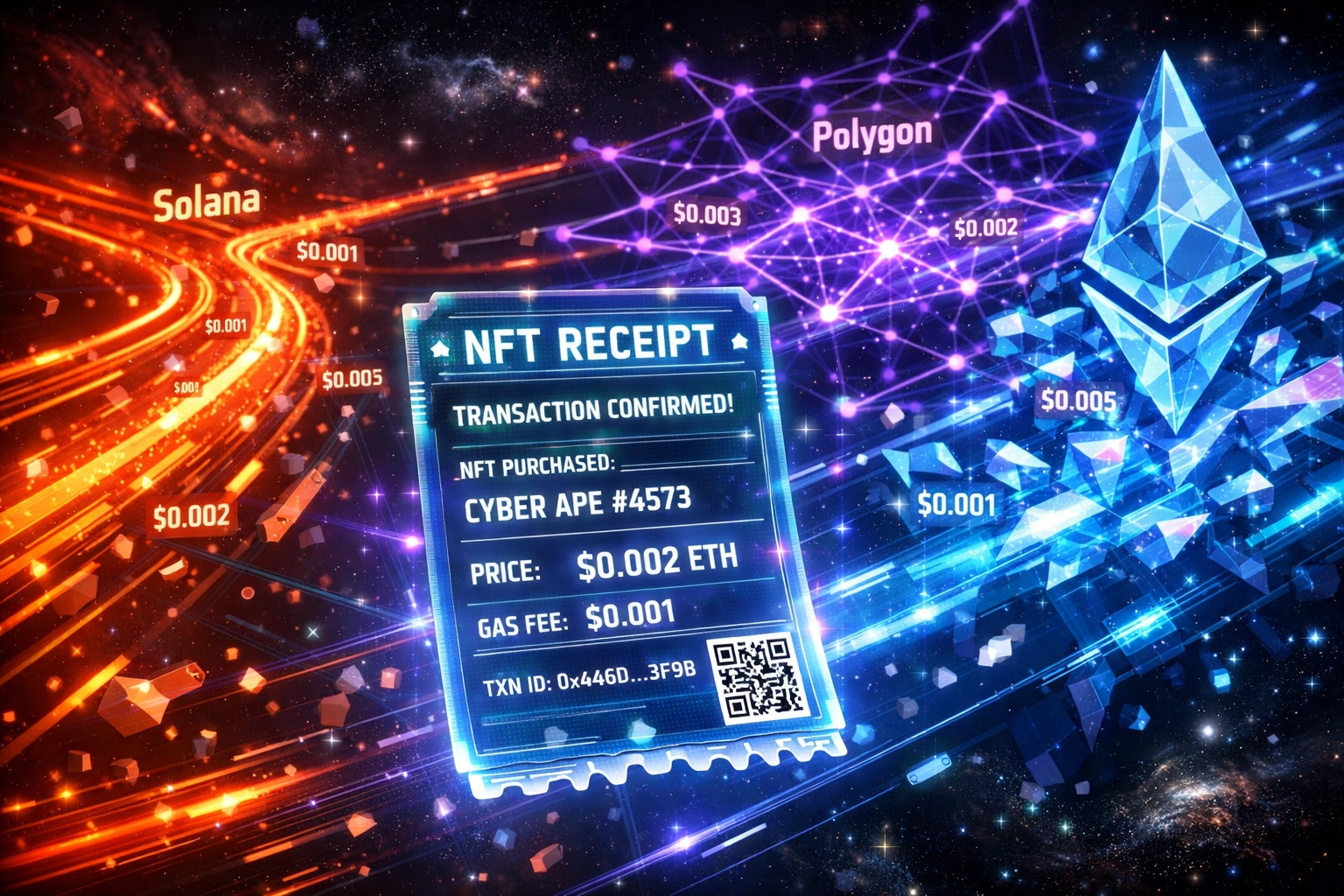
Solana: $0.00025 per transaction
Polygon: $0.01-0.05 per transaction
Ethereum: $1-5 depending on network congestion
Compare that to 3% traditional processing. A $10,000 transaction costs:
Traditional: $300-350 in fees
Solana blockchain: $0.00025
Savings: 99.99%+
Even accounting for occasional blockchain congestion, the math is undeniable.
Process payments directly on-chain. Wallet-to-wallet. No intermediaries taking cuts. Just blockchain validator fees: fractions of a cent.
NFT receipts add another layer of innovation.
Every transaction generates an immutable NFT receipt stored on-chain. Permanent proof of purchase. Customer ownership verification. Warranty tracking. Loyalty program integration.
Traditional payment processors charge extra for detailed transaction analytics. Blockchain gives you every data point natively. Transaction history, customer wallet addresses, payment timestamps: all transparent and verifiable.

Step 5: Monitor Savings and Scale Your Web3 Payment Volume
Implementation is just the beginning. The real gains come from monitoring and scaling.
Real-world savings by business size:
Small business ($500K annual revenue):
Traditional fees: $15,000-18,000/year
Web3 fees: $4,500-5,000/year
Annual savings: $10,500-13,500 (70-75% reduction)
Mid-size business ($2M annual volume):
Traditional fees: $60,000-70,000/year
Web3 fees: $18,000-20,000/year
Annual savings: $42,000-50,000 (70% reduction)
Enterprise ($10M+ volume):
Traditional fees: $300,000-350,000/year
Web3 fees: $90,000-100,000/year
Annual savings: $210,000-250,000+ (70%+ reduction)
Track these metrics monthly:
Average effective fee rate per transaction
Total fee savings compared to traditional processing
Customer adoption rate of crypto payment options
Settlement speed improvements
Chargeback elimination impact
Scale gradually. Start by offering crypto payments as an option. As adoption grows, shift more volume to Web3 rails.
CoinPayments charges 0.5% platform fees plus blockchain costs. That erodes savings significantly at scale. NOWPayments offers lower rates but still takes a platform cut.
Larecoin charges zero platform fees. Just blockchain gas costs. The more volume you process, the more you save.
The Chargeback Elimination Bonus
Traditional payment processing loses merchants 0.5-1% of revenue to chargeback fraud. Customers dispute charges. Banks reverse transactions. You're out the product and the money.
Blockchain transactions are final.
No chargebacks. No friendly fraud. No false disputes. Payment received means payment kept.
For high-risk industries (digital goods, supplements, adult content), this alone justifies Web3 payment adoption. Chargeback losses can exceed 2-3% of revenue in some sectors.
Web3 payments reduce that to zero. Immediate, irreversible settlement.
Why Merchants Choose Decentralized Over Legacy Crypto Processors
NOWPayments and CoinPayments pioneered crypto merchant services. Respect for that.
But they're still intermediaries. Custodial wallets. Platform fees. Centralized infrastructure.
Larecoin represents the next evolution:
True self-custody: you control the keys
Zero platform fees: only pay blockchain gas
NFT receipt innovation: permanent transaction records
LUSD stablecoin native: no forced conversions
Global instant settlement: 3-8 second finality
No KYC friction: merchants and customers both
This is merchant independence. Financial sovereignty. No permission required.
Getting Started Today
The fee reduction math is simple. A $500K business saves $10,500+ annually. A $2M business saves $42,000+.
Those savings compound. Year after year. Pure margin expansion.
Implementation timeline:
Day 1: Set up self-custody merchant wallet (15 minutes)
Day 2: Enable LUSD stablecoin payments
Day 3-5: Integrate with existing payment systems
Week 2: Process first Web3 transactions
Month 1: Begin tracking savings metrics
Month 3: Scale volume based on adoption data
Start alongside traditional processing. No need to eliminate card payments immediately. Offer customers the choice.
The crypto-native audience will find you. International customers will appreciate no forex markups. Fee-conscious businesses will see the math.
Web3 global payments aren't replacing traditional systems overnight. They're offering a parallel financial infrastructure. Lower fees. Faster settlement. More merchant control.
The question isn't whether to adopt Web3 payments. It's how much longer you can afford to wait.
Check out Larecoin's merchant solutions at larecoin.com and join the conversation in our community forums.
Your margins will thank you.
Comments