

.png)
How to Reduce Merchant Interchange Fees by 50%+ with Web3 Global Payments (Easy Guide)
- [[[Free!!]<<<<]] Watch: 스포르팅 - 토트넘 Live Stream 13 September 2022
- Jan 21
- 4 min read
![Writer: [[[Free!!]<<<<]] Watch: 스포르팅 - 토트넘 Live Stream 13 September 2022](https://lh3.googleusercontent.com/a/AItbvmktwQc0wCdd3ZEETSYItRQubwwBzOyjD_dcigRf=s96-c)
Interchange fees are killing your margins.
Every swipe. Every tap. Every online checkout. You're bleeding 2-3.5% to card networks, payment processors, and banks. Cross-border transactions? Even worse, 6-6.5% evaporates before you see a dime.
Here's the thing: it doesn't have to be this way.
Web3 global payments are rewriting the rules. Merchants worldwide are slashing fees by 50% or more, some achieving 80%+ reductions. No tricks. No gimmicks. Just blockchain-powered efficiency.
This guide breaks down exactly how to make it happen.
The Real Cost of Traditional Payment Processing
Let's talk numbers.
A $100 transaction through traditional card processing costs you $2-3.50 in fees. That's before chargebacks, PCI compliance costs, and the nightmare of reconciliation.
Scale that up:
$10,000 monthly revenue = $200-350 lost to fees
$100,000 monthly revenue = $2,000-3,500 gone
$1M annual revenue = $20,000-35,000 handed over to intermediaries
International sales? Add another 3% for currency conversion and correspondent banking fees. A $10,000 cross-border transfer can cost around $330 in traditional fees.
That money should be in your pocket. Building your business. Fueling growth.
How Web3 Payments Slash Fees by 50%+
Web3 payments work differently.
Instead of routing through card networks, correspondent banks, and multiple intermediaries, blockchain enables direct peer-to-peer transactions between digital wallets. Fewer middlemen = drastically lower costs.
Here's the breakdown:
Payment Method | Typical Fee Rate |
Traditional card processing | 2-3.5% |
Cross-border (traditional) | 6-6.5% |
Stablecoin payments | Domestic rate only (no FX markup) |
Blockchain-based systems | Up to 80% fee reduction |
The math is simple. Blockchain systems can reduce that $330 cross-border fee to approximately $66. Same transaction. Same value. Fraction of the cost.
Smart contracts automate compliance checks and currency conversions. No manual intervention. No hidden processing fees. Just clean, efficient transactions that settle in seconds, not days.
Why Larecoin Beats Traditional Crypto Payment Processors
You've probably heard of crypto payment solutions. Maybe you've looked at NOWPayments or CoinPayments. They work. But they come with limitations.
The problem with most crypto processors:
Custodial wallets (they hold your funds)
Limited stablecoin options
Complex integration requirements
Inconsistent fee structures
Minimal merchant tools
Larecoin takes a different approach.
Self-Custody Merchant Accounts
Your funds. Your control. Always.
Unlike CoinPayments or Triple-A solutions that require custodial arrangements, Larecoin's self-custody merchant accounts keep you in the driver's seat. No third party holding your revenue. No withdrawal delays. No counterparty risk.
This is financial sovereignty for your business.
LUSD Stablecoin Benefits
Volatility is the #1 concern merchants have about crypto payments. Valid concern.
Larecoin's LUSD stablecoin eliminates that worry. You receive payments in a stable, dollar-pegged asset. No price swings between transaction and settlement. Your $100 sale stays worth $100.
LUSD advantages:
Dollar-pegged stability
Gas-only transfers (minimal network fees)
Instant settlement
No FX conversion costs for international sales
NFT Receipts for Accounting
Here's where it gets interesting.
Every Larecoin transaction generates an NFT receipt, an immutable, blockchain-verified record of the sale. No more digging through spreadsheets. No more reconciliation headaches.
For accounting purposes, NFT receipts provide:
Tamper-proof transaction records
Automatic audit trails
Simplified tax reporting
Real-time revenue tracking
Your accountant will thank you.
Receivables Token Innovation
Larecoin's receivables token transforms how you manage cash flow.
Traditional payment processing ties up your money for days, sometimes weeks. Chargebacks can claw back funds months after a sale. The receivables token creates a tokenized representation of your incoming payments, giving you unprecedented visibility and control over your cash position.
Step-by-Step: Setting Up Web3 Payments for Your Business
Ready to cut those fees? Here's how to get started.
Step 1: Evaluate Your Current Fee Structure
Pull your processing statements. Calculate your true cost per transaction, including:
Interchange fees
Assessment fees
Processor markup
Gateway fees
Chargeback costs
Currency conversion (if applicable)
Most merchants are shocked when they see the real number.
Step 2: Choose Your Crypto POS System
For small business owners, the right crypto POS system makes all the difference.
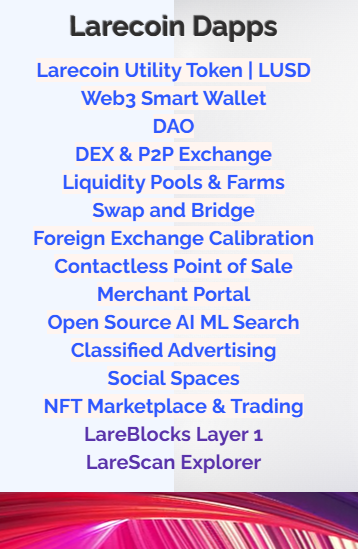
Larecoin offers a contactless POS solution that integrates with your existing setup. No complicated hardware swaps. No IT headaches. Just plug-and-play simplicity.
Key features to look for:
Stablecoin support (non-negotiable)
Self-custody options
NFT receipt generation
Multi-chain compatibility
Easy refund processing

Step 3: Set Up Your Merchant Portal
Larecoin's merchant portal gives you complete control:
Real-time transaction monitoring
Automatic settlement options
Customer management tools
Analytics dashboard
Push-to-card functionality
Configure your preferences. Set your accepted currencies. You're operational.
Step 4: Integrate with Existing Systems
Already using e-commerce platforms? No problem.
Larecoin connects with major shopping cart systems and point-of-sale solutions. Your checkout flow stays seamless. Customers get more payment options. You get lower fees.
Step 5: Go Live and Monitor
Start with a percentage of transactions if you're cautious. Many merchants begin by offering crypto as an alternative payment method alongside traditional cards.
Track your savings. Compare fee structures. Scale up as you see the results.
Larecoin vs. The Competition: A Direct Comparison
How does Larecoin stack up as a NOWPayments alternative or CoinPayments alternative?
Feature | Larecoin | NOWPayments | CoinPayments |
Self-custody | ✅ | Limited | ❌ |
NFT receipts | ✅ | ❌ | ❌ |
Native stablecoin | ✅ (LUSD) | ❌ | ❌ |
Gas-only transfers | ✅ | ❌ | ❌ |
Receivables token | ✅ | ❌ | ❌ |
Built-in POS | ✅ | Limited | Limited |
The difference is clear. Larecoin was built from the ground up for Web3 global payments. Not retrofitted. Not adapted. Purpose-built.
The Bottom Line on Fee Reduction
Interchange fees are a choice.
You can continue paying 2-3.5%+ on every transaction. Or you can embrace Web3 payments and keep more of what you earn.
The numbers don't lie:
50%+ fee reduction is achievable
Cross-border savings can hit 80%
Settlement time drops from days to seconds
Self-custody eliminates counterparty risk
Larecoin makes this accessible for businesses of all sizes. From solo entrepreneurs to enterprise operations.
Get started with Larecoin and start keeping more of your revenue.

Frequently Asked Questions
Is this legal for my business? Absolutely. Larecoin operates within US regulatory frameworks. Compliant. Transparent. Legitimate.
What about customer adoption? Crypto payment adoption is accelerating. Offering it as an option, alongside traditional methods, captures a growing customer segment while reducing your fees on those transactions.
How fast is implementation? Most merchants are operational within days, not weeks. The Larecoin merchant portal is designed for speed.
Can I convert to fiat instantly? Yes. Push-to-card functionality lets you move funds to traditional bank accounts whenever you choose.
Stop leaking revenue to outdated payment rails. The future of merchant payments is here; and it costs a fraction of what you're paying now.
Comments