

.png)
How to Reduce Merchant Interchange Fees by 50%+ With Web3 Global Payments (Easy Guide)
- [[[Free!!]<<<<]] Watch: 스포르팅 - 토트넘 Live Stream 13 September 2022
- 5 days ago
- 4 min read
![Writer: [[[Free!!]<<<<]] Watch: 스포르팅 - 토트넘 Live Stream 13 September 2022](https://lh3.googleusercontent.com/a/AItbvmktwQc0wCdd3ZEETSYItRQubwwBzOyjD_dcigRf=s96-c)
Interchange fees are eating your margins alive.
Every swipe. Every tap. Every online checkout. The traditional payment processors take their cut: and it's way bigger than most merchants realize.
We're talking 2-4% on domestic transactions. Up to 6.4% on cross-border payments. That's money straight out of your pocket.
But here's the thing. Web3 global payments can slash those costs by 50% or more. Some merchants are seeing reductions of up to 80%.
No gimmicks. No complicated restructuring. Just a smarter payment rail.
Let's break down exactly how to make this happen for your business.
The Interchange Fee Problem (It's Worse Than You Think)
Traditional card payments involve a ridiculous chain of intermediaries.
Your customer pays. The issuing bank takes a cut. The card network takes a cut. The acquiring bank takes a cut. The payment processor takes a cut.
Everyone gets paid before you do.
Here's the typical breakdown:
Interchange fees: 1.5-2.5%
Card network fees: 0.13-0.15%
Processor markup: 0.5-1%
FX fees (international): 1-3%
Add it all up. You're bleeding money on every transaction.
And the worst part? These fees hit hardest on small and medium businesses. The ones who can least afford it.
Why Web3 Payments Change Everything
Blockchain networks don't need correspondent banks.
They don't need multiple intermediaries taking their piece.
Direct settlement. Peer-to-peer. Transparent fees that don't fluctuate based on card type or transaction origin.
The numbers speak for themselves:
Traditional cross-border: 4-6% in fees
Stablecoin rails: Under 0.1%
That's not a typo. Sub-0.1% transaction costs are real and achievable right now.
Settlement happens in minutes instead of days. Your working capital isn't locked up waiting for funds to clear. Smart contracts automate compliance and currency conversions in real-time.
This isn't future tech. It's happening today.
How Larecoin Delivers 50%+ Fee Reductions
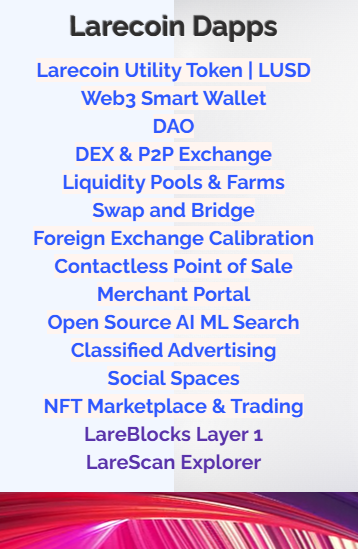
Larecoin built the entire ecosystem around merchant savings.
Here's the stack:
LUSD Stablecoin Benefits
Dollar-pegged stability without dollar-sized fees. Accept payments in LUSD and bypass the entire traditional banking settlement layer. No FX spreads on international orders. No surprise rate hikes.
Self-Custody Merchant Accounts
Your funds. Your keys. Your control.
Traditional processors hold your money hostage. Rolling reserves. Delayed payouts. Frozen accounts with zero explanation.
Self-custody means instant access to your revenue. No intermediary can block, delay, or seize your funds. Financial sovereignty for your business.
NFT Receipts for Accounting
Every transaction generates an immutable on-chain receipt. Perfect audit trail. Automated reconciliation. Your accountant will thank you.
These aren't just receipts: they're verifiable proof of every payment, timestamped and permanent.
Receivables Token
Turn your incoming payments into liquid assets. The receivables token system lets you unlock value from pending transactions without waiting for traditional settlement windows.
Step-by-Step: Setting Up Web3 Payments for Your Business
Ready to cut those fees? Here's the path:
Step 1: Assess Your Current Costs
Pull your merchant statements. Calculate your true effective rate across all transaction types. Most merchants are shocked when they see the real numbers.
Include:
Per-transaction fees
Monthly fees
International transaction surcharges
Chargeback fees
PCI compliance fees
Step 2: Choose Your Web3 Payment Solution
Not all crypto payment processors are equal.
Larecoin offers the complete package: stablecoin acceptance, NFT receipts, self-custody, and a crypto POS system for small business operations. Purpose-built for merchants who want control.
NOWPayments focuses on multi-currency acceptance but lacks the self-custody features that protect your funds.
CoinPayments has been around longer but charges higher fees and doesn't offer the accounting automation that NFT receipts provide.
Triple-A targets enterprise clients with regulatory compliance features, but smaller merchants get priced out.
Step 3: Integrate the Payment Gateway
Most Web3 payment solutions offer:
E-commerce plugins (WooCommerce, Shopify, etc.)
API integration for custom builds
POS hardware for physical locations
Implementation typically takes hours, not weeks.
Step 4: Configure Your Settlement Preferences
Choose how you want to receive funds:
Hold in stablecoin (LUSD)
Auto-convert to local currency
Push to card for instant access
The flexibility here is massive compared to traditional processors.
Step 5: Train Your Team
The customer-facing experience stays simple. Behind the scenes, your staff needs to understand the new reconciliation process and how to handle any edge cases.

Real Cost Comparison: Traditional vs. Web3
Let's run the numbers on a $100,000 monthly revenue business.
Traditional Processing (blended 3% rate):
Monthly fees: $3,000
Annual cost: $36,000
Web3 Processing (0.5% effective rate):
Monthly fees: $500
Annual cost: $6,000
Annual savings: $30,000
That's not theoretical. That's real money back in your business.
For international sellers, the gap widens even more. Cross-border transactions that cost 6%+ drop to under 1%.
Why NOWPayments and CoinPayments Fall Short
Let's be direct about the alternatives.
NOWPayments doesn't offer true self-custody. Your funds route through their wallets before reaching you. That's a trust layer you don't need.
CoinPayments charges 0.5% on transactions: better than cards, but still higher than necessary. And their settlement options are limited compared to newer solutions.
Neither offers NFT receipts. Neither provides the receivables tokenization that unlocks working capital.
Neither gives you complete financial sovereignty.
When you're evaluating a NOWPayments alternative or CoinPayments alternative, these differences matter.
The Self-Custody Advantage
This deserves its own section.
Traditional payment processors have demonstrated: repeatedly: that they'll freeze merchant accounts without warning. PayPal horror stories. Stripe holds. Square lockouts.
Your business revenue shouldn't depend on a third party's risk assessment algorithm.
Self-custody merchant accounts through Web3 solutions eliminate this vulnerability entirely. Funds settle directly to wallets you control. No one can freeze your business operations with an automated email.
That's not just cost savings. That's business continuity insurance.

Getting Started Today
The transition isn't complicated.
Visit Larecoin to explore the merchant solutions
Calculate your current interchange costs
Set up a test integration
Run parallel processing to compare results
Scale up as confidence builds
Most merchants see positive ROI within the first month.
The Bottom Line
Interchange fees are a legacy tax on your business.
Web3 global payments offer a legitimate path to 50%+ reductions. Stablecoin rails. Direct settlement. Self-custody control.
The infrastructure is mature. The savings are real. The only question is how long you want to keep overpaying.
Your competitors are already making the switch.
Time to reduce those merchant interchange fees and put that money back where it belongs( in your business.)
Comments