

.png)
How to Reduce Merchant Interchange Fees by 50%+ with Web3 Global Payments (Easy Guide)
- [[[Free!!]<<<<]] Watch: 스포르팅 - 토트넘 Live Stream 13 September 2022
- Jan 20
- 4 min read
![Writer: [[[Free!!]<<<<]] Watch: 스포르팅 - 토트넘 Live Stream 13 September 2022](https://lh3.googleusercontent.com/a/AItbvmktwQc0wCdd3ZEETSYItRQubwwBzOyjD_dcigRf=s96-c)
Interchange fees are killing your margins.
Every swipe. Every tap. Every online checkout. You're bleeding 2-4% to card networks, issuing banks, and payment processors.
Cross-border? That jumps to 4-6%.
Here's the thing: Web3 global payments can slash those fees by 50% or more. No gimmicks. No complicated setups. Just smarter rails.
Let's break down exactly how to make it happen.
The Hidden Tax on Every Transaction
Traditional payment processing is a fee buffet. Interchange fees. Network fees. Acquiring bank fees. FX spreads.
A $100,000 international transfer through SWIFT? That's roughly $1,500 in fees alone.
For small businesses with thin margins, this is brutal.
The average cross-border payment fee sits at 6.4%. That's money straight out of your pocket: every single month.
Why Web3 Payments Change Everything
Blockchain technology removes the middlemen.
No correspondent banks. No layered processing fees. No 3-5 day settlement windows.
Instead: direct settlement. Transparent fees. Funds in your account within minutes.
Key advantages:
Stablecoin rails eliminate FX conversion costs
Smart contracts automate compliance and currency conversion
Self-custody merchant accounts mean you control your funds
NFT receipts for accounting create immutable transaction records
The numbers speak for themselves. Stablecoin payment volume has exploded from under $2 billion to over $6.3 billion monthly in just two years.
Merchants are waking up.
Strategy #1: Ditch Card Networks for Stablecoin Rails
This is the biggest lever.
Traditional card networks charge 4-6% for cross-border transactions. Stablecoin-based solutions compress that dramatically.
Some merchants now receive 0.5% rebates on stablecoin orders. That's not a fee reduction: that's getting paid to accept payments.
How it works:
Customer pays with USDC, LUSD, or other stablecoins
Transaction settles on blockchain in seconds
You receive funds directly to your self-custody merchant account
No interchange. No network fees. No FX spread.
The LUSD stablecoin benefits are particularly compelling for merchants wanting dollar-denominated settlements without traditional banking rails.

Strategy #2: Implement Direct Blockchain Settlement
Each intermediary in traditional systems charges 0.5-2% in fees.
Stack three or four intermediaries? You're looking at 3-8% gone before you see a dime.
Direct blockchain settlement changes the math entirely.
Real example: A manufacturer sending $500,000 monthly to Asian suppliers saves $2,400 per month using blockchain settlement versus SWIFT.
That's $28,800 annually: just from switching rails.
The settlement speed difference is equally significant. Instead of waiting 3-5 business days, transactions complete in seconds. Your working capital stays working.
Strategy #3: Leverage Smart Contracts for Automation
Manual processing is expensive.
Currency conversions. Compliance checks. Payment reconciliation. Each step adds cost.
Smart contracts handle this automatically:
Real-time FX conversion at live rates
Automated compliance verification
Instant reconciliation via NFT receipts for accounting
Zero manual intervention required
This isn't just about saving fees. It's about eliminating entire operational workflows.
Strategy #4: Deploy a Crypto POS System for Small Business
Brick-and-mortar merchants: this one's for you.
A crypto POS system for small business enables in-store stablecoin acceptance with the same ease as traditional card terminals.
No additional hardware required in most cases. Just software integration with your existing setup.
Benefits:
Same checkout speed as card payments
Settlement in minutes, not days
Dramatically lower per-transaction costs
Customer choice drives adoption
Why Larecoin Beats the Competition
Looking for a NOWPayments alternative or CoinPayments alternative? Here's where Larecoin separates from the pack.
Self-Custody From Day One
Most crypto payment processors hold your funds. You're trusting them with your revenue.
Larecoin's self-custody merchant accounts flip this model. Your keys. Your funds. Always.
The Receivables Token Advantage
This is unique to Larecoin.
The receivables token lets you tokenize outstanding payments. Use them as collateral. Trade them. Unlock liquidity without waiting for customer payments.
For businesses managing cash flow, this is a game-changer.
NFT Receipts Built In
Every transaction generates an NFT receipt. Immutable. Verifiable. Perfect for accounting and audit trails.
No more digging through payment processor dashboards. Your transaction history lives on-chain, permanently accessible.
Integrated Ecosystem
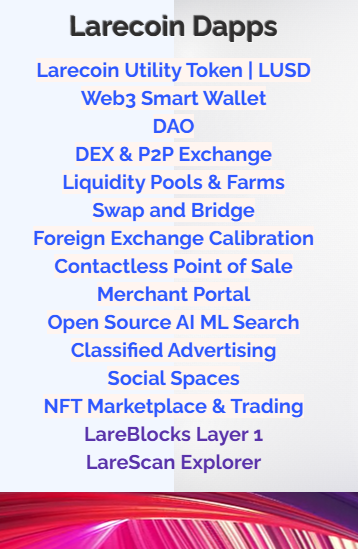
While competitors like Triple-A, NOWPayments, and CoinPayments offer payment processing, Larecoin delivers a complete Web3 ecosystem:
Smart wallet integration
Decentralized exchange access
Liquidity pools
Merchant portal
Contactless POS support
One platform. Full financial sovereignty.
The Financial Sovereignty Factor
Here's what most guides won't tell you.
Reducing fees is just the start. The real opportunity is bank-free business operations.
Traditional banking comes with:
Account freezes
Arbitrary holds
Geographic restrictions
Operating hour limitations
Web3 global payments eliminate these friction points entirely.
Your business operates 24/7. Funds move globally without permission. You maintain full control.
This is financial sovereignty in practice.

Implementation: Your 5-Step Action Plan
Ready to cut those fees? Here's your roadmap:
Step 1: Audit Current Fees
Calculate your total payment processing costs. Include interchange, network fees, FX spreads, and processor markup. Most merchants are shocked at the true number.
Step 2: Set Up Self-Custody Wallet
You'll need a merchant wallet that you control. This is non-negotiable for maximizing savings and maintaining sovereignty.
Step 3: Integrate Stablecoin Acceptance
Start with USDC and LUSD. These offer the broadest customer adoption and most stable settlement values.
Step 4: Deploy POS or E-commerce Plugin
Larecoin offers merchant solutions that integrate with existing systems. Minimal technical lift required.
Step 5: Promote to Customers
Offer incentives for crypto payment. Even a 1% discount is win-win when you're saving 3%+ on processing.
Real Numbers: What to Expect
Let's get specific.
Small Retailer ($50,000/month in sales)
Current fees at 2.9%: $1,450/month
Web3 processing at 1%: $500/month
Monthly savings: $950
Annual savings: $11,400
E-commerce Store ($200,000/month, 40% international)
Current fees at 3.5% average: $7,000/month
Web3 processing at 0.8%: $1,600/month
Monthly savings: $5,400
Annual savings: $64,800
These aren't theoretical. Merchants are achieving these results today.
The Bottom Line
Traditional payment processing is an outdated tax on your business.
Web3 global payments offer a clear path to reduce merchant interchange fees by 50%+. The technology is mature. The savings are real. The implementation is straightforward.
Your next move:
Visit larecoin.com to explore merchant solutions
Calculate your potential savings based on current volume
Start accepting stablecoin payments this month
The merchants who move first capture the biggest advantage.
Don't leave money on the table.
Comments