

.png)
How to Slash Merchant Interchange Fees by 50%+ Using a Receivables Token (Easy Guide)
- [[[Free!!]<<<<]] Watch: 스포르팅 - 토트넘 Live Stream 13 September 2022
- Jan 22
- 4 min read
![Writer: [[[Free!!]<<<<]] Watch: 스포르팅 - 토트넘 Live Stream 13 September 2022](https://lh3.googleusercontent.com/a/AItbvmktwQc0wCdd3ZEETSYItRQubwwBzOyjD_dcigRf=s96-c)
Interchange fees are eating your profits alive.
Every swipe. Every tap. Every transaction. Card networks and payment processors are skimming 2-4% off the top. For many merchants, that's the difference between thriving and barely surviving.
Here's the good news: Web3 payments are rewriting the rules. Receivables tokens can slash those fees by 50% or more. No middlemen. No legacy banking infrastructure taking a cut.
Let's break down exactly how it works.
The Interchange Fee Problem
Traditional payment processing is expensive. Period.
Here's what you're actually paying when a customer swipes:
Interchange fees: 1.5-3.5% per transaction
Assessment fees: 0.13-0.15% to card networks
Processor markup: Additional 0.5-1%+
Gateway fees: Monthly charges plus per-transaction costs
Add it up. You're hemorrhaging money on every single sale.
B2B merchants get hit even harder. Commercial card transactions can reach 2.95% or higher if data isn't optimized properly.
The traditional solution? Negotiate harder. Optimize Level 2 and Level 3 data. Pass costs to customers through surcharges.
These methods help. But they don't solve the fundamental problem.
The infrastructure itself is broken.
Enter Receivables Tokens
Receivables tokens are blockchain-based representations of payment obligations. Think of them as digital IOUs that settle instantly on-chain.
Here's the key difference:
Traditional payments route through multiple intermediaries. Each one takes a cut. Each one adds friction.
Receivables tokens eliminate the middlemen entirely.
When a customer pays with a receivables token:
The payment settles directly to your wallet
No card network involvement
No processor markup
Minimal gas fees only
The result? Transaction costs drop from 2-4% to fractions of a percent.
That's not a minor optimization. That's a fundamental shift in payment economics.
How Larecoin's Receivables Token Works
Larecoin built receivables tokens specifically for merchant use cases.
The system is straightforward:
Customer side: Buyers hold LARE or LUSD in their self-custody wallet. They scan. They pay. Done.
Merchant side: You receive funds instantly. No 2-3 day settlement windows. No chargebacks. No frozen funds.
The math: A merchant processing $100,000/month in traditional card payments loses $2,500-$4,000 to fees. With Larecoin's receivables token system, that drops to under $500.
That's 50-80% savings. Straight to your bottom line.

LUSD Stablecoin: Volatility Solved
"But crypto is volatile."
Fair point. Bitcoin swings 10% in a day sometimes.
That's why LUSD exists.
LUSD is Larecoin's stablecoin pegged to the US dollar. Merchants receive stable value. No price fluctuation risk.
Key advantages:
1:1 USD peg: Always worth a dollar
Instant settlement: No waiting for bank transfers
Global acceptance: Works anywhere, anytime
Self-custody: You control your funds
Price volatility was the biggest barrier to crypto payment adoption. LUSD removes that barrier entirely.
Accept payments in LARE. Receive LUSD. Simple.
NFT Receipts: More Than Just Proof of Purchase
Here's where things get interesting.
Every Larecoin transaction generates an NFT receipt. This isn't a gimmick. It's a fundamental upgrade to payment documentation.
Traditional receipts are:
Easily lost
Hard to verify
Disconnected from inventory systems
Useless for warranty claims months later
NFT receipts are:
Permanently stored on-chain
Cryptographically verified
Linked to customer wallets
Programmable with smart contract logic
For merchants: Automated accounting. Immutable transaction records. Simplified tax compliance.
For customers: Proof of purchase that can't be disputed. Warranty claims backed by blockchain verification. Potential for loyalty rewards tied to purchase history.
Some merchants are already using NFT receipts to trigger automatic loyalty points. Others link them to exclusive discounts on future purchases.
The utility expands with creativity.
Self-Custody: Non-Negotiable in Web3 Payments
This is critical. Pay attention.
Custodial payment solutions are a trap. You don't control your funds. Someone else does.
Remember FTX? Celsius? BlockFi?
Billions lost because users trusted third parties with their assets.
Larecoin is built on self-custody principles. Your keys. Your crypto. Your control.
Why this matters for merchants:
No account freezes
No arbitrary holds on your funds
No platform risk
No permission needed to access your own money
Competitors like NOWPayments and CoinPayments operate custodial models. They hold your funds. They control withdrawals. They can freeze accounts.
That's not financial sovereignty. That's dependency with extra steps.
Larecoin flips the script. You receive payments directly to your own wallet. No intermediary custody required.
Larecoin vs. The Competition
Let's be direct about how Larecoin stacks up.
NOWPayments:
Custodial model
0.5-1% fees
Limited stablecoin options
No NFT receipt functionality
CoinPayments:
Custodial model
0.5% fees plus conversion charges
Complex fee structure
No receivables token system
Larecoin:
Self-custody
Minimal gas-only fees
LUSD stablecoin integration
Receivables token architecture
NFT receipts standard
Push-to-card options for fiat off-ramping
The difference isn't marginal. It's architectural.
Legacy crypto payment processors grafted blockchain onto traditional payment rails. Larecoin built native Web3 payment infrastructure from the ground up.
Easy Setup Guide: Start Slashing Fees Today
Ready to cut your payment processing costs in half?
Here's the step-by-step:
Step 1: Set Up Your Merchant Wallet
Download a Solana-compatible wallet. Phantom works great. Set up your recovery phrase. Store it securely offline.
Step 2: Connect to Larecoin
Visit larecoin.com and link your merchant wallet. The process takes under 5 minutes.
Step 3: Configure Payment Options
Choose which tokens to accept. LARE, LUSD, or both. Set automatic conversion preferences if desired.
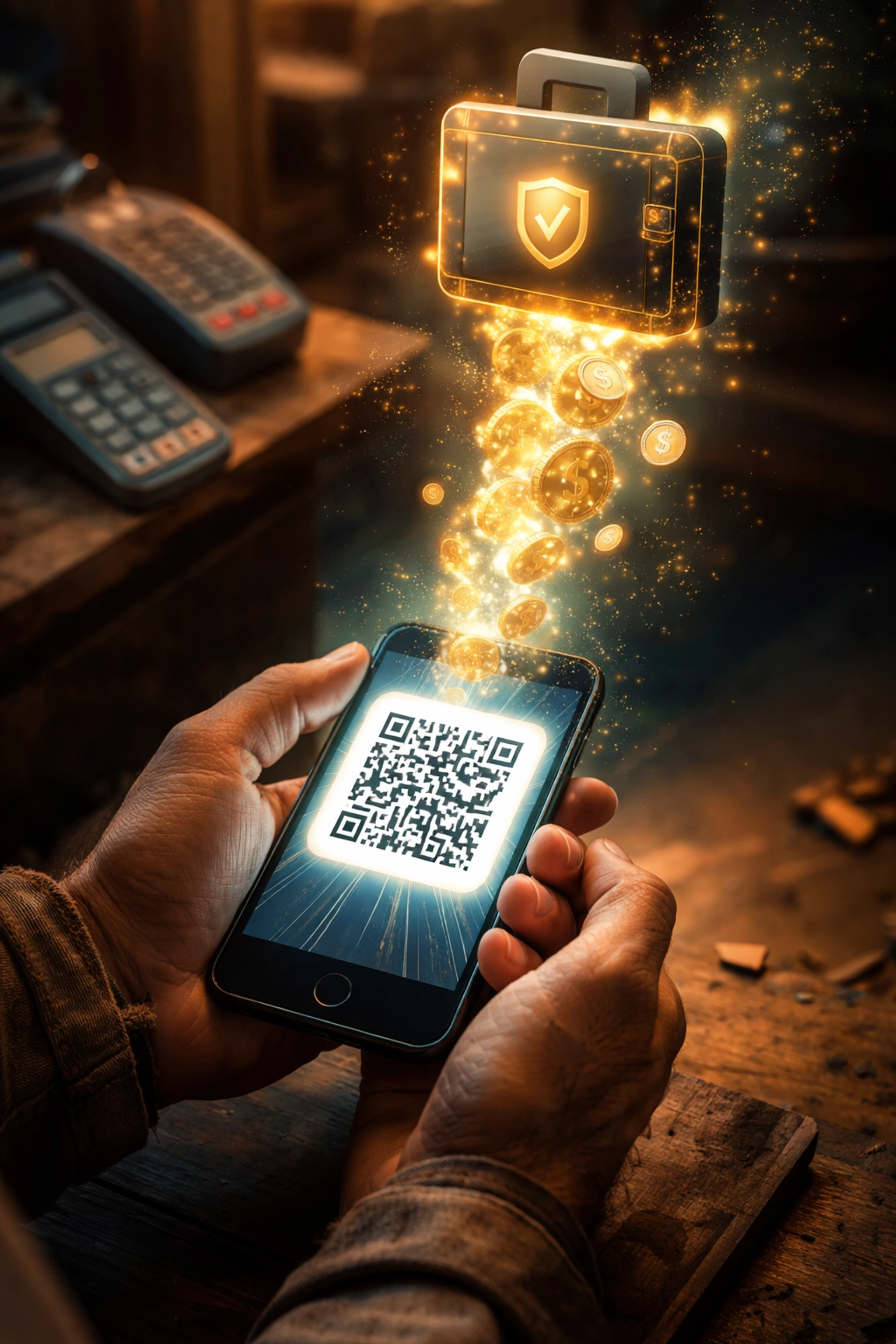
Step 4: Generate Payment Links or QR Codes
Create payment endpoints for your checkout flow. Integrate via API or use simple QR codes for in-person transactions.
Step 5: Start Accepting Payments
That's it. Funds settle directly to your wallet. NFT receipts generate automatically.
No lengthy applications. No credit checks. No waiting for approval.
The Bottom Line
Interchange fees are a tax on commerce. Every percentage point matters.
Traditional processors won't fix this. They profit from the status quo.
Web3 payments offer a genuine alternative. Receivables tokens. Self-custody. Instant settlement. Minimal fees.
Larecoin makes it practical.
50%+ fee reduction isn't theoretical. It's happening right now for merchants who've made the switch.
Your competitors are still paying legacy processing fees. You don't have to.
The future of payments is here. Time to claim your share of the savings.
Ready to slash your interchange fees?
Check out Larecoin and join the community discussion in the official announcements forum.
Questions? Let's chat.
Comments