

.png)
How to Slash Merchant Interchange Fees by 50%+ Using Web3 Global Payments (Easy Guide for 2026)
- [[[Free!!]<<<<]] Watch: 스포르팅 - 토트넘 Live Stream 13 September 2022
- 4 days ago
- 4 min read
![Writer: [[[Free!!]<<<<]] Watch: 스포르팅 - 토트넘 Live Stream 13 September 2022](https://lh3.googleusercontent.com/a/AItbvmktwQc0wCdd3ZEETSYItRQubwwBzOyjD_dcigRf=s96-c)
Traditional payment processing is eating your margins alive.
Every swipe. Every tap. Every online checkout. You're bleeding 4-6% to interchange fees, network fees, acquiring bank fees, and FX spreads.
In 2026, that's not just outdated. It's unnecessary.
Web3 global payments compress those costs down to roughly 0.5%. That's not a typo. We're talking about slashing your merchant interchange fees by 50-80%.
Ready to stop paying the payment tax? Let's break it down.
The True Cost of Traditional Payment Processing
Here's what you're actually paying every time a customer swipes their card:
Interchange fees: 1.5-3.5% per transaction
Network fees: 0.05-0.15%
Acquiring bank fees: 0.2-0.5%
FX spreads (international): 1-3%
Chargeback fees: $15-100 per dispute
Add it up. Cross-border transactions? You're looking at 4-6% vanishing before you see a dime.
For a business processing $500,000 annually, that's $20,000-$30,000 in fees. Gone. Every single year.
SWIFT transfers? Even worse. Around $25 per side plus 1% transaction fee plus 2% currency bid-ask spread. And you wait 3-5 business days for settlement.
Why Web3 Global Payments Change Everything
Blockchain-based stablecoin payments flip the script entirely.
Instead of routing through correspondent banks, card networks, and multiple intermediaries, Web3 payments move value directly. Peer-to-peer. Merchant-to-customer.
The result?
On/off-ramp costs: ~0.5%
In-network fees: Pennies
Settlement time: Minutes, not days
FX fees: Near zero
That locked capital sitting in payment limbo for 3-5 business days? It becomes immediate working cash. For thin-margin, high-turnover merchants, this alone can outweigh the fee savings.
Monthly stablecoin payment volume grew from under $2 billion to over $6.3 billion in just two years. The smart money is already moving.
How Larecoin Delivers 50%+ Fee Reduction
Larecoin isn't just another crypto payment processor. It's a complete Web3 global payments ecosystem built for merchants who want to keep more of what they earn.
Here's what sets it apart:
LUSD Stablecoin Benefits
Volatility kills merchant adoption. That's why LUSD exists.
The LUSD stablecoin gives you all the speed and cost advantages of blockchain settlement without the price swings of Bitcoin or Ethereum. Accept payments in crypto. Settle in stable value. Simple.
No more watching your revenue fluctuate 10% overnight.
Self-Custody Merchant Accounts
Traditional processors hold your funds. They control access. They set the rules.
With Larecoin's self-custody merchant accounts, you control your keys. You control your funds. No third party standing between you and your revenue.
Bank-free business operations aren't just possible. They're practical.
NFT Receipts for Accounting
Here's where it gets interesting.
Every transaction generates an NFT receipt. Immutable. Verifiable. Permanent.
For accounting? Game-changer. No more chasing paper trails. No more reconciliation nightmares. Every transaction is cryptographically proven and instantly auditable.
Your accountant will thank you. Your auditors will be impressed.
Receivables Token
The receivables token transforms how you manage cash flow.
Outstanding invoices become tokenized assets. Liquid. Tradeable. Usable as collateral. Turn your receivables into working capital without waiting 30, 60, or 90 days.
Larecoin vs. The Competition
Let's be direct. There are other options out there. NOWPayments. CoinPayments. Triple-A.
Here's why merchants are choosing Larecoin as their NOWPayments alternative and CoinPayments alternative:
NOWPayments Comparison
NOWPayments offers basic crypto acceptance. That's it.
Larecoin delivers:
Self-custody (NOWPayments holds your funds)
NFT receipts for accounting (NOWPayments: basic transaction logs)
LUSD stablecoin integration (NOWPayments: limited stablecoin options)
Receivables tokenization (NOWPayments: not available)
CoinPayments Comparison
CoinPayments has been around since 2013. That's both a strength and a weakness.
Legacy architecture means:
Slower settlement times
Higher processing fees
No Web3-native features
Custodial control of funds
Larecoin was built for 2026. Not retrofitted from 2013.
Triple-A Comparison
Triple-A focuses on enterprise. Great for Fortune 500 companies with dedicated integration teams.
For small to mid-sized businesses? Larecoin's crypto POS system for small business delivers enterprise features without enterprise complexity.
Step-by-Step Implementation Guide
Getting started isn't complicated. Here's your roadmap:
Step 1: Audit Your Current Fee Structure
Before switching anything, know what you're paying now.
Pull your last 90 days of processing statements. Calculate your true cost per transaction including:
Base interchange
Network fees
Processor markup
FX conversions
Chargebacks
This is your baseline. This is what you're about to beat.
Step 2: Identify High-Fee Corridors
Not all transactions cost the same.
International payments typically carry the highest fees. Target these first:
Cross-border e-commerce
International B2B invoicing
Multi-currency settlements
Focus on routes with the highest volume and longest settlement windows. Maximum impact. Fastest ROI.
Step 3: Set Up Your Larecoin Merchant Account
Head to larecoin.com and set up your self-custody merchant account.
The process takes minutes, not days. No lengthy underwriting. No reserves. No rolling holds.
Step 4: Integrate Your Payment Flow
Larecoin integrates with your existing checkout. Your customers don't need to manage crypto wallets.
They pay from compatible wallets. You receive funds instantly. The blockchain complexity stays invisible.
Step 5: Configure LUSD Settlement
Choose your settlement preference:
Hold LUSD for maximum fee savings
Auto-convert to local currency
Split between crypto and fiat
Your treasury. Your rules.
What Results to Expect
Let's get specific about the numbers:
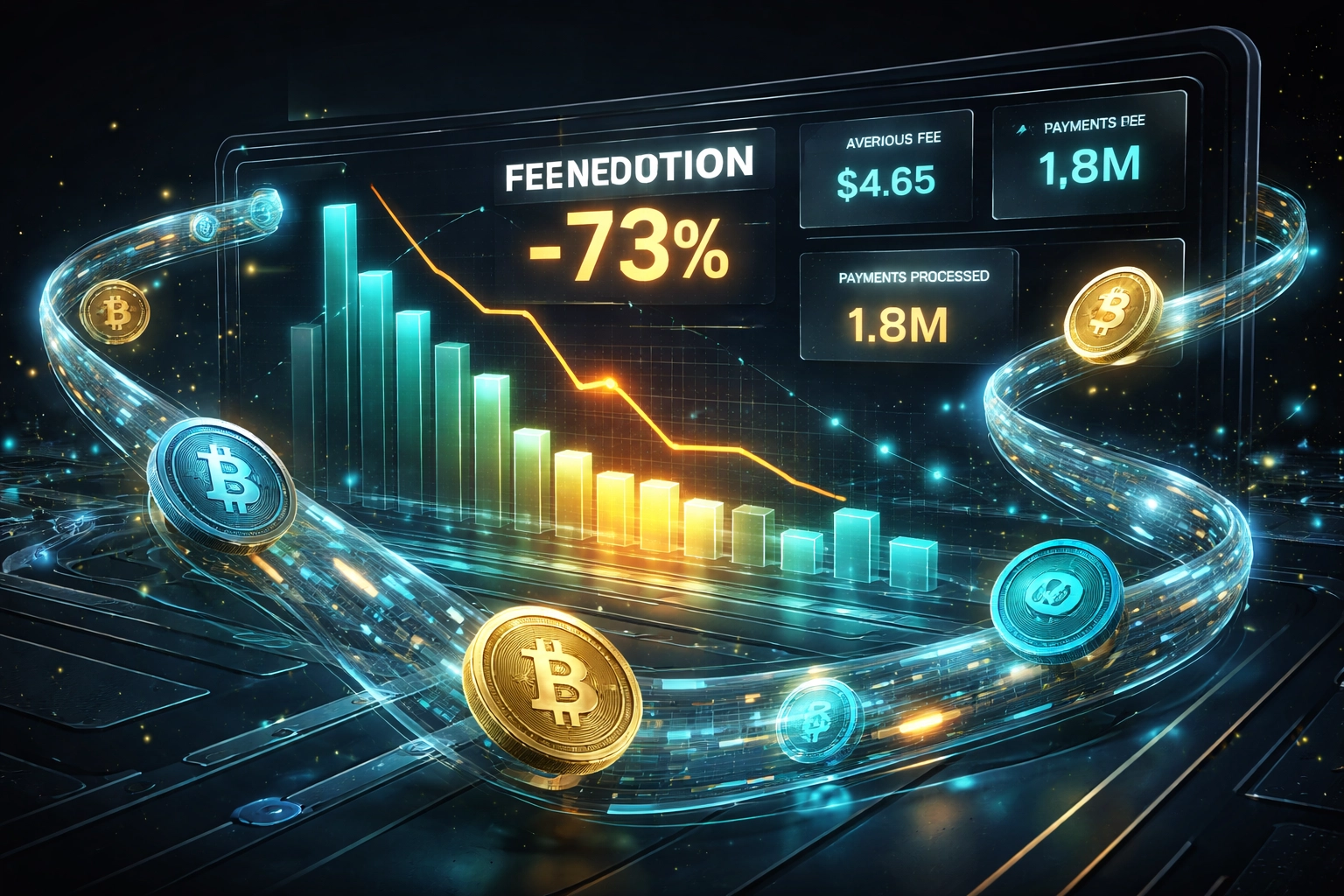
Fee Reduction: 50-80% compared to traditional card processing
Settlement Time: Minutes instead of 3-5 business days
Chargeback Rate: Near zero (crypto transactions are irreversible by design)
International Fees: Compressed to sub-1%
Working Capital Improvement: Immediate access to funds previously locked in settlement
For a business processing $1 million annually in cross-border transactions at 5% average fees, switching to Web3 payments saves $40,000-$45,000 per year.
That's not marketing fluff. That's math.
The Financial Sovereignty Advantage
This isn't just about saving money. It's about control.
Traditional payment processors can:
Freeze your funds
Increase your rates overnight
Terminate your account without warning
Hold reserves for months
Self-custody changes that equation entirely.
Your keys. Your funds. Your business.
No more wondering if your processor will support your industry next month. No more arbitrary holds on your revenue. No more asking permission to access money your customers already paid you.
Getting Started Today
The merchants already using Web3 payments aren't evangelists. They're pragmatists.
They noticed when settlement speeds increased. They noticed when fees decreased. They scaled accordingly.
You don't need to "embrace crypto" as a marketing position. You just need to recognize better economics when you see them.
The traditional payment infrastructure was built for a different era. Card networks, correspondent banks, 3-5 day settlements: these are legacy systems charging legacy prices.
Web3 global payments are the upgrade.
Visit larecoin.com/welcome to set up your merchant account. Keep more of what you earn. Settle in minutes. Control your own funds.
The 50% fee reduction isn't theoretical. It's available now.
Stop paying the payment tax. Start keeping your revenue.
Comments