

.png)
Larecoin Vs BitPay Vs Visa: Which Is Better For Your Merchant Business?
- [[[Free!!]<<<<]] Watch: 스포르팅 - 토트넘 Live Stream 13 September 2022
- Jan 17
- 4 min read
![Writer: [[[Free!!]<<<<]] Watch: 스포르팅 - 토트넘 Live Stream 13 September 2022](https://lh3.googleusercontent.com/a/AItbvmktwQc0wCdd3ZEETSYItRQubwwBzOyjD_dcigRf=s96-c)
Payment processing fees are eating your margins alive.
Every swipe. Every tap. Every transaction. Money disappears into interchange fees, network costs, and processor markups.
For merchants, ISOs, and enterprises, choosing the right payment infrastructure isn't just operational, it's existential. The wrong choice costs you thousands annually. The right one? Game-changing.
Let's break down three options: Visa (the legacy giant), BitPay (the crypto pioneer), and Larecoin (the Web3 disruptor). No fluff. Just facts.
The Problem With Traditional Payment Rails
Visa and Mastercard dominate global payments. Over 80% of card transactions flow through their networks.
But dominance comes with a price tag.
Here's what merchants actually pay:
Interchange fees: 1.5% to 3.5% per transaction
Network assessment fees: 0.13% to 0.15%
Processor markups: 0.1% to 0.5%
Chargeback fees: $15 to $100 per dispute
Add it up. A business processing $1 million annually loses $25,000 to $40,000 in fees alone.
That's not a cost of doing business. That's a leak in your ship.
Visa: The Legacy Standard
What it is: The world's largest payment network. Trusted. Ubiquitous. Expensive.
Pros:
Universal acceptance
Consumer trust and familiarity
Established fraud protection
Instant authorization
Cons:
High interchange fees (1.5% - 3.5%)
Chargebacks favor consumers
2-3 day settlement times
Zero transparency in fee structures
No innovation in decades
Visa works. It's reliable. But it's built for a world that's rapidly changing.
The model is simple: extract maximum value from every transaction. Merchants pay. Consumers don't notice. Networks profit.
Verdict: Safe choice. Expensive choice.
BitPay: The Crypto Pioneer
What it is: One of the oldest crypto payment processors. Operating since 2011. Accepts 100+ cryptocurrencies.
Pros:
Low fees (0.5% - 1%)
Settlement in crypto or fiat (USD, EUR, GBP)
Price-locking protects against volatility
Enterprise-grade infrastructure
Online and in-store checkout options
Cons:
Immediate conversion to fiat (loses crypto upside)
Limited ecosystem benefits
Less accessible for small businesses
No receivables functionality
Standard transaction model
BitPay solved a real problem: letting merchants accept crypto without crypto complexity.
But here's the catch. BitPay converts everything to fiat immediately. You're using blockchain rails to end up with the same dollars you started with.
Is that really Web3? Or just Web2 with extra steps?
Verdict: Good bridge solution. Not the future.
Larecoin: The Web3 Disruptor
What it is: A complete Web3 payments ecosystem. Built for merchants who want more than just payment processing.
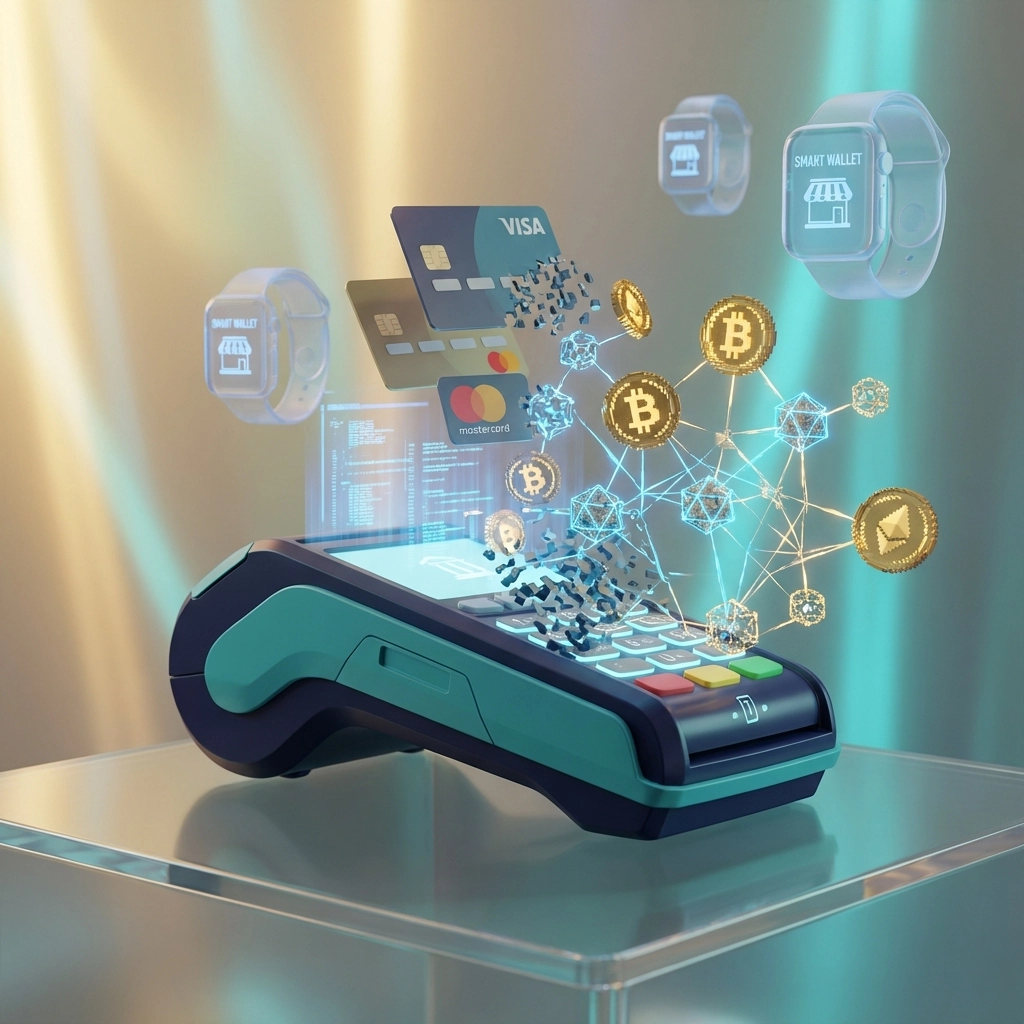
The Larecoin Difference:
50%+ fee reduction compared to Visa/Mastercard
Crypto Receivables instead of instant conversion
NFT receipts for transparent accounting
Gas-only transfers with LUSD stablecoin
Smart Wallet integration
Push-to-card functionality
This isn't just a payment processor. It's infrastructure for the next decade of commerce.
Fee Comparison: The Numbers Don't Lie
Feature | Visa | BitPay | Larecoin |
Transaction Fee | 1.5% - 3.5% | 0.5% - 1% | Gas only |
Settlement Time | 2-3 days | Same day | Instant |
Chargebacks | Yes | Limited | None |
Crypto Holding | No | Optional | Native |
NFT Receipts | No | No | Yes |
Receivables | No | No | Yes |
Annual savings on $1M volume:
Visa: -$25,000 to -$40,000
BitPay: -$5,000 to -$10,000
Larecoin: Gas fees only (~$500 - $1,000)
The math is clear. Larecoin saves merchants 90%+ on processing costs versus traditional rails.
Crypto Receivables: The New Business Standard
Here's where Larecoin fundamentally changes the game.
Traditional payment processors: including BitPay: convert your crypto to fiat immediately. Transaction happens. Crypto disappears. Dollars appear.
Larecoin introduces Crypto Receivables.
Instead of instant conversion, you hold tokenized receivables on-chain. These receivables:
Appreciate with crypto market movements
Provide liquidity options
Create tax-efficient timing opportunities
Enable collateralization for business loans
Build on-chain credit history
Think of it like accounts receivable: but programmable, transparent, and appreciating.
Why this matters for merchants:
Cash flow flexibility - Convert when YOU choose
Potential upside - Crypto appreciation benefits you
Balance sheet strength - Receivables as assets
Tax optimization - Time conversions strategically
Traditional processors take your crypto and give you dollars. Larecoin gives you options.

NFT Receipts: Accounting Meets Blockchain
Every Larecoin transaction generates an NFT receipt.
Not a gimmick. A tool.
What NFT receipts provide:
Immutable record - Can't be altered or lost
Instant auditing - Real-time transaction verification
Automated reconciliation - Smart contracts handle matching
Transparent history - Every transaction traceable
Reduced disputes - On-chain proof eliminates he-said-she-said
For enterprises processing thousands of transactions monthly, this transforms accounting from a bottleneck to a breeze.
No more hunting for paper trails. No more reconciliation nightmares. Every transaction lives on-chain, verified and permanent.
For ISOs and payment facilitators: NFT receipts create differentiation. Offer your merchants something Visa literally cannot provide.
The Larecoin Ecosystem Advantage
Larecoin isn't a standalone product. It's an ecosystem.
Smart Wallet
Unified interface for all payment activities. Accept, hold, convert, and spend: all in one place. No juggling multiple platforms.
LUSD Stablecoin
Larecoin's native stablecoin eliminates volatility concerns. Peg to USD. Transact with confidence. Gas-only transfer fees mean near-zero cost movement.
Gas-Only Transfers
Traditional processors charge percentage fees. Larecoin charges gas only.
$100 transaction? Gas fee. $100,000 transaction? Same gas fee.
Volume scales. Fees don't.
Push-to-Card
Need fiat? Push funds directly to your existing card. Instant access to traditional banking rails when you need them. Web3 benefits with Web2 offramps.
Explore the full ecosystem at larecoin.com.
Who Should Choose What?
Choose Visa if:
You need universal acceptance above all else
Your customers exclusively use cards
You're willing to pay premium for familiarity
Innovation isn't a priority
Choose BitPay if:
You want crypto acceptance without complexity
Immediate fiat conversion suits your needs
You're testing crypto waters before committing
Enterprise support is essential
Choose Larecoin if:
Fee reduction is a priority
You want crypto exposure without volatility risk
Transparent accounting matters
You're building for the future
Receivables and cash flow flexibility appeal to you
The Bottom Line
Visa built payment rails for the 1970s. BitPay built a bridge between old and new. Larecoin built infrastructure for what's next.
For merchants: 50%+ fee savings. Crypto receivables. NFT receipts. Real competitive advantage.
For ISOs: Differentiated offering. Better margins. Future-proof portfolio.
For enterprises: Scalable infrastructure. Transparent accounting. Reduced operational costs.
The payments landscape is shifting. Blockchain rails are no longer experimental: they're essential.
The question isn't whether to adopt Web3 payments. It's whether you'll lead or follow.
Ready to cut your payment processing costs in half?
Visit larecoin.com to get started. Join the conversation in our community forum for the latest updates.
The future of payments is here. Time to claim your piece.
Comments