

.png)
Looking For a CoinPayments Alternative? Here Are 10 Things You Should Know About Receivables Tokens
- [[[Free!!]<<<<]] Watch: 스포르팅 - 토트넘 Live Stream 13 September 2022
- 2 days ago
- 3 min read
![Writer: [[[Free!!]<<<<]] Watch: 스포르팅 - 토트넘 Live Stream 13 September 2022](https://lh3.googleusercontent.com/a/AItbvmktwQc0wCdd3ZEETSYItRQubwwBzOyjD_dcigRf=s96-c)
Frustrated with CoinPayments? You're not alone.
Long settlement times. Processor dependencies. Limited control over your own revenue.
Sound familiar?
Here's the thing. The crypto payments landscape has evolved. Receivables tokens are changing the game for merchants who want real financial sovereignty.
Let's break down exactly what you need to know.
1. Instant Liquidity Is the New Standard
CoinPayments? You're waiting. 1-2 business days minimum. Sometimes longer.
Receivables tokens flip this entirely.
Every payment becomes tradable the moment it's created. Not hours later. Not days later. Immediately.
No ACH transfer queues. No wire transfer delays. No "pending" status limbo.
Settlement happens in minutes. On blockchain time.
This isn't a minor upgrade. It's a fundamental shift in how cash flow works.
2. Self-Custody Means You Actually Own Your Money
Here's the uncomfortable truth about traditional crypto processors.
Your funds sit in their wallets. Under their control. On their timeline.
Receivables tokens? Different story.
You maintain direct control of your wallet. Your tokens. Your revenue.
No platform can freeze your assets. No middleman dictates when you access your money.
This is what self-custody merchant accounts actually look like.
3. Say Goodbye to 3.5% Interchange Fees
Let's talk numbers.
Traditional payment processors charge:
1.5%-3.5% interchange fees
Gateway fees
Processor fees
Compliance fees
Monthly minimums
It adds up fast. Especially for small businesses.
Receivables tokenization slashes these costs dramatically. We're talking 50%+ savings in many cases.
More revenue stays in your pocket. Where it belongs.
4. Multiple Revenue Pathways Open Up
CoinPayments gives you one option. Convert and wait.
Receivables tokens? Way more flexible.
Think:
Secondary market trading – Sell receivables for immediate cash
Collateral use – Leverage tokens for additional financing
Portfolio management – Strategic control over your receivables
Hold and appreciate – Keep tokens when timing favors you
Your revenue becomes an asset class. Not just a number in someone else's system.

5. Blockchain Transparency Eliminates Reconciliation Headaches
Every transaction. Permanently recorded. On-chain.
Timestamps. Verification. Immutable records.
No more reconciling across multiple systems. No more "our records show" disputes with processors.
One single source of truth.
This is what Web3 global payments should look like. Complete transparency without the administrative nightmare.
6. No More Middleman Dependencies
CoinPayments routes your funds through their systems. Their servers. Their rules.
Their timelines.
Receivables tokenization removes this entirely.
Hold your tokens. Convert when you want. Trade on your schedule. Not theirs.
Financial sovereignty isn't a buzzword here. It's the architecture.
7. NFT Receipts Transform Your Accounting
This one's huge for merchants.
Traditional receipts? Paper trails. PDFs. Spreadsheet chaos.
NFT receipts for accounting create:
Immutable transaction records
Time-stamped audit trails
Independent verification for auditors
Streamlined compliance documentation
Your accountant will thank you. Your auditor definitely will.
Every receipt becomes a verifiable on-chain asset. Not just a document that could be altered.
8. Understanding How Receivables Tokens Actually Work
Simple breakdown:
Transaction occurs – Customer pays
Token mints – Blockchain-verified asset created instantly
Immediate access – Hold, trade, or convert on your terms
Full transparency – Everything visible on-chain
No black boxes. No mystery processing periods. No "trust us" from a third party.
The technical architecture supports what traditional processors can't deliver. True ownership.
9. Tokenize Future Contracts, Not Just Current Receivables
Here's where it gets interesting.
Receivables tokens can represent rights to future payments. Not just what's already in the pipeline.
Think:
Subscription revenue streams
Service contracts
Anticipated sales
You can access capital upfront through NFT auctions. Buyers bid for payment rights.
This unlocks financing options that don't exist in the CoinPayments world.
10. International Payments Without the Friction
Traditional banking for cross-border payments:
Weekend delays
Currency conversion (5-7 business days)
Correspondent bank fees
Compliance bottlenecks
Tokenized settlements operate on blockchain timelines. Always on. Borderless by design.
For merchants with global reach, this isn't convenience. It's competitive advantage.

The Bottom Line: Processor vs. Ownership
CoinPayments is a processor-dependent solution.
You send funds through their system. They process. They hold. They release.
Receivables tokens fundamentally restructure:
Who controls liquidity – You do
When payments settle – Immediately
What your revenue can do – Multiple pathways
This isn't about switching from one processor to another. It's about exiting the processor model entirely.
Why Merchants Are Making the Switch
The math is simple.
Lower fees. Faster settlement. True ownership.
No frozen accounts. No arbitrary holds. No "we're reviewing your transaction" delays.
For merchants tired of the traditional crypto payment processor model, receivables tokens represent the next evolution.
Self-custody merchant accounts aren't a luxury anymore. They're becoming standard for forward-thinking businesses.
Ready to Explore?
Larecoin is building the infrastructure for this shift.
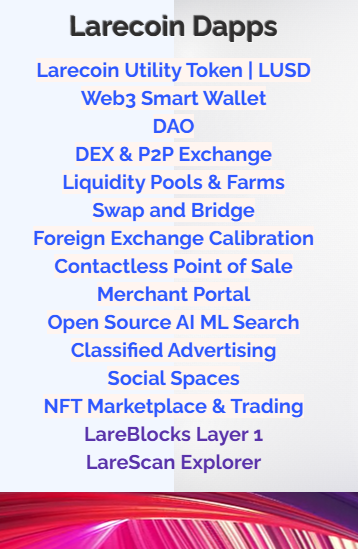
LUSD stablecoin benefits. NFT receipts. Crypto POS system for small business. The whole stack.
Check out Larecoin to see how receivables tokenization can transform your payment operations.
Or dive deeper into the Larecoin blog for more on Web3 global payments and what's coming next.
The future of merchant payments isn't waiting on bank processing queues.
Neither should you.
Comments