

.png)
Looking For NOWPayments and CoinPayments Alternatives? Here Are 10 Things You Should Know About Decentralized Payment Freedom
- [[[Free!!]<<<<]] Watch: 스포르팅 - 토트넘 Live Stream 13 September 2022
- Feb 13
- 4 min read
![Writer: [[[Free!!]<<<<]] Watch: 스포르팅 - 토트넘 Live Stream 13 September 2022](https://lh3.googleusercontent.com/a/AItbvmktwQc0wCdd3ZEETSYItRQubwwBzOyjD_dcigRf=s96-c)
Shopping around for NOWPayments and CoinPayments alternatives?
You're probably tired of the same old crypto payment processors promising "non-custodial" solutions while still routing every payment through their infrastructure.
Here's the reality: most crypto payment gateways aren't actually decentralized. They're just traditional payment processors wearing Web3 clothing.
Let's break down what real decentralized payment freedom looks like, and why it matters for your bottom line.
1. "Non-Custodial" Doesn't Mean Self-Custody
NOWPayments and CoinPayments both claim non-custodial operations. Sounds good, right?
Wrong.
Payments still flow through their systems. Their uptime becomes your uptime. Their policies become your constraints.
True self-custody means payments land directly in YOUR wallet. No intermediaries. No permission needed. No third-party infrastructure that can go down at 3 AM when you're processing international orders.
Your keys. Your crypto. Your control from day one.
That's the difference between claiming to be non-custodial and actually being self-custodial.

2. Fee Structures Are Eating Your Margins
Let's talk money.
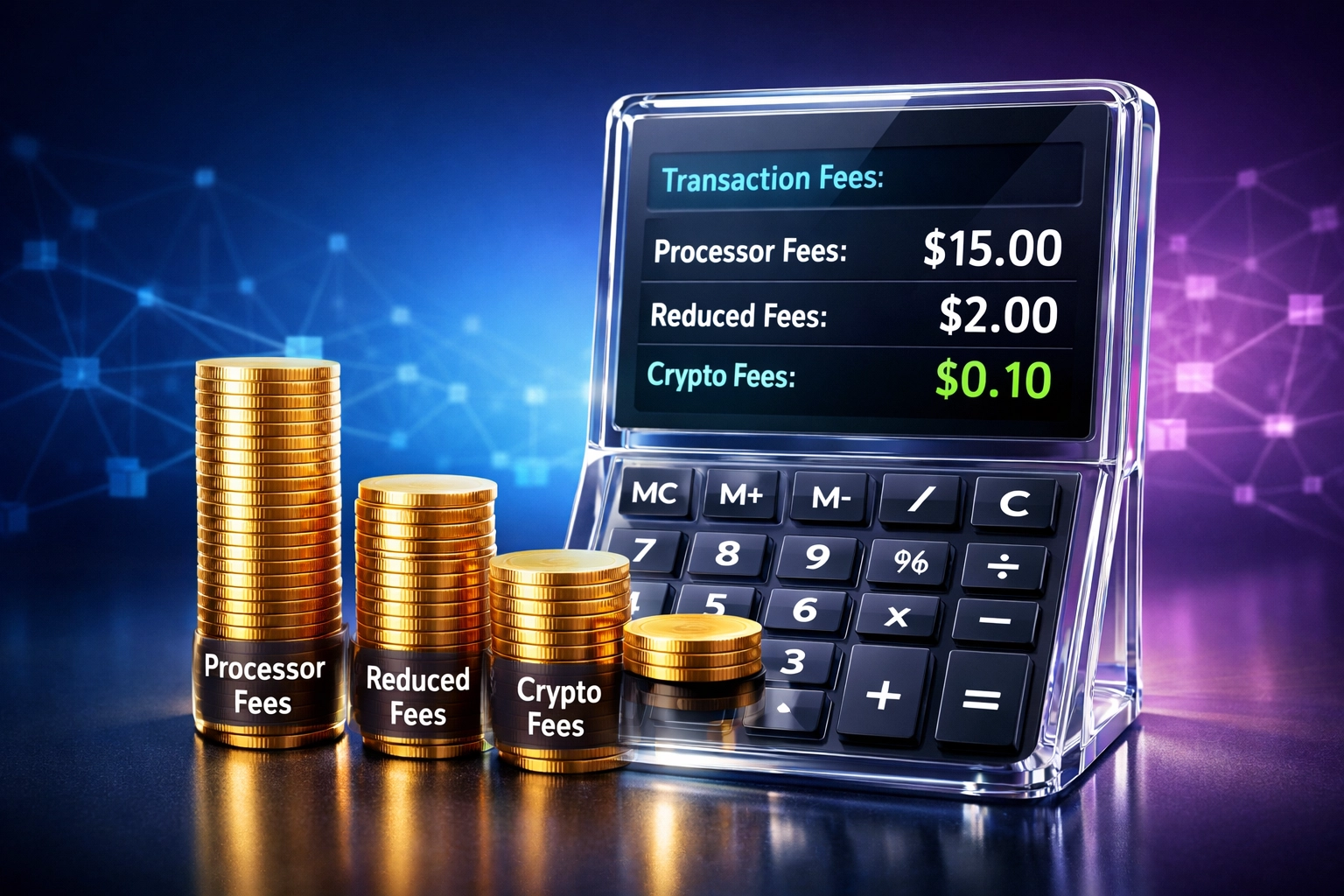
NOWPayments charges 0.5% on standard plans. CoinPayments sits around 0.5% too. Seems reasonable until you run the math on monthly volume.
$50,000 monthly volume = $250 in fees $200,000 monthly volume = $1,000 in fees $1,000,000 monthly volume = $5,000 in fees
Now compare that to gas-only transfers where you pay exactly what the blockchain charges. No markup. No percentage fees. No tiered pricing schemes.
Just transparent, predictable costs.
For merchants processing serious volume, this difference compounds fast. We're talking thousands saved monthly, money that stays in your business instead of funding someone else's infrastructure.
3. NFT Receipts Change The Game
Here's something NOWPayments and CoinPayments can't offer: NFT receipts.
Every transaction gets minted as an NFT proof-of-payment. Permanent. Immutable. Blockchain-verified.
Why does this matter?
Instant verification without customer service tickets
Automated dispute resolution with on-chain proof
Collectible transaction history for customers
Novel loyalty program opportunities
Built-in anti-fraud protection
Traditional payment processors give you a database entry. Decentralized systems give you cryptographic proof that exists forever on the blockchain.
One can disappear if the company shuts down. The other can't.
4. LUSD Brings Stability Without Centralization
Stablecoins solve crypto's volatility problem. But most stablecoins introduce new problems.
USDT? Centralized and controversial. USDC? Regulated by Circle, subject to freezing. DAI? Better, but complex.
LUSD offers decentralized stability backed by ETH collateral. No central authority. No freezing risk. No regulatory pressure points.
For merchants wanting stable value without giving up decentralization principles, LUSD hits different.
Accept payments in LUSD and avoid the "will my payment be worth 20% less tomorrow" nightmare, without trusting a centralized issuer.
5. Direct Wallet Integration Eliminates The Middleman
NOWPayments and CoinPayments both position themselves between you and your customers.
Their infrastructure processes the payment. Their systems handle the routing. Their wallets touch your funds before you do.
Decentralized payment freedom means peer-to-peer transactions. Customer wallet to merchant wallet. Direct. Immediate. No intermediary touching your funds.
The payment flow is simple:
Customer initiates payment
Transaction broadcasts to blockchain
Funds arrive in YOUR wallet
You maintain complete control
No third party can freeze your account. No service can decide you're "high risk." No platform can change terms on you.
6. Cryptocurrency Support: Quality Over Quantity
NOWPayments brags about 300+ supported cryptocurrencies.
Cool story.
How many of those does your customer base actually use?
Most merchants need Bitcoin, Ethereum, USDT, USDC, and maybe 3-5 others. Supporting 300 obscure tokens is marketing fluff.
Focus on what matters: robust support for the cryptocurrencies people actually spend. Layer 1 blockchains. Established stablecoins. Tokens with real liquidity.

Quality beats quantity when you're running an actual business.
7. Infrastructure Dependency Is A Single Point Of Failure
Traditional crypto payment processors create dependency.
Their servers go down? You can't accept payments. Their API breaks? Your checkout stops working. Their business model changes? You're scrambling for alternatives.
Decentralized infrastructure removes this single point of failure.
Transactions happen on-chain. Smart contracts execute automatically. No central server controls your payment flow.
The blockchain doesn't take vacations. It doesn't have maintenance windows. It doesn't suddenly pivot to a new business model that screws over merchants.
8. Merchant Freedom Means Policy Freedom
Read the fine print on NOWPayments and CoinPayments terms of service.
Prohibited industries. Restricted countries. Compliance requirements. KYC thresholds.
These policies can change. Suddenly your business doesn't fit their risk profile anymore.
Decentralized payment systems don't have terms of service that change on you. The blockchain doesn't care what you sell or where you sell it.
If it's legal in your jurisdiction, you can accept crypto payments. Period.
No arbitrary bans. No "sorry, your industry is too risky now." No geographic restrictions because some compliance officer got nervous.
9. Settlement Times Matter More Than You Think
CoinPayments batch settlements. NOWPayments has scheduled payouts.
Decentralized payments settle when the blockchain confirms the transaction. Usually minutes.
No waiting for batch processing. No scheduled payout windows. No "funds will be available in 2-3 business days."
The concept of "business days" doesn't exist on the blockchain. Saturday night transaction? Settled Saturday night.
This isn't just convenience. It's working capital optimization. Faster access to funds means better cash flow management.

10. The Real Cost Of Not Owning Your Payment Infrastructure
Here's what keeps getting overlooked in these comparisons:
Using a centralized crypto payment processor means renting someone else's infrastructure forever.
You never own the relationship with your customer. You never control the payment flow. You never build actual Web3 capabilities into your business.
Decentralized payment freedom means building equity in your own infrastructure. Learning to operate in the actual crypto economy, not just touching the edges of it.
Five years from now, which business is better positioned?
The one that learned to operate decentralized payment systems independently, or the one still paying monthly fees to a middleman?
The Path Forward
NOWPayments and CoinPayments serve a purpose. They make crypto payments accessible for businesses just dipping their toes in Web3.
But if you're serious about crypto, if you believe in decentralization, if you want actual payment freedom: you need actual self-custody solutions.
Real merchant independence means:
Direct wallet control
Gas-only fee structures
NFT receipt innovation
Decentralized stablecoin options
No intermediary dependencies
Policy-free payment acceptance
The technology exists today. The infrastructure is live. The question is whether you're ready to make the jump from renting crypto payment infrastructure to owning it.
Most merchants stick with what's comfortable. But the smartest ones are already making the switch.
Check out Larecoin's approach to decentralized payments and see what real payment freedom looks like in 2026.
The choice is yours. Keep paying fees to centralized processors, or take control of your payment infrastructure.
Which side of history do you want to be on?
Comments