

.png)
LUSD, Gas-Only Transfers, and Self-Custody: 3 Web3 Payment Features Your Current Processor Lacks
- [[[Free!!]<<<<]] Watch: 스포르팅 - 토트넘 Live Stream 13 September 2022
- Jan 23
- 4 min read
![Writer: [[[Free!!]<<<<]] Watch: 스포르팅 - 토트넘 Live Stream 13 September 2022](https://lh3.googleusercontent.com/a/AItbvmktwQc0wCdd3ZEETSYItRQubwwBzOyjD_dcigRf=s96-c)
Your crypto payment processor is outdated. Period.
NOWPayments. CoinPayments. Triple-A. They've been around for years. But they're stuck in Web2 thinking. Centralized custody. Hidden fees. Zero innovation.
The Web3 payments landscape has evolved. Most processors haven't.
Larecoin has. Here's what separates true Web3 payment infrastructure from the legacy players still calling themselves "crypto-native."
The Problem with Current Crypto Payment Processors
Let's be real. Most crypto payment processors operate like traditional fintech companies wearing a blockchain costume.
They hold your funds. They charge conversion fees. They control your keys.
That's not Web3. That's PayPal with extra steps.
Common issues with legacy processors:
Custodial wallets that hold merchant funds
High conversion and withdrawal fees
Limited stablecoin options
No on-chain transaction verification
Complex fee structures that eat into margins
Merchants deserve better. Your customers expect better.
Feature #1: LUSD Stablecoin Integration
Stablecoins are the backbone of crypto payments. But not all stablecoins are created equal.
USDT and USDC dominate the market. But they're centralized. Controlled by single entities. Subject to freezes and blacklists.
LUSD is different.
LUSD is a decentralized stablecoin backed by ETH deposits. It maintains a 1:1 peg with the US dollar. No governance. No intermediaries. Fully on-chain.
Why LUSD matters for merchants:
Zero counterparty risk : No centralized entity can freeze your funds
0% interest borrowing : Merchants can leverage ETH collateral without ongoing costs
True decentralization : Issued, managed, and redeemed entirely on-chain
DeFi compatibility : Use LUSD across lending, yield farming, and payments
CoinPayments offers USDT and USDC. NOWPayments does too. Triple-A sticks to the basics.
None of them offer LUSD integration with gas-only transfer capabilities.
Larecoin does.
This isn't just about having another stablecoin option. It's about giving merchants access to truly decentralized, censorship-resistant payment rails.
Feature #2: Gas-Only Transfers
Here's where things get interesting.
Traditional crypto payment processors charge percentage-based fees. Send $10,000? Pay a percentage. Send $100,000? Pay a bigger percentage.
That model is broken.
Gas-only transfers flip the script.
With Larecoin's infrastructure, merchants pay only the network gas fee. No percentage cuts. No hidden charges. No surprise deductions.
The math is simple:
Transaction Size | Traditional Processor (1-2%) | Larecoin (Gas-Only) |
$1,000 | $10-$20 | ~$0.50 |
$10,000 | $100-$200 | ~$0.50 |
$100,000 | $1,000-$2,000 | ~$0.50 |
The fee savings are massive. We're talking 50%+ reduction in payment processing costs. For high-volume merchants, that's thousands of dollars back in their pockets every month.
NOWPayments charges 0.5-1% per transaction. CoinPayments takes 0.5%. Triple-A has complex tiered pricing.
Larecoin? Gas only.
This is how Web3 payments should work. The blockchain handles settlement. You pay for network resources. Nothing more.
Feature #3: True Self-Custody
"Not your keys, not your crypto."
We've all heard it. Few processors actually live by it.
Self-custody means you control your funds. Always. No exceptions.
Most crypto payment processors operate custodial models. They receive customer payments. Hold the funds. Then release to merchants on their schedule.
That creates risk. Counterparty risk. Regulatory risk. Insolvency risk.
Remember FTX? Celsius? Voyager?
Merchants who used custodial services lost everything.
Larecoin's self-custody architecture:
Payments settle directly to merchant-controlled wallets
Master/sub-wallet structures for enterprise organizations
Real-time settlement : no holding periods
Full control over private keys
NFT receipts for immutable transaction verification
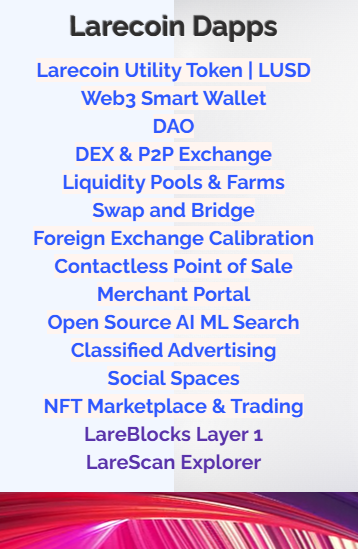
The master/sub-wallet system deserves special attention. Enterprise merchants can create hierarchical wallet structures. Headquarters controls the master wallet. Individual locations operate sub-wallets. All with real-time visibility and instant settlement.
CoinPayments offers some wallet flexibility. NOWPayments has basic merchant wallets. Neither provides the depth of self-custody options Larecoin delivers.
NFT Receipts: On-Chain Proof of Every Transaction
Paper receipts are dead. Digital receipts get lost in email folders.
NFT receipts are permanent.
Every transaction processed through Larecoin generates an NFT receipt. Immutable. Verifiable. Stored on-chain forever.
Benefits for merchants:
Fraud-proof transaction records
Simplified accounting and reconciliation
Customer-facing proof of purchase
Integration with loyalty and rewards programs
Benefits for customers:
Proof of ownership for warranty claims
Collectible transaction history
Easy returns and exchanges
Digital asset they actually own
No other major crypto payment processor offers NFT receipts as a standard feature. This is native Web3 functionality that legacy players simply can't match.
Compliance Built In: MSB Registration & MTL Coverage
Innovation means nothing without compliance.
Larecoin operates with full regulatory authorization. Federal Money Services Business (MSB) registration. State-level Money Transmitter License (MTL) coverage across the U.S.
What this means for merchants:
Legal protection when accepting crypto payments
Confidence in processor longevity
Meeting compliance requirements for enterprise clients
Audit-ready transaction records
Many offshore processors operate in regulatory gray areas. That creates risk for merchants. One regulatory action could freeze funds or shut down services.
Larecoin's MTL compliance provides peace of mind. You're working with a licensed, regulated entity that prioritizes legal operations.
QR-Generated Crypto POS: Accept Payments Anywhere
Point-of-sale shouldn't require expensive hardware.
Larecoin's QR-generated crypto POS turns any device into a payment terminal. Smartphone. Tablet. Laptop. Doesn't matter.
How it works:
Merchant generates QR code for transaction amount
Customer scans with any Web3 wallet
Payment settles in seconds
NFT receipt generated automatically
No hardware costs. No terminal leases. No complex integrations.
Triple-A offers QR payments. So does CoinPayments. But they're still charging percentage fees and using custodial settlement.
Larecoin combines QR convenience with gas-only pricing and self-custody settlement. That's the trifecta.
The Future: Metaverse Shopping & Social Commerce
Payments are just the beginning.
Larecoin is building toward a B2B2C metaverse where social shopping becomes reality. VR storefronts. AR product visualization. Social commerce with friends across the globe.
What's coming:
Virtual showrooms for physical and digital products
Social shopping experiences with real-time interaction
AR try-before-you-buy for retail
Integrated payments across virtual and physical worlds
The metaverse shopping revolution requires native Web3 payment infrastructure. Not retrofitted traditional processors. Not custodial services pretending to be decentralized.
Real Web3 payments. Self-custody. Gas-only transfers. LUSD settlement.
That's Larecoin.
The Bottom Line
Your current crypto payment processor is leaving money on the table. And exposing you to unnecessary risk.
LUSD provides decentralized stablecoin settlement without centralized control.
Gas-only transfers slash payment processing costs by 50% or more.
Self-custody ensures you always control your funds.
NOWPayments, CoinPayments, and Triple-A built their businesses on Web2 infrastructure. They've made incremental improvements. But they haven't fundamentally evolved.
Larecoin is built for Web3 from the ground up. NFT receipts. Master/sub-wallets. QR-generated POS. MTL compliance. Metaverse-ready architecture.
The gap between legacy crypto processors and true Web3 payment infrastructure grows wider every day.
Which side are you on?
Ready to upgrade your crypto payments? Visit Larecoin and see what Web3-native payment processing actually looks like.
Comments