

.png)
Metaverse Shopping in 2026: How VR/AR Checkout Will Replace QR Codes (And Why Merchants Should Care Now)
![Writer: [[[Free!!]<<<<]] Watch: 스포르팅 - 토트넘 Live Stream 13 September 2022](https://lh3.googleusercontent.com/a/AItbvmktwQc0wCdd3ZEETSYItRQubwwBzOyjD_dcigRf=s96-c)
QR codes had their moment. Pandemic hit. Everyone scanned everything. Contactless became king.
But here's the reality: QR codes are a bridge technology. A placeholder for what's coming next.
VR/AR checkout is replacing static codes in 2026. And merchants who ignore this shift will get left behind.
Why QR Codes Are Already Outdated
Think about it. You pull out your phone. Open the camera. Scan a code. Wait for it to load. Get redirected to a payment page. Enter details. Confirm.
That's six friction points. Six chances for customers to abandon cart.
91% of Gen Z shoppers want AR experiences. They're not looking to scan codes. They want immersive, frictionless payments that happen inside their virtual environments.
The data backs this up. Retailers using AR see 94% higher conversion rates than traditional checkout flows. Visitors spend 3x longer in virtual storefronts. More time browsing equals more revenue.
QR codes? They're flat. Two-dimensional. Dead tech walking.
What VR/AR Checkout Actually Looks Like in 2026
Forget scanning codes at register terminals.
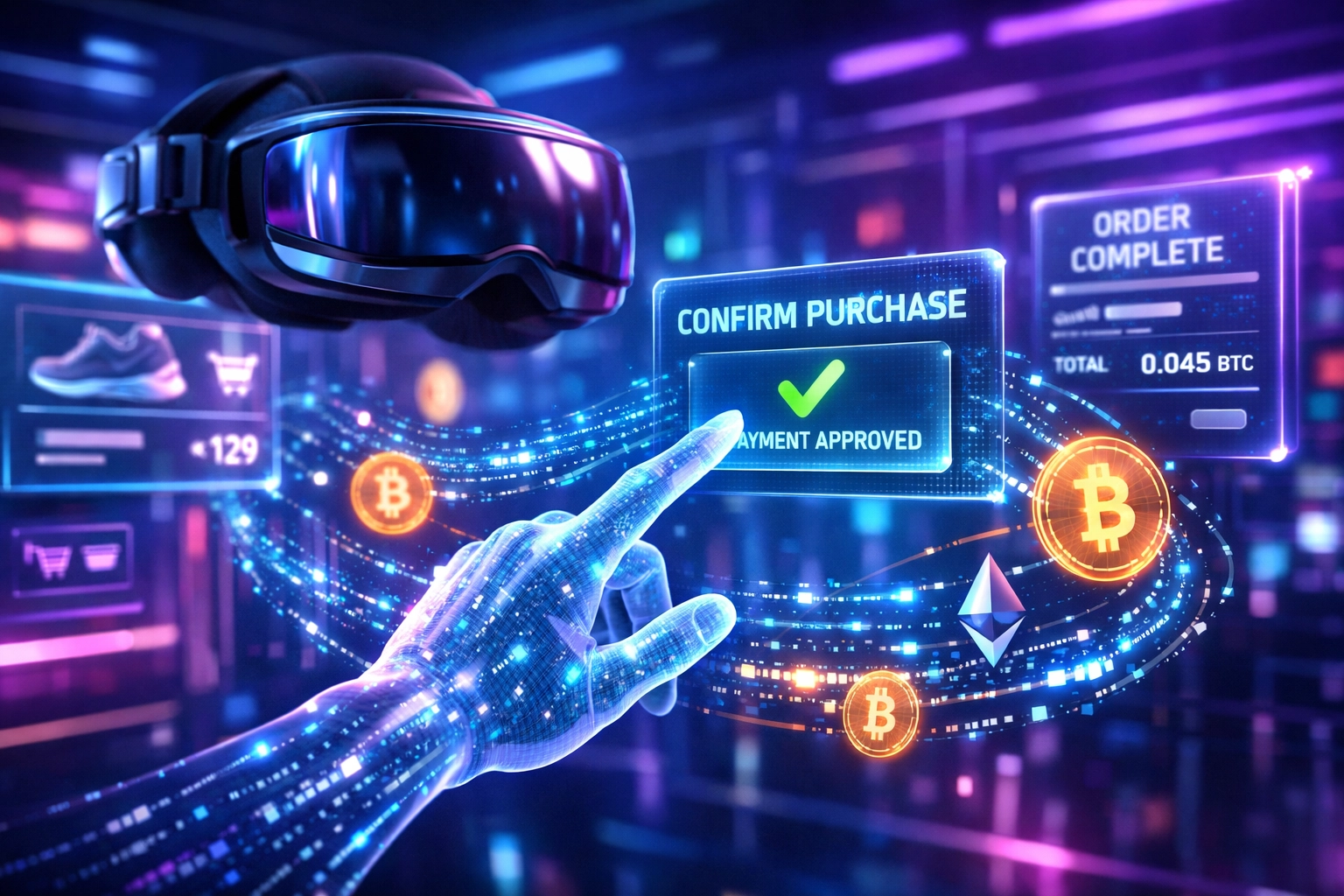
VR/AR checkout happens in-world. You're shopping in a virtual Nike store inside the metaverse. You pick up digital sneakers. Instantly, your self-custody wallet pops up as a holographic overlay. Confirm purchase with a hand gesture. Transaction completes via gas-only transfer using LUSD stablecoin.
NFT receipt mints automatically. Proof of purchase. Warranty documentation. Authentication certificate. All blockchain-verified. No paper. No email confirmations that get lost in spam folders.
The entire process takes 3-5 seconds. No app switching. No code scanning. No friction.
That's the baseline for 2026. Anything slower loses customers.
The Technical Infrastructure Making This Possible
Legacy payment processors aren't built for this. NOWPayments, CoinPayments, Triple-A: they're still operating on outdated checkout models designed for 2D web interfaces.
Here's what actually powers immersive VR/AR payments:
Self-Custody Wallets Users control their keys. No intermediary holding funds. Merchants receive payments directly to master wallets with instant settlement.
Gas-Only Transfers You pay network fees. Nothing else. No hidden processor charges. No payment gateway markups. Just the cost of blockchain computation.
LUSD Stablecoin Integration Price stability without volatility risk. Merchants accept crypto without exchange rate anxiety. Customers pay in stable value tokens pegged to USD.
NFT Receipt Technology Every transaction generates a non-fungible token receipt. Tamper-proof. Permanently verifiable. Built-in warranty tracking and product authentication.
Compare this to traditional processors:
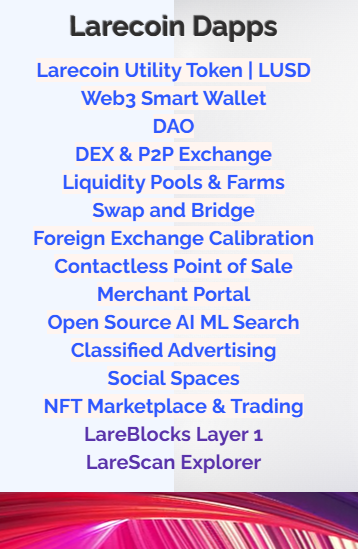
Feature | Larecoin | NOWPayments | CoinPayments | Triple-A |
Self-Custody | ✅ | ❌ | ❌ | ❌ |
Gas-Only Fees | ✅ | ❌ | ❌ | ❌ |
NFT Receipts | ✅ | ❌ | ❌ | ❌ |
VR/AR Native | ✅ | ❌ | ❌ | ❌ |
Master/Sub-Wallets | ✅ | Limited | Limited | ❌ |
The difference isn't subtle. It's fundamental architecture.
Merchant Benefits: Why This Matters for Your Bottom Line
Interchange fees drop by more than 50%.
Traditional payment processors charge 2.9% + $0.30 per transaction. Some go higher. Credit card companies take their cut. Payment gateways take theirs. Everyone wants a piece.
Crypto payments via gas-only transfers? You pay blockchain network fees. That's it. Average cost: $0.50-$2.00 per transaction depending on network congestion.
Do the math on a $100 purchase:
Traditional processor: $3.20 in fees
Larecoin gas-only: $1.50 in fees
That's 53% savings. On every single transaction. Forever.
Master and Sub-Wallet Architecture
Franchise operators and multi-location merchants get centralized treasury management with location-specific sub-wallets. Track revenue by store. Manage payroll by location. Maintain unified financial oversight.
One dashboard. Complete visibility. Zero intermediaries.
QR-Generated POS Systems
Physical retail isn't dead. It's evolving. Larecoin's contactless POS generates dynamic QR codes for in-store purchases while simultaneously supporting VR/AR checkout for customers wearing smart glasses or AR headsets.
The infrastructure adapts to customer preference. Not the other way around.
Compliance: The Unsexy Advantage That Matters
Here's what nobody talks about: regulatory compliance is the moat.
Larecoin operates with federal MSB registration and state-level MTL coverage across the United States. That's Money Transmitter Licenses in every jurisdiction that requires them.
Why does this matter?
Because half the crypto payment startups popping up today will get shut down within 18 months for operating without proper licensing. They cut corners. They move fast. They break things (including financial regulations).
When they collapse, merchants lose access to funds. Customers can't complete purchases. Business grinds to halt.
MTL compliance isn't optional. It's the foundation of sustainable payment infrastructure.
Compare this to competitors who operate in regulatory gray zones or offshore jurisdictions. When regulators crack down: and they will: those platforms disappear overnight.
Larecoin isn't going anywhere.
The B2B2C Metaverse: Social Shopping Meets Commerce
Here's where it gets interesting.
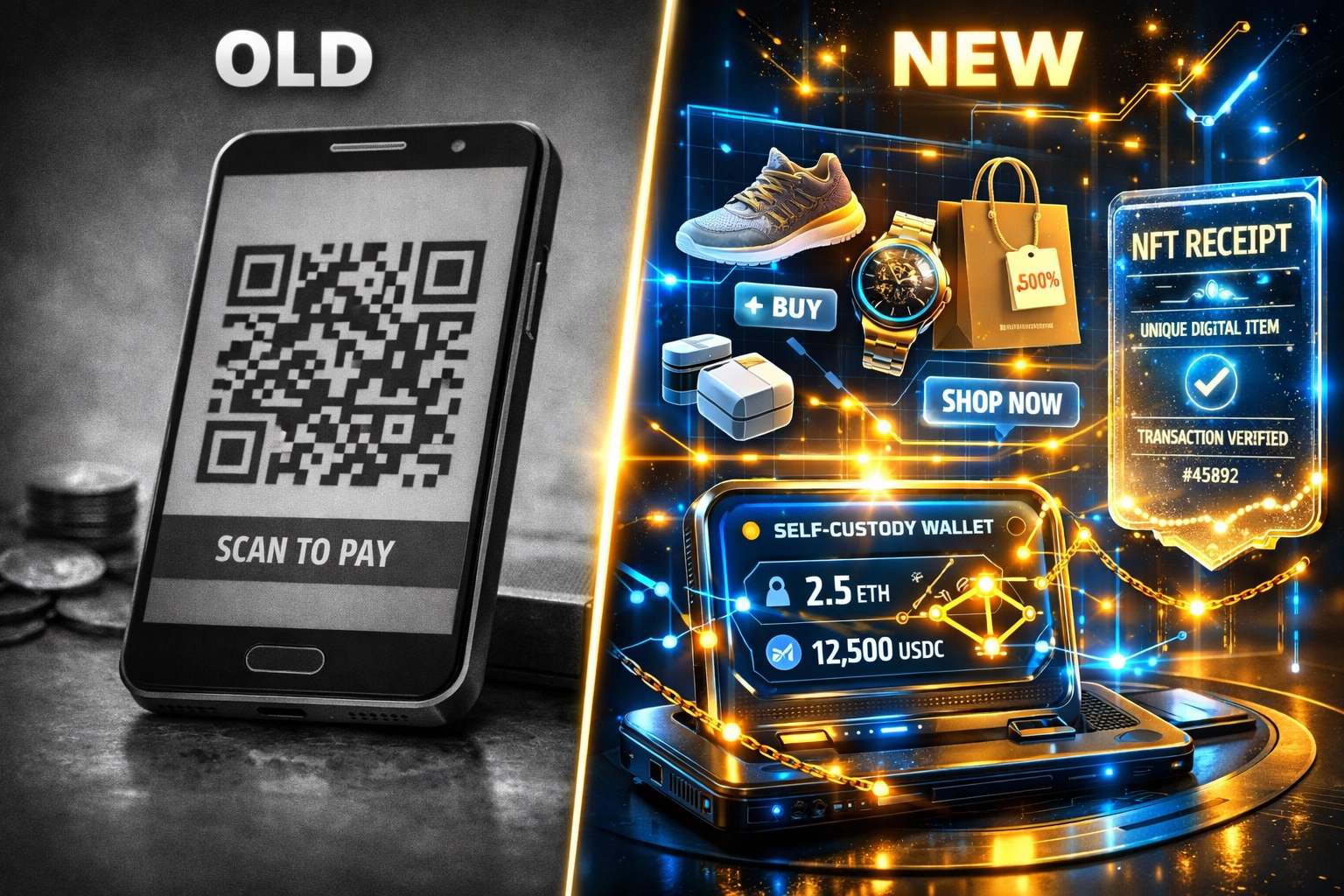
Larecoin isn't building another payment processor. We're building a complete B2B2C metaverse ecosystem for social commerce.
Think about how shopping actually happens. You don't browse alone. You text friends. Share screenshots. Ask opinions. Shopping is inherently social.
The Larecoin metaverse brings this into immersive environments:
Virtual Showrooms Brands create persistent metaverse storefronts. Customers visit with friends. Try products in VR. Complete checkout without leaving the experience.
Social Discovery See what other users are browsing. Get recommendations from community members. Join group shopping sessions with built-in video chat.
Creator Monetization Influencers build virtual stores featuring curated product collections. Earn commission on every sale. Track attribution via blockchain-verified referrals.
All powered by the same self-custody, gas-only payment infrastructure that eliminates processor fees.
This isn't futuristic speculation. 30% of businesses globally will have metaverse offerings by 2026, according to Gartner. JP Morgan projects $1 trillion in metaverse revenue.
The question isn't whether metaverse commerce happens. It's whether your business is positioned to capitalize on it.
What Merchants Should Do Right Now
Start piloting metaverse integrations today. Not next quarter. Not after you "see how it plays out." Now.
Early adopters capture market share. Late adopters play catch-up.
Here's your 90-day action plan:
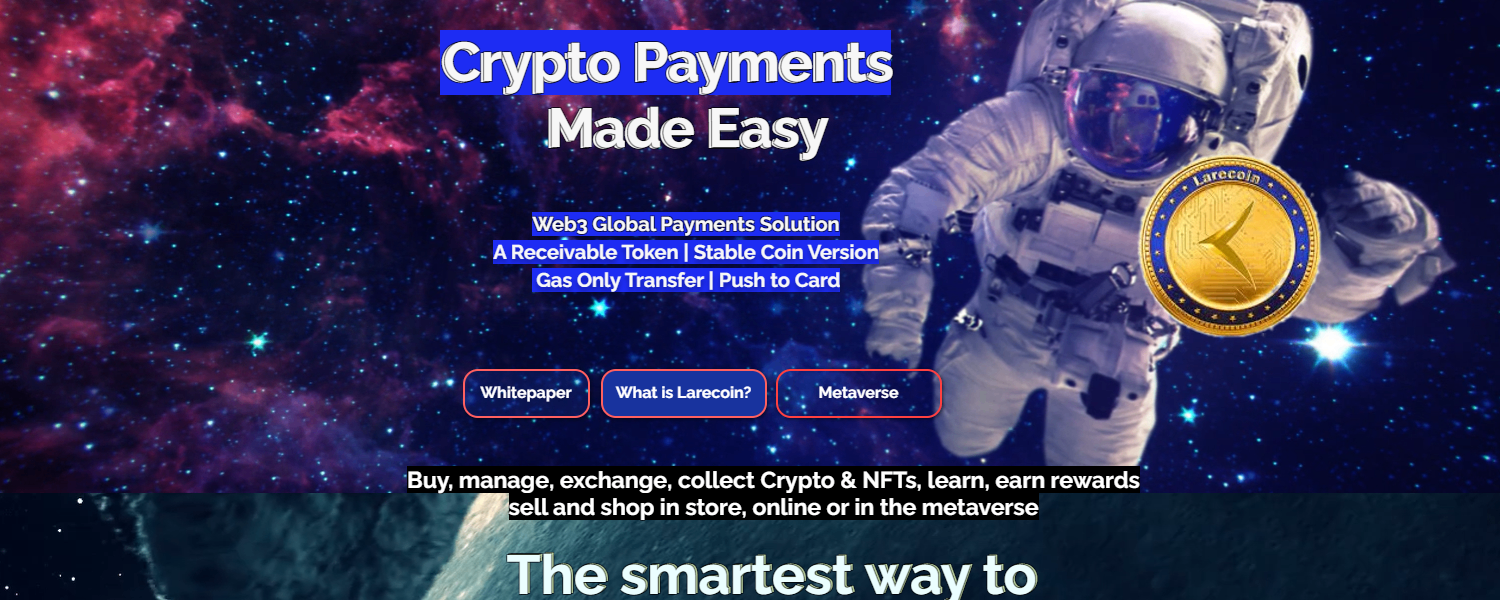
Set up a Larecoin merchant portal at larecoin.com
Deploy your first virtual storefront using the no-code metaverse builder
Test VR/AR checkout flows with beta customer cohorts
Track conversion data comparing traditional vs. immersive checkout
Scale what works and iterate based on real usage metrics
The infrastructure exists. The compliance framework is solid. The market demand is verified.
The only variable is merchant adoption speed.
Final Reality Check
VR/AR checkout isn't replacing QR codes because it's cooler or more futuristic.
It's replacing them because it's faster, cheaper, and generates higher conversion rates.
Merchants who embrace gas-only transfers, self-custody wallets, and NFT receipts will reduce payment processing costs by half while delivering the immersive experiences customers increasingly expect.
Merchants who stick with legacy processors will watch profit margins erode while competitors capture market share.
The metaverse isn't coming. It's here. 91% of Gen Z already wants AR shopping. Brands like Nike, Gucci, and Louis Vuitton are already operating virtual storefronts.
The migration from QR codes to VR/AR checkout is happening whether you're ready or not.
Question is: which side of this transition will your business be on?
Comments