

.png)
Metaverse Shopping in 2026: Why VR/AR Payments Need Federal MSB and MTL Compliance
- [[[Free!!]<<<<]] Watch: 스포르팅 - 토트넘 Live Stream 13 September 2022
- 2 hours ago
- 5 min read
![Writer: [[[Free!!]<<<<]] Watch: 스포르팅 - 토트넘 Live Stream 13 September 2022](https://lh3.googleusercontent.com/a/AItbvmktwQc0wCdd3ZEETSYItRQubwwBzOyjD_dcigRf=s96-c)
The metaverse shopping revolution is here. Virtual storefronts. AR try-ons. VR shopping malls. But there's a massive problem nobody's talking about.
Most crypto payment processors operating in immersive commerce environments aren't properly licensed.
The $800 Billion Compliance Gap
By 2026, metaverse retail is projected to hit $800 billion. That's more than the entire GDP of Switzerland. Yet the majority of VR/AR payment solutions lack proper federal MSB registration and state-level MTL coverage.
Here's what that means for merchants: legal exposure, potential fines, and frozen funds.
When you process crypto payments in virtual environments: whether that's a VR showroom or an AR shopping experience: you're transmitting money across state lines. That triggers federal Money Services Business requirements and state Money Transmitter License obligations.

Most platforms ignore this. They focus on slick UI and fast transactions. But compliance isn't optional.
Why MSB and MTL Matter for Metaverse Commerce
Federal MSB registration with FinCEN establishes legitimacy. It signals you're operating within U.S. regulatory frameworks. You're not a fly-by-night operation.
State MTL licenses go further. They prove you've met capital requirements, undergone background checks, and maintain proper reserves in each jurisdiction where you operate.
For metaverse merchants, this matters more than ever.
Virtual goods purchased with crypto in VR environments trigger the same regulations as physical goods bought online. The medium doesn't change the law. A transaction is a transaction.
Platforms like NOWPayments and CoinPayments offer multi-currency support. They tout low fees and fast processing. But dig into their compliance documentation. Most operate in regulatory gray zones, particularly for U.S.-based merchants handling VR/AR transactions.
Triple-A has made strides with licensing. But their coverage remains limited to select states. That leaves merchants exposed in major markets.
Larecoin's Full-Spectrum Compliance Advantage
Larecoin operates differently. Federal MSB registration. State-level MTL coverage across the U.S.
This isn't just paperwork. It's protection.
When you integrate Larecoin into your metaverse storefront, you're partnering with a fully compliant payment infrastructure. No regulatory surprises. No sudden account freezes. No emergency cease-and-desist orders.

The compliance foundation enables everything else. It's why Larecoin can offer:
NFT receipt generation for every transaction
LUSD stablecoin integration for price stability
Gas-only transfers that eliminate token costs
True self-custody with master/sub-wallet architecture
These technical innovations only work when built on proper regulatory infrastructure. Otherwise, you're building a Ferrari on quicksand.
Technical Innovations for Immersive Shopping
VR and AR shopping demand different payment solutions than traditional e-commerce. You can't ask someone in a VR headset to pull out their phone and open a banking app.
Payments need to be native to the immersive experience.
Larecoin's QR-generated POS system integrates directly into virtual environments. A customer in VR sees a product. They point. They click. A QR code appears in their visual field. Their crypto wallet: already integrated with their VR profile: processes the payment instantly.
No app switching. No headset removal. Pure seamless commerce.
The NFT receipt system goes further. Every purchase generates an on-chain receipt as an NFT. This isn't just record-keeping. It's proof of authenticity for digital goods, warranty tracking for physical products, and loyalty program integration all rolled into one.
Compare this to NOWPayments or CoinPayments. Both require merchants to manually generate invoices. Customers exit the immersive environment. They navigate external payment interfaces. The friction kills conversions.
In metaverse commerce, friction equals abandoned carts.

Slashing Interchange Fees by 50%+
Traditional payment processors charge 2.9% plus $0.30 per transaction. For high-ticket VR purchases: say, a $5,000 digital art piece or a $10,000 virtual real estate plot: those fees compound fast.
Larecoin reduces interchange fees by more than 50%. Gas-only transfers mean merchants pay network fees, not percentage-based processing cuts. On a $10,000 transaction, that's saving $290 versus traditional processors.
The master/sub-wallet system amplifies this advantage. Merchants create sub-wallets for different virtual storefronts, product lines, or metaverse platforms. All roll up to a master wallet. All maintain self-custody.
You control your funds. Always.
CoinPayments offers multi-wallet support. But funds sit in their custody. Same with most Triple-A integrations. You're trusting third parties with your revenue in exchange for convenience.
Larecoin eliminates that trade-off. Full control. Lower fees. Complete compliance.
The Larecoin B2B2C Metaverse Vision
Beyond payment processing, Larecoin is building integrated social shopping experiences in its own B2B2C metaverse.
Picture this: Virtual shopping districts where merchants set up storefronts. Customers browse as avatars. They interact with products in 3D. They chat with friends in real-time. They make purchases with a gesture.
All powered by compliant crypto rails. All generating NFT receipts. All settling in LUSD stablecoin to avoid volatility.
This isn't theoretical. The infrastructure is live. Merchants can deploy virtual stores today. The metaverse shopping layer launches Q3 2026.
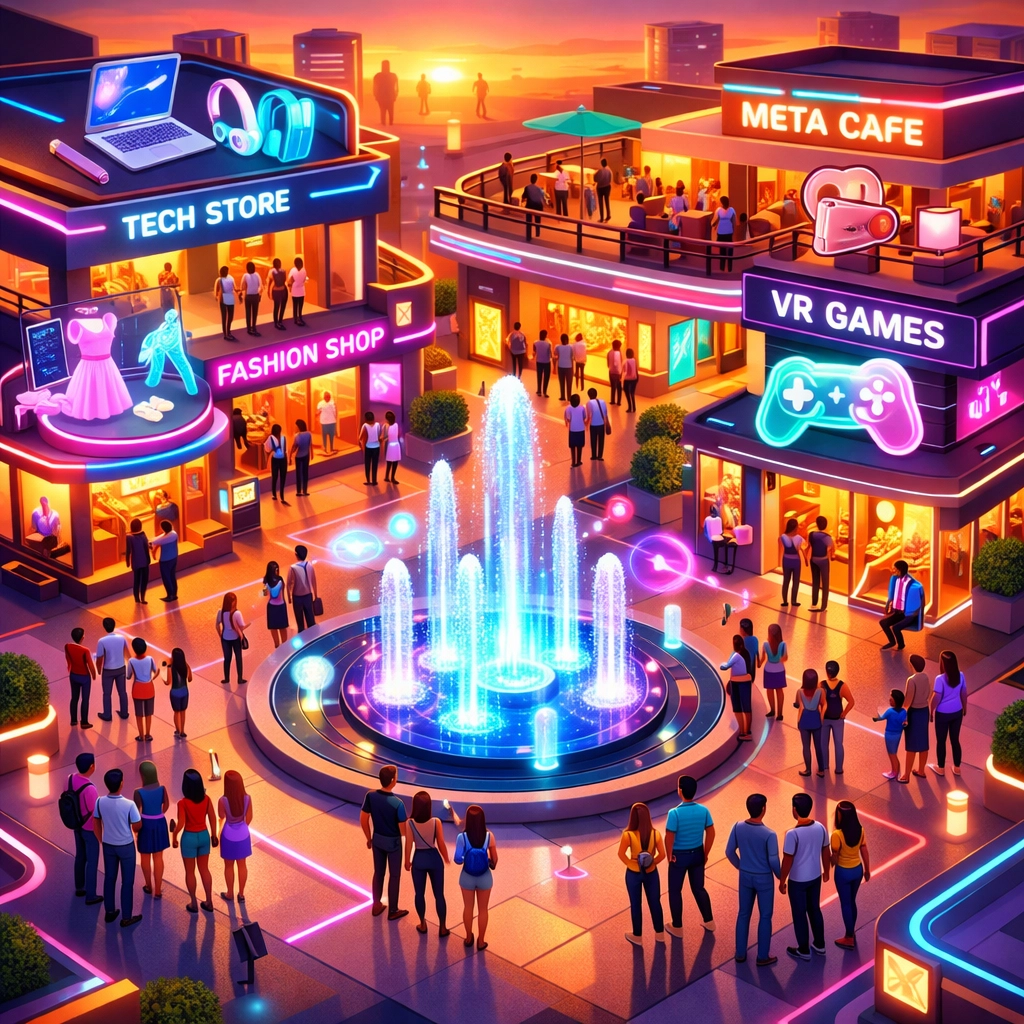
Social shopping transforms commerce. Traditional e-commerce is isolating. You browse alone. You decide alone. You buy alone.
Metaverse shopping is communal. You explore with friends. You get real-time feedback on that digital jacket. You attend virtual product launches as events, not transactions.
Commerce becomes entertainment. Entertainment becomes commerce.
Why Other Platforms Fall Short
NOWPayments excels at payment diversity. 200+ cryptocurrencies supported. Fast integration. But zero metaverse-specific features. No VR/AR optimization. No social shopping layer. No NFT receipts.
CoinPayments offers similar breadth. They've been around since 2013. But their interface looks like it's from 2013. Clunky merchant portals. No immersive commerce tools. And concerning compliance gaps for U.S. merchants.
Triple-A targets enterprise clients. They have regulatory awareness. But their metaverse strategy is non-existent. They're building for today's web, not tomorrow's spatial internet.
Larecoin builds for where commerce is headed.
Not where it's been. The metaverse isn't a gimmick. It's not Second Life 2.0. It's the next interface layer for the internet. Shopping, socializing, working: all converging in immersive environments.
Payment infrastructure needs to evolve accordingly. Compliance-first. Immersive-native. Merchant-empowered.
The 2026 Metaverse Shopping Landscape
Fast forward six months. Holiday shopping season. Consumers don VR headsets to browse virtual Black Friday sales. They walk through digital department stores with friends across the country. They try on virtual clothing using AR mirrors. They purchase both digital wearables and physical products for home delivery.
All transactions process through compliant crypto rails. All generate NFT receipts. All settle in stablecoins. Zero interchange fees eating merchant margins.
This is the Larecoin advantage.
Merchants gain customers globally without currency conversion hassles. They reduce payment processing costs by 50%+. They offer innovative NFT loyalty programs. They build branded experiences in the Larecoin metaverse.
All while maintaining full regulatory compliance. Federal MSB registration. State MTL coverage. Complete self-custody.

The platforms that ignore metaverse shopping will fade. The ones that bolt on VR support as an afterthought will struggle. The ones building compliance-first, immersive-native infrastructure will dominate.
Join the Metaverse Payments Revolution
Larecoin isn't waiting for the metaverse to arrive. We're building it. With proper compliance. With merchant-first technology. With social shopping at the core.
If you're a merchant exploring VR/AR commerce, you need payment infrastructure that matches your ambition. Not legacy processors adapted for crypto. Not compliance-light platforms that might work until they don't.
You need federal MSB registration. State MTL coverage. NFT receipts. LUSD stability. Self-custody. And a roadmap that extends into immersive commerce.
You need Larecoin.
Ready to future-proof your payment infrastructure? Explore our merchant solutions at larecoin.com and discover why compliant crypto payments are the foundation of metaverse commerce.
The future of shopping is immersive. The future of payments is compliant. The future is Larecoin.
Comments