

.png)
Metaverse Shopping Is Coming: 5 Steps to Prepare Your Business for VR/AR Commerce
- [[[Free!!]<<<<]] Watch: 스포르팅 - 토트넘 Live Stream 13 September 2022
- 2 hours ago
- 5 min read
![Writer: [[[Free!!]<<<<]] Watch: 스포르팅 - 토트넘 Live Stream 13 September 2022](https://lh3.googleusercontent.com/a/AItbvmktwQc0wCdd3ZEETSYItRQubwwBzOyjD_dcigRf=s96-c)
The future of retail isn't a website. It's a world.
VR headsets are flying off shelves. AR try-ons are becoming standard. And metaverse shopping? It's not science fiction anymore. It's the next frontier for merchants who want to stay competitive.
But here's the thing. Most businesses aren't ready.
Legacy payment systems weren't built for immersive environments. Traditional POS solutions can't handle 3D storefronts. And those hefty interchange fees? They'll eat your margins alive in a virtual economy.
Time to adapt. Here are five steps to prepare your business for VR/AR commerce: and why the right crypto payment infrastructure makes all the difference.
Step 1: Understand the Virtual Commerce Landscape
Metaverse shopping isn't just regular e-commerce with a headset. It's a fundamentally different experience.
Customers don't browse. They explore. They don't click "add to cart." They pick up virtual products, examine them from every angle, and make purchasing decisions in real-time social environments.
This changes everything.
What you need to know:
Immersive environments demand instant, frictionless transactions
Social shopping means group purchases and split payments become standard
Digital assets (NFTs, virtual goods) require native Web3 payment rails
Cross-platform compatibility is non-negotiable
Traditional payment processors like CoinPayments and NOWPayments offer basic crypto acceptance. Triple-A provides some enterprise solutions. But none of them were architected for metaverse-native commerce.
The gap is massive. And it's an opportunity.
Step 2: Choose a Payment Infrastructure Built for the Future
Your payment stack determines your ceiling.
Pick a system designed for yesterday's internet? You'll spend years retrofitting. Choose infrastructure built for Web3? You're already ahead.
Here's what separates metaverse-ready payment solutions:
Gas-Only Transfers
Every transaction in the metaverse needs to be fast and cheap. Larecoin's gas-only transfer model eliminates unnecessary fees. You pay for network costs. That's it.
Compare this to traditional processors charging 2.9% + $0.30 per transaction. In high-volume virtual environments, those fees compound fast.
LUSD Stablecoin Integration
Volatility kills commerce. Customers hesitate when prices fluctuate mid-purchase.
LUSD provides stability without sacrificing the benefits of crypto. Instant settlement. Global accessibility. No currency conversion headaches. Your virtual storefront prices stay consistent whether a customer joins from Tokyo or Toronto.
Self-Custody
Here's where most crypto payment providers fail.
NOWPayments, CoinPayments, Triple-A: they all require you to trust a third party with your funds. That's a single point of failure. A security risk. A regulatory headache.
Self-custody changes the game. With Larecoin's smart wallet architecture, merchants maintain full control of their assets. No intermediaries. No custody risk. Just direct ownership.
NFT Receipts
This is where VR/AR commerce gets interesting.
Every transaction generates a verifiable, immutable NFT receipt. Not just for record-keeping: though that matters for accounting and compliance. These receipts become collectible proof of purchase.
Imagine a customer buying limited-edition virtual sneakers in your metaverse store. Their NFT receipt proves authenticity. It can unlock future discounts. It might even appreciate in value as a collectible.
Traditional payment processors can't do this. Period.
Step 3: Prioritize Security and Compliance
The metaverse is the Wild West right now. That won't last.
Regulation is coming. Smart businesses are getting compliant now: before enforcement actions start making headlines.
Why MTL compliance matters:
Money Transmitter Licenses (MTLs) aren't optional. They're the foundation of legal crypto commerce in the United States. Operating without proper licensing? That's a ticking time bomb.
Larecoin maintains federal MSB registration and state-level MTL coverage across the U.S. This isn't a technicality. It's your insurance policy against regulatory risk.
Compare this to competitors:
Many crypto payment processors operate in legal gray areas. They might work today. Tomorrow? One enforcement action could freeze your entire payment infrastructure.
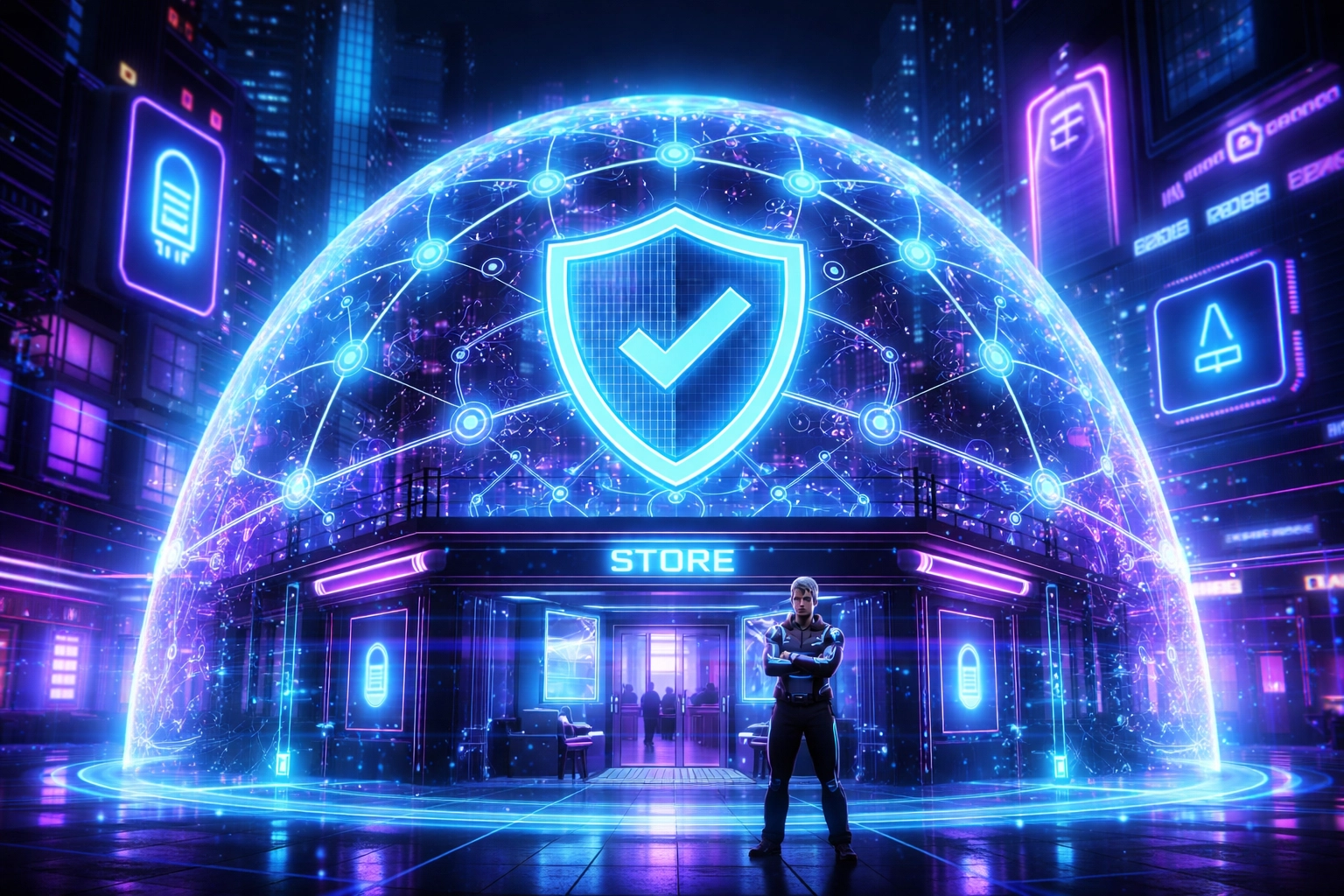
Security in immersive environments requires extra vigilance:
Identity verification becomes more complex when customers are avatars
Fraud detection needs real-time AI/ML capabilities
Asset authentication must be blockchain-native
Privacy controls must balance transparency with user protection
The merchants who solve these challenges first will dominate metaverse commerce. The ones who ignore them will become cautionary tales.
Step 4: Optimize for Immersive Customer Experiences
Your virtual storefront is your brand. Every pixel matters.
But beautiful environments mean nothing if checkout is painful. The goal: seamless transactions that feel native to the experience.
Crypto POS for the metaverse:
QR-generated POS systems bridge physical and virtual commerce. A customer in your VR store sees a product. They scan a QR code with their smart wallet. Transaction complete.
No redirects. No external payment pages. No friction.
Larecoin's merchant portal enables master/sub-wallet architecture. Perfect for multi-location virtual stores or franchise operations. Track revenue across all your metaverse properties from a single dashboard.
The fee savings add up fast:
Traditional interchange fees eat 2-4% of every transaction. Larecoin reduces these costs by more than 50%.
On $100,000 in monthly sales, that's $2,000-4,000 back in your pocket. Every month. In the metaverse, where margins on virtual goods can be razor-thin, this difference determines profitability.
Social shopping integration:
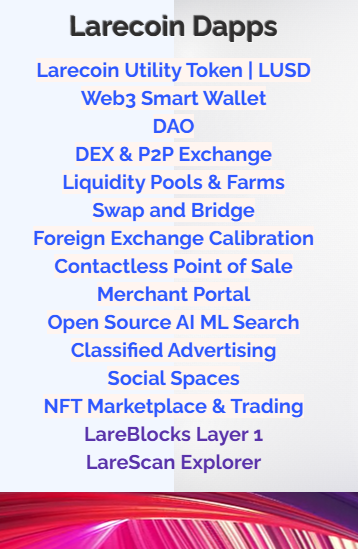
The Larecoin B2B2C metaverse isn't just a payment layer. It's a complete social commerce ecosystem.
Customers shop together. They share recommendations in real-time. They split purchases instantly. Group buying power translates to volume discounts and loyalty rewards.
This is the future of retail. And it requires payment infrastructure designed from the ground up for social interaction.
Step 5: Build Your Team and Onboarding Strategy
Technology means nothing without execution.
Your staff needs to understand VR/AR environments. They need to troubleshoot crypto payments. They need to guide customers through experiences that don't exist yet.
Start training now:
Familiarize your team with Web3 wallet interactions
Practice customer service scenarios in virtual environments
Develop FAQ content for crypto payment questions
Create onboarding flows that assume zero prior knowledge
Customer onboarding is equally critical:
Most consumers haven't made a crypto purchase. Even fewer have shopped in VR.
Your onboarding process must be dead simple. Connect wallet. Browse products. Complete purchase. Three steps maximum.
Complicated checkout flows kill conversion rates in traditional e-commerce. In immersive environments, where the goal is presence and flow, friction is even more destructive.

The Bottom Line
Metaverse shopping isn't coming. It's here.
Early adopters are already building virtual storefronts. Smart merchants are testing crypto payment integrations. Forward-thinking brands are claiming their space in immersive environments.
The question isn't whether VR/AR commerce will go mainstream. It's whether you'll be ready when it does.
Your action items:
Audit your current payment infrastructure for Web3 readiness
Evaluate crypto POS solutions with metaverse capabilities
Verify compliance credentials (MSB, MTL coverage)
Calculate potential fee savings from crypto payment adoption
Begin staff training on virtual commerce fundamentals
The merchants who move now will own the metaverse retail landscape. The ones who wait will be playing catch-up for years.
Ready to future-proof your business? Explore Larecoin's merchant solutions and discover what metaverse-native payments look like.
The future is immersive. Your payment infrastructure should be too.
Comments