

.png)
Metaverse Shopping Meets MTL Compliance: How Larecoin's B2B2C VR/AR Platform Is Building the Future of Trusted Web3 Payments
- [[[Free!!]<<<<]] Watch: 스포르팅 - 토트넘 Live Stream 13 September 2022
- 2 hours ago
- 5 min read
![Writer: [[[Free!!]<<<<]] Watch: 스포르팅 - 토트넘 Live Stream 13 September 2022](https://lh3.googleusercontent.com/a/AItbvmktwQc0wCdd3ZEETSYItRQubwwBzOyjD_dcigRf=s96-c)
The Metaverse Has a Payments Problem
Virtual shopping is exploding. VR headsets are mainstream. AR overlays bring products into your living room before you buy.
But here's the catch: traditional crypto payment processors weren't built for immersive commerce.
You can't slap a NOWPayments checkout button into a VR storefront and call it a day. CoinPayments doesn't understand cross-reality transactions. Triple-A wasn't designed for social shopping environments where customers browse together in virtual spaces.
The metaverse demands a different infrastructure. One that handles microtransactions across virtual and physical touchpoints. One that complies with actual U.S. regulations while maintaining Web3's self-custody promise.
That's exactly what Larecoin built.
Where Legacy Crypto Processors Fall Short
NOWPayments excels at basic crypto checkout integration. But their fee structure: layered on top of network costs: breaks down when merchants process thousands of daily metaverse microtransactions. No master/sub-wallet architecture for managing multiple virtual storefronts. No NFT receipt infrastructure for cross-platform verification.
CoinPayments offers multi-currency support but locks merchants into custodial wallets with withdrawal limitations. Their compliance framework wasn't designed for the regulatory complexity of immersive commerce environments spanning virtual worlds and physical locations.
Triple-A focuses on fiat on/off-ramps, positioning themselves as a traditional payment gateway dressed in crypto clothing. Useful for standard e-commerce. Completely inadequate for VR/AR shopping experiences requiring real-time, cross-reality transaction verification.
None of these platforms address the fundamental challenge: combining metaverse-native commerce with state-level MTL compliance and merchant-controlled self-custody.
Larecoin's Technical Foundation
Gas-Only Transfer Architecture
Larecoin operates on a simple principle: merchants pay network fees, not percentage cuts.
Traditional credit card interchange fees hit 2.5-3.5%. Add payment processor margins and you're surrendering 4-5% of revenue. For high-volume merchants processing thousands of transactions daily, those percentages compound fast.
Gas-only transfers eliminate percentage-based revenue extraction. Merchants pay the actual cost of blockchain settlement. Nothing more.
The math matters:
Traditional processing: $100,000 monthly revenue = $4,000+ in fees
Gas-only transfers: $100,000 monthly revenue = sub-$500 network costs
Savings: >50% reduction in payment processing overhead
Master/Sub-Wallet Infrastructure
Operating multiple locations: virtual or physical: creates complexity. Separate accounting. Different inventory systems. Regional managers needing oversight without full treasury access.
Larecoin's master/sub-wallet architecture solves this. Merchants maintain one master wallet with full control. Deploy unlimited sub-wallets for:
Individual virtual storefronts
Physical retail locations
Product line divisions
Regional operations
Franchise locations
Each sub-wallet operates independently. The master wallet maintains oversight. No intermediary touches your funds.
Self-custody throughout the entire flow. No withdrawal limits. No holding periods. Your revenue, your control, your timeline.
NFT Receipt Verification
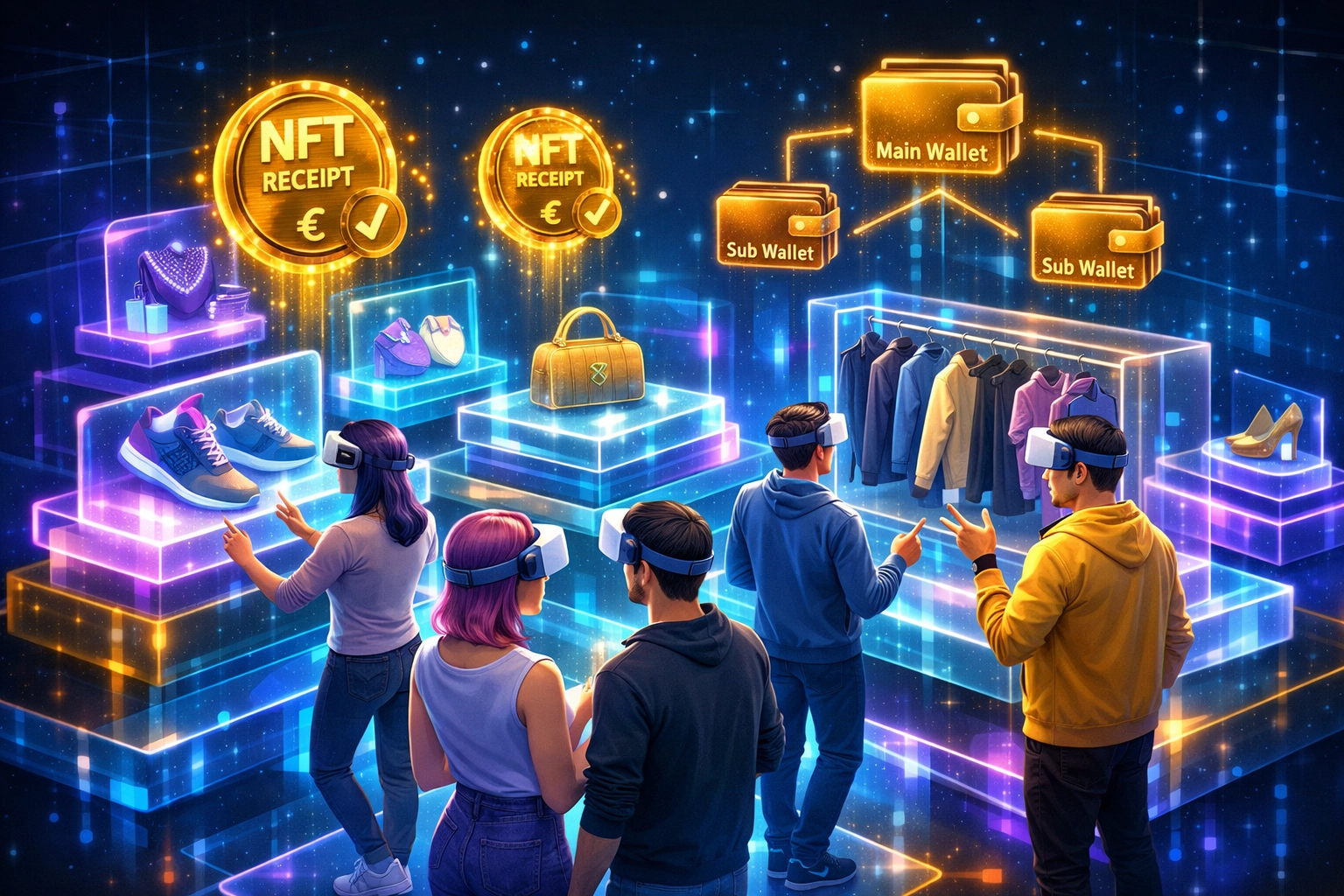
Every Larecoin transaction generates a permanent, blockchain-secured NFT receipt.
Why does this matter in the metaverse? Because traditional receipts don't travel across platforms.
Customer buys a virtual fashion item in your VR showroom. Wants to return it in your physical store. Needs warranty service six months later in a different metaverse platform.
The NFT receipt:
Proves purchase authenticity instantly
Eliminates "lost receipt" disputes
Travels with the customer across platforms
Enables instant warranty verification
Creates an immutable transaction history
No more "email us a photo of your receipt" friction. The blockchain is the source of truth.
LUSD Stablecoin Integration
Volatility kills mainstream adoption. Merchants need predictable revenue. Customers need stable pricing.
Larecoin's LUSD stablecoin integration provides dollar-pegged stability without sacrificing Web3 infrastructure benefits. Price items in LUSD. Receive LUSD. Know exactly what you're getting.
Gas-only fees still apply. Self-custody remains intact. You just eliminated the "crypto went down 15% since this morning" problem.
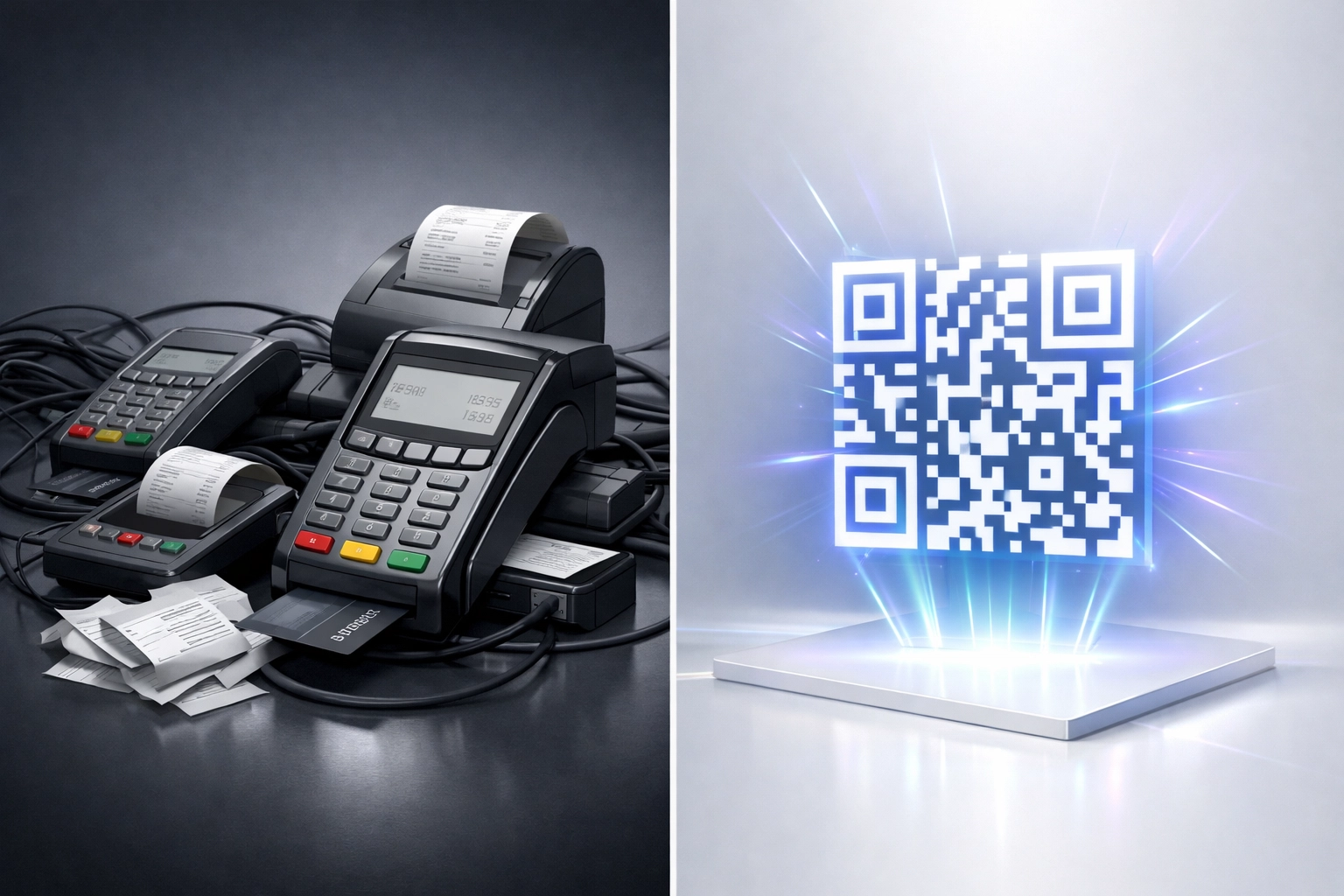
The QR-Generated POS Revolution
Traditional point-of-sale systems require:
Hardware installation
Software integration
Payment terminal contracts
Monthly equipment fees
Technical support dependencies
Larecoin's QR-generated POS eliminates all of it.
Generate a payment QR code. Customer scans. Transaction settles. Works identically whether you're operating a:
Physical retail counter
Virtual VR storefront
AR popup experience
Mobile commerce environment
Hybrid cross-reality space
Same infrastructure. Same settlement speed. Same self-custody model. Zero hardware requirements.
A coffee shop in Brooklyn and a virtual sneaker boutique in Decentraland use identical payment rails. That's the power of platform unification.
Social Shopping in the B2B2C Metaverse
Traditional e-commerce is isolated. You browse alone. Click alone. Buy alone.
Larecoin's B2B2C metaverse platform brings back the social element.
Customers enter virtual storefronts together. Browse products as a group. Try on virtual fashion simultaneously. Ask questions to live-avatar sales associates. Experience products in shared VR environments before committing.
Early data shows brands utilizing immersive experiences achieve 33%+ conversion rate increases compared to standard e-commerce. Why? Because social shopping replicates the in-store experience humans evolved to prefer.
The VR/AR advantage extends beyond social proof:
VR showrooms let customers explore full-scale product environments
AR overlays place products in customers' actual physical spaces
Cross-reality compatibility enables buy-in-VR, confirm-on-mobile, redeem-in-store flows
Persistent virtual storefronts operate 24/7 without staffing costs
Merchants gain global reach without geographical limitations. Customers gain immersive experiences without travel requirements.
The infrastructure handling all those transactions? Larecoin's gas-only, self-custody payment rails with NFT receipt verification.
The Compliance Advantage
Here's what most crypto payment processors won't tell you: operating in the U.S. metaverse commerce space without proper licensing is regulatory suicide.
Federal Money Services Business (MSB) registration is just the start. Real compliance requires state-level Money Transmitter License (MTL) coverage.
Larecoin maintains federal MSB registration and state-level MTL compliance across U.S. jurisdictions. This isn't marketing fluff. It's the foundation enabling merchants to operate in immersive commerce environments without regulatory exposure.
When traditional processors tell you they "support crypto payments," ask about their MTL coverage. Ask how they handle cross-reality transaction verification. Ask what happens when state regulators start examining metaverse commerce flows.
Most can't answer. Larecoin built the answer into the infrastructure.

What This Means for Merchants
Strip away the metaverse hype and VR terminology. Here's what actually matters:
Financial Impact:
Over 50% reduction in payment processing fees
Self-custody eliminates intermediary risk
Master/sub-wallet infrastructure scales with your business
Gas-only transfers create predictable cost structures
Operational Advantages:
QR-generated POS requires zero hardware investment
NFT receipts eliminate documentation disputes
Cross-reality compatibility unifies virtual and physical operations
LUSD integration provides stability without sacrificing Web3 benefits
Competitive Edge:
MTL compliance enables regulated metaverse commerce
B2B2C social shopping infrastructure increases conversion rates
VR/AR experiences differentiate your brand
Federal MSB registration provides institutional credibility
Traditional processors force you to choose: crypto flexibility OR regulatory compliance. Metaverse compatibility OR merchant control. Low fees OR self-custody.
Larecoin eliminates the tradeoffs.
The 10-Year Vision
This is the first post in a 100-post series exploring Larecoin's infrastructure, competitive positioning, and merchant implementation strategies.
We're not building for next quarter. We're building for the next decade of commerce.
The metaverse isn't coming. It's here. AR shopping isn't experimental. It's converting 33% better than traditional e-commerce. Web3 payments aren't niche. They're solving problems legacy processors can't touch.
Merchants who position themselves now: with compliant infrastructure, self-custody control, and immersive shopping experiences: win the next era of retail.
Ready to eliminate payment processor fees while building your metaverse presence?
Explore Larecoin's merchant solutions at larecoin.com. Join the conversation in our global collaborations forum. Check the marketplace for early adopter incentives.
The future of trusted Web3 payments is already processing transactions. The question is whether you're part of it.
Comments