

.png)
NFT Receipts for Accounting: 5 Steps How to Automate Tax Season and Slash Bookkeeping Time (Easy Guide for Merchants)
- [[[Free!!]<<<<]] Watch: 스포르팅 - 토트넘 Live Stream 13 September 2022
- 1 hour ago
- 5 min read
![Writer: [[[Free!!]<<<<]] Watch: 스포르팅 - 토트넘 Live Stream 13 September 2022](https://lh3.googleusercontent.com/a/AItbvmktwQc0wCdd3ZEETSYItRQubwwBzOyjD_dcigRf=s96-c)
Tax season sucks for crypto merchants.
You're drowning in wallet addresses, transaction hashes, and scattered payment records. Traditional processors like NOWPayments and CoinPayments hand you CSV files that require hours of manual sorting. Your accountant charges extra because crypto "is complicated."
NFT receipts change everything.
Every transaction becomes an immutable, blockchain-verified record. Automated. Categorized. Audit-ready. Zero manual entry.
Let's slash your bookkeeping time by 80% and automate tax compliance, without surrendering control to centralized payment processors.
Why NFT Receipts Beat Traditional Crypto Payment Records
Traditional payment processors store your transaction data in their databases.
You don't own it. You rent access.
NOWPayments gives you API access to transaction history. But their servers control the data. CoinPayments locks critical reporting features behind premium tiers. Both charge monthly fees just to access your own payment records.
NFT receipts flip this model.
Each payment generates an on-chain NFT containing transaction metadata, amount, timestamp, customer wallet, product details. Stored permanently on the blockchain. No subscription fees. No gatekeeper access.
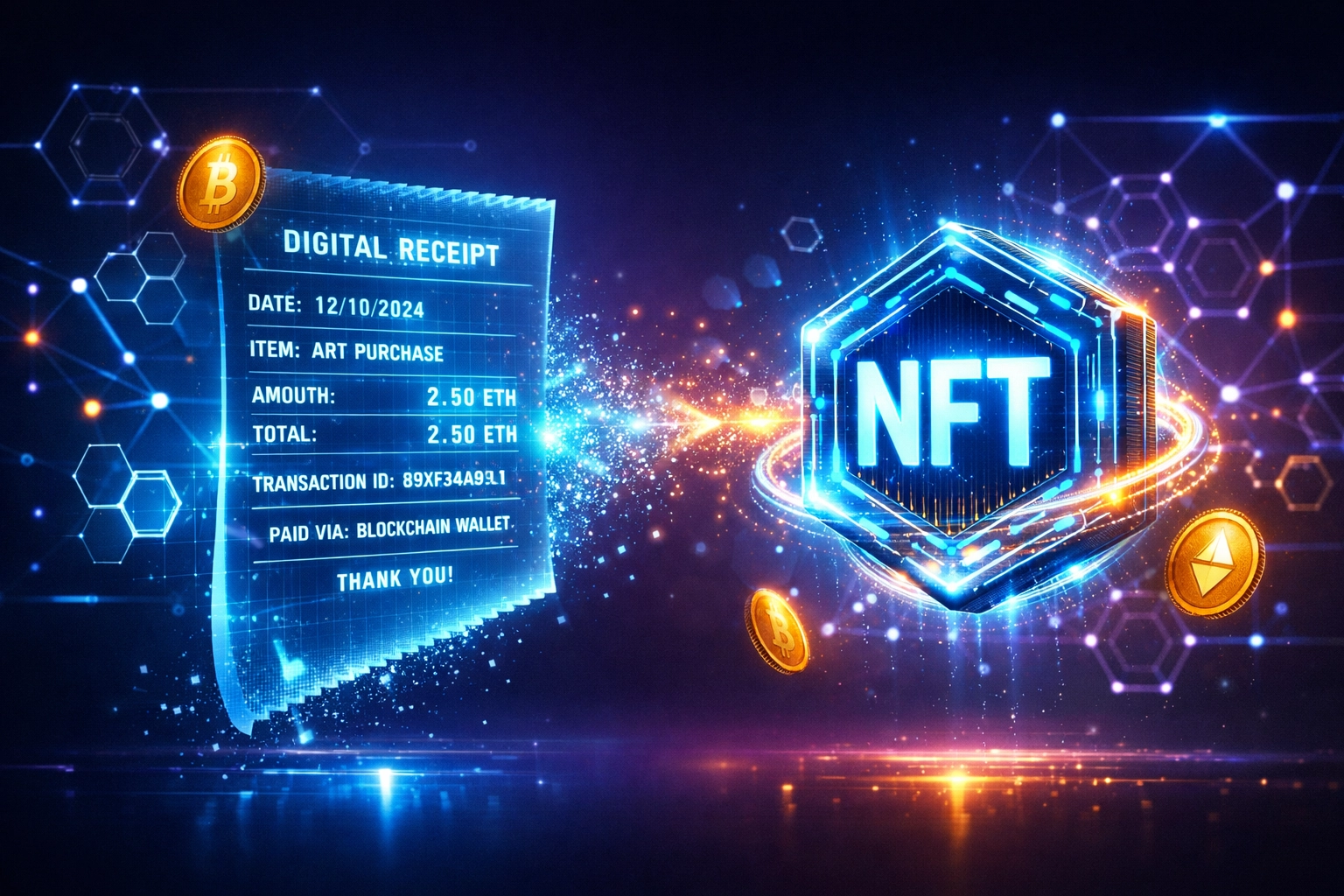
Self-custody extends beyond crypto assets to business records.
Your accounting data lives in your wallet. Export it anytime. Switch accounting software without migration headaches. Complete merchant independence.
The Hidden Cost of Manual Crypto Bookkeeping
Average crypto merchant spends 12-15 hours per month reconciling payments.
That's $300-$500 in billable time at standard bookkeeping rates. Multiply by 12 months. Add year-end tax preparation.
Manual processes cost $5,000-$8,000 annually.
Factor in errors. Misclassified transactions trigger IRS scrutiny. Incorrect cost basis calculations inflate tax liability. One audit request costs more than automation tools.
NFT receipt automation eliminates 90% of manual work. Pre-categorized transactions. Automated cost basis tracking. Tax-ready reports generated instantly.
Return on investment hits positive in month two.
Step 1: Connect Self-Custody Wallets to NFT Receipt Generation
Start with wallet integration.
Unlike NOWPayments or CoinPayments, which require accounts, KYC verification, and custody surrender, NFT receipt systems connect directly to your self-custody wallet.
No intermediaries. No account creation.
Configure your payment acceptance wallet to automatically mint NFT receipts on transaction confirmation. Each incoming payment triggers receipt generation containing:
Transaction hash
Payment amount (in LUSD or LARE)
Timestamp and block number
Customer wallet address
Product/service identifier
Gas fee breakdown
All metadata embedded on-chain. Immutable. Instantly verifiable.

Most platforms support ERC-721 and ERC-1155 standards across Ethereum, Solana, and Polygon networks. Larecoin's ecosystem natively integrates with Solana's SPL token standard, minimal gas fees, maximum speed.
Step 2: Automate Transaction Categorization and Fee Tracking
Manual categorization wastes hours.
Was that transaction revenue? Refund? Royalty payment? Gas reimbursement?
NFT receipt smart contracts categorize automatically.
Configure rules once. Every subsequent transaction auto-tags based on:
Payment source (customer vs. vendor)
Amount thresholds
Product categories
Wallet whitelist/blacklist
Time of transaction
Gas fees auto-separate from revenue. Platform fees (if using hybrid models) flag separately. Refunds link to original sale NFTs for complete audit trails.
Compare this to NOWPayments, manual CSV downloads requiring custom scripts or Excel macros. CoinPayments charges extra for automated reporting features that still require manual verification.
Self-custody NFT receipts categorize at mint time. Zero post-processing.
Step 3: Build Real-Time Financial Dashboards
Visibility prevents surprises.
Traditional processors offer dashboards, but they show their view of your data. Delayed updates. Limited customization. Restricted export options.
NFT receipt ecosystems let you build custom dashboards querying blockchain directly.
Pull data from your wallet. Filter by date range, category, or customer. Track:
Daily/weekly/monthly revenue in LUSD or LARE
Outstanding invoices (unpaid NFT receipts)
Tax liability estimates by jurisdiction
Fee breakdowns across transaction types
Cost basis aging for capital gains
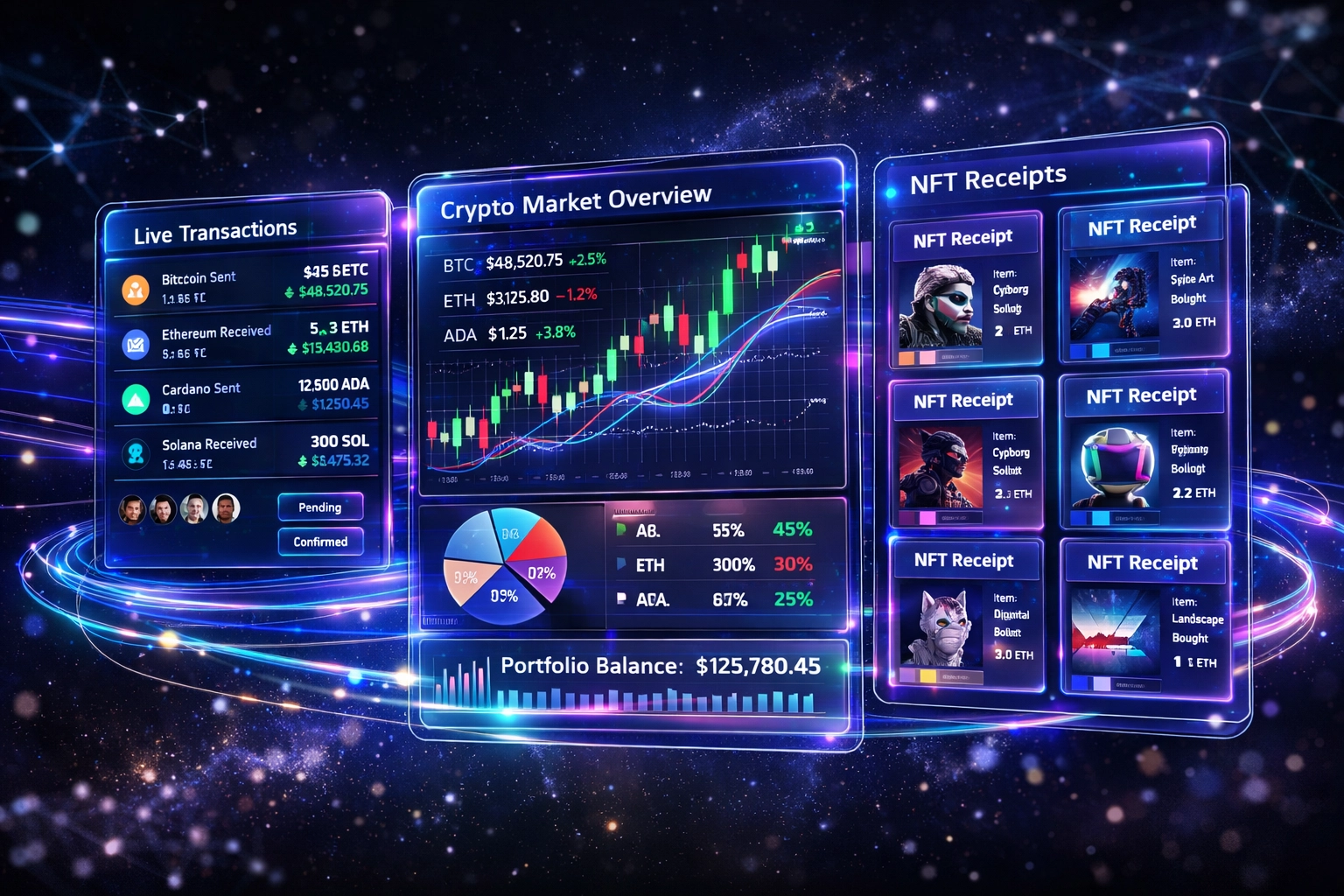
Real-time updates. No API rate limits. No monthly dashboard access fees.
Your data. Your dashboard. Your control.
Larecoin merchants connect wallets to analytics tools pulling directly from Solana blockchain. Sub-second updates. Zero intermediary fees.
Step 4: Generate Automated Tax Reports and P&L Statements
Tax preparation destroys February and March.
Accountants need transaction histories, capital gains calculations, inventory tracking, and expense categorization. Traditional processors hand you raw data dumps.
NFT receipts generate tax-ready reports automatically.
Smart contracts calculate:
Realized gains/losses on LARE or LUSD holdings
Short-term vs. long-term capital treatment
Cost basis per transaction (FIFO, LIFO, or specific identification)
Gross revenue by category
Deductible expenses (gas fees, platform costs)
Export directly to TurboTax, H&R Block software, or accounting platforms. Pre-formatted. Pre-calculated.
Compare to NOWPayments, which provides transaction CSVs requiring manual import into third-party tax software. CoinPayments offers basic reporting but charges premium tier fees for historical data beyond 90 days.
NFT receipts stored on blockchain remain accessible forever. Zero retention fees.
Generate tax reports for any historical period. Audit-proof documentation with blockchain verification.
Step 5: Implement Automated Invoice and Receipt Distribution
Customer receipts build trust.
Traditional e-commerce sends email receipts. Crypto payments often skip this step, leaving customers without proof of purchase.
NFT receipts deliver to customer wallets automatically.
Configure your payment system to:
Mint receipt NFT on payment confirmation
Send copy to customer's wallet address
Include purchase details, product info, and support contacts
Enable viewing through NFT marketplaces or custom portals
Customers verify authenticity on-chain. No fake receipts. No email phishing risks.
For B2B merchants, automate recurring invoice NFTs. Pre-filled templates with wallet addresses. Scheduled monthly or quarterly. Payment status updates on-chain, no manual follow-ups.
Request Finance and similar platforms charge 2-3% for automated invoicing. NFT receipts on Larecoin cost only gas fees.
Solana gas fees average $0.00025 per transaction. Process 10,000 invoices for $2.50. Compare to $200-$300 on centralized invoice platforms.
Breaking Free from Payment Processor Lock-In
NOWPayments and CoinPayments control your transaction history.
Export your data? Sure: in their format, on their timeline, with their limitations. Switch providers? Lose historical reporting integration. Miss a subscription payment? Lose dashboard access to your own records.
NFT receipts eliminate platform dependency.
Your receipts live in your wallet. Forever accessible. Transferable across platforms. Compatible with any accounting software supporting blockchain imports.
Switch from one merchant tool to another? Your NFT receipt history travels with you. No data migration. No export fees. No vendor lock-in.
This is merchant freedom.

LUSD Stability Meets NFT Receipt Automation
Volatile crypto complicates accounting.
Received 0.5 ETH last week worth $1,200. Today it's worth $1,100. Cost basis? Fair market value at receipt? At conversion? At year-end?
LUSD stablecoin eliminates volatility headaches.
Accept payments in LUSD. Receipts record exact dollar value. No conversion tracking. No volatility adjustments. Simple accounting.
NFT receipts minted for LUSD transactions lock in dollar amount at payment time. Your books stay stable. Tax calculations stay simple.
Traditional processors force conversions to fiat: charging 1-3% conversion fees plus withdrawal fees. LUSD lets you hold stablecoin value, skip conversions, and pay only gas fees when you actually need fiat.
Keep more revenue. Simplify accounting. Maintain crypto exposure without volatility risk.
Getting Started: Your First NFT Receipt in 15 Minutes
Ready to automate?
Connect your self-custody Solana wallet to Larecoin's payment ecosystem. Configure automatic NFT receipt minting for incoming LARE or LUSD payments. Set categorization rules based on your business model.
First receipt mints on your next incoming payment. Automatically categorized. Permanently recorded. Instantly accessible.
No monthly fees. No KYC verification. No custody surrender.
Pure merchant independence.
Visit Larecoin to explore NFT receipt integration guides and join the merchant community building the future of decentralized commerce.
Tax season just became your easiest quarter.
Comments