

.png)
NFT Receipts for Accounting: The Simple Trick to Improve Your Business Tax Deductions Right Now
- [[[Free!!]<<<<]] Watch: 스포르팅 - 토트넘 Live Stream 13 September 2022
- 2 hours ago
- 4 min read
![Writer: [[[Free!!]<<<<]] Watch: 스포르팅 - 토트넘 Live Stream 13 September 2022](https://lh3.googleusercontent.com/a/AItbvmktwQc0wCdd3ZEETSYItRQubwwBzOyjD_dcigRf=s96-c)
Tax season hits different when you're running a crypto business.
Scrambling for receipts. Digging through blockchain explorers. Trying to piece together gas fees from six months ago.
Sound familiar?
Here's the thing. NFT receipts are changing the game for merchants and crypto businesses. And if you're not using them yet, you're leaving money on the table.
Let's break down how this simple trick can boost your tax deductions: and why platforms like NOWPayments and CoinPayments are already falling behind.
What Are NFT Receipts?
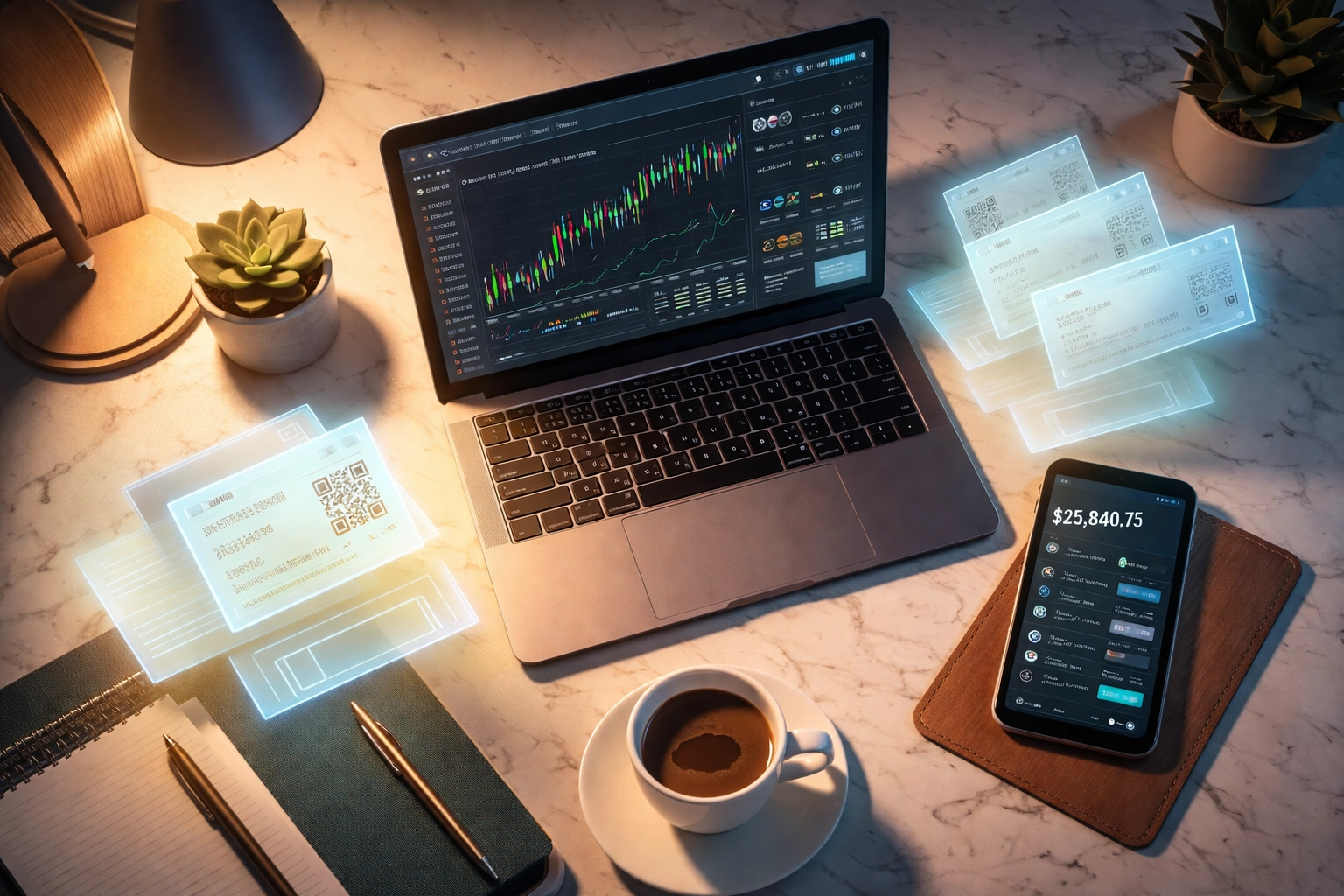
Think of NFT receipts as permanent, tamper-proof records of your business transactions.
Every purchase. Every sale. Every gas fee. All minted on-chain and stored in your wallet forever.
No more:
Lost paper receipts
Corrupted spreadsheets
Emails buried in your inbox
Manual data entry errors
NFT receipts capture transaction data automatically. Date, amount, parties involved, blockchain fees: everything the IRS wants to see.
And because they're on the blockchain? Immutable. Verifiable. Audit-ready.

Why Traditional Receipt Systems Fail Crypto Businesses
Here's where things get messy with competitors.
Platforms like NOWPayments and CoinPayments process your transactions. Sure. But their receipt systems? Centralized databases. PDF exports. Manual downloads.
What happens when:
Their server goes down?
You lose account access?
They discontinue a feature?
Your records disappear. Or become inaccessible right when you need them most.
Plus, these platforms charge hefty processing fees. NOWPayments takes 0.5% to 1% per transaction. CoinPayments? Similar story.
Every fee adds up. And guess what? Those fees are deductible: if you can document them properly.
Traditional systems make this harder than it needs to be.
The Deductible Expenses You're Probably Missing
Professional crypto merchants can deduct a wide range of business expenses. But only with proper documentation.
Creation costs:
NFT design and development
Smart contract deployment
Platform listing fees
Blockchain costs:
Gas fees for every transaction
Network fees for cross-chain operations
Minting costs
Operational expenses:
Internet and utilities
Software subscriptions
Hardware and equipment
Marketing expenses:
Promotional campaigns
Social media advertising
Influencer partnerships
Here's the formula:
Total NFT Sales - Documented Expenses = Taxable Income
Miss a deduction? You're paying taxes on money you never actually kept.

How NFT Receipts Maximize Your Deductions
NFT receipts solve the documentation problem at the source.
Every transaction generates an on-chain record automatically. No manual entry. No forgotten receipts. No gaps in your records.
Example scenario:
You earned $10,000 from crypto payments last year. Business expenses totaled $3,000: gas fees, software, utilities.
With proper NFT receipts: Taxable income = $7,000.
Without documentation: Taxable income = $10,000.
That's $3,000 in deductions you'd lose. At a 25% tax rate? $750 back in your pocket.
Multiply that across dozens of transactions. Hundreds. Thousands.
The savings add up fast.
Self-Custody: The Missing Piece
Here's what NOWPayments and CoinPayments don't tell you.
Their systems hold your transaction data. Not you.
You're trusting a third party with your business records. Your financial history. Your tax documentation.
Self-custody changes everything.
When your NFT receipts live in your own wallet, you control them. No middleman. No platform dependency. No single point of failure.
This is merchant freedom. True independence from centralized payment processors.

The Larecoin Approach to NFT Receipts
Larecoin built its ecosystem around these exact principles.
Gas-only transfers. No percentage fees eating into your revenue. Just minimal network costs.
LUSD stablecoin integration. Stable pricing for consistent record-keeping. No wild price swings complicating your accounting.
Self-custody by default. Your receipts. Your wallet. Your control.
On-chain verification. Every transaction creates a permanent, auditable record.
Compare that to NOWPayments charging 0.5%+ per transaction. Or CoinPayments taking their cut on every sale.
Those fees? Deductible. But with Larecoin's gas-only model, you're not generating unnecessary expenses in the first place.
Lower fees = higher profit margins = smarter business.
Documentation Best Practices for 2026
Want to maximize your deductions? Follow these rules:
1. Capture everything in real-time
Don't wait until tax season. Generate NFT receipts for every business transaction as it happens.
2. Categorize expenses properly
Creation costs
Blockchain fees
Operational expenses
Marketing spend
Clear categories = faster filing = fewer audit headaches.
3. Keep gas fee records
Every transaction on Ethereum, Solana, or any other chain incurs gas fees. These are 100% deductible as business expenses.
NFT receipts capture this automatically.
4. Separate business from personal
If you're using crypto for both? Maintain separate wallets. Clear boundaries make accounting straightforward.
5. Use stablecoins for consistency
LUSD and other stablecoins simplify record-keeping. No price volatility to track. Clean, consistent values for every transaction.
Hobby vs. Business: Know the Difference
Quick IRS reality check.
If you're creating NFTs as a hobby, you report income on Schedule 1. But you can't deduct business expenses the same way.
Running a legitimate business? Schedule C filing unlocks full expense deductions.
The difference can be thousands of dollars in tax savings.
NFT receipts help prove business intent. Regular transactions. Documented expenses. Professional record-keeping.
It's the paper trail that separates hobbyists from serious merchants.
Why Decentralized Payment Solutions Win
Centralized platforms create dependencies. Vulnerabilities. Single points of failure.
Decentralized solutions like Larecoin flip the script.
No platform lock-in. Your transaction data belongs to you.
No fee extraction. Keep more of what you earn.
No permission required. Accept payments from anyone, anywhere.
No data silos. Open, verifiable records on public blockchains.
This is the future of merchant payments. And it's happening right now.
Getting Started Today
Ready to level up your accounting game?
Step 1: Set up a self-custody wallet for business transactions.
Step 2: Integrate NFT receipt generation into your payment flow.
Step 3: Explore the Larecoin ecosystem for gas-only payment processing.
Step 4: Start documenting every transaction on-chain.
Step 5: Watch your deductible expenses stack up: properly documented and audit-ready.
Tax season doesn't have to be chaos. NFT receipts bring order, transparency, and real savings to your crypto business.
The merchants already using this approach? They're keeping more money. Paying less tax. Building more sustainable businesses.
The ones still relying on NOWPayments' PDF exports and CoinPayments' centralized records? They're leaving deductions on the table.
Your move.
Larecoin is building the future of decentralized crypto payments. Web3 global payments. Self-custody solutions. NFT receipts. Merchant freedom.
Explore more at larecoin.com
Comments