

.png)
NOWPayments Alternative: 7 Reasons Larecoin Cuts Fees Merchants Actually Pay
- [[[Free!!]<<<<]] Watch: 스포르팅 - 토트넘 Live Stream 13 September 2022
- 2 hours ago
- 3 min read
![Writer: [[[Free!!]<<<<]] Watch: 스포르팅 - 토트넘 Live Stream 13 September 2022](https://lh3.googleusercontent.com/a/AItbvmktwQc0wCdd3ZEETSYItRQubwwBzOyjD_dcigRf=s96-c)
Merchants are tired of percentage-based fees eating into profits.
NOWPayments charges 0.5-1% per transaction. Add withdrawal fees. Currency conversion spreads. Custody costs.
Those "small" percentages add up fast.
Larecoin flips the model. Gas-only pricing. Self-custody architecture. Zero platform fees.
Here's exactly how merchants save 50-80% on actual payment costs.
Reason #1: Gas-Only Pricing Eliminates Platform Fees
Traditional processors charge percentage fees on every transaction.
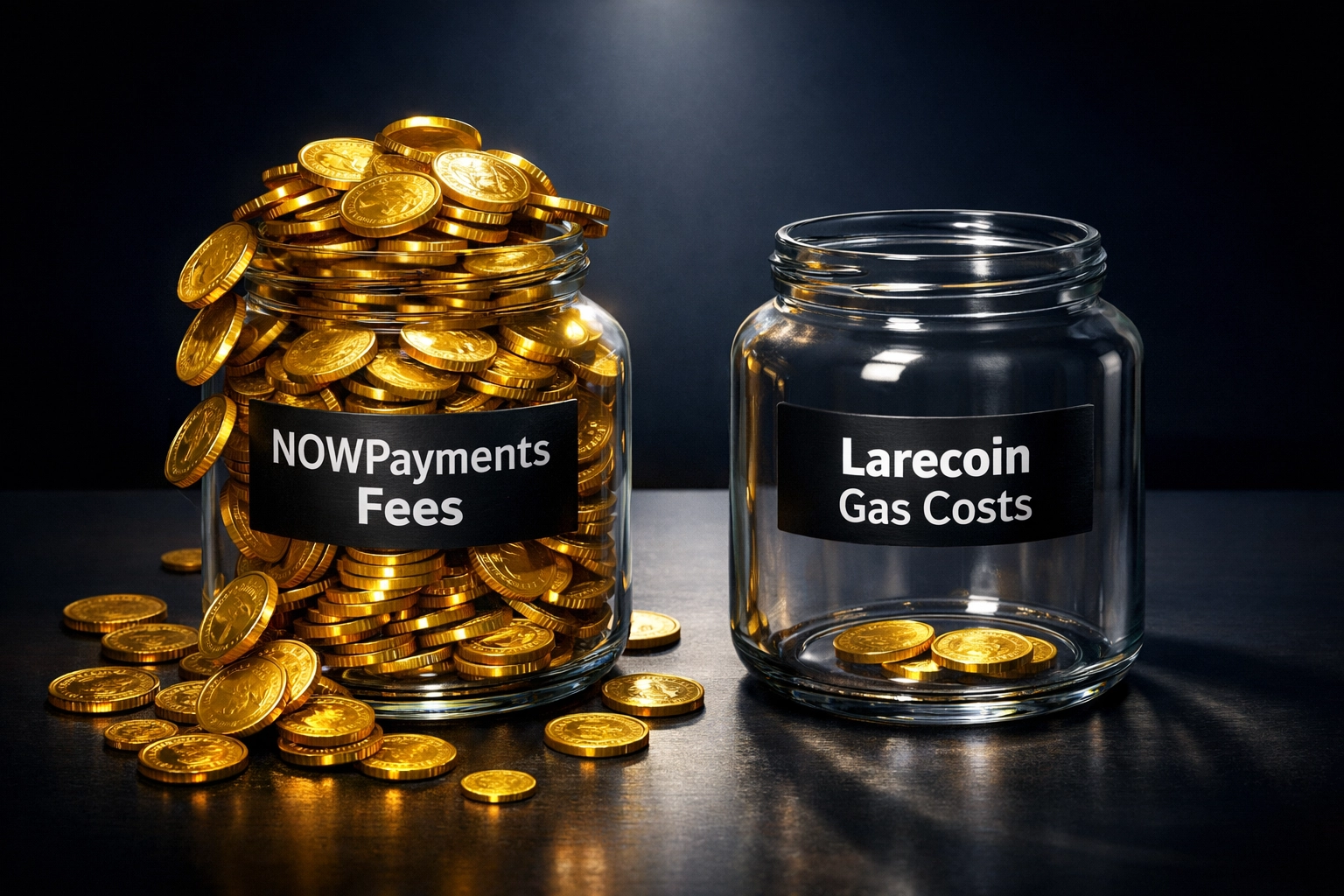
Process $100,000? Pay $500-1,000 to NOWPayments.
Larecoin charges zero platform fees. Only blockchain gas costs.
Built on Solana. Transactions cost pennies. Not percentages.
Real numbers:
$1.2M annual volume with NOWPayments = ~$9,000 in fees
Same volume with Larecoin = ~$2,000 in gas costs
78% reduction in actual fees paid
The math is simple. Percentage fees scale with your volume. Gas fees don't.
Reason #2: Self-Custody Means Zero Custodial Costs
NOWPayments holds your funds. Charges for that privilege.
Withdrawal fees. Minimum thresholds. Processing delays.
Larecoin gives merchants direct wallet control. Immediate fund access.
What this means:
No withdrawal fees ever
No custody-related charges
No waiting for payment releases
Complete control over your crypto
Your funds. Your wallet. Your timeline.
Traditional processors treat your money like theirs. Larecoin treats it like yours.
Reason #3: Transparent Structure With Zero Hidden Charges
"Hidden fees" aren't hidden when you read the fine print.
Currency conversion spreads. Network fees. Processing charges. Monthly minimums.
Larecoin's cost structure fits in one sentence: You pay gas fees only.
No conversion spreads because settlements happen in native crypto. No processing charges because there's no middleman custody. No monthly fees because the blockchain doesn't bill monthly.
Every cost is visible on-chain. Every transaction traceable on LareScan.
Transparency isn't a feature. It's the architecture.

Reason #4: Faster Settlements Cut Time-Based Costs
NOWPayments settlements take minutes. Sometimes longer during congestion.
Time in transit = risk. Price volatility. Opportunity cost.
Larecoin settles in fractions of a second. Solana's speed advantage.
Speed benefits:
Immediate liquidity access
Reduced volatility exposure
Lower working capital requirements
Real-time inventory management
Faster settlements mean better cash flow management. Better planning. Lower financial stress.
Speed is a fee reducer merchants forget to calculate.
Reason #5: NFT Receipts Add Value Without Adding Cost
Traditional processors give you transaction IDs. Text strings. Boring data.
Larecoin generates NFT receipts for every transaction.
Why merchants care:
Verifiable on-chain proof
Enhanced customer experience
Marketing opportunity (collectible receipts)
Dispute resolution evidence
Zero additional cost
NFT receipts aren't gimmicks. They're functional blockchain utilities that traditional processors can't match.
NOWPayments charges more for features. Larecoin includes them in gas-only pricing.

Reason #6: LUSD Stablecoin Options Reduce Volatility Costs
Crypto volatility is a hidden fee. Accept Bitcoin, lose 5% by settlement.
NOWPayments offers stablecoins. Charges conversion fees.
Larecoin supports LUSD natively. Larecoin's own stablecoin. Zero conversion charges.
LUSD advantages:
Instant stablecoin settlements
No conversion spread markup
Direct wallet deposit
Full transparency on pricing
Merchants want crypto benefits without crypto volatility. LUSD delivers both without the fee markup.
Stablecoin support shouldn't cost extra. With Larecoin, it doesn't.
Reason #7: Scalability Advantage Gets Bigger As You Grow
Small merchants might not notice percentage-fee pain. High-volume merchants feel it everywhere.
Process $10M annually? NOWPayments takes $50,000-100,000.
Larecoin's gas costs stay relatively constant regardless of transaction size.
Scaling comparison:
$100K volume: NOWPayments ~$750 vs Larecoin ~$200
$1M volume: NOWPayments ~$7,500 vs Larecoin ~$1,800
$10M volume: NOWPayments ~$75,000 vs Larecoin ~$18,000
The gap widens with growth. Percentage fees punish success.
Gas-only pricing rewards it.
Traditional processors become more expensive as you succeed. Larecoin becomes more efficient.
The Independence Factor
Fee savings matter. But freedom matters more.
NOWPayments controls your funds. Dictates settlement terms. Sets withdrawal rules.
Larecoin gives merchants complete independence. Self-custody. Direct blockchain access. No permission required.
Merchant freedom means:
Process payments 24/7 without approval
Withdraw anytime without limits
Integrate without platform restrictions
Build on open protocols
Lower fees are the quantifiable benefit. Independence is the strategic advantage.
Real-World Implementation
Setting up Larecoin takes minutes. Not days.
Connect Solana wallet. Generate payment addresses. Start accepting crypto.
No lengthy approval processes. No documentation delays. No arbitrary account holds.
Traditional processors gate access behind compliance theater. Larecoin operates on public blockchain infrastructure.
Open access. Open architecture. Open opportunity.
Check the Larecoin ecosystem for merchant tools and integration guides.
The Bottom Line
NOWPayments charges percentage fees. Hidden costs. Custodial control.
Larecoin charges gas only. Transparent costs. Self-custody freedom.
78% fee reduction isn't marketing spin. It's blockchain math.
Merchants switching from traditional processors save thousands monthly. High-volume merchants save hundreds of thousands annually.
The question isn't whether Larecoin costs less. The data proves it does.
The question is whether merchants value independence enough to switch.
For merchants tired of percentage-based extraction, the answer is obvious.
Cut fees. Keep control. Build on Larecoin.
Want to explore merchant payment solutions that prioritize your bottom line? Connect with the Larecoin community and discover how gas-only pricing transforms payment economics.
Comments