

.png)
NOWPayments Vs CoinPayments Vs Larecoin: Which Crypto POS System Cuts Your Interchange Fees in Half?
![Writer: [[[Free!!]<<<<]] Watch: 스포르팅 - 토트넘 Live Stream 13 September 2022](https://lh3.googleusercontent.com/a/AItbvmktwQc0wCdd3ZEETSYItRQubwwBzOyjD_dcigRf=s96-c)
Traditional payment processors drain merchant profits.
2-3% interchange fees. Chargebacks. Delayed settlements. Monthly gateway charges.
Crypto POS systems promise relief. But most just replicate the old model with new branding.
Let's break down who actually delivers.
The Fee Structure Reality Check
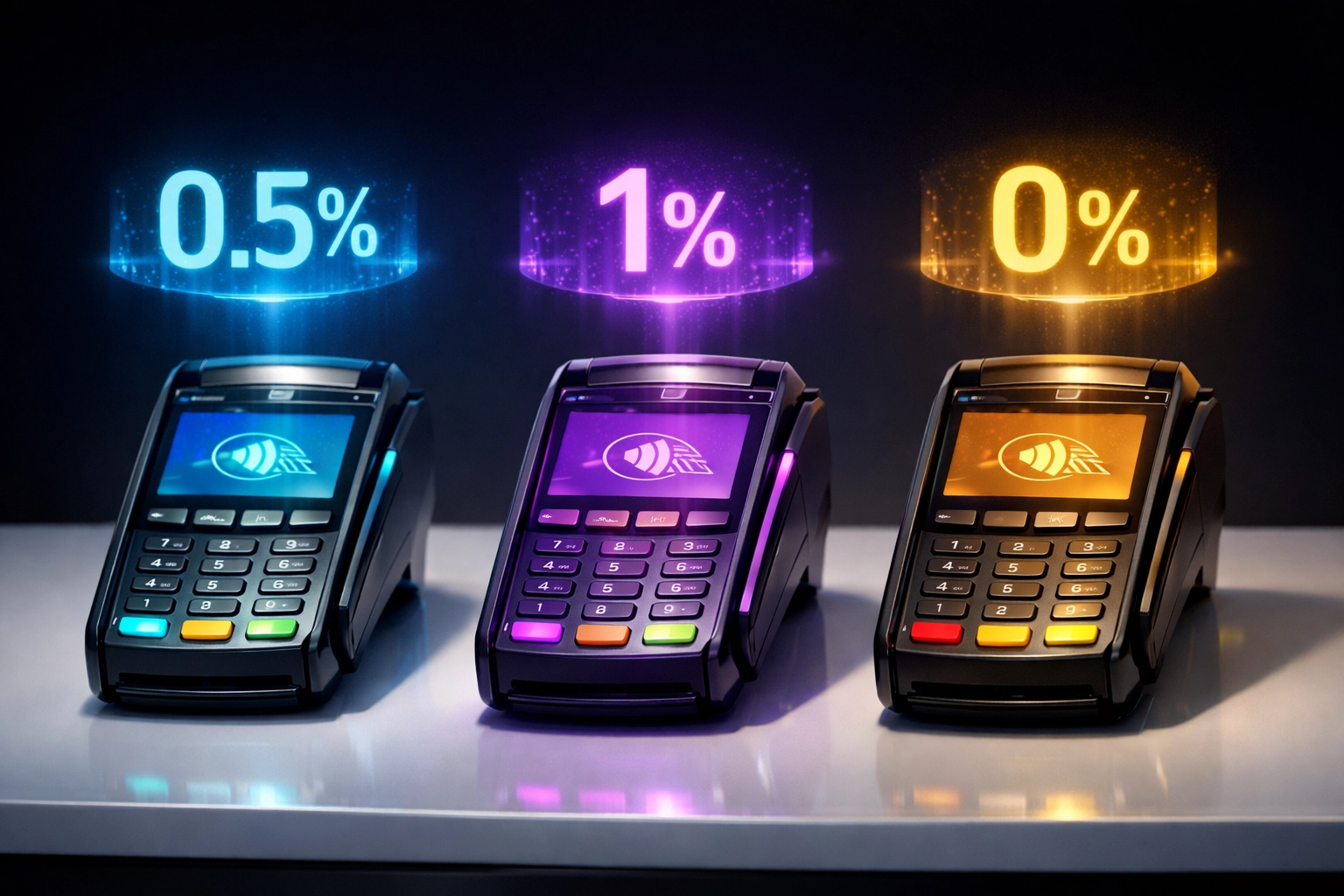
NOWPayments charges 0.5% for single-currency transactions. 1% when you handle multiple cryptocurrencies. Plus blockchain gas fees on every transaction.
CoinPayments mirrors this exact structure. 0.5% for Bitcoin and Ethereum. 1% for tokens and stablecoins. Network fees passed directly to you.
Both platforms pocket percentage fees regardless of your volume. Scale up your business? Your fees scale too.
Larecoin operates differently.
Gas-only pricing. Zero percentage fees. You pay exactly what the blockchain charges: nothing more.
No transaction percentage means your costs don't compound as revenue grows. Process $10 or $10 million. The fee structure stays flat.
Real Numbers From Real Businesses
Let's run the math on actual merchant volumes.
Scenario 1: $100,000 monthly processing
That's $1.2 million annually.
NOWPayments/CoinPayments: ~$9,000 in annual fees (percentage charges + network costs)
Larecoin: ~$2,000-$5,000 in gas fees only
Scenario 2: $500,000 annual volume
Traditional crypto processors: ~$3,750-$5,000 in fees
Larecoin: ~$2,000 in gas costs
Savings compound fast. At $1 million annual volume, merchants save approximately $6,500 versus percentage-based competitors.
The difference? Architectural philosophy.
Percentage-based pricing was designed for credit card networks maintaining legacy infrastructure. Web3 doesn't need intermediaries taking cuts.
Gas fees represent actual network computational costs. That's it.
The Custody Question Nobody's Asking
Here's what competitors don't advertise prominently.
NOWPayments and CoinPayments hold your funds in custodial wallets.
Your crypto sits on their servers. They control the private keys. You trust them with custody.
Custodial models create vulnerabilities:
Exchange hacks
Platform insolvency
Regulatory seizures
Withdrawal delays
Account freezes
Larecoin operates on self-custody principles.
You control your keys. You own your funds. Your wallet. Your assets. No intermediary custody risk.
This isn't just philosophical: it's financial sovereignty.
When FTX collapsed, custodial wallet holders lost everything. Self-custody users kept their assets.
Web3 payments shouldn't require trusting centralized entities. That defeats the entire purpose.

NFT Receipts: Beyond Transaction Records
Traditional receipts are paper trails destined for landfills or lost email folders.
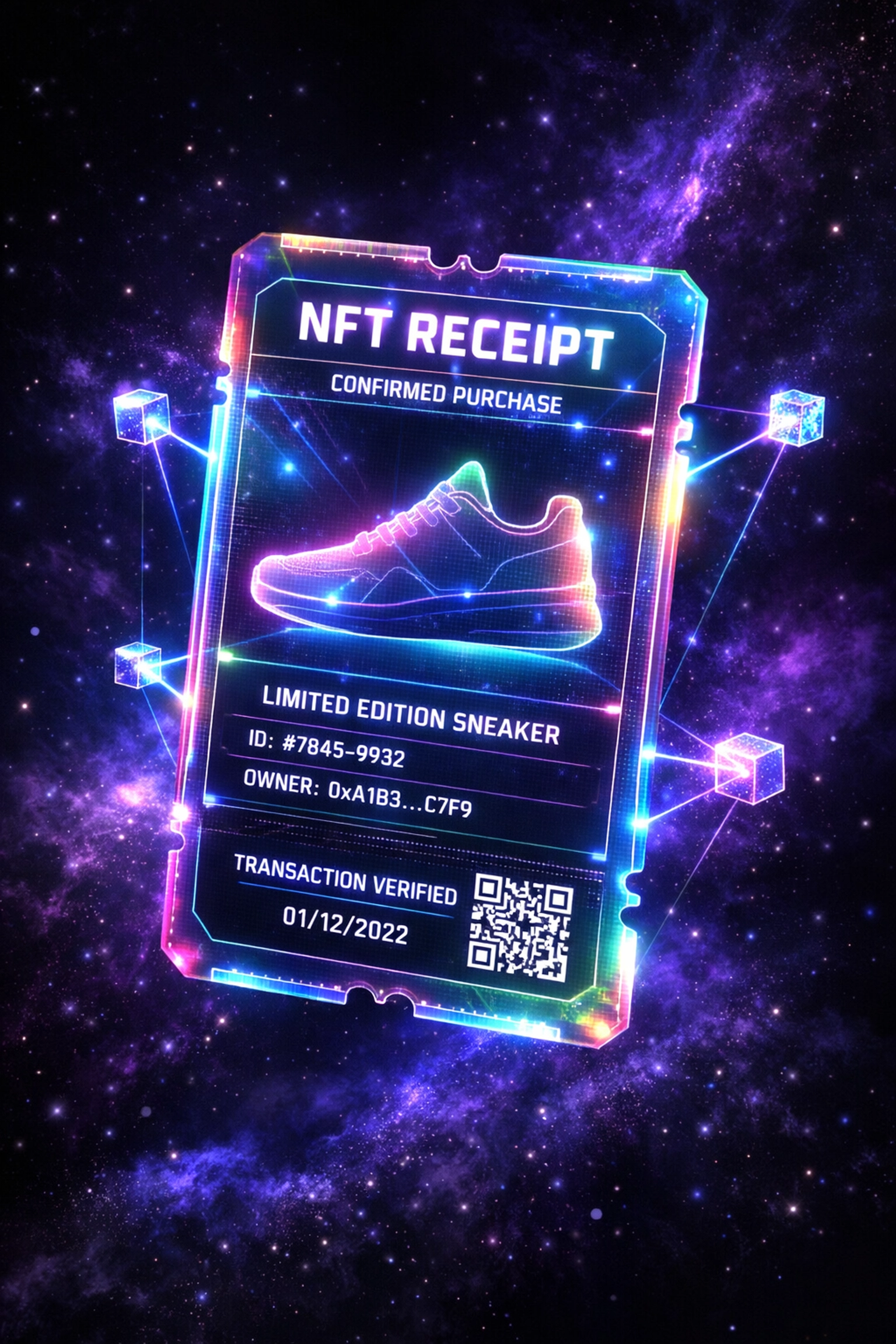
Larecoin generates NFT receipts for every transaction.
Why does this matter?
Permanent verification. Blockchain-stored proof of purchase that can't be altered or lost.
Customer engagement. NFT receipts unlock loyalty programs, exclusive access, and community membership.
Accounting automation. Smart contracts automatically categorize and organize transaction data for tax purposes.
Resale value. Limited-edition NFT receipts from exclusive drops or collaborations become collectibles.
Imagine running a sneaker boutique. Customers buy limited-edition releases. Their NFT receipt proves authenticity and purchase date. The receipt itself gains value as a collectible tied to the product's provenance.
This transforms transactions into relationships.
NOWPayments and CoinPayments issue standard digital receipts. Text files. Email confirmations. Nothing blockchain-native.
NFT receipts represent the future of customer interaction. Ownership verification meets community building.
LUSD: The Stablecoin Advantage
Volatility kills merchant crypto adoption.
Accept Bitcoin at $60,000. Price drops to $55,000 overnight. Your profit margin evaporates.
Stablecoins solve this. But not all stablecoins equal.
Larecoin integrates LUSD (Liquity USD): a decentralized, algorithmic stablecoin backed entirely by ETH collateral.
Key advantages:
Decentralized governance. No central authority controlling supply or redemption.
Overcollateralized. Every LUSD backed by >110% ETH collateral. Mathematical stability.
Censorship-resistant. Immutable smart contracts. No blacklist functions. True permissionless payments.
Zero ongoing fees. No interest charges. One-time borrowing fee only.
Compare this to USDC or USDT: centralized stablecoins that can freeze accounts, comply with government seizure orders, and operate on traditional banking rails.
LUSD represents pure DeFi principles applied to merchant payments.
Price stability without sacrificing decentralization.
Speed and Settlement: The Practical Test
Payment processing lives or dies on settlement speed.
NOWPayments settles transactions within 2-10 minutes typically. Depends on blockchain congestion and chosen cryptocurrency.
CoinPayments averages similar timeframes. Multi-currency support adds complexity and potential delays.
Larecoin leverages optimized smart contract architecture for near-instant confirmations on supported networks.
But speed means nothing without finality.
Traditional credit card "settlements" carry 60-180 day chargeback windows. Merchants face clawback risk for months.
Crypto transactions finalize permanently within minutes. No chargebacks. No reversal risk. True settlement.
This finality protects merchants from fraud while enabling instant global commerce.
Integration Complexity: Developer Experience
Merchant adoption hinges on implementation ease.
NOWPayments offers API integration, plugins for major e-commerce platforms, and hosted payment pages. Setup takes hours to days depending on technical sophistication.
CoinPayments provides similar tooling. Extensive documentation. Active developer community. Reasonable onboarding curve.
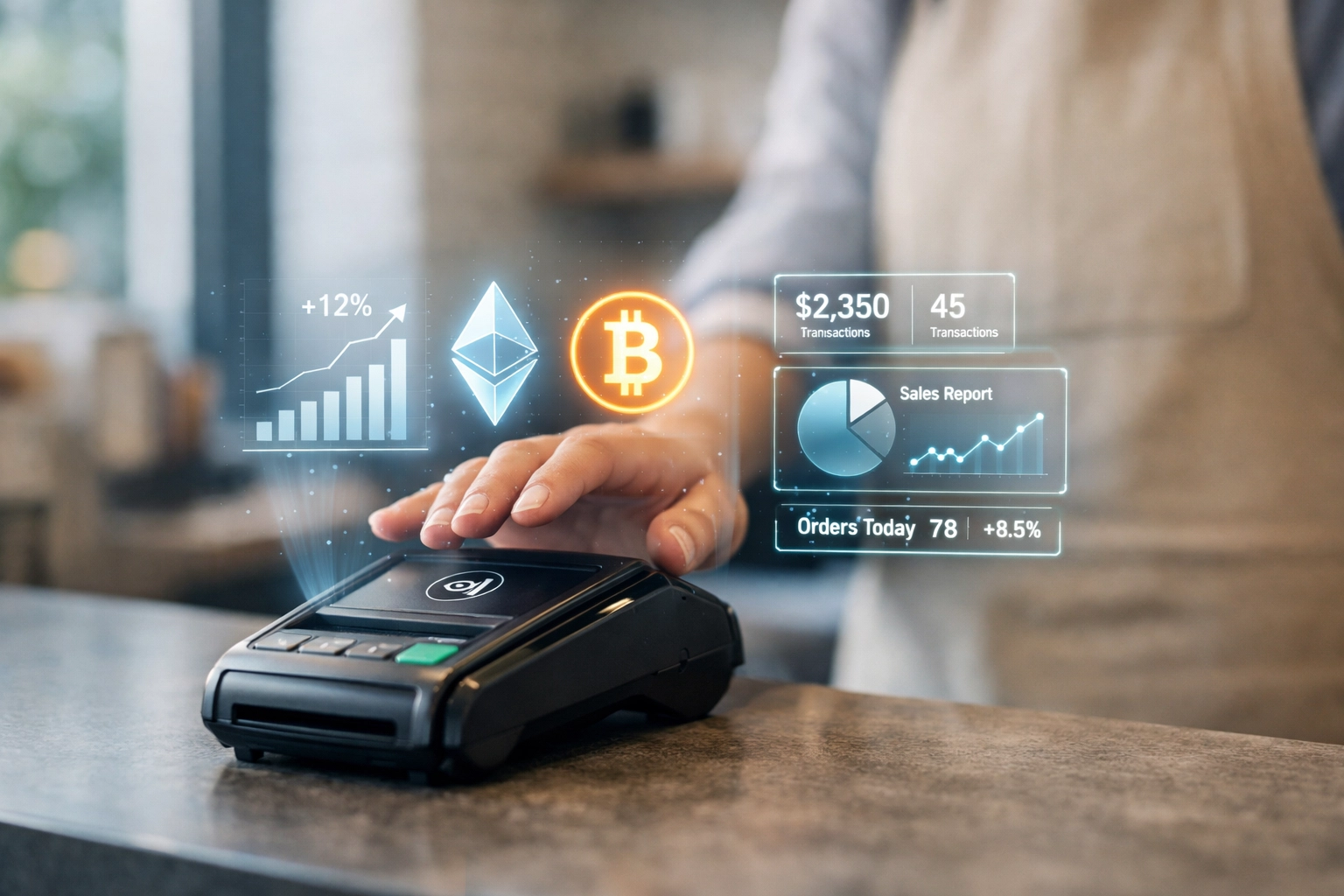
Larecoin prioritizes seamless integration with contactless POS systems and merchant portals designed for Web3-native operations.
The merchant portal handles:
Real-time analytics
Multi-token support
Automatic LUSD conversion
NFT receipt generation
Customer relationship management
One dashboard. Complete payment infrastructure.
No cobbling together third-party tools. No managing multiple vendor relationships.
Multi-Currency Support: The Global Commerce Factor
International commerce demands flexibility.
NOWPayments supports 150+ cryptocurrencies. Impressive breadth. But percentage fees apply across all.
CoinPayments handles similar range. 2,000+ coin support claimed. Volume dispersed across long-tail assets with varying liquidity.
Larecoin focuses on high-utility tokens with deep liquidity pools.
Quality over quantity.
Supporting obscure altcoins creates accounting nightmares and conversion complexity. Most merchants want Bitcoin, Ethereum, stablecoins, and select DeFi tokens.
Larecoin delivers exactly that with gas-only pricing across all supported assets.
No fee tier surprises. No complex pricing matrices.
Transparent. Predictable. Scalable.
The Verdict: Who Actually Wins?
Choose NOWPayments if: You need maximum cryptocurrency variety and don't mind percentage fees eating into margins. Custodial convenience outweighs sovereignty concerns.
Choose CoinPayments if: Similar to NOWPayments with slightly different interface preferences. You're comfortable with custodial models and percentage-based pricing.
Choose Larecoin if: You're serious about slashing payment processing costs by 50%+ while maintaining complete asset control. NFT receipts, LUSD stability, and self-custody align with your Web3 principles.
The math speaks clearly.
At any meaningful transaction volume, gas-only pricing destroys percentage-based models economically.
Self-custody eliminates platform risk that centralized competitors inherently carry.
NFT receipts and LUSD integration represent genuine innovation rather than crypto-washing traditional payment rails.
Building Merchant Freedom
Payment processors have extracted rent from commerce for decades.
Credit card networks justified fees through infrastructure costs and fraud protection. But those models don't translate to blockchain architecture.
Web3 enables peer-to-peer value transfer without intermediaries. Gas fees cover computational costs. Nothing more.
Percentage-based crypto payment processors import legacy financial thinking into decentralized systems. They're intermediaries cosplaying as Web3 infrastructure.
True crypto payments eliminate middlemen entirely.
Larecoin built this vision into foundational architecture. Not as marketing spin. As technical reality.
Gas-only pricing. Self-custody. NFT utility. Decentralized stablecoins.
This is what Web3 payments should be.
The question isn't whether to adopt crypto payments: traditional rails are collapsing under their own inefficiency.
The question is whether you'll choose freedom or just digital versions of the same old gatekeepers.
Merchants deserve better. Larecoin delivers.
Comments