

.png)
NOWPayments Vs CoinPayments Vs Larecoin: Which Crypto POS System Wins for Small Business?
- [[[Free!!]<<<<]] Watch: 스포르팅 - 토트넘 Live Stream 13 September 2022
- 58 minutes ago
- 4 min read
![Writer: [[[Free!!]<<<<]] Watch: 스포르팅 - 토트넘 Live Stream 13 September 2022](https://lh3.googleusercontent.com/a/AItbvmktwQc0wCdd3ZEETSYItRQubwwBzOyjD_dcigRf=s96-c)
Small business owners are done with traditional payment processors. The fees are brutal. The chargebacks are relentless. And bank holds? Don't even get me started.
Crypto POS systems are changing the game. But which one actually delivers for small business?
Let's break down NOWPayments, CoinPayments, and Larecoin. No fluff. Just facts.
The Real Cost of Payment Processing
Here's what most merchants don't realize. Traditional processors take 2.5-3.5% of every transaction. That's $25,000-$35,000 annually on $1 million in sales. Gone.
Crypto payment solutions slash those numbers dramatically. But not all platforms are created equal.
The breakdown for a business processing $500,000 annually:
Platform | Estimated Annual Cost |
Traditional Processors | ~$15,000 |
NOWPayments/CoinPayments | ~$5,000 |
Larecoin | Under $2,000 |
That's not a typo. Larecoin's gas-only transfer model can reduce merchant interchange fees by 50% or more compared to even other crypto solutions.
NOWPayments: The Token Maximalist
NOWPayments is the go-to for crypto diversity. Over 300 supported cryptocurrencies. If your customers want to pay in obscure altcoins, this platform has you covered.
Pros:
Massive token variety
Non-custodial options available
Decent API documentation
Established reputation
Cons:
0.5-1% processing fees still add up
Requires API integration
Developer resources needed for setup
Transaction times hover around 5 minutes
No NFT receipts
No native stablecoin solution
NOWPayments works well for tech-savvy merchants with developer support. But small businesses without IT departments? The integration complexity becomes a barrier fast.
CoinPayments: The Legacy Player
CoinPayments has been around. That's both its strength and weakness. Stability and reliability come standard. Innovation? Not so much.
Pros:
Straightforward onboarding
40+ cryptocurrencies supported
Optional POS hardware
Familiar interface for traditional retailers
Cons:
Similar 0.5-1% fee structure
Partial self-custody only
Transaction times vary wildly (minutes to hours)
No NFT receipt functionality
No native stablecoin
Legacy tech stack showing its age
For merchants transitioning from traditional payment systems, CoinPayments offers a comfortable middle ground. But you're paying for that comfort through fees and limited features.
Larecoin: The Web3 Native Solution
Built from the ground up for modern commerce. Larecoin isn't retrofitting crypto onto old infrastructure. It's reimagining what merchant payments should look like.
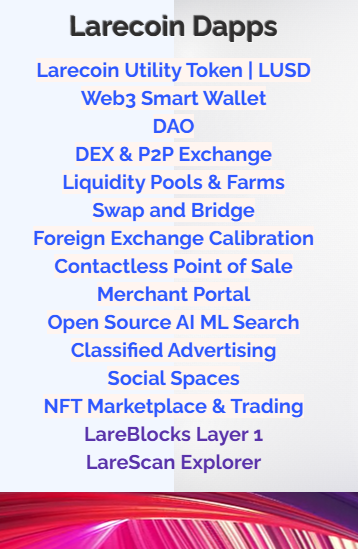
The standout features:
Gas-Only Transfer Model No percentage-based fees. You pay network costs. That's it. For high-volume merchants, the savings compound dramatically.
LUSD Stablecoin Benefits Volatility protection built in. Accept crypto without the price swing anxiety. LUSD maintains peg stability while you focus on running your business.
Self-Custody Merchant Accounts Your funds. Your control. The Smart Wallet architecture means no third party holds your revenue. Financial sovereignty isn't just a buzzword here.
NFT Receipts for Accounting Every transaction generates an immutable, on-chain receipt. Audits become straightforward. Tax season becomes manageable. Your accountant might actually smile.
Sub-Second Finality No more waiting 5-10 minutes for confirmation. Transactions settle almost instantly. Customer experience improves. Line speeds increase.
QR-Based Setup No POS hardware required. No developer needed. Generate a QR code. Start accepting payments. Done.
Feature-by-Feature Comparison
Feature | NOWPayments | CoinPayments | Larecoin |
Processing Fees | 0.5-1% | 0.5-1% | Gas only |
Cryptocurrency Support | 300+ | 40+ | Comprehensive + LUSD |
Transaction Speed | ~5 minutes | Variable | Sub-second |
Self-Custody | Yes | Partial | Yes (Smart Wallet) |
NFT Receipts | No | No | Yes |
Native Stablecoin | No | No | LUSD built-in |
POS Hardware Required | No | Optional | No (QR-based) |
Setup Complexity | High (API) | Medium | Low (QR code) |
Receivables Token | No | No | Yes |

Real-World Cost Scenarios
Let's get specific. A coffee shop processing 200 transactions daily at $15 average:
Monthly volume: $90,000 Annual volume: $1,080,000
Traditional processor (3%): $32,400/year in fees NOWPayments (0.75%): $8,100/year Larecoin (gas only): Approximately $2,000-3,000/year
That $29,000+ difference? That's inventory. That's marketing. That's profit.
For a retail boutique with higher average tickets: say $150: the math becomes even more dramatic at scale.
The Self-Custody Question
Here's where things get philosophical. And practical.
Traditional processors hold your money. Sometimes for days. Sometimes longer if they decide something looks "suspicious." Chargebacks can freeze accounts without warning.
NOWPayments offers non-custodial options. Good start.
CoinPayments provides partial self-custody. Better than nothing.
Larecoin's Smart Wallet delivers complete self-custody merchant accounts. Your revenue flows directly to your wallet. No intermediary holds your funds. No third party can freeze your account.
For merchants prioritizing financial sovereignty and bank-free business operations, this distinction matters enormously.

NFT Receipts: The Accounting Revolution
Traditional receipts? Paper trails. Email archives. Scattered records.
NFT receipts for accounting transform every transaction into a permanent, verifiable, on-chain record. Each receipt carries:
Transaction amount
Timestamp
Parties involved
Payment method
Immutable verification
Tax preparation becomes automated. Audit trails become bulletproof. Disputes become resolvable with cryptographic proof.
Neither NOWPayments nor CoinPayments offers this functionality. Larecoin includes it standard.
Who Should Choose What?
Choose NOWPayments if:
You need maximum token variety (300+)
You have developer resources for API integration
Your customers demand obscure altcoin acceptance
Non-custodial options are priority
Choose CoinPayments if:
You want familiar, legacy-style interface
Token variety matters but not critically
You prefer managed simplicity
You're comfortable with partial custody
Choose Larecoin if:
Reducing merchant interchange fees is priority
Self-custody and financial sovereignty matter
You want NFT receipts for accounting automation
LUSD stablecoin benefits appeal to you
Quick setup without developer resources is essential
Web3 global payments align with your business vision
The Receivables Token Advantage
Larecoin introduces something neither competitor offers: the receivables token concept.
Your incoming payments become tokenized assets. This opens possibilities for invoice financing, liquidity management, and business operations that traditional payment rails simply can't match.
For growing businesses, this flexibility creates opportunities. For established businesses, it creates efficiency.
Making the Switch
Transitioning from traditional processors feels daunting. It isn't.
Larecoin's QR-based system means you can run parallel payment options. Accept traditional cards while introducing crypto. Gauge customer interest. Scale adoption organically.
No hardware investment. No IT overhaul. No disruption to existing operations.
Ready to explore? The math speaks for itself. The features speak louder.
The Bottom Line
NOWPayments serves the token-diverse merchant with developer support.
CoinPayments serves the cautious adopter wanting familiar territory.
Larecoin serves the forward-thinking small business owner ready to slash fees, embrace self-custody, and leverage Web3 tools like NFT receipts and LUSD stablecoin benefits.
The crypto POS system for small business isn't one-size-fits-all. But for merchants prioritizing savings, sovereignty, and modern infrastructure?
The winner's clear.
Comments