

.png)
Reduce Merchant Interchange Fees: 5 Steps How to Accept Crypto Without Losing 3% to Legacy Systems (Easy Guide for Small Business)
![Writer: [[[Free!!]<<<<]] Watch: 스포르팅 - 토트넘 Live Stream 13 September 2022](https://lh3.googleusercontent.com/a/AItbvmktwQc0wCdd3ZEETSYItRQubwwBzOyjD_dcigRf=s96-c)
You're bleeding money.
Every swipe. Every tap. Every online checkout.
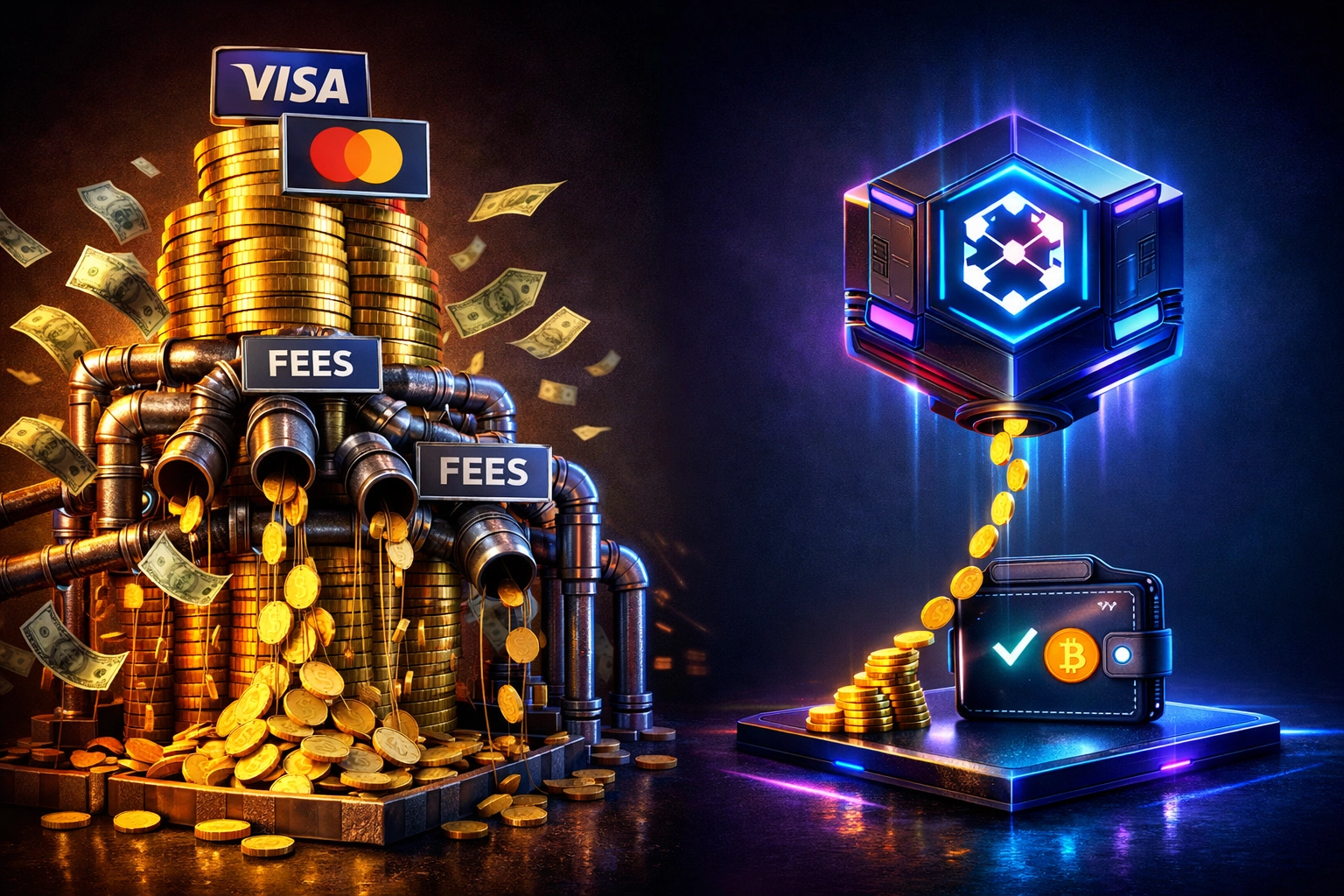
Visa takes a cut. Mastercard takes a cut. Your payment processor takes a cut. Your acquiring bank takes a cut.
That "convenience" costs you 2.5-4% of every single transaction.
Process $500,000 a year? You just handed $12,500 to legacy payment systems.
There's a better way.
The Legacy Payment Stack is Robbing You Blind
Traditional payment processing is a stack of middlemen.
Each one taking their piece:
Interchange fees: 1.5-3%
Assessment fees: 0.13-0.15%
Processor markups: 0.1-0.5%
Monthly gateway fees: $10-50
Total damage? Minimum 2.5-4% per transaction.
Cross-border? You're looking at 4-7% with currency conversion spreads.
The math is brutal. A $100 sale nets you $96-97.50 after fees.
That's your profit margin disappearing before you even calculate overhead.
How Crypto Payments Cut Fees by 50%+
Blockchain technology eliminates the middlemen.
No Visa. No Mastercard. No acquiring banks.
Direct peer-to-peer settlement.
Stablecoin transactions like LUSD cost under 0.1% compared to traditional interchange fees of 1-3%.
That's a 99.5% reduction in per-transaction costs.
Some crypto payment systems charge only gas fees. Often under $0.50 per transaction regardless of transaction size.
No percentage-based fees. Period.
The 5-Step Setup Process (Actually Easy)
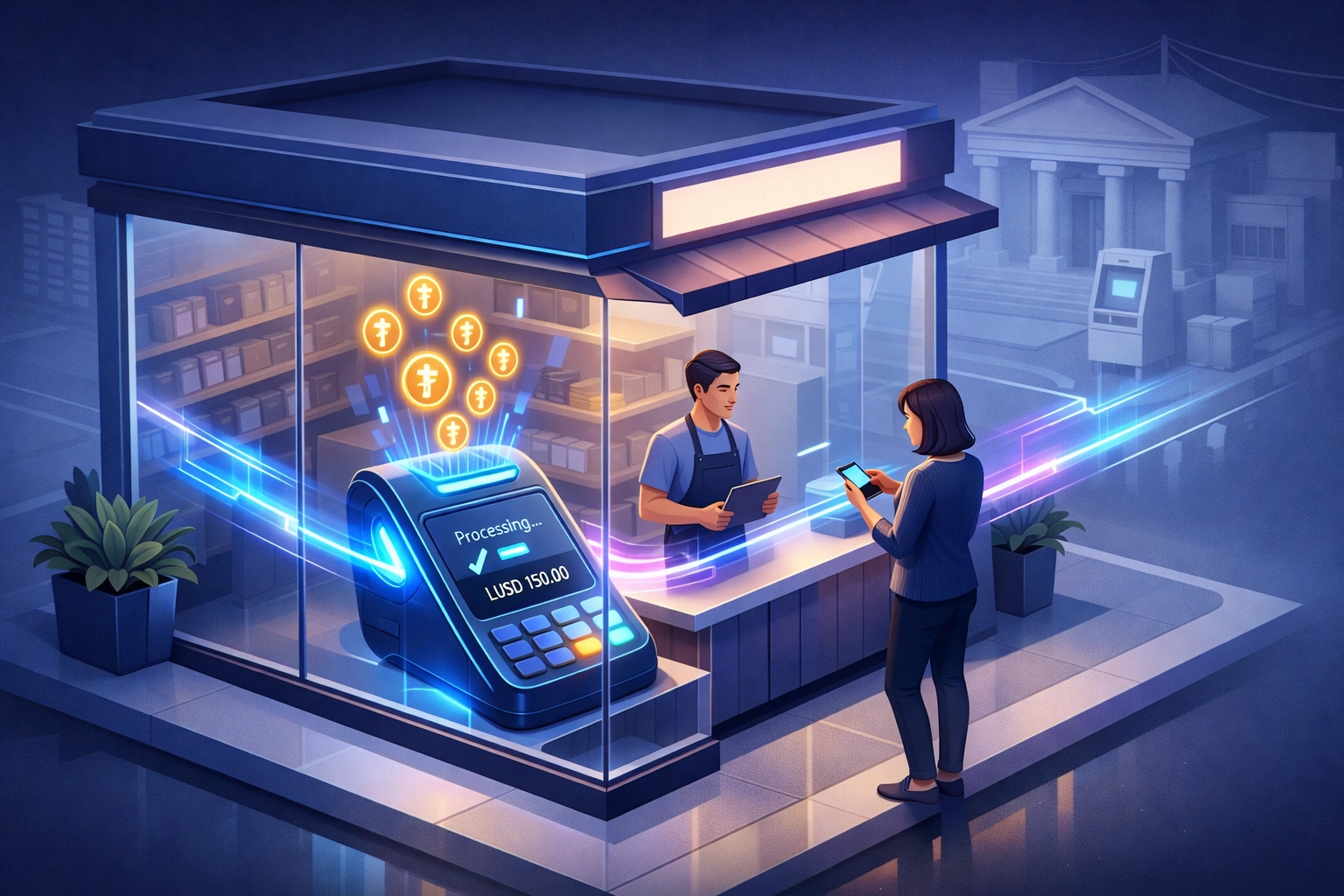
Step 1: Choose Your Crypto Payment Processor
Pick a blockchain-based POS that supports stablecoins.
Larecoin offers LUSD stablecoin payments with zero price volatility. Unlike NOWPayments or CoinPayments, we prioritize self-custody and true financial sovereignty.
Not your keys, not your crypto. We get that.
Look for:
Stablecoin support (LUSD is ideal)
Self-custody options
NFT receipt generation
Money Transmitter licensing
Step 2: Create Your Merchant Account
Complete KYC verification through the provider portal.
Takes 15-30 minutes tops.
Verify the processor holds:
Money Transmitter registrations
State licenses
Regulatory compliance certifications
This protects you legally. Non-negotiable.
Step 3: Integrate Your Payment System
Most modern crypto payment processors offer plug-and-play widgets.
E-commerce? Drop in a payment button.
Physical store? POS integration takes minutes.
No coding required. No developer needed.
Larecoin's integration works with existing systems. No ripping out your current setup.
Step 4: Configure Smart Contracts
This is where the magic happens.
Smart contracts automate:
Compliance checks
Instant crypto-to-stablecoin conversion
Transaction settlement (minutes, not 1-3 days)
Set your preferences once. Let the blockchain handle the rest.
Want instant conversion to fiat? Done.
Prefer to hold LUSD? Also done.
Mixed strategy? Configure the percentage split.

Step 5: Go Live and Choose Settlement Options
Activate your merchant account.
Choose how you receive payments:
Option A: Keep cryptocurrencies in your wallet
Full self-custody
No reliance on payment processors
Complete financial sovereignty
Option B: Auto-convert to fiat currency
Minimize volatility exposure
Traditional accounting compatibility
Direct bank deposits
Option C: Mixed strategy
Hold percentage in LUSD stablecoin
Convert percentage to fiat
Best of both worlds
Fee Comparison: Larecoin vs. The Competition
Let's talk numbers.
Traditional Processors:
Fees: 2.5-4% per transaction
Settlement: 1-3 days
Chargebacks: Constant risk
Cross-border: 4-7% fees
NOWPayments:
Fees: 0.4-0.5%
Network fees extra
Custody: They hold your funds
NFT receipts: None
CoinPayments:
Fees: 0.5% + network fees
Settlement: Varies
Self-custody: Limited options
Receipt innovation: Zero
Larecoin:
Fees: Gas-only (often under $0.50 flat)
Settlement: Minutes via smart contracts
Custody: True self-custody options
NFT receipts: Automatic generation
LUSD stablecoin: Price stability without volatility
The difference is obvious.
Process that same $500,000 annually through Larecoin? You're looking at under $2,500 in fees instead of $12,500.
That's $10,000+ back in your pocket every year.
Beyond Lower Fees: The Larecoin Advantage
NFT Receipt Innovation
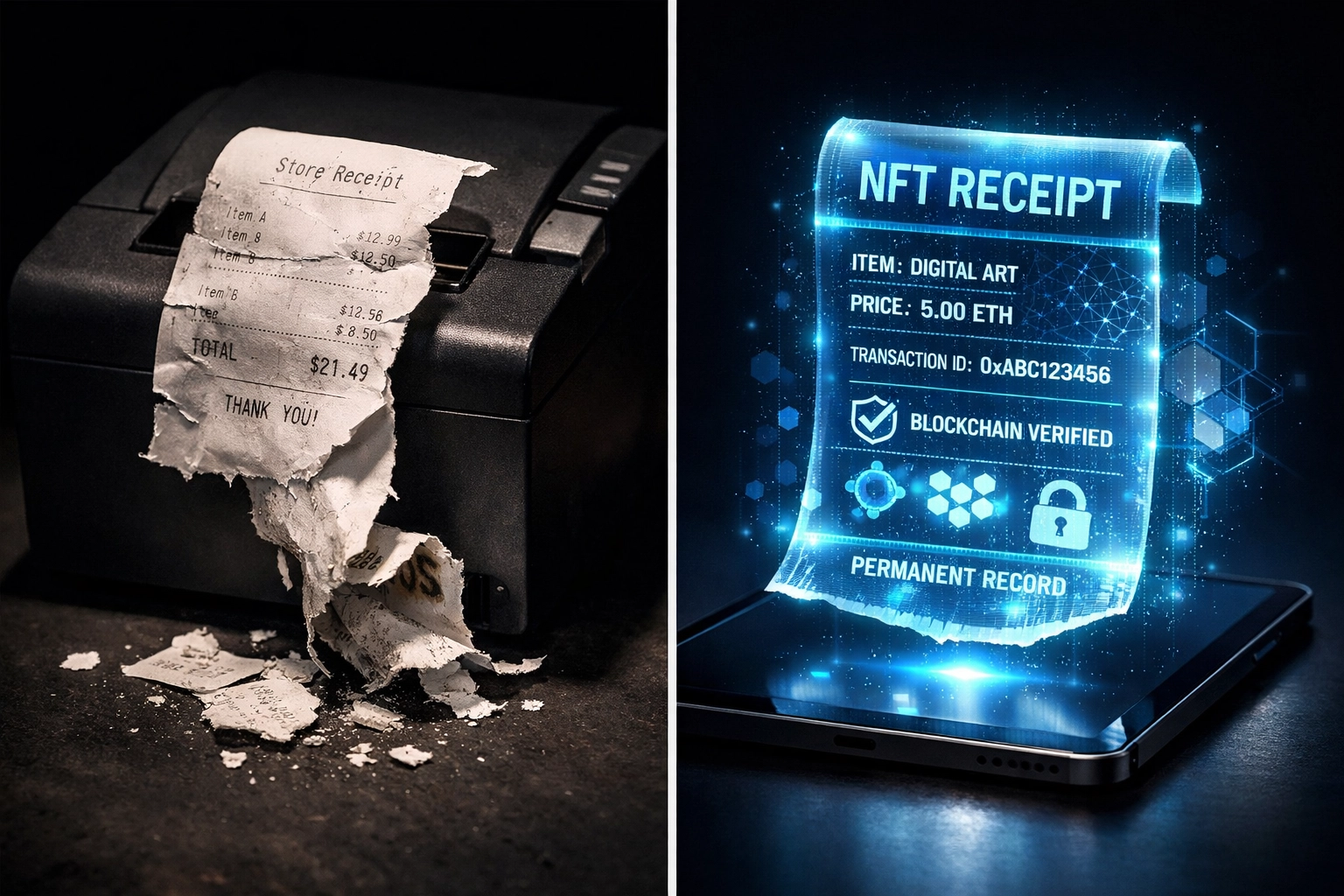
Every transaction generates an automatic NFT receipt.
Why this matters:
Permanent blockchain records: Immutable proof of every transaction
Tax documentation: Simplified year-end accounting
Dispute protection: Cryptographic proof against chargebacks
Customer transparency: Verifiable transaction history
Traditional receipts can be lost, forged, or disputed.
NFT receipts can't.
LUSD Stablecoin Stability
Price volatility is crypto's biggest merchant concern.
LUSD solves this.
Stablecoin payments provide:
Immediate settlement finality
No currency conversion slippage
Zero counterparty risk
Price stability without centralized control
Accept crypto payments without crypto headaches.
True Self-Custody Control
This is non-negotiable.
Your money. Your wallet. Your control.
Not sitting in a payment processor's account waiting for approval.
Not subject to arbitrary freezes or holds.
Not dependent on third-party solvency.
Direct self-custody means you control your funds from the moment the customer pays.
Financial sovereignty isn't a buzzword. It's your right.
The Small Business Reality Check
Small businesses get hit hardest by interchange fees.
You don't have the volume to negotiate better rates.
You don't have the leverage that Fortune 500 companies have.
You're stuck with standard merchant account pricing.
Crypto payments level the playing field.
A $50 transaction costs the same $0.50 gas fee as a $5,000 transaction.
That changes everything for high-ticket merchants.
Coffee shop selling $5 lattes? Traditional 3% fee = $0.15. Larecoin gas fee = $0.50.
(Stick with traditional for micro-transactions. We're honest about that.)
Jewelry store selling $2,000 pieces? Traditional 3% fee = $60. Larecoin gas fee = $0.50.
You save $59.50 per transaction.
The math works for any business with average transaction values above $20-30.
Getting Started Today
The barrier to entry is lower than you think.
No massive capital investment.
No long-term contracts.
No complex technical setup.
Just better economics.
Visit Larecoin to set up your merchant account.
Test it with small transactions first. Build confidence.
Scale when you're ready.
The 2026 Reality
We're in February 2026.
Legacy payment systems are dinosaurs.
Blockchain payment rails are here. Working. Scaling.
Early adopters are already saving 50%+ on transaction fees.
They're reinvesting those savings into growth.
While competitors bleed 3% per transaction, they're stacking cash.
The question isn't "Should I accept crypto payments?"
The question is "Can I afford not to?"
$10,000+ in annual savings for a small business processing $500K.
That's inventory. That's marketing. That's hiring.
That's the difference between surviving and thriving.
Cut the middlemen. Keep your money.
Welcome to the future of merchant payments.
Comments