

.png)
Self-Custody Merchant Accounts 101: A Beginner's Guide to Bank-Free Business Operations
- [[[Free!!]<<<<]] Watch: 스포르팅 - 토트넘 Live Stream 13 September 2022
- 2 hours ago
- 5 min read
![Writer: [[[Free!!]<<<<]] Watch: 스포르팅 - 토트넘 Live Stream 13 September 2022](https://lh3.googleusercontent.com/a/AItbvmktwQc0wCdd3ZEETSYItRQubwwBzOyjD_dcigRf=s96-c)
Banks have had their turn. Now it's yours.
Self-custody merchant accounts are changing everything about how businesses accept payments. No middlemen. No frozen funds. No asking permission to access your own money.
This is bank-free business operations. And it's not the future: it's happening right now.
Let's break it down.
What Exactly Is a Self-Custody Merchant Account?
Simple concept. Powerful execution.
A self-custody merchant account lets you receive cryptocurrency payments directly into a wallet you control. Not a wallet controlled by a payment processor. Not a wallet held by an exchange. Your wallet. Your keys. Your money.
Traditional payment processors act as intermediaries. They hold your funds. They set the rules. They take their cut before you see a dime.
Self-custody flips that script entirely.
When a customer pays, funds move directly from their wallet to yours. Recorded on the blockchain. Verified in real time. No waiting. No approval needed.
Why Businesses Are Ditching Traditional Payment Processors
Here's what traditional payment processing looks like:
Customer pays $100
Processor takes 2.9% + $0.30
Funds hit your account in 2-7 business days
Processor can freeze your account anytime
Chargebacks eat into your revenue
Now here's what self-custody looks like:
Customer pays $100
You receive $100 (minus minimal network fees)
Funds available immediately
Nobody can freeze your account
No chargebacks on blockchain transactions
The math speaks for itself.
Traditional interchange fees drain merchants of 50%+ of potential savings. Self-custody merchant accounts eliminate that overhead entirely.
How Self-Custody Payments Actually Work
The mechanics are straightforward.
Step 1: Customer initiates payment at checkout.
Step 2: Your system generates a payment request (usually a QR code).
Step 3: Customer confirms the transaction in their wallet.
Step 4: Funds transfer directly to your business wallet.
Step 5: Transaction records permanently on the blockchain.
That's it. No intermediaries. No delays. No permission required.
The blockchain serves as your receipt, your ledger, and your proof of payment: all in one immutable record.

The Real Benefits of Going Bank-Free
Slash Processing Fees by 50% or More
Traditional payment processors charge anywhere from 1.5% to 3.5% per transaction. For a business processing $100,000 monthly, that's $1,500-$3,500 going straight to intermediaries.
Self-custody? Network fees are often fractions of a penny. The savings compound fast.
Instant Settlement
No more waiting days for funds to clear. Blockchain transactions settle in seconds to minutes. Your cash flow becomes predictable. Your operations become smoother.
True Financial Sovereignty
This is the big one.
With self-custody, you're not trusting a third party with your revenue. Payment processors have frozen merchant accounts for vague "policy violations." Banks have closed business accounts without explanation.
When you hold your own keys, nobody can touch your funds without your explicit permission.
Reduced Institutional Risk
Remember when payment processors went down and merchants couldn't accept payments for hours? Or when exchanges collapsed and took customer funds with them?
Self-custody eliminates counterparty risk. Your funds aren't exposed to failures of payment processors, exchanges, or banking partners.
Global Reach Without Borders
Accept payments from customers anywhere in the world. No currency conversion headaches. No international wire fees. No waiting weeks for cross-border settlements.
A customer in Tokyo pays you in crypto. You receive it instantly. Same process for London, São Paulo, or Lagos.
Self-Custody vs. Custodial Solutions: The Key Differences
Let's compare.
Custodial Solutions (NOWPayments, CoinPayments, Triple-A):
Third party holds your funds
Subject to their terms and conditions
Potential account freezes
Withdrawal limits may apply
Dependent on platform uptime
Self-Custody (Larecoin's approach):
You hold your funds directly
No third-party terms governing your money
No freeze risk
No withdrawal limits
Independent of any single platform
Custodial services have their place. They're easier to set up. Less technical knowledge required. But you're trading sovereignty for convenience.
For businesses serious about financial independence, self-custody is the only path forward.
What You Need to Get Started
Self-custody comes with responsibility. Here's what's required:
Secure Key Management
Your private keys are everything. They grant full access to your wallet. If compromised, your funds are at risk.
Best practices:
Use hardware wallets for significant holdings
Never share private keys or seed phrases
Store backup phrases in secure, offline locations
Consider multi-signature setups for larger operations
Technical Understanding
You don't need to be a developer. But you do need to understand:
How blockchain transactions work
Basic wallet security principles
How to verify transactions on-chain
The Right Infrastructure
This is where Larecoin enters the picture.
A proper crypto POS system for small business makes self-custody accessible. It handles the technical complexity while keeping you in control of your keys.
How Larecoin Powers Self-Custody Merchant Operations
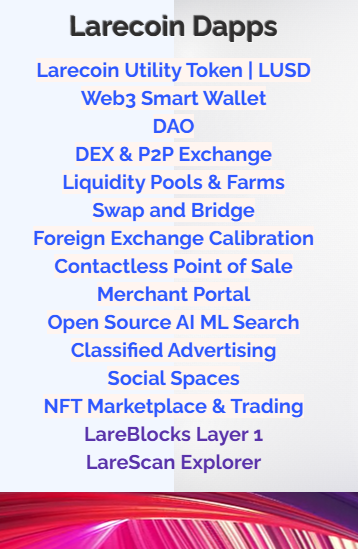
Larecoin built its entire ecosystem around merchant sovereignty.
LUSD Stablecoin Benefits: Accept payments in a stable, dollar-pegged cryptocurrency. No volatility concerns. Full self-custody maintained.
NFT Receipts for Accounting: Every transaction generates an NFT receipt. Immutable proof of payment. Simplified reconciliation. Audit-ready records.
Receivables Token: Tokenize your accounts receivable. Unlock liquidity without surrendering custody. A game-changer for cash flow management.
Web3 Global Payments: Accept payments from anywhere. Settle instantly. No intermediaries taking a cut.
Looking for a NOWPayments alternative or CoinPayments alternative that prioritizes your financial sovereignty? Larecoin delivers.
The Tradeoffs: What You Need to Know
Let's be real. Self-custody isn't for everyone.
More Responsibility: You're your own bank and your own head of security. No customer support line to call if you lose your keys.
Learning Curve: Traditional payment processors handle complexity for you. Self-custody requires baseline technical knowledge.
Regulatory Considerations: Depending on your jurisdiction, self-custody may have tax or compliance implications. Consult professionals.
The tradeoff is sovereignty vs. convenience. For many merchants, the benefits far outweigh the additional responsibility.
Getting Started: Your Next Steps
Ready to explore self-custody for your business?
1. Assess Your Current Processing Costs Calculate what you're paying in interchange fees, processing fees, and chargeback losses. The number might surprise you.
2. Understand Your Customer Base Are your customers crypto-savvy? Do you have international customers struggling with traditional payment methods?
3. Start Small You don't need to go all-in immediately. Accept crypto alongside traditional payments. Build familiarity.
4. Choose the Right Partner A platform like Larecoin provides the infrastructure for self-custody without requiring you to build everything from scratch.
5. Secure Your Operations Implement proper key management from day one. Security isn't optional.

The Bottom Line
Self-custody merchant accounts represent a fundamental shift in how businesses operate.
No more asking permission. No more excessive fees. No more frozen accounts.
Just direct, peer-to-peer value transfer. You provide goods or services. You receive payment. Done.
The infrastructure exists today. The technology is proven. The only question is whether you're ready to take control.
Bank-free business operations aren't just possible: they're practical.
And the merchants who embrace this shift now? They're positioning themselves for a financial future built on sovereignty, not dependence.
Ready to explore what's possible? Visit the Larecoin community and connect with merchants already operating bank-free.
Your keys. Your money. Your business.
Comments