

.png)
Self-Custody Merchant Accounts 101: A Beginner's Guide to Bank-Free Business Operations
- [[[Free!!]<<<<]] Watch: 스포르팅 - 토트넘 Live Stream 13 September 2022
- 6 hours ago
- 4 min read
![Writer: [[[Free!!]<<<<]] Watch: 스포르팅 - 토트넘 Live Stream 13 September 2022](https://lh3.googleusercontent.com/a/AItbvmktwQc0wCdd3ZEETSYItRQubwwBzOyjD_dcigRf=s96-c)
Banks don't own your business. So why do they control your money?
Self-custody merchant accounts are changing that. Completely.
No intermediaries. No frozen funds. No permission needed to access your own revenue.
This is your beginner's guide to bank-free business operations: and why 2026 is the year to make the switch.
The Problem with Traditional Merchant Accounts
Traditional payment processing is broken. You know it. We know it.
Here's what merchants deal with daily:
Interchange fees eating 2-4% of every transaction
Settlement delays of 2-7 business days
Arbitrary account freezes and holds
Chargebacks that favor customers over merchants
Geographic restrictions blocking global sales
Complex compliance requirements
The worst part? You have zero control over your own funds until the processor decides to release them.
That's not ownership. That's dependency.
What Are Self-Custody Merchant Accounts?
Self-custody means exactly what it sounds like: you control your private keys, you control your funds.
No third party sits between you and your money. Payments flow directly from customer wallets to yours. The blockchain records everything in real-time.
Think of it like this: traditional merchant accounts are renting your financial infrastructure. Self-custody means you own it outright.
Key characteristics of self-custody merchant accounts:
Direct wallet-to-wallet transactions
Instant settlement (seconds, not days)
Full control over private keys
No intermediary access to your funds
Transparent on-chain records
24/7 global accessibility
The customer scans. Confirms. Done.
Funds hit your wallet immediately. No waiting. No wondering.
Why Bank-Free Business Operations Matter
Financial sovereignty isn't just a buzzword. It's a competitive advantage.
1. Slash Merchant Interchange Fees by 50%+
Traditional processors charge 2-4% per transaction. Crypto payments? Fractions of a percent.
For a business processing $100,000 monthly, that's the difference between $3,000 in fees and $300. Every single month.
That savings compounds. Fast.
2. Instant Global Reach
No currency conversions. No international transfer fees. No waiting for cross-border settlements.
A customer in Tokyo pays you at 3 AM. Funds arrive instantly. Same as a local customer.
Web3 global payments eliminate borders entirely.
3. No Account Freezes
Ever had a payment processor freeze your account "pending review"?
With self-custody, that's impossible. Your keys. Your funds. Period.
4. True Financial Privacy
Your transaction details stay between you and your customers. No third parties analyzing your cash flow, selling your data, or making decisions based on your business model.

How Larecoin Enables Self-Custody for Merchants
Larecoin built its entire infrastructure around merchant financial sovereignty.
Here's what makes it different:
LUSD Stablecoin Benefits
Volatility concerns? Solved.
LUSD provides the stability of fiat with the freedom of crypto. Accept payments without worrying about price swings between transaction and conversion.
Customers pay in their preferred crypto. You receive stable value. Simple.
NFT Receipts for Accounting
Every transaction generates an immutable receipt. On-chain. Verifiable. Permanent.
NFT receipts for accounting transform your bookkeeping:
Automatic audit trails
Zero reconciliation headaches
Instant verification for tax purposes
No lost paperwork: ever
Your accountant will thank you.
Receivables Token Innovation
Larecoin's receivables token system turns your incoming payments into programmable assets.
What does that mean practically?
Automate supplier payments triggered by customer receipts
Create smart contract-based payment splitting
Build cash flow forecasting directly into your payment infrastructure
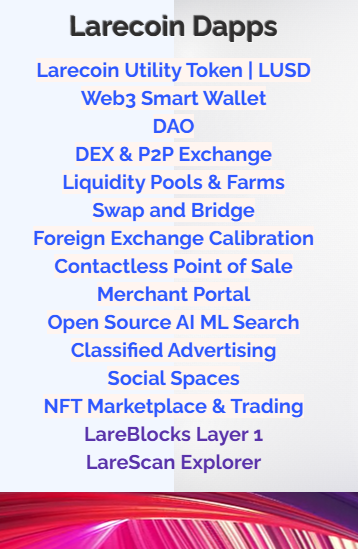
Crypto POS System for Small Business
Not every business needs enterprise-level infrastructure.
Larecoin's contactless POS solution works for:
Coffee shops
Retail stores
Service providers
Pop-up vendors
Food trucks
Same self-custody benefits. Scaled for small business reality.
Self-Custody vs. Custodial Alternatives: What's the Difference?
Not all crypto payment processors offer true self-custody. Most don't.
Custodial Solutions (NOWPayments, CoinPayments, Triple-A)
These platforms hold your funds on your behalf. Convenient? Sure. But you're trading one intermediary for another.
NOWPayments alternative seekers often discover their funds still sit in third-party wallets. Same dependency, different technology.
CoinPayments alternative hunters find similar structures: centralized control over "decentralized" assets.
The problem with custodial solutions:
Platform bankruptcy = your funds at risk
Regulatory seizures possible
KYC requirements on your customers
Withdrawal limits and delays
Account termination at platform discretion
True Self-Custody (Larecoin)
With Larecoin's self-custody merchant accounts:
Funds never touch third-party wallets
No platform risk
No custody agreements
No permission required
Full regulatory independence
The difference matters most when things go wrong. Custodial platforms have collapsed. Accounts have been frozen. Funds have been seized.
Self-custody makes you immune to all of it.
Getting Started: Your First Self-Custody Merchant Setup
Ready to ditch the bank dependency?
Here's the roadmap:
Step 1: Generate Your Merchant Wallet
Create a dedicated business wallet with secure key storage. This wallet receives all customer payments directly.
Critical: Back up your recovery phrase. Store it offline. Never share it with anyone.
Step 2: Configure Your Payment Gateway
Connect your wallet to Larecoin's merchant portal. Set up your accepted cryptocurrencies, LUSD conversion preferences, and notification settings.
Step 3: Integrate Your POS or E-Commerce
Physical retail: Deploy contactless POS hardware
Online stores: Add payment widget to checkout
Service businesses: Generate payment links on demand
Step 4: Train Your Team
Self-custody requires understanding. Ensure everyone handling payments knows:
How to verify transaction confirmations
Basic wallet security practices
Customer support protocols for crypto payments
Step 5: Go Live
Start accepting payments. Monitor your dashboard. Watch funds arrive in real-time.
No approval process. No waiting period. No permission needed.

Common Self-Custody Concerns (Addressed)
"What if I lose my keys?"
Proper backup procedures eliminate this risk. Multiple secure copies of your recovery phrase, stored in different physical locations.
"Isn't this complicated?"
Modern self-custody tools abstract most complexity. You interact with a familiar interface: the blockchain handles the rest.
"What about customer chargebacks?"
Crypto transactions are final. No chargebacks means no chargeback fraud. Disputes get handled through customer service, not payment processor arbitration.
"How do I handle taxes?"
NFT receipts for accounting provide complete transaction records. Export directly to your accounting software. Every payment documented automatically.
The Future Is Bank-Free
Traditional payment processing served its purpose. That era is ending.
Self-custody merchant accounts offer:
Lower fees
Faster settlements
Global reach
True ownership
Complete control
The businesses adopting this infrastructure now gain advantages their competitors can't match.
Banks had their turn. It's your turn now.
Ready to explore self-custody for your business? Visit Larecoin and discover how Web3 global payments transform merchant operations.
Comments