

.png)
Self-Custody Merchant Accounts Explained: Your Quick-Start Guide to Bank-Free Business
- [[[Free!!]<<<<]] Watch: 스포르팅 - 토트넘 Live Stream 13 September 2022
- 4 days ago
- 5 min read
![Writer: [[[Free!!]<<<<]] Watch: 스포르팅 - 토트넘 Live Stream 13 September 2022](https://lh3.googleusercontent.com/a/AItbvmktwQc0wCdd3ZEETSYItRQubwwBzOyjD_dcigRf=s96-c)
Banks have had a stranglehold on business payments for decades.
Processing delays. Frozen accounts. Ridiculous interchange fees eating into your margins.
It's 2026. You don't need them anymore.
Self-custody merchant accounts are flipping the script. Direct wallet-to-wallet payments. No intermediaries. No gatekeepers. Your money hits your wallet the moment a customer pays.
This is your quick-start guide to going bank-free.
What Exactly Is a Self-Custody Merchant Account?
Traditional merchant accounts? You're renting access to your own money.
Banks and payment processors hold your funds. They decide when you get paid. They charge you for the privilege. And they can freeze your account whenever they feel like it.
Self-custody is different.
You control the keys. You control the funds. Period.
When a customer pays, funds go straight from their wallet to yours. Recorded on the blockchain in real-time. No processing delays. No middlemen taking their cut before you see a dime.
Think of it as the difference between storing cash in a bank vault vs. keeping it in your own safe. One requires permission. The other doesn't.
Why Merchants Are Ditching Traditional Payment Processors
Let's talk numbers.
Average credit card interchange fees: 1.5% to 3.5% per transaction.
That's before gateway fees. Before monthly minimums. Before PCI compliance costs.
Running a business on thin margins? Those fees are brutal.
Here's what traditional processors cost you:
Interchange fees (non-negotiable)
Assessment fees
Payment gateway fees
Monthly statement fees
PCI compliance fees
Chargeback fees
Early termination fees
Add it up. You're losing 3% to 5% on every single transaction.
Now multiply that across your annual revenue.
Painful, right?
Self-custody merchant accounts slash those fees by 50% or more. Some transactions cost nothing beyond minimal gas fees.
How Self-Custody Actually Works for Businesses
The mechanics are simple.
Customer scans a QR code or clicks a payment link
Payment goes directly from their wallet to yours
Transaction records on the blockchain
You have immediate access to funds
No 3-day settlement windows. No rolling reserves. No "pending" status.
Your money is your money the second it arrives.
This is where solutions like Larecoin come in. Purpose-built for merchants who want control over their payment infrastructure.
Unlike competitors like NOWPayments or CoinPayments: which still act as intermediaries in many cases: true self-custody means the funds never touch a third party's wallet.

The Real Benefits of Going Bank-Free
1. Slash Merchant Interchange Fees
We mentioned this, but it's worth repeating.
Traditional payment processing eats 3-5% of revenue. Self-custody crypto payments? A fraction of that.
Gas-only transfers mean you're paying pennies instead of percentages.
2. Global Reach Without Currency Headaches
Accept payments from anywhere. No currency conversion fees. No international transaction surcharges.
A customer in Tokyo pays the same way as one in Toronto.
Web3 global payments eliminate borders.
3. Instant Settlement
No more waiting 2-3 business days for funds to clear.
Blockchain transactions settle in seconds or minutes. Not days.
Cash flow just got a whole lot healthier.
4. Financial Sovereignty
This is the big one.
No bank can freeze your self-custody wallet. No payment processor can hold your funds hostage during a "review."
You are your own bank.
For merchants in high-risk industries: or anyone tired of arbitrary account closures: this is game-changing.
5. Transparent Accounting with NFT Receipts
Every transaction lives on the blockchain. Immutable. Auditable.
Larecoin takes this further with NFT receipts for accounting. Each transaction generates a unique, verifiable receipt.
Tax season just got easier.
Self-Custody vs. The Competition
Not all crypto payment solutions are created equal.
NOWPayments and CoinPayments are popular options. But here's the thing: they often custody funds temporarily or require withdrawals to access your money.
That's not true self-custody.
Triple-A offers enterprise solutions but comes with complexity and costs that don't suit small businesses.
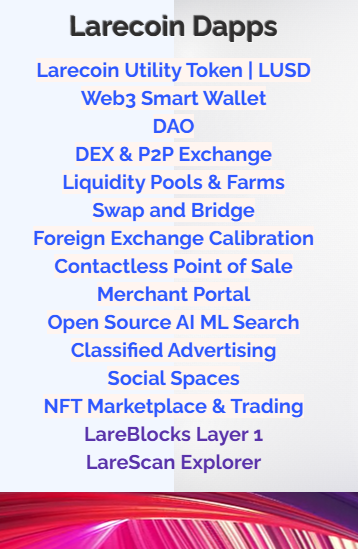
Larecoin's approach:
True wallet-to-wallet transfers
LUSD stablecoin for price stability
Receivables tokens for flexible cash flow management
Crypto POS system for small business integration
NFT receipts baked into every transaction
It's the NOWPayments alternative and CoinPayments alternative that actually delivers on the self-custody promise.
Getting Started: Your Quick-Start Checklist
Ready to go bank-free? Here's your action plan.
Step 1: Set Up Your Self-Custody Wallet
You need a wallet you control. Not an exchange wallet. Not a custodial service.
Hardware wallets offer maximum security. Software wallets offer convenience.
Pick what fits your business operations.
Step 2: Choose Your Payment Infrastructure
This is where Larecoin shines.
Visit larecoin.com to explore the merchant portal. Integration options include:
QR code payments for in-person transactions
Payment links for online sales
Crypto POS system for retail environments
API integration for custom solutions
Step 3: Educate Your Team
Self-custody requires responsibility.
Key wallet security practices:
Backup seed phrases in multiple secure locations
Never share private keys
Use hardware wallets for large balances
Implement multi-signature protocols for team access
Step 4: Start Accepting Payments
Go live. Accept your first payment. Experience instant settlement.
That dopamine hit when funds land directly in your wallet? Addictive.

LUSD Stablecoin: Stability Without Sacrifice
"But what about volatility?"
Valid concern. Bitcoin swings 5% in a day sometimes.
That's where LUSD comes in.
Larecoin's stablecoin solution gives you the benefits of crypto payments: low fees, instant settlement, global reach: without the price volatility.
Accept payment in any supported crypto. Settle in LUSD. Sleep easy.
LUSD stablecoin benefits:
Pegged to stable value
Instant conversion
No volatility risk on receivables
Seamless accounting
Your accountant will thank you.
The Receivables Token Advantage
Here's something NOWPayments and CoinPayments don't offer.
Receivables tokens let you tokenize future payments. Use them as collateral. Trade them. Manage cash flow in ways traditional accounting never allowed.
It's DeFi meets accounts receivable.
For businesses with longer payment cycles or B2B operations, this unlocks serious flexibility.
Common Concerns (And Why They're Overblown)
"Isn't this complicated?"
Modern crypto payment solutions are plug-and-play. QR code scans. Simple interfaces. Your customers don't need to understand blockchain.
"What about regulatory compliance?"
Blockchain transactions are transparent and auditable. Many jurisdictions actually prefer the traceability over cash transactions.
Work with a crypto-savvy accountant. You'll be fine.
"My customers don't use crypto."
They might not today. But Web3 adoption is accelerating. Early movers capture market share.
Plus, stablecoin options like LUSD feel familiar to customers used to dollar-denominated transactions.
The Bottom Line
Self-custody merchant accounts aren't just an alternative to traditional banking.
They're an upgrade.
Lower fees. Faster settlement. Global reach. True ownership of your funds.
The infrastructure exists today. The tools are ready. The only question is whether you're ready to make the switch.
Stop paying 3-5% on every transaction.
Stop waiting days for your own money.
Stop asking permission to run your business.
Go bank-free.
Check out Larecoin's merchant solutions and take the first step toward financial sovereignty.
Your business deserves better than traditional payment rails.
Comments