

.png)
Self-Custody Merchant Accounts Secrets Revealed: What NOWPayments and CoinPayments Don't Want You to Know
- [[[Free!!]<<<<]] Watch: 스포르팅 - 토트넘 Live Stream 13 September 2022
- 6 days ago
- 4 min read
![Writer: [[[Free!!]<<<<]] Watch: 스포르팅 - 토트넘 Live Stream 13 September 2022](https://lh3.googleusercontent.com/a/AItbvmktwQc0wCdd3ZEETSYItRQubwwBzOyjD_dcigRf=s96-c)
Let's cut straight to it.
The crypto payment industry has a dirty secret. Most "self-custody" solutions aren't actually self-custody at all. And the big players? They're banking on you not figuring that out.
NOWPayments. CoinPayments. They talk a big game about decentralization. Freedom. Control.
But here's what they conveniently leave out of the marketing brochures.
The Self-Custody Illusion
True self-custody means one thing: you control your private keys.
Period.
No intermediaries touching your funds. No third-party wallets holding your revenue hostage. No corporate accounts where your money gets commingled with everyone else's.
When a customer pays you, the funds should hit YOUR wallet. Directly. Recorded on the blockchain in real time. No delays. No middlemen taking a cut before you even see your own money.
But most crypto payment processors? They've built their entire business model on being that middleman.
Think about it. If they're not touching your funds, how are they making money?
The answer is usually hidden in:
Processing fees
Conversion spreads
Holding periods
Withdrawal minimums
"Network fees" that mysteriously exceed actual blockchain costs
What NOWPayments Gets Wrong
NOWPayments positions itself as a non-custodial solution. Sounds great on paper.
Reality check:
Auto-conversion features mean your funds often pass through their systems
Payout thresholds keep your money locked until you hit minimum amounts
Limited wallet integration forces you into their ecosystem
Fee structures that eat into your margins
For merchants processing serious volume, these "small" friction points add up fast. We're talking thousands in unnecessary costs annually.
And the kicker? You're still trusting a centralized entity to process and route your payments.
Where CoinPayments Falls Short
CoinPayments has been around since 2013. Legacy player. Established reputation.
But legacy also means:
Outdated infrastructure struggling to keep pace with DeFi innovation
Custodial elements built into their core architecture
Multi-step verification processes that slow down fund access
Complex fee tiers that benefit high-volume merchants at everyone else's expense
They've built their moat around being "easy." But easy shouldn't mean giving up control.
The Real Cost of Custodial Dependency
Here's what no one wants to talk about.
Every time your funds sit in someone else's wallet: even temporarily: you're exposed to:
Counterparty risk: Company goes bankrupt? Your funds are in the queue with every other creditor.
Regulatory seizure: One government subpoena and your account gets frozen. No warning.
Security vulnerabilities: Centralized honeypots attract hackers. Your money. Their security practices.
Arbitrary holds: "Suspicious activity" flags can lock you out for weeks. Good luck running a business.
The Mt. Gox collapse. FTX. Celsius. The graveyard of custodial platforms is massive.
And merchants keep trusting these models. Why?
Because they don't know there's a better way.
Enter True Self-Custody: The Larecoin Difference
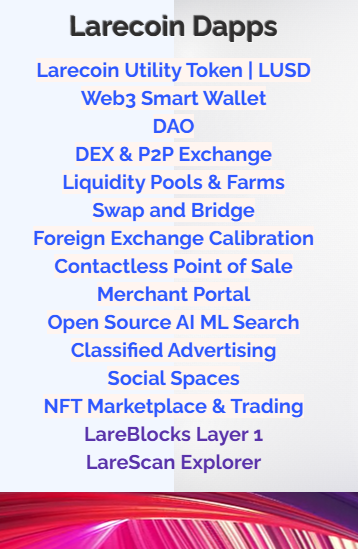
Larecoin was built from the ground up with one principle: your funds, your control.
No exceptions. No asterisks. No fine print.
Here's how it works:
Direct Wallet-to-Wallet Transfers
Customer pays. Funds hit your wallet. Same block. Same transaction. No routing through intermediary accounts.
The payment processor can't freeze what they never touch.
Slash Interchange Fees by 50%+
Traditional payment processing? You're paying 2.9% + $0.30 per transaction. Minimum.
Credit card networks have merchants by the throat. They know you need them. So they squeeze.
Crypto was supposed to fix this. But processors like NOWPayments and CoinPayments just replaced one middleman with another. Different technology. Same extractive model.
Larecoin's architecture eliminates the unnecessary layers. We're talking sub-1% total costs for most merchants.
Do the math on your monthly volume. That's not savings. That's a competitive advantage.
LUSD Stablecoin: Stability Meets Sovereignty
Volatility concerns? Valid.
That's why LUSD exists.
Dollar-pegged stability without the centralized custody risks of USDC or USDT
Gas-only transfers that minimize transaction costs
Instant settlement without conversion delays
Full transparency on reserves and collateralization
You get the stability merchants need with the sovereignty Web3 promises.
No more choosing between price predictability and self-custody. LUSD delivers both.
NFT Receipts: The Future of Transaction Records
This is where it gets interesting.
Traditional receipts? Paper or PDF. Forgeable. Losable. Zero utility beyond proof of purchase.
NFT receipts transform every transaction into a verifiable, immutable, programmable asset.
For merchants:
Automatic warranty tracking
Loyalty program integration
Return/exchange verification
Tax documentation that auditors actually trust
For customers:
Permanent proof of purchase
Transferable ownership records
Access to exclusive perks tied to purchase history
Resale documentation for secondhand markets
One receipt. Infinite utility. Minted automatically with every Larecoin transaction.
NOWPayments doesn't offer this. CoinPayments doesn't either. It's not even on their roadmap.
Why Financial Sovereignty Matters for Merchants
This isn't just about fees. It's about control.
When you build your business on someone else's infrastructure, you're renting your revenue stream. They set the rules. They can change them anytime.
Self-custody flips the script.
You decide:
Which wallets to use
When to convert (or not)
How to structure your treasury
What happens to your data
No permission required. No approval processes. No account reviews.
Your business. Your money. Your rules.
The Competitive Edge You're Missing
Think about what's happening in ecommerce right now:
Margins are shrinking across every category
Customer acquisition costs are through the roof
Payment processing remains a fixed tax on every transaction
The merchants winning in 2026 aren't just optimizing marketing funnels. They're optimizing their entire financial stack.
Cutting interchange fees by 50%+ isn't a nice-to-have. It's the difference between profitable growth and running in place.
And the competitors still paying 3% per transaction? They're funding your expansion without even knowing it.
Getting Started with True Self-Custody
Ready to take control?
Here's your playbook:
Set up a Solana-compatible wallet that you control
Connect to Larecoin's merchant portal for instant payment processing
Generate your payment links or integrate the API into your existing checkout
Start accepting LUSD and LARE with NFT receipt generation
Watch funds hit your wallet in real time: no holds, no delays
That's it. No 30-day approval process. No document verification theater. No waiting for someone to decide you're worthy of accessing your own money.

The Bottom Line
NOWPayments and CoinPayments built their businesses for a different era. When "crypto payments" was novel enough that merchants would accept any solution.
That era is over.
Today's merchants need:
True self-custody with no custodial compromises
Sub-1% processing costs that preserve margins
Stablecoin options that eliminate volatility risk
NFT receipts that add value beyond the transaction
Instant settlement without arbitrary holds
Larecoin delivers all of it. No exceptions.
The secrets are out. The question is whether you'll act on them.
Your competitors probably won't.
That's your opportunity.
Explore the full Larecoin ecosystem at larecoin.com and see what true self-custody looks like.
Comments