

.png)
Self-Custody Merchant Accounts: Why Everyone Is Talking About Them (And You Should Too)
- [[[Free!!]<<<<]] Watch: 스포르팅 - 토트넘 Live Stream 13 September 2022
- 2 hours ago
- 5 min read
![Writer: [[[Free!!]<<<<]] Watch: 스포르팅 - 토트넘 Live Stream 13 September 2022](https://lh3.googleusercontent.com/a/AItbvmktwQc0wCdd3ZEETSYItRQubwwBzOyjD_dcigRf=s96-c)
Your keys. Your coins. Your business.
That's the mantra driving the biggest shift in merchant payments we've seen in a decade. Self-custody merchant accounts are changing everything. And if you're still routing transactions through third-party processors, you're leaving money: and control: on the table.
Let's break down why self-custody is dominating every crypto payments conversation right now.
What Exactly Is a Self-Custody Merchant Account?
Simple concept. Revolutionary execution.
A self-custody merchant account lets you accept payments directly from customer wallets. No middleman. No custodial holding periods. No third-party touching your funds.
Transactions settle directly on-chain. You maintain full control of your private keys. The payment goes straight to your wallet.
Think of it as the difference between renting and owning. Traditional processors hold your money. Self-custody means you actually possess it from the moment the transaction confirms.
Why Traditional Payment Processors Are Bleeding You Dry
Let's talk numbers.
Traditional merchant processing fees eat 2.5% to 3.5% per transaction. Interchange fees. Assessment fees. Payment gateway fees. Chargeback fees. The list goes on.
Running a $500K annual revenue business? You're handing over $12,500 to $17,500 every year just in processing costs.
Cross-border? Even worse. Currency conversion markups. International transaction surcharges. Settlement delays stretching 3-5 business days.
Here's the kicker: You don't control any of it. Processors can freeze your account. Hold your funds. Change terms overnight.
That's not financial sovereignty. That's financial dependency.
The Self-Custody Advantage: 5 Reasons Merchants Are Making the Switch
1. Slash Fees by 50% or More
Self-custody eliminates the middleman markup. You pay network gas fees: that's it.
On most chains, we're talking fractions of a cent per transaction. Compare that to 3% processing fees on every sale.
The math speaks for itself. Reduce merchant interchange fees dramatically. Keep more of what you earn.
2. Instant Settlement
No more waiting 2-7 business days for funds to clear.
On-chain settlement happens in seconds to minutes. Your money is available immediately. Cash flow problems? Solved.
3. True Financial Sovereignty
Your wallet. Your keys. Your rules.
No processor can freeze your account because they don't like your industry. No bank can flag your transactions as "suspicious." You operate independently of legacy financial infrastructure.
Bank-free business operations aren't just possible: they're preferable.
4. Reduced Liability and Compliance Overhead
When you don't custody customer funds, you shift liability. Customers manage their own security. You manage your business.
This translates to lower compliance costs. Reduced insurance requirements. Minimized exposure to fraud and external attacks.
5. Global Reach Without Borders
Accept payments from anywhere on the planet. No currency conversion hassles. No international processing restrictions.
Web3 global payments don't care about geography. A customer in Tokyo pays you as easily as a customer in Toronto.
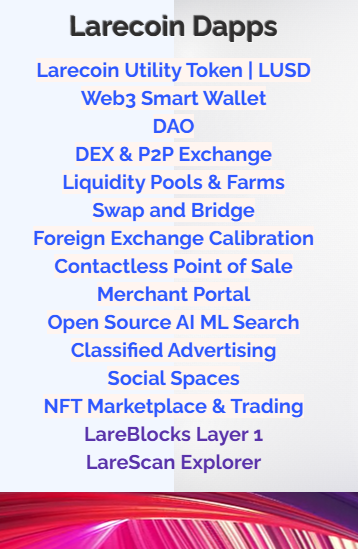
How Larecoin Stacks Up Against the Competition
You've got options. NOWPayments. CoinPayments. Triple-A. Each offers crypto payment processing.
But here's where Larecoin separates from the pack.
NOWPayments Alternative
NOWPayments provides solid multi-currency support. But they're still a custodial solution at heart. Your funds flow through their infrastructure first.
Larecoin keeps you in control from transaction to settlement. True self-custody. No compromise.
CoinPayments Alternative
CoinPayments has been around since 2013. They support 100+ coins. Impressive range.
But legacy architecture means legacy limitations. Settlement delays. Custodial holding. The same old problems dressed in crypto clothing.
Larecoin delivers next-gen infrastructure built for Web3 from the ground up.
Triple-A and Beyond
Enterprise solutions like Triple-A cater to larger merchants with complex needs. Compliance-heavy. Integration-heavy.
Perfect if you need hand-holding. Overkill if you want lean, efficient, self-sovereign payment acceptance.
Larecoin gives you the tools without the overhead. Crypto POS system for small business? Check. Enterprise-grade features without enterprise-grade complexity? Double check.
Technical Features That Actually Matter
NFT Receipts for Accounting
Every transaction generates an on-chain record. But Larecoin takes it further with NFT receipts.
Immutable. Verifiable. Automatically organized.
Your accounting team will thank you. Tax season becomes less painful when every transaction carries cryptographic proof of purchase details, timestamps, and amounts.
NFT receipts for accounting aren't a gimmick. They're the future of financial record-keeping.
LUSD Stablecoin Benefits
Volatility concerns? Valid.
That's why LUSD stablecoin integration matters. Accept crypto payments. Settle in stable value. Eliminate the price swing anxiety that keeps some merchants on the sidelines.
LUSD stablecoin benefits include predictable accounting, simplified bookkeeping, and protection against market downturns.
Receivables Token Innovation
Here's where things get interesting.
Larecoin's receivables token transforms pending payments into tradeable assets. Invoice financing meets DeFi.
Need liquidity before settlement? Tokenize those receivables. Access capital without traditional factoring costs or banking relationships.
Financial flexibility. Built into the protocol.
Who Should Consider Self-Custody Merchant Accounts?
E-Commerce Operators
High transaction volumes mean fee savings compound fast. Even 1% reduction across thousands of transactions adds up to serious money.
International Sellers
If your customer base spans continents, traditional processors punish you with conversion fees and settlement delays. Self-custody eliminates both.
Privacy-Focused Businesses
Not every business wants: or needs: a traditional banking relationship. Self-custody enables operation outside the legacy financial system entirely.
Crypto-Native Brands
Your audience already holds wallets. They understand keys. They expect Web3-native payment options. Meet them where they are.
Small Business Owners
The crypto POS system for small business market is exploding. Lower fees mean better margins. Better margins mean survival in competitive markets.
The Trade-Off: What You Need to Know
Full transparency here.
Self-custody shifts responsibility. Your keys, your security. There's no customer service line to call if you lose access.
This model works best when:
You understand wallet management fundamentals
Your customers are comfortable with crypto transactions
You're willing to invest in proper key security protocols
For crypto-savvy merchants serving crypto-savvy customers? Self-custody is the obvious choice.
For businesses just starting their Web3 journey? Consider the learning curve. But don't let it stop you: the rewards justify the ramp-up.
Getting Started With Larecoin
Ready to take control?
The path forward is straightforward:
Set up your self-custody wallet : Maintain your keys from day one
Integrate Larecoin payment acceptance : Works with existing e-commerce platforms
Configure your settlement preferences : Crypto, LUSD, or a mix
Start accepting payments : Go live in hours, not weeks
Explore the full ecosystem at Larecoin and join the community discussion to connect with merchants already running self-custody operations.

The Bottom Line
Self-custody merchant accounts represent more than a payment method upgrade. They represent a philosophical shift.
From renting to owning. From dependency to sovereignty. From losing 3% on every sale to keeping what you earn.
The conversation around self-custody isn't hype. It's recognition that the old way of processing payments serves processors: not merchants.
Larecoin puts control back where it belongs. In your hands.
Your keys. Your coins. Your business.
Time to start acting like it.
Comments