

.png)
Slash Your Interchange Fees by 50%+: The Merchant's Guide to Self-Custody Web3 Payments
- [[[Free!!]<<<<]] Watch: 스포르팅 - 토트넘 Live Stream 13 September 2022
- 2 hours ago
- 4 min read
![Writer: [[[Free!!]<<<<]] Watch: 스포르팅 - 토트넘 Live Stream 13 September 2022](https://lh3.googleusercontent.com/a/AItbvmktwQc0wCdd3ZEETSYItRQubwwBzOyjD_dcigRf=s96-c)
Your Payment Processor Is Your Biggest Expense
Every swipe costs you money.
Every transaction bleeds profit.
Traditional payment processors are bleeding merchants dry with fees that stack up faster than revenue. The average merchant loses 2.5-3.5% of every sale to interchange fees, gateway charges, and monthly minimums.
That's $15,000-20,000 annually on $500,000 in transactions.
Gone.
Web3 self-custody payments flip this broken model on its head. Below 0.5% transaction costs. No chargebacks. No monthly fees. No cross-border markups.
Just pure savings.

The Middleman Tax Is Killing Your Margins
Traditional payment processing runs through multiple intermediaries.
Card networks take their cut. Issuing banks take their slice. Payment processors grab their fee. Gateway providers add their charge.
Every hand in the cookie jar reduces your profit.
The system wasn't built for merchants: it was built to extract maximum value from every transaction. Settlement takes 2-7 days. Chargebacks cost $15-100 per dispute. International payments add 2-4% in conversion fees.
You're paying for infrastructure designed in the 1960s.
Web3 payments eliminate the entire chain. Peer-to-peer transactions on blockchain networks operate with only gas fees: the minimal network cost to process your payment.
No intermediaries. No layers of fees. No waiting for settlement.
Self-Custody: Full Control, Zero Counterparty Risk
Self-custody means YOU control the private keys.
Not a bank. Not a processor. Not a centralized payment gateway.
Your funds. Your control. Your security.
Traditional payment processors can freeze accounts, hold funds, or suffer hacks that expose customer data. Centralized custody creates counterparty risk: the danger that someone else's failure becomes your problem.
Self-custody eliminates this entirely.
Blockchain's cryptographic security replaces traditional dispute management. Transactions are final, transparent, and immutable. You maintain direct control over payment funds until the moment of transaction completion.
This is financial sovereignty.
No more waiting for "account reviews" that lock your cash flow. No more surprise holds because an algorithm flagged your business. No more dependency on centralized systems that can fail.
The Math That Changes Everything
Let's break down the actual savings.
Traditional Processing ($500K Annual Volume):
Transaction fees: $12,500-17,500 (2.5-3.5%)
Monthly minimums: $300-600/year
Gateway fees: $240-480/year
Chargeback fees: $1,500-3,000/year (100 disputes × $15-30)
Cross-border markups: $2,000-4,000/year
Total: $16,540-25,580 annually
Web3 Self-Custody ($500K Annual Volume):
Gas fees: $2,500 (0.5% maximum)
Monthly minimums: $0
Gateway fees: $0
Chargeback fees: $0 (blockchain transactions are final)
Cross-border markups: $0
Total: $2,500 annually
That's an 85% reduction in payment processing costs.
For a $1M business? You're saving $28,000-48,000 per year.
Settlement happens in 60 seconds instead of days. Your cash flow improves immediately. Working capital no longer sits locked in payment processor accounts.
NFT Receipts: Programmable Proof of Purchase
Web3 payments unlock capabilities traditional systems can't touch.
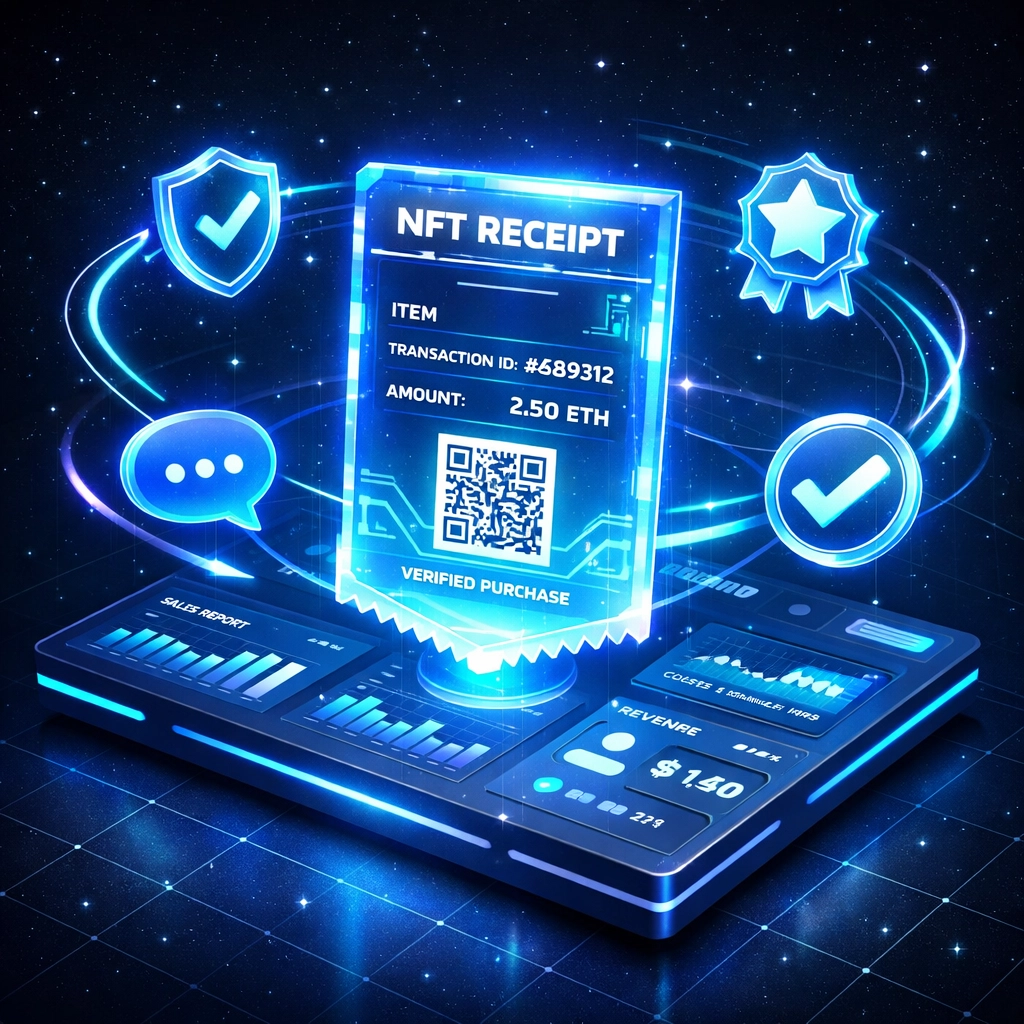
NFT receipts transform static transaction records into dynamic, programmable assets.
What NFT Receipts Enable:
Verified proof of purchase stored on-chain
Automatic warranty tracking tied to the transaction
Loyalty rewards embedded in the receipt itself
Resale rights and authenticity verification for premium goods
Direct communication channel with customers via token-gated content
A receipt becomes more than confirmation: it becomes a relationship tool.
Luxury brands use NFT receipts for authenticity verification. Electronics retailers embed warranty terms directly in the token. Service businesses attach renewal reminders and upgrade offers.
Traditional receipts are dead paper trails.
NFT receipts are living, programmable connections to your customers.

LUSD: Stablecoin Stability Without Centralized Risk
Accepting crypto doesn't mean accepting volatility.
LUSD (Liquity USD) stablecoin provides price stability without centralized control. Unlike USDT or USDC: which depend on bank reserves and can freeze funds: LUSD operates through decentralized collateral.
LUSD Advantages for Merchants:
Algorithmic stability without corporate control
No blacklist functionality (your funds can't be frozen)
Fully decentralized backing through ETH collateral
Lower redemption fees than traditional stablecoins
Immutable smart contracts protect against policy changes
Merchants get dollar-pegged stability with none of the centralized risk.
Your payment rails can't be censored. Your funds can't be frozen by corporate policy changes. The protocol works the same today, tomorrow, and ten years from now.
Stablecoin payments with self-custody infrastructure create the perfect merchant payment stack: predictable value with zero intermediary risk.
Larecoin vs NOWPayments vs CoinPayments
Not all crypto payment processors are equal.
NOWPayments charges 0.5% per transaction but holds custody of your funds. You're trusting a centralized service to process payments and settle properly. Custodial risk returns through the back door.
CoinPayments offers more crypto options but takes 0.5% plus network fees. Still custodial. Still dependent on their infrastructure. Account freezes and holds remain possible.
Larecoin operates differently.
True self-custody from end to end. You control keys. Gas-only transfers mean sub-0.5% costs. NFT receipt infrastructure built natively. LUSD integration for stable value without centralized risk.
Settlement happens on-chain, immediately, with cryptographic finality. No waiting for processor approval. No custodial dependency. No counterparty risk.
Larecoin isn't just another payment processor: it's infrastructure for financial sovereignty.
Implementation: Easier Than You Think
Self-custody sounds technical.
It's not.
Modern Web3 payment tools handle complexity behind simple interfaces. Wallet-as-a-Service (WaaS) providers bridge the gap between self-custody security and user-friendly operation.
Setup Process:
Create self-custody wallet (5 minutes)
Integrate payment widget on your site (15 minutes)
Configure LUSD and preferred tokens (10 minutes)
Test transaction flow (5 minutes)
Total setup: Under an hour.
Your customers pay from their Web3 wallets. Funds arrive in your self-custody wallet. Gas fees get deducted automatically. NFT receipts generate on-chain.
Done.
No merchant account approval process. No credit checks. No waiting periods. No monthly minimums or contract commitments.
Infrastructure designed for the 2020s, not the 1960s.
The Financial Sovereignty Revolution
Traditional payment processing exists to extract value.
Web3 payments exist to transfer value.
The difference is fundamental.
Every percentage point you save on fees flows directly to your bottom line. Every day your funds aren't locked in processing limbo improves working capital. Every transaction that settles in seconds instead of days accelerates business velocity.
Self-custody Web3 payments with Larecoin infrastructure deliver what traditional systems promise but never provide:
Low fees. Fast settlement. Full control.
No intermediaries skimming value. No custodial risk. No frozen accounts or arbitrary holds.
Just efficient, peer-to-peer value transfer secured by cryptography and blockchain infrastructure.
The merchants cutting fees by 50%+ aren't waiting for traditional processors to improve.
They're building on Web3.
Ready to slash your interchange fees? Explore Larecoin's payment solutions and take control of your payment infrastructure today.
Comments