

.png)
Stop Overpaying on Interchange Fees: 5 Web3 Global Payments Hacks That Actually Work
- [[[Free!!]<<<<]] Watch: 스포르팅 - 토트넘 Live Stream 13 September 2022
- Jan 25
- 4 min read
![Writer: [[[Free!!]<<<<]] Watch: 스포르팅 - 토트넘 Live Stream 13 September 2022](https://lh3.googleusercontent.com/a/AItbvmktwQc0wCdd3ZEETSYItRQubwwBzOyjD_dcigRf=s96-c)
You're bleeding money.
Every swipe. Every tap. Every international transaction.
Traditional payment processors are quietly siphoning 2-4% on domestic transactions. International? That jumps to 4-6%. For a business processing $500,000 annually, that's $15,000-$30,000 vanishing into thin air.
But here's the thing: Web3 global payments can slash those fees to below 1%.
Not "maybe." Not "in theory." Actually.
Let's break down five strategies that are working right now for merchants ditching the traditional payment processing trap.
Hack #1: Set Up a Self-Custody Merchant Account
Traditional merchant accounts come with baggage.
Credit checks. Monthly minimums. Acquiring bank fees eating 0.1-0.5% off every transaction. Processing delays. Chargebacks. The whole mess.
Self-custody merchant accounts eliminate the middlemen entirely.
Here's what changes:
You control your private keys directly
Settlements flow straight to your wallet
No third-party processor taking cuts
No lengthy bank applications
No monthly minimums holding your business hostage
The concept is simple: your money, your control. When a customer pays, funds hit your account: not some intermediary's holding account for 3-5 business days.
Platforms like Larecoin are building infrastructure that makes self-custody accessible for merchants of all sizes. No crypto PhD required.
Compare this to alternatives like NOWPayments or CoinPayments, where you're still dealing with custodial solutions and additional platform fees. Self-custody changes the game.
Hack #2: Accept Stablecoin Payments (Specifically LUSD)
Volatility killed crypto payments for mainstream adoption. Nobody wants to accept Bitcoin when it could drop 10% before you convert it.
Stablecoins solved that problem.
LUSD stablecoin benefits for merchants:
Dollar-pegged stability
No foreign exchange conversion spreads (saving 1-3% on international payments)
Zero network assessment fees (traditional processors charge 0.13-0.15%)
Instant settlement
Global accessibility without currency conversion nightmares
Let's run the numbers.
A $10,000 international transaction through traditional processors costs approximately $330 in fees. With stablecoin payments? Around $66.
That's an 80% reduction. On a single transaction.
Scale that across a year of international business. The savings compound fast.
The key is choosing the right stablecoin infrastructure. LUSD offers merchants the stability of fiat with the efficiency of blockchain: without the volatility anxiety that scared businesses away from crypto payments in 2021.
Hack #3: Implement NFT Receipt Generation for Accounting

Here's where Web3 gets genuinely useful beyond just payment processing.
NFT receipts for accounting create blockchain-verified proof of every transaction. Immutable. Timestamped. Permanently accessible.
Why this matters:
Eliminates manual reconciliation nightmares
Creates audit-ready records automatically
Simplifies tax season dramatically
Provides dispute resolution evidence
Reduces accounting labor costs
Traditional receipt systems rely on databases that can be altered, lost, or corrupted. NFT receipts exist on-chain forever.
Your accountant will thank you. Your auditors will be impressed. Your reconciliation time gets cut in half.
This isn't some futuristic concept: it's operational technology available through Web3 payment platforms today. The receivables token approach transforms how businesses track and verify transactions.
Hack #4: Deploy Smart Contract Automation
Manual payment processing introduces human error, delays, and unnecessary costs.
Smart contracts automate the entire flow.
What gets automated:
Compliance checks
Real-time currency conversions
Exchange rate optimization
Settlement processing
Multi-party payment splitting
Traditional processors settle in 3-5 business days. Smart contract settlements happen in minutes.
The currency conversion piece alone saves significant money. Smart contracts pull live exchange rate data, eliminating the inflated spreads traditional processors bake into "free" currency conversion.
Nothing is free in traditional payment processing. They just hide the costs.
For small businesses, a crypto POS system for small business operations powered by smart contracts means faster cash flow, lower overhead, and fewer accounting headaches.
Hack #5: Offer Crypto-First Payments While Maintaining Traditional Options

Going fully crypto isn't realistic for most merchants. Yet.
The smart play: crypto-first with traditional fallback.
The strategy:
Position stablecoin payments as your primary option
Keep integrated traditional card processors available
Incentivize crypto payments with discounts (pass the fee savings to customers)
Capture crypto-native customers at lower costs
Retain traditional payment access for conventional customers
This approach works because you're not forcing customers into unfamiliar territory. You're offering options: and benefiting when they choose the lower-cost option.
The crypto-native customer base is growing. Web3 global payments adoption accelerates monthly. Position your business to capture that market while competitors cling to expensive legacy systems.
Real Numbers: What These Hacks Actually Save
Let's talk specifics.
Small Business Scenario:
Monthly revenue: $30,000
Traditional processing (3%): $900/month in fees
Web3 processing (0.5-1%): $150-$300/month in fees
Annual savings: $7,200-$9,000
Mid-Size Business Scenario:
Annual processing: $500,000
Traditional processing (3%): $15,000/year in fees
Web3 processing (0.5%): $2,500/year in fees
Annual savings: $12,500 (75% reduction)
International transactions amplify these savings further. Cross-border payments traditionally include FX markups, surcharges, and additional processing fees that Web3 eliminates entirely.
Why Larecoin Over Other Solutions
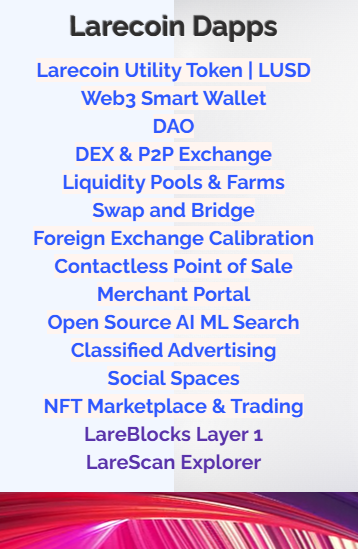
The Web3 payments space has options. NOWPayments exists. CoinPayments exists. Triple-A exists.
Here's what makes Larecoin different:
Self-Custody First: Your keys. Your funds. Your control. No custodial compromise.
LUSD Integration: Purpose-built stablecoin infrastructure designed for merchant operations.
NFT Receipt System: Automated blockchain-verified accounting built into every transaction.
Receivables Token: Transform outstanding payments into tradeable, trackable assets.
Gas-Only Transfers: Minimal transaction costs without platform percentage cuts.
Push to Card: Bridge crypto settlements back to traditional banking when needed.
The ecosystem approach matters. Larecoin isn't just a payment processor: it's infrastructure for bank-free business operations.
Financial sovereignty for merchants who are tired of intermediaries dictating terms.
Getting Started
Implementing these hacks doesn't require a complete business overhaul.
Step 1: Set up a Larecoin merchant account
Step 2: Enable stablecoin payment acceptance
Step 3: Configure NFT receipt generation
Step 4: Train your team on the merchant portal
Step 5: Promote crypto payment options to customers
Most merchants are operational within 48 hours. No credit checks. No lengthy approval processes. No monthly minimums.
The Bottom Line
Interchange fees are a choice.
Traditional processors have convinced businesses that 2-4% is just the cost of doing business. It isn't. It's the cost of using outdated infrastructure designed to extract maximum value from merchants.
Web3 global payments offer an alternative. Self-custody merchant accounts put you in control. Stablecoin payments eliminate volatility concerns. NFT receipts simplify accounting. Smart contracts automate the tedious stuff.
The merchants adopting these strategies now will have significant cost advantages over competitors still paying legacy fees in 2027.
The question isn't whether Web3 payments will become standard. The question is whether you'll be early or late to the transition.
Stop overpaying. Start building infrastructure for the future.
Explore Larecoin's merchant solutions and see what your business saves.
Comments