

.png)
Stop Wasting Money on Legacy Payment Fees: Try These 7 Web3 Global Payments Hacks
- [[[Free!!]<<<<]] Watch: 스포르팅 - 토트넘 Live Stream 13 September 2022
- Jan 28
- 4 min read
![Writer: [[[Free!!]<<<<]] Watch: 스포르팅 - 토트넘 Live Stream 13 September 2022](https://lh3.googleusercontent.com/a/AItbvmktwQc0wCdd3ZEETSYItRQubwwBzOyjD_dcigRf=s96-c)
Legacy payment fees are draining your business. Every wire transfer. Every cross-border transaction. Every card swipe.
You're bleeding money to intermediaries who add zero value.
The numbers don't lie. Traditional banking rails take 3-5 business days for settlement. SWIFT networks charge absurd fees. Interchange costs eat into your margins.
Meanwhile, companies using Web3 global payments report 70% cost reductions. Settlement times? Under 10 minutes.
Time to stop playing by outdated rules.
Here are 7 Web3 payment hacks that smart merchants are using right now to slash fees and scale globally.
Hack #1: Bypass Traditional Banking Rails Entirely
This is the big one.
Traditional payment infrastructure is bloated. Multiple intermediaries. Each one takes a cut. Each one adds delay.
Blockchain payment rails eliminate the middlemen.
PayPal and Square processed over $12 billion in blockchain payments in 2025. Corporate clients saved up to 45% on transaction fees compared to wire transfers.
With Larecoin, you process payments directly on-chain. No correspondent banks. No clearing houses. No unnecessary fees.
The result? Faster settlement. Lower costs. Complete transparency.
Hack #2: Leverage Stablecoins for Cross-Border Settlement
Volatility concerns? Solved.
LUSD stablecoin benefits are massive for merchants:
Price stability pegged to USD
Near-instant transfers across borders
No currency conversion fees
24/7 settlement (not just banking hours)
Traditional FX services charge 2-4% on currency conversion. Banks add their spread on top.
Stablecoins bypass all of that.
Financial institutions are already leveraging blockchain infrastructure for near-instant transfers. They're using stablecoins and decentralized protocols to skip the intermediaries that impose high fees and settlement delays.
Your competition is catching on. Are you?
Hack #3: Embrace Self-Custody Merchant Accounts
Here's a radical concept: actually own your money.
Traditional payment processors hold your funds. They set withdrawal limits. They can freeze your account without warning.
Self-custody merchant accounts change everything.
With Larecoin's approach, you maintain control of your private keys. Your funds settle directly to your wallet. No waiting periods. No arbitrary holds.
Why this matters:
Immediate access to revenue
No dependency on third-party custodians
True financial sovereignty
Bank-free business operations
This isn't about being anti-bank. It's about being pro-independence.
Hack #4: Implement NFT Receipts for Accounting
NFT receipts for accounting sound futuristic. They're actually practical.
Every transaction generates an immutable, on-chain receipt. Timestamped. Verified. Permanent.
Benefits for your business:
Automatic audit trails – no more digging through spreadsheets
Tamper-proof records – disputes become trivial to resolve
Instant verification – auditors can verify transactions independently
Reduced compliance overhead – everything is documented by default
Walmart Canada eliminated 70% of freight invoice disputes through smart contract automation. That's not a typo. Seventy percent.
NFT receipts bring similar efficiency to everyday merchant transactions.
Hack #5: Deploy a Crypto POS System for Small Business
Point-of-sale doesn't have to mean point-of-fees.
Traditional POS systems charge:
Monthly software fees
Per-transaction percentages
Hardware rental costs
Payment processing fees
A crypto POS system for small business flips this model.
Larecoin's ecosystem includes contactless POS solutions designed for merchants who want to reduce merchant interchange fees dramatically. Accept crypto payments alongside traditional methods. Give customers options. Keep more of your revenue.
Small businesses benefit most. When margins are tight, every percentage point matters.
Hack #6: Automate with Smart Contracts
Manual payment reconciliation is a time sink.
Smart contracts execute automatically when conditions are met. No human intervention required.
Use cases:
Automatic supplier payments when inventory arrives
Instant royalty distributions for creators
Conditional releases based on delivery confirmation
Recurring billing without failed payment headaches
The efficiency gains compound. Less administrative overhead. Fewer errors. Faster cash flow cycles.
Organizations integrating blockchain payment rails with existing systems report 70% cost savings on international transfers. ROI materializes within 6-12 months of deployment.
Not theoretical. Measurable.
Hack #7: Tokenize Your Receivables

The receivables token concept is a game-changer for cash flow.
Instead of waiting 30, 60, or 90 days for payment, tokenize your receivables. Access liquidity immediately. Let the blockchain handle the rest.
How it works:
Invoice gets converted to a digital token
Token represents the future payment
Access funds immediately through DeFi liquidity pools
Original payer settles on normal terms
This is programmable liquidity. Real-time access to your own money.
PayFi solutions enable real-time liquidity and agentic payment execution. Payments fund, execute, and settle autonomously: without prefunding or manual orchestration.
Why Larecoin Over the Alternatives?
You've got options in Web3 payments. Let's be real about the landscape.
NOWPayments offers basic crypto acceptance. It works. But you're still dealing with custody issues and limited features.
CoinPayments has been around forever. The interface feels dated. Integration can be clunky.
Triple-A targets enterprise. If you're not massive, you're not their priority.
Larecoin is different.
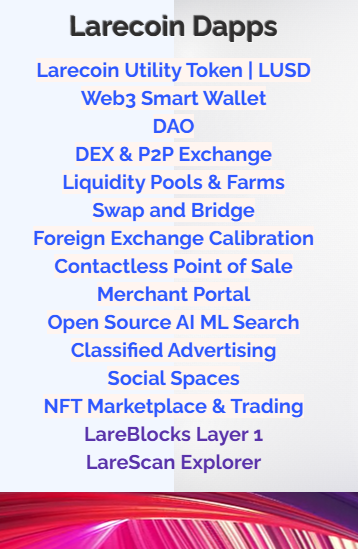
The ecosystem includes:
LUSD stablecoin for volatility-free transactions
NFT receipts built into every transaction
Self-custody as the default, not an afterthought
Receivables tokens for instant liquidity access
Crypto POS designed for small business reality
Smart wallet integration across the platform
Explore the full Larecoin ecosystem to see how these pieces connect.
The ROI Timeline
This isn't a multi-year implementation project.
Companies report returns within 90 days to 6 months of adopting Web3 payment infrastructure.
Quick wins:
Immediate reduction in cross-border fees
Faster settlement improves cash flow instantly
Reduced dispute resolution costs
Lower compliance overhead through automation
Medium-term gains:
Customer acquisition through payment flexibility
Operational efficiency from smart contract automation
Global market access without banking complexity
The infrastructure is ready. The tools exist. The question is whether you'll adopt them before your competitors do.
Getting Started

Don't overcomplicate this.
Step 1: Assess your current payment costs. Add up interchange fees, wire transfer costs, FX spreads, and settlement delays.
Step 2: Identify your highest-fee transactions. Cross-border payments are usually the worst offenders.
Step 3: Start small. Test Web3 payments on a subset of transactions.
Step 4: Scale what works. Expand based on real data, not hype.
Join the Larecoin community to connect with merchants already making this transition.
The Bottom Line
Legacy payment fees exist because you've accepted them as normal.
They're not.
Every fee you pay to intermediaries is money that could fund growth, reduce prices for customers, or hit your bottom line.
Web3 global payments aren't theoretical anymore. They're not "coming soon." They're here.
Companies are saving 45-70% on payment processing. Settlement happens in minutes, not days. Merchants maintain custody of their own funds.
The seven hacks above aren't secrets. They're strategies that forward-thinking businesses are implementing right now.
The question isn't whether Web3 payments will become standard. It's whether you'll be ahead of the curve or playing catch-up.
Stop wasting money. Start building the payment infrastructure your business deserves.
Comments