

.png)
The CLARITY Act Changes Everything: How Self-Custody Merchant Accounts Just Got Regulatory Approval (Finally)
- [[[Free!!]<<<<]] Watch: 스포르팅 - 토트넘 Live Stream 13 September 2022
- 2 hours ago
- 5 min read
![Writer: [[[Free!!]<<<<]] Watch: 스포르팅 - 토트넘 Live Stream 13 September 2022](https://lh3.googleusercontent.com/a/AItbvmktwQc0wCdd3ZEETSYItRQubwwBzOyjD_dcigRf=s96-c)
The Regulatory Fog Just Lifted
For years, crypto merchants operated in a gray zone.
The question loomed: Are we securities dealers? Commodity traders? Money transmitters?
Nobody knew. Nobody could say for sure.
The CLARITY Act (H.R. 3633) changes that game entirely.
This legislation establishes clear jurisdictional boundaries between the SEC and CFTC for digital assets. More importantly, it creates a defined pathway for self-custody merchant solutions to operate within explicit regulatory guidelines.
Translation: Merchants who want to accept crypto payments without third-party custodians finally have a framework.
And that's massive for platforms like Larecoin.

What the CLARITY Act Actually Does
Let's cut through the jargon.
The Digital Asset Market Clarity Act of 2025 does three critical things:
Defines Digital Assets: Creates clear categories for what counts as a security versus a commodity in the crypto space.
Splits Jurisdiction: Gives the CFTC authority over most digital assets. Narrows the SEC's reach to specific security-type tokens.
Establishes Compliance Pathways: Provides merchants and platforms with defined rules for operating legally.
The bill passed the House in July 2025 with bipartisan support. As of early 2026, it's moving through Senate committees.
Treasury Secretary Scott Bessent called it "essential to the future viability of bitcoin and digital asset markets in the U.S."
He's right. And here's why merchants should care.
Self-Custody Changes the Power Dynamic
Traditional payment processors hold your funds.
They custody. They control. They charge fees for that privilege.
NOWPayments? 0.5% per transaction minimum.
CoinPayments? Up to 0.5% plus network fees.
Triple-A? Similar structure with added custody risk.
Self-custody merchant accounts flip this model.
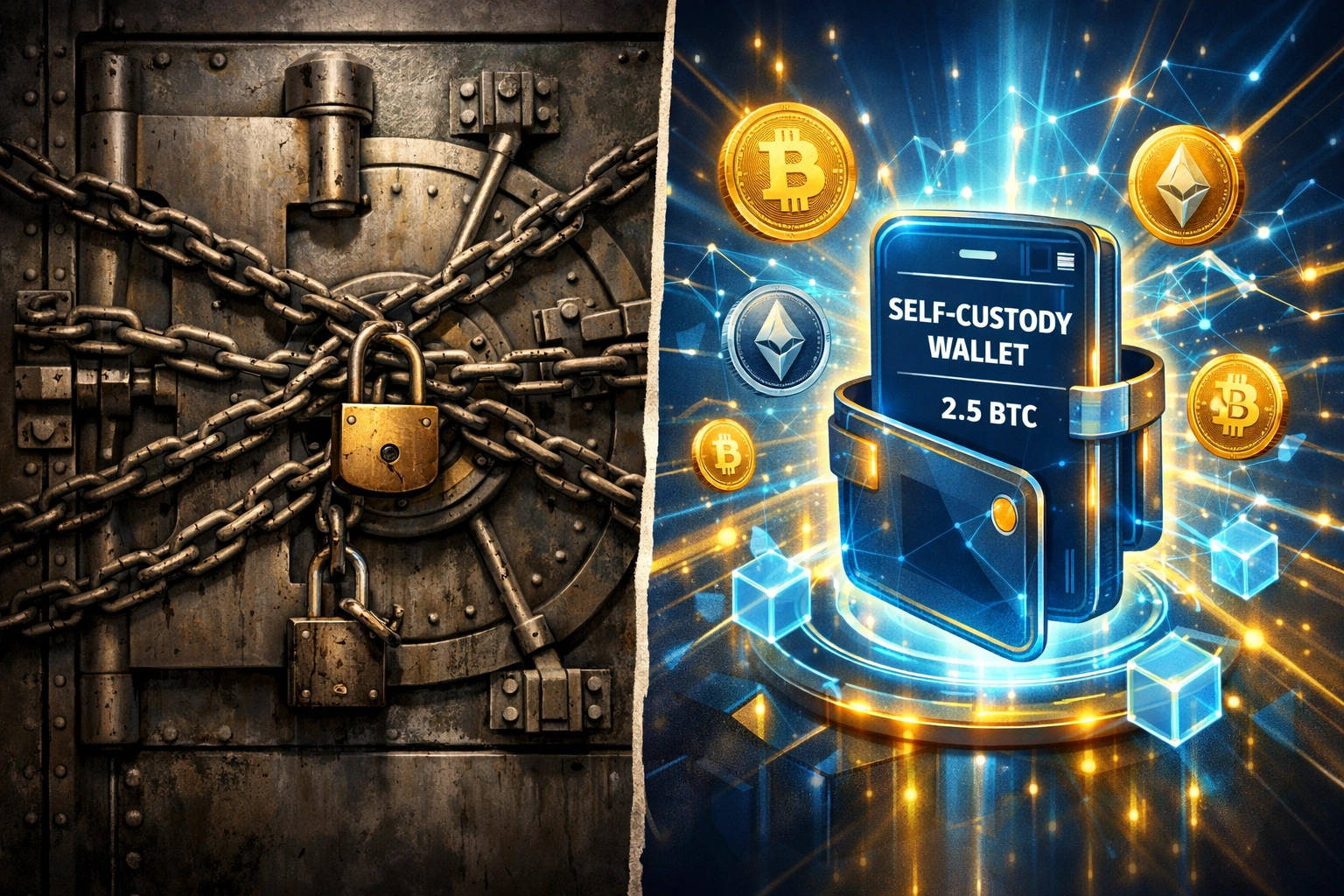
You hold the keys. You control the wallet. You receive payments directly to addresses you own.
The CLARITY Act provides the regulatory framework that makes this model legally defensible at scale.
No more operating in uncertainty. No more wondering if regulators will classify your merchant account as an unlicensed money transmission service.
Clear rules. Clear boundaries. Clear operations.
How Larecoin Merchants Win Under This Framework
Larecoin built its entire infrastructure around self-custody merchant solutions.
Here's what that means in practice:
Master/Sub-Wallet Architecture: Create unlimited sub-wallets under your master merchant account. Each customer, each location, each product line gets its own address. Full control stays with you.
NFT Receipts: Every transaction generates an NFT receipt on LareBlocks. Immutable proof of purchase. Tax documentation solved. Audit trails automated.
50% Lower Fees: Because there's no custody middleman, Larecoin charges significantly less than competitors. We're talking 0.25% versus 0.5%+ elsewhere.
Push-to-Card Services: Accept crypto, instantly convert to fiat, push directly to your business card. No custody period. No waiting.
LUSD Stablecoin Integration: Accept volatile crypto, receive stable value. All within the same self-custody framework.
The CLARITY Act validates this entire approach.
Regulators now recognize that self-custody models with proper KYC/AML compliance don't require the same oversight as custodial exchanges.
That's the green light merchants needed.
The LareBlocks Advantage in a Regulated Environment
Here's where infrastructure matters.
Larecoin doesn't operate on someone else's blockchain.
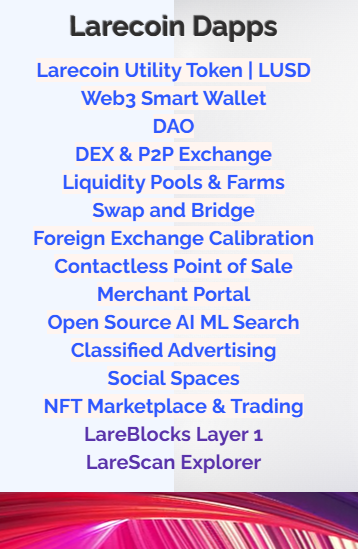
LareBlocks is our Layer 1 infrastructure. LareScan is our explorer.
Full transparency. Full control. Full compliance capability.
When regulators ask for transaction history? LareScan provides it.
When auditors need proof of payment flows? LareBlocks delivers immutable records.
When merchants need to demonstrate compliance? The entire system was built for this moment.
Other platforms scramble to retrofit compliance onto existing architectures.
Larecoin built compliance into the foundation.
That's the difference between reactive and proactive infrastructure design.
Social Impact Meets Regulatory Compliance
The 1.5% charity tax built into Larecoin transactions?
That becomes a compliance feature under the CLARITY Act framework.
Regulators love demonstrable social impact. It shows responsible platform design.
Every transaction on Larecoin automatically contributes to verified charitable organizations.
Merchants can showcase this to customers. To auditors. To regulators.
It's not just good marketing. It's structural proof of ethical operations.
The CLARITY Act creates space for innovative tokenomics like this.
Previous regulatory uncertainty made platforms hesitant to implement automatic charitable giving: too many questions about whether it constituted a security feature.
Now? Clear guidelines allow clear innovation.

AI-Powered Merchant Tools Get Regulatory Protection
Larecoin's AI shopping features and B2B2C metaverse experiences operate differently under the CLARITY Act.
These aren't securities. They're utility features within a payment ecosystem.
The Act's clear definitions protect innovation in:
AI Search and Discovery: Customers find products using natural language. Merchants get discovered without traditional ad spend.
Metaverse Commerce Spaces: Virtual storefronts with crypto payment integration. All self-custody. All compliant.
Smart Routing: AI determines optimal payment paths: lowest fees, fastest settlement, best conversion rates.
Without regulatory clarity, these features existed in legal limbo.
The CLARITY Act removes that ambiguity.
Merchants can adopt cutting-edge payment technology without legal fear.
The Competitive Landscape Shifts
NOWPayments, CoinPayments, Triple-A: they all operate on custodial models.
They hold merchant funds during processing. They manage the wallets. They control the flow.
That custody creates regulatory burden under the CLARITY Act.
More oversight. More compliance requirements. More operational costs.
Those costs flow downstream to merchants as higher fees.
Larecoin's self-custody model avoids this entirely.
Merchants maintain custody. Larecoin provides the rails and tools.
Regulatory burden stays minimal. Fees stay low. Control stays with the merchant.
That's the structural advantage the CLARITY Act enables.
What Merchants Should Do Right Now
The regulatory landscape just stabilized.
Smart merchants make moves before competitors catch up.
Set Up Your Larecoin Merchant Account: Self-custody infrastructure is ready. The regulatory framework is clear. Get ahead of the curve.
Explore Master/Sub-Wallet Configurations: Design your payment architecture now. Multiple locations? Different product lines? Separate wallets for each.
Implement NFT Receipts: Customers increasingly expect proof of purchase on-chain. Larecoin does this automatically.
Test Push-to-Card Functionality: Accept crypto without crypto volatility risk. Convert and settle instantly.
Review Fee Structures: Calculate your savings versus NOWPayments and CoinPayments. 50% lower fees compound quickly.
The CLARITY Act created the environment. Larecoin built the tools.
What you do next determines whether you lead your industry or follow it.
The Path Forward Is Clear
Regulatory uncertainty held crypto payments back for years.
The CLARITY Act removes that obstacle.
Self-custody merchant accounts now operate within defined legal boundaries.
Larecoin's infrastructure: LareBlocks, LareScan, Master/Sub-wallets, NFT receipts, LUSD stablecoin, Push-to-Card services: was built for exactly this regulatory environment.
We didn't wait for permission. We built anticipating clarity.
That clarity is here.
Merchants who move now capture market share before the rush.
Competitors still figuring out compliance strategies will lag behind.
The question isn't whether to adopt crypto payments.
The question is whether you adopt with full self-custody control or settle for custodial middlemen.
One approach puts you in the driver's seat. The other keeps you dependent on third parties.
The CLARITY Act makes both legal.
But only one gives you actual control.
Ready to explore what self-custody merchant accounts look like in practice? Check out the full Larecoin ecosystem at larecoin.com and see why merchants are making the switch.
Comments